In the West we talk of democracy as if it is universally understood and incapable of more than one interpretation. As Lijia Zhang explains, it can mean something different to the people of China.
In the West we talk of democracy as if it is universally understood and incapable of more than one interpretation. As Lijia Zhang explains, it can mean something different to the people of China.
I’m learning to take control of my own life,” Angela, a young white-collar worker in Nanjing, told me during an interview for a project on changing attitudes towards marriage and motherhood. She wasn’t talking about elections or grand political ideals, but about the small, essential freedoms, over work, over her body, and over her future. Resisting pressure from her family, she had decided not to have children and to live life on her own terms.
The Chinese Communist Party has increasingly imposed rules that curb the very autonomy people like Angela are seeking. In some ways, the desire for autonomy is a challenge to that kind of rule. Angela never used the word “democracy.” Most people don’t anymore. But her longing for agency is, in essence, democratic.
These days, minzhu, or democracy, from min meaning people and zhu meaning to be in charge or to decide, is omnipresent in state rhetoric yet largely avoided in daily conversation. President Xi Jinping promotes “whole-process people’s democracy,” a system in which the Party listens attentively to the people and acts in their

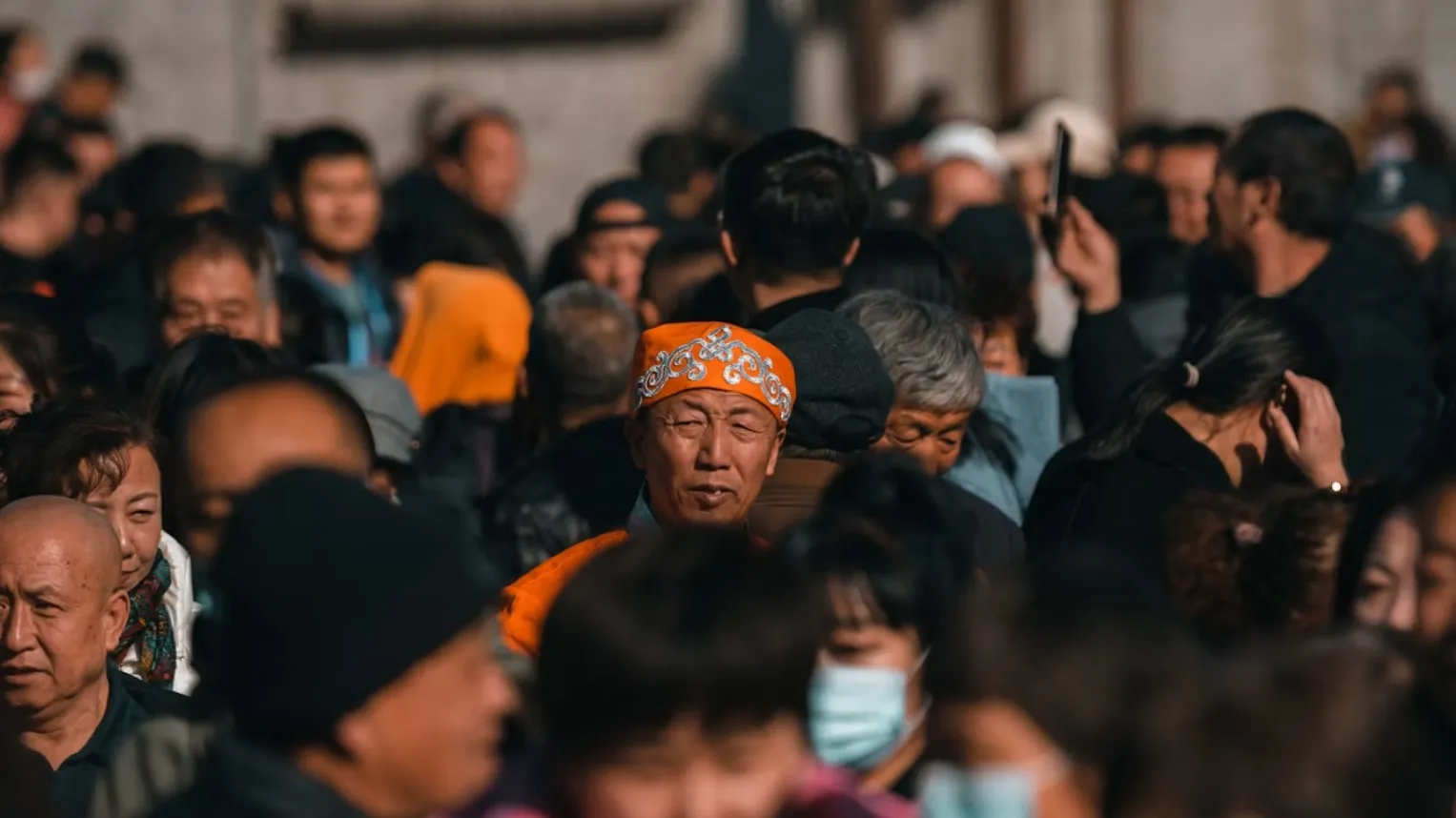
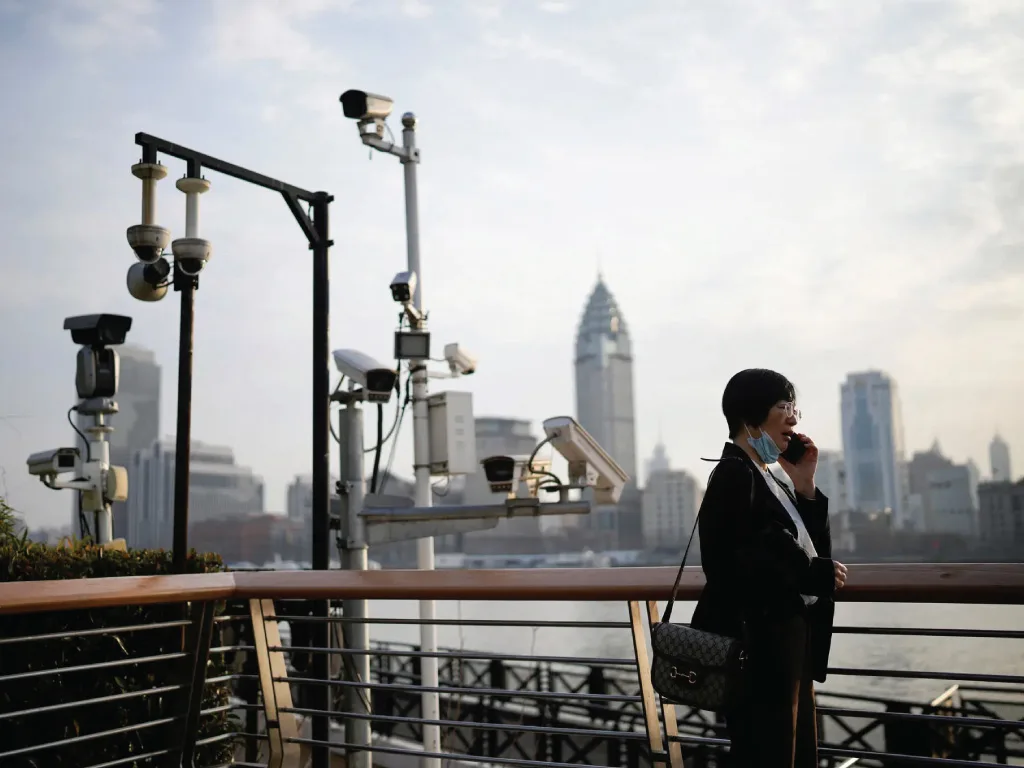
Everyday life unfolds under watchful eyes in modern China, where political language is avoided but the desire for dignity endures. Photo: Reuters
Best interest. Ordinary citizens, however, know instinctively that the word is sensitive, even risky. And yet beneath the surface, the desire for dignity and justice persists.
This tension is not new. It stretches back a century to the May Fourth Movement of 1919, which helped shape modern China and introduced “Mr. De” and “Mr. Sai”, democracy and science, as cures for China’s ills.
In 2019, at a gathering marking the movement’s 100th anniversary, Xi urged young Chinese to embrace the “May Fourth spirit”. But democracy appeared only briefly, almost as a historical footnote. The emphasis was patriotism and obedience to the Party, another reminder of how contested the legacy of May Fourth has become.

For many young urban Chinese, personal autonomy is sought in daily life rather than through formal politics. Photo: AFP
The original protests began when students in Beijing took to the streets to oppose the Western powers’ decision to let Japan keep territories in Shandong after World War I. Outrage at foreign bullying and the Chinese government’s weakness soon ignited a broader cultural revolution, before Mao’s political one, led by intellectuals such as Chen Duxiu and Hu Shi. They rejected stale Confucian values and embraced liberalism, pragmatism, feminism, and individualism. Free thinking and tolerance were celebrated. Chen famously declared that only “Mr De” and “Mr Sai” could rescue China from darkness.
After 1949, the Communist Party reinterpreted the May Fourth spirit as patriotism, progress, democracy and science, though democracy became increasingly symbolic. Under Mao, the country lived under what he called a “people’s democratic dictatorship,” a contradiction Chinese citizens understood well. After the reform era, personal freedoms expanded but political reform stalled. In 1989, a pro-democracy movement, led by students and participated in by people from all walks of life, once again swept the country, only to be met with tanks and bullets in Tiananmen Square.

Student protesters during the May Fourth Movement of 1919, when democracy and science were promoted as paths to national renewal.
I remember those days vividly. As a young factory worker in Nanjing, I organised the largest protest by workers in support of the Beijing students. We believed we were continuing the legacy of our patriotic forebears. That hope was extinguished on the dark night of 4 June. Ever since, the memory of democracy in China has been contested, repressed, and half-remembered.

Factory workers during China’s reform era, when economic freedoms expanded but political reform stalled. Photo: ILO.
Today, China’s economic achievements are extraordinary. Its high-speed rail network is the envy of the world; its space programme reaches the far side of the moon; it leads in mobile technology and green energy and is competitive with the USA in AI. Materially, the nation is transformed. Politically, the trajectory has reversed. Under Xi, censorship has deepened, civil society faces strict controls, independent voices have dwindled, the gender pay gap has widened and feminist activism has been banned. Many young Chinese have learnt to avoid political discussions altogether.
And yet the desire for basic democratic rights continues to surface quietly, in small struggles that rarely make headlines. Parents protest arbitrary school policies on WeChat. Residents petition local governments over pollution, land grabs or unfair relocations. Women speak up about sexual harassment despite enormous pressure. These are not organised political movements, but they reflect something real: a yearning to be heard.
When repression goes too far, people are willing to push back, as seen in the “White Paper Movement” of late 2022. Spontaneous protests erupted nationwide against suffocating Covid rules, pushing the government to abruptly end the zero-Covid policy.
Over the years, I’ve asked many ordinary Chinese what democracy means to them. Their answers rarely resemble political theory. Instead, they speak of fairness, justice when wronged, protection from abusive employers, the right to speak truth without fear. Migrant workers complain about wage theft and corruption. Young women talk about autonomy over their bodies and life choices. Business owners wish for equal treatment under the law. These everyday aspirations amount to a quiet, unspoken version of democracy, one rooted not in ideology but in human dignity.
Here lies the paradox: China’s leaders insist that Western-style democracy is chaotic and unsuited to China’s needs. They point to economic performance and political stability — and they are not entirely wrong that democracy is struggling globally. Turkey, Myanmar, Tunisia, Venezuela, Poland and, indeed, the United States have all experienced democratic backsliding. Even in long-established democracies, trust has eroded. In Britain, the endless wrangling over Brexit once made Chinese leaders laugh that at least they had no such problem.

Social media platforms in China are tightly monitored, forcing dissent into brief, coded or private forms.
But this misses the point. Democracy is not merely a mechanism for decision-making; it is a system of limits. A democratic constitution restrains state power and protects citizens. It ensures that no leader – no matter how capable – rules indefinitely or without accountability. And while democracies may be flawed or inefficient, they tend to be richer, fairer and more content because people have a say in their future.
Is democracy still worth pursuing in China today? I believe so. Not because Western democracies are perfect, but because the desire for voice and dignity is universal. What is striking, after a century of searching, is that democracy in China has never disappeared. It has changed shape. From the bold declarations of the May Fourth intellectuals to the whispered hopes of Angela in Nanjing; from student protesters in 1919 and 1989 to everyday acts of resistance in the digital age, democracy lives on, not as a political system but as a persistent moral instinct. Even in a country where the word is avoided, millions still long for Mr De. So do I.