With President Trump preoccupied with the war in the Middle East this may not be the best moment to meet Xi Jinping of China, who has just endorsed the country’s latest Five-Year Plan. Howard Zhang has been looking at the plan and at issues between the two superpowers.
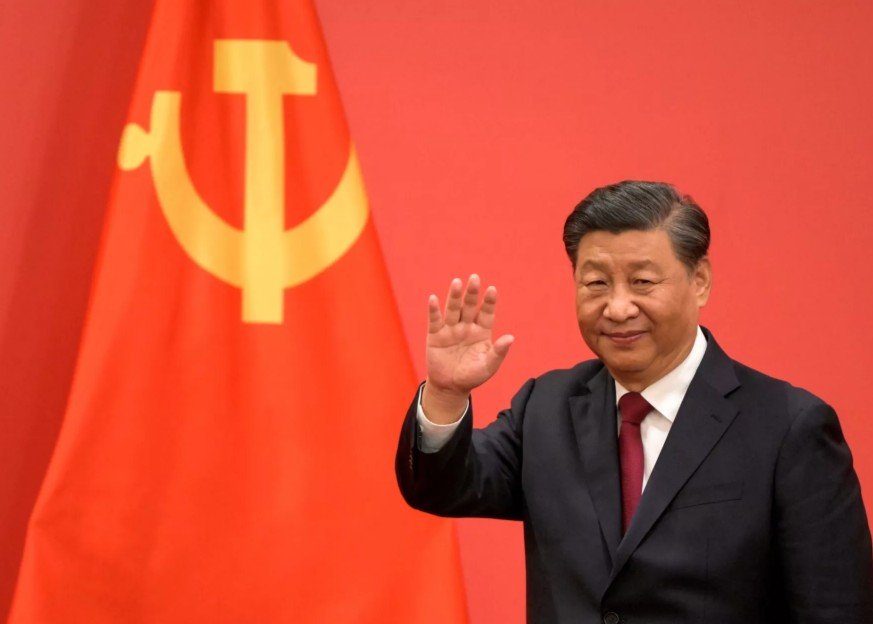
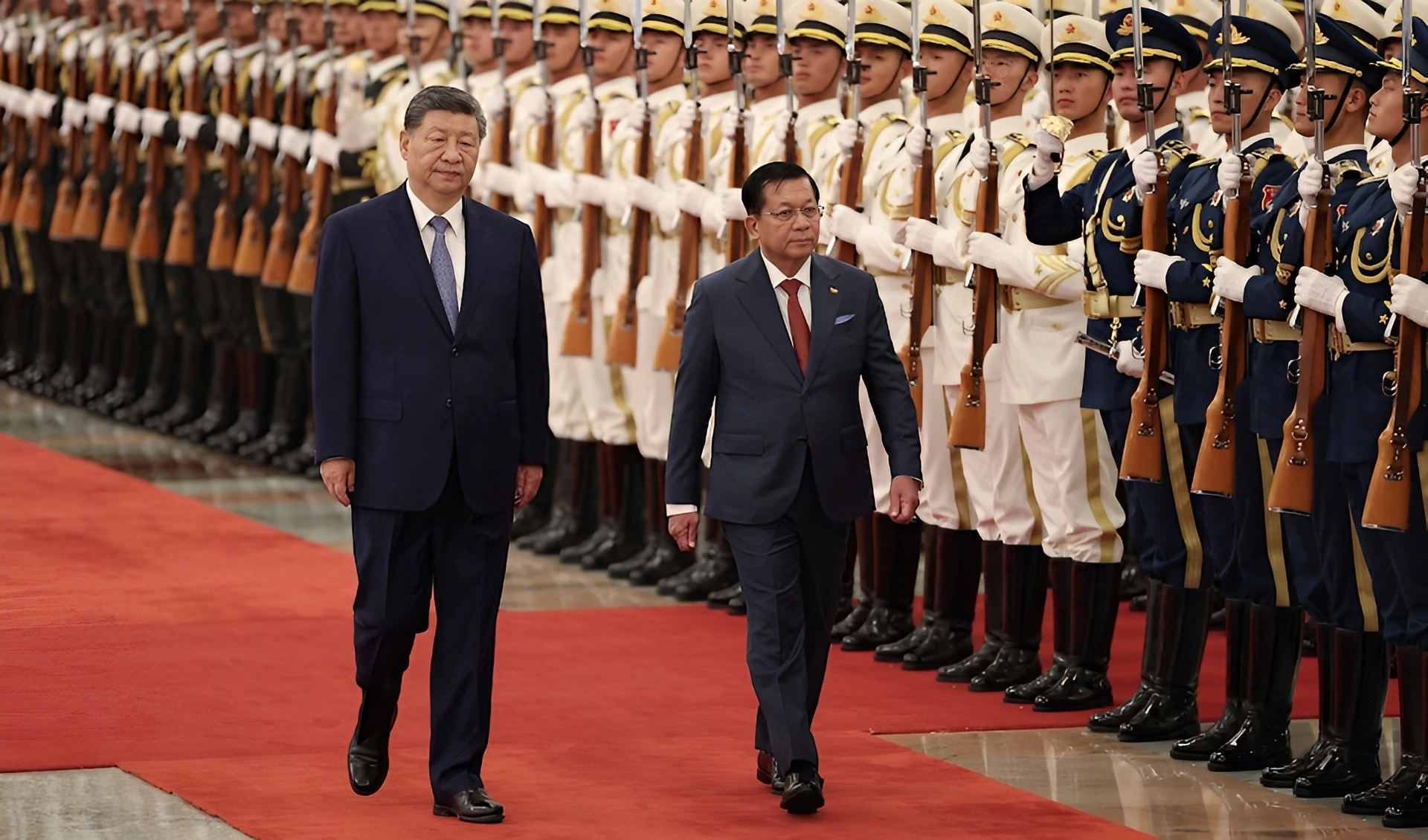
As global attention shifts to conflict in the Middle East, Xi Jinping presses ahead with a strategy focused on consolidating power at home and preparing China for long-term geopolitical and economic rivalry. Photo: AFP
The war in and around Iran has sent shockwaves far beyond the Gulf, rattling global energy markets and spreading turbulence as far as East Asia. For President Trump, the conflict may prove a defining gamble. If he neutralises Iran’s nuclear capability — or even triggers regime change — he will have achieved something successive American presidents failed to accomplish for decades, with significant implications for future geopolitical balances.
While the world’s gaze is firmly fixed on Iran, a quieter drama has been unfolding in China. In early March, a carefully choreographed scene played out inside the Great Hall of the People during China’s annual rubber-stamp parliamentary session. Taken together with other signals emerging from Beijing, it suggests that President Xi Jinping is doubling down on his economic policies at home and strategic competition abroad. Four signals stand out.
Signal One: Xi’s unchallenged authority
When President Xi sat down centre stage at the opening ceremony of the parliamentary sessions, the choreography was strikingly unusual. 
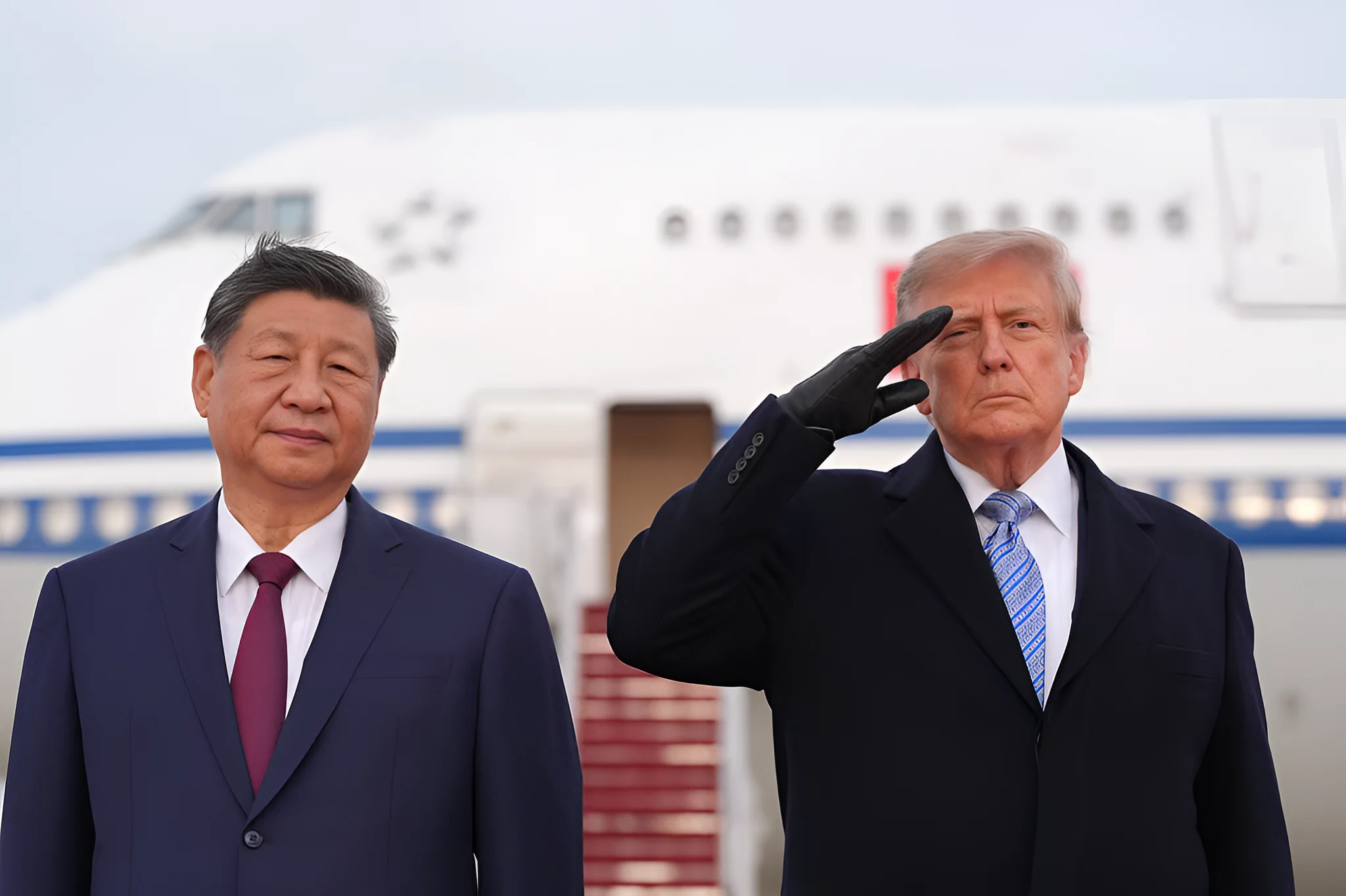
US President Donald Trump and Chinese President Xi Jinping shake hands. Photo: AFP
The master of ceremonies first announced Xi’s full set of titles: ‘General Secretary of the Communist Party of China, President of the People’s Republic of China, and Chairman of the Central Military Commission – Xi Jinping…’ The entire hall rose to its feet and applauded. Xi stood up slowly, nodded to acknowledge, and then sat down again. Only afterwards did the master of ceremonies add: ‘and other leaders of the Party and the state’.
In the ritualised theatre of Communist Party politics, such details matter. In previous years, the names of other senior leaders — at the very least members of the Politburo Standing Committee — would also be read out. Not this time. The omission spoke volumes.  Chinese President Xi Jinping and Premier Li Qiang at the Chinese People’s Political Consultative Conference closing session in Beijing’s Great Hall of the People, where staged proceedings signal authority in party politics. Photo: Reuters
Even by the rigid conventions of Chinese political stagecraft, the sequence was unusually explicit. The imagery recalled an earlier era of Communist political theatre under Mao, when the authority of a single leader was placed above the collective. After endless purges, most recently among senior officers, Xi now faces no visible rival within the system. In the realm of elite politics, he reigns supreme.
Signal Two: Acknowledging economic strain
Yet this political triumph masks a more uncomfortable reality. China’s economy remains under strain, and even Xi’s loyalist premier, Li Qiang, acknowledged the difficulties in his annual government Work Report. The GDP growth target was trimmed slightly to below the once-sacrosanct 5 per cent mark, a modest adjustment that may ease deflationary pressure.
Beyond that, the report offered little in the way of meaningful measures to boost household consumption. Instead, the emphasis remained on stabilising industry and investment. Reviving consumer demand would require deeper reforms and a greater shift of resources towards households — steps that could be read as an admission that the current economic model is faltering.  Premier Li Qiang acknowledged economic pressures in China, signalling concerns over slowing growth and weak domestic consumption.
For now, the leadership appears unwilling to make that concession. Xi may reign supreme politically, but his economic response suggests a leadership managing weakness rather than fundamentally changing course.
Signal Three: Doubling down on industrial competition
If China’s economic model is under strain, the leadership’s response is not to abandon it but to double down. Across speeches, planning documents and commentaries in the Party media, one phrase appears repeatedly: ‘coordinating development and security’.
The emerging framework of the 15th Five-Year Plan (2026–2030) reflects this thinking. Rather than pivoting towards consumption, Beijing is concentrating resources on a small number of strategic sectors, hoping to outcompete the West. These include semiconductors, AI, robotics, biotech and advanced pharmaceuticals.
In effect, the leadership is mobilising state resources behind what policymakers call ‘new productivity forces’, betting that technological dominance and industrial scale will secure China’s long-term economic position. Some UK analysts such as Charles Parton of the RUSI think tank see the plan less as a conventional economic programme than as a blueprint for navigating a prolonged period of geopolitical rivalry.  Premier Li Qiang acknowledged economic pressures in China, signalling concerns over slowing growth and weak domestic consumption.
Signal Four: A subtle shift on Taiwan
The final signal concerns Taiwan. Official rhetoric opposing Taiwanese independence remains harsh. Yet recent messaging suggests renewed emphasis on political influence rather than confrontation.
Wang Huning — one of Xi’s closest strategy and propaganda advisers — emphasised strengthening ‘cross-strait exchanges’ and united front work during the sessions. Such language points to renewed focus on political and economic integration across the Taiwan Strait, tools long used by Beijing to shape opinion on the island. Pressure will continue, but the emphasis is shifting back towards influence and persuasion rather than military action.
A quieter but harder China
Taken together, these signals suggest a China that may appear less confrontational on the surface but could prove more difficult for the outside world to manage.
Direct military escalation may be avoided for now. Beijing may rely more on tools operating below the threshold of open conflict: cyber espionage, intellectual-property theft, maritime pressure in contested waters and political influence operations abroad.
United Front networks are likely to play an even bigger role, particularly in Taiwan, across the developing world and parts of the West. Economic tools may also play a role, from subsidised exports that undercut competitors to strategic investments aimed at expanding China’s influence.
The unanswered question
One issue nevertheless remains unresolved. The next Communist Party congress is expected in the autumn of 2027. The question of leadership succession will inevitably resurface. Will Xi retain all his formal positions for another term? Or might he follow the example of Deng Xiaoping by stepping back while continuing to wield decisive influence behind the scenes?  Mao Zedong shakes hands with Deng Xiaoping in Beijing in 1974, a moment that underscores the historical weight of leadership concentration and succession in China. Photo: AFP
For now, Xi appears unrivalled. There is little sign of a designated successor. Yet history offers cautionary lessons. The world has seen what follows when towering figures such as Stalin or Mao leave the stage.
The signals emerging from Beijing suggest that the coming years will be devoted less to expansion than to fortifying the political and economic order Xi has built — and preparing China for a prolonged strategic contest with the West.