The lady known affectionately as Japan’s ‘Iron Lady’ has led the country’s Liberal Democratic Party (LDP) to a landslide electoral victory – the party won more than two-thirds of seats in the House of Representatives or Diet.
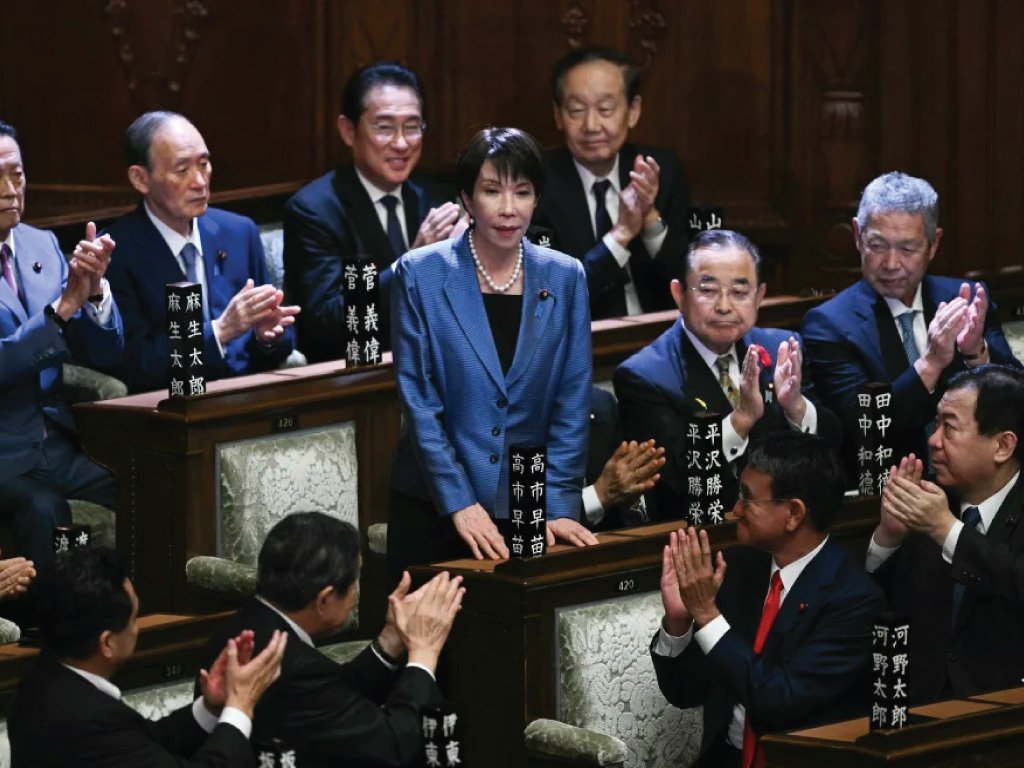
The lady known affectionately as Japan’s ‘Iron Lady’ has led the country’s Liberal Democratic Party (LDP) to a landslide electoral victory – the party won more than two-thirds of seats in the House of Representatives or Diet. Having led the party to an unequivocal lead, Prime Minister Sanae Takaichi now faces the formidable task of turning this political capital into concrete policy achievements. Yoshiteru Uramoto reports on what is being seen as a historic victory.
Sanae Takaichi called the election just four months after becoming Japan’s first female prime minister. Although analysts first regarded it as a gamble, they now describe it as a historic victory, giving the LDP its largest ever number of seats in the Diet.
According to Professor Izuru Makihara of Tokyo University, the scale of the win reflects positively on the prime minister’s personal appeal. Her “straightforward and down-to-earth communication style” helped cultivate an image of decisive leadership at a time when many voters are frustrated by economic stagnation and cautious consensus politics. Her nationalistic rhetoric also appears to have resonated.
Born in Nara and educated at Kobe University, Ms Takaichi does not come from a political dynasty, which is unusual among recent Japanese leaders. First elected to the Diet in 1993, she has held senior cabinet roles, including minister for internal affairs and communications. Supporters cite her unconventional youth − motorcycle riding and playing drums in a heavy metal band − as evidence of a break from traditional political moulds.

During the campaign, she leaned into her reputation as an ideologically clear and firm leader. Commentators have compared her to former British Prime Minister Margaret Thatcher on account of her emphasis on resolve and policy discipline. Critics argue, however, that her style places less emphasis on consensus-building, which has long been central to Japan’s faction-driven system. During campaigning, her platform centred on economic revitalisation, stronger national defence and a more assertive foreign policy amid rising regional tensions. Pre-election opinion polls suggested that LDP approval had softened before the vote; yet the result indicates that voters distinguished between dissatisfaction with the broader establishment and confidence in her leadership.
The campaign briefly shifted when the LDP’s former coalition partner, Komeito, joined the Constitutional Democratic Party to form the new Centrist Reform Alliance (CRA), raising doubts

about whether the ruling party could retain its majority. But the alliance suffered a severe setback at the polls and now struggles for relevance.
With a renewed mandate, Ms Takaichi needs to convert momentum into results. She is regarded as a meticulous policy-maker with firm views on fiscal management, defence, technological innovation and structural reform. Her decisiveness has appealed to core LDP supporters, some of the business community and younger voters who are concerned about Japan’s economic future amid demographic decline.

Domestically, Ms Takaichi has pledged measures to ease rising food prices and reduce energy bills, while promoting growth through innovation and investment. Conservative elements welcome her commitment to strengthening defence and reinforcing national sovereignty. But her proposals on migration and constitutional reform, in particular to boost the status of the country’s Self Defence Forces, have drawn scrutiny; critics warn against rapid changes that could alter Japan’s post-war security posture and cultural integrity.
Economic sustainability remains a key concern. Bunmei Ibuki, a former Speaker of the House of Representatives, has cautioned that what he describes as Ms Takaichi’s “responsible expansionary fiscal policy” may not guarantee durable growth. He argues that heavy reliance on government bond issuance in the latest supplementary budget could deter private investment and weaken the yen, fuelling inflation rather than easing it. He also questions how long the public will tolerate high prices and stagnant wages, suggesting that the administration’s longevity depends on its success in maintaining the people’s trust.
Foreign policy poses equally complex challenges. Tension with China remains high. In November 2025, Ms Takaichi told the Diet that a potential Chinese naval blockade or military action against Taiwan could lead to a “survival-threatening situation”, prompting a sharp response from Beijing. Officials warn that Chinese export controls on certain military-related and medical supplies could expand to rare earth materials, posing serious risks to Japanese industry. Government sources acknowledge there is no clear blueprint for restoring bilateral stability.

Relations with China and the issue of Taiwan remain central to Japan’s strategic calculations. Ms Takaichi has reaffirmed adherence to the “one-China policy” – in other words, not to recognise Taiwan as a sovereign state – while stressing peace and stability in the Taiwan Strait. Security cooperation with the United States has intensified through joint exercises and enhanced intelligence sharing, which officials describe as deterrence.
Ms Takaichi, who met President Trump in Tokyo before the election, is expected to meet him in Washington in March ahead of his planned visit to Beijing for talks with President Xi Jinping. Japanese officials note that Mr Trump has historically favoured leaders with strong domestic mandates, which Ms Takaichi clearly has. Analysts say that the scale of the LDP’s victory will strengthen Ms Takaichi’s hand in shaping long-term diplomatic strategy.
Beyond China, Japan is deepening cooperation with partners in the Quad – Australia, the US and India – and other alliances. Efforts are under way to enhance collaboration on climate policy, cybersecurity, supply-chain resilience and disaster response through forums such as the G-7, APEC and ASEAN, reflecting Tokyo’s commitment to a rules-based international order.

Constitutional issues have returned to the agenda, including debate over the imperial institution. Ms Takaichi has signalled support for renewed discussion of revisions to the Imperial House Law, including proposals to broaden succession options. Government panels are reviewing the legal implications, as Japan confronts demographic change and evolving social expectations. At a post-victory press conference Ms Takaichi expressed her long-held desire to amend the Constitution to recognise the Self Defence Forces.
For supporters, the massive victory renewed stability and political capital to pursue the mandate into results. The firmer her resolve, the fewer will stand in her way. For critics, it raises questions about Japan’s economic management, constitutional debate and security policy amid growing regional uncertainty.