With World Cup football finals taking place in June and July in Canada, the United States and Mexico we asked football writer John Duerden what the chances are for the Asian teams taking part.
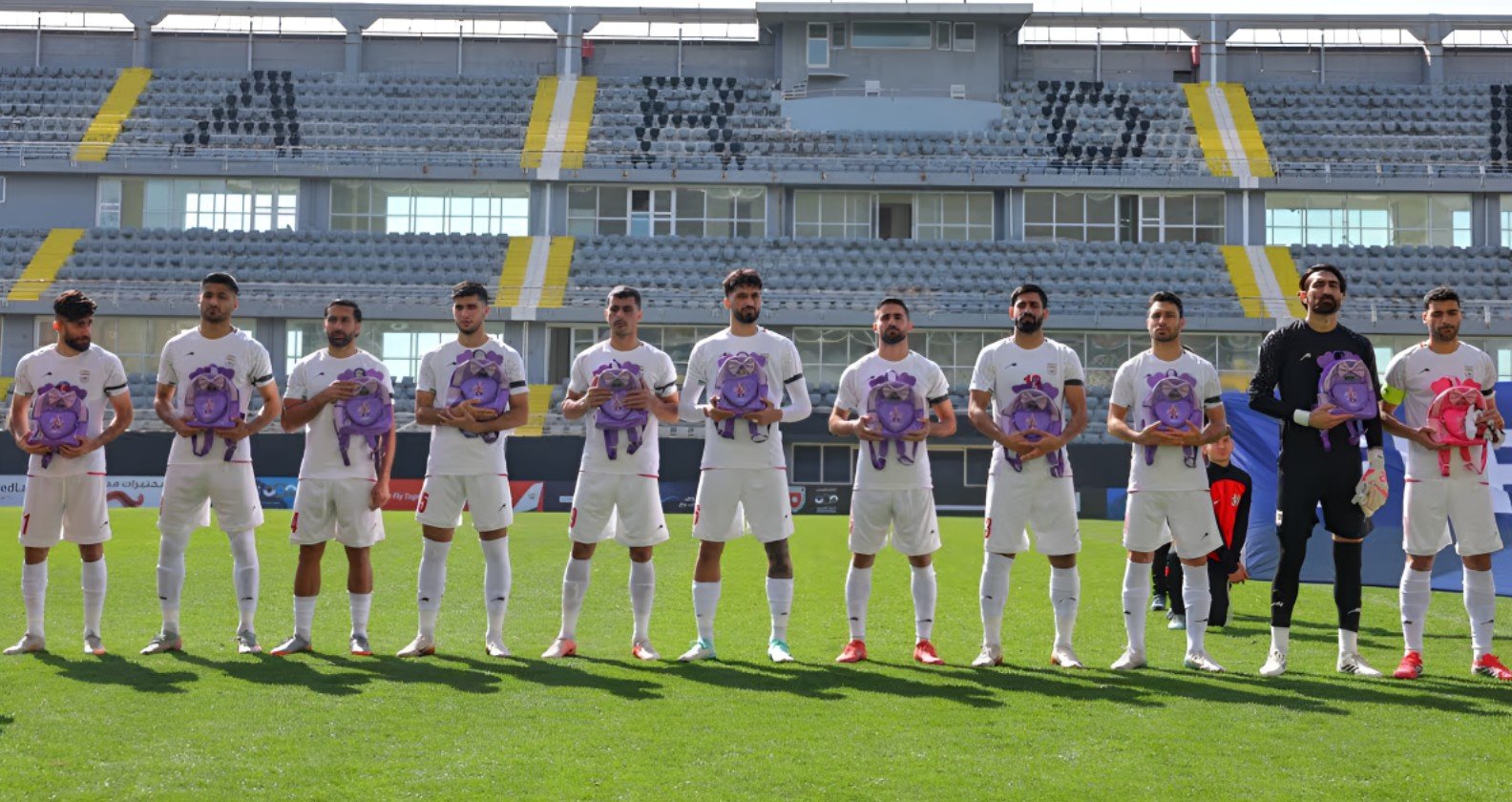
Iran players held children’s backpacks before a World Cup warm-up against Nigeria, in tribute to schoolgirls killed in a bombing during the conflict. Photo: Riza Ozel/AP Photo
Asia has an unprecedented nine representatives at the 2026 World Cup but that is not the only aspect of this summer’s tournament that is different. For the first time, there is a team from the continent openly talking of lifting the trophy in the final that will take place in New Jersey on 19 July; there are dozens of players playing in Europe’s top leagues and, most unusual of all, there is a nation sending a team to play in a country with which it is at war.
No sooner had the United States started bombing Iran on 28 February than speculation began as to whether Team Melli, one of Asia’s strongest, would participate. With President Trump questioning the safety of the visiting athletes, who are due to play two games in Los Angeles – home to a large Iranian community – it looked as if they would not take part.
The speculation has subsided and it now seems the world is likely to see a team representing a nation that is being attacked by the hosts playing in front of Californian crowds full of supporters, mostly from families that fled the 1979 Islamic Revolution and are hostile to the Iranian regime. Many players are also believed to have little sympathy for the government. Sardar Azmoun, a star striker, was cut from March’s warm-up games for speaking out. His team-mates sang the anthem with varying levels of enthusiasm while each holding a child's backpack in tribute to the schoolgirls killed by a bombing earlier in the war. It is a narrative set to dominate the tournament until Iran are eliminated and head home.
When that will be is hard to say. Those March games, a 2-1 defeat against Nigeria and a 5-0 win over Costa Rica, marked the only football played by the team in recent months. The domestic league has been suspended because of the conflict. The one positive thing is that the group looks wide open. This World Cup has been expanded to 48 from 32 in the past, divided into 12 groups of four with 32 progressing to the next stage. In this new format, finishing third may be enough to progress to the next stage and progressing from a group containing New Zealand, Belgium and Egypt is within Iran’s capabilities.
A first ever appearance in the knockout rounds, in its seventh attempt, would be a huge deal for football fans back home. Or maybe not. The regime has long been suspicious of the sport’s
power. When qualification was secured for the 1998 World Cup with a win in Australia, the team were told to delay their return home until the party had died down. The authorities in Tehran will be wary of giving the population reason to take to the streets whether in celebration or protest.
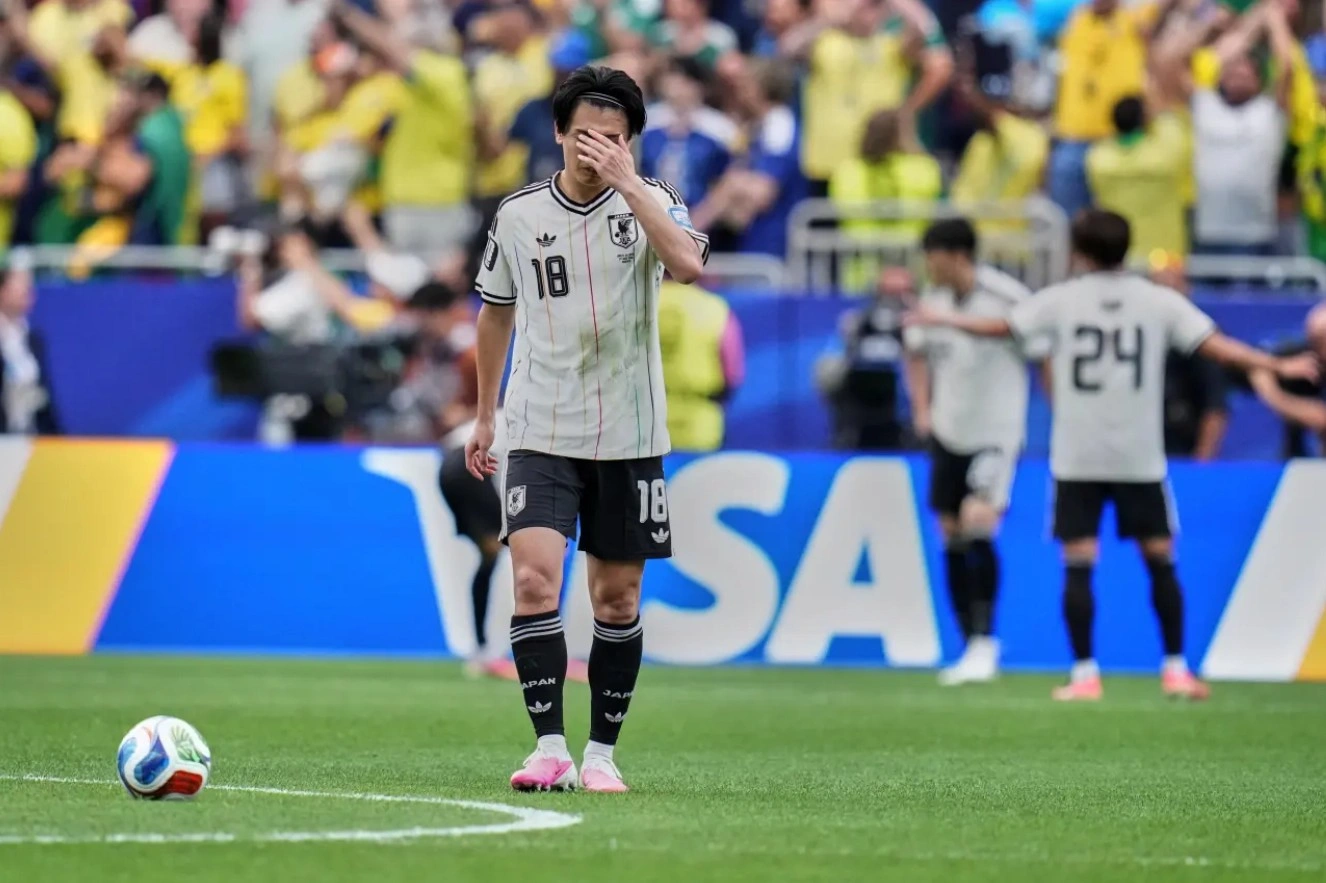
Iran, ranked 21 in the world by FIFA, is however not Asia’s biggest hope. That is Japan. The Samurai Blue have appeared at every World Cup since 1998 but never progressed past the Round of 16. Their ambitions have grown. ‘I don't think it's an easy task to win the World Cup but I'm confident that we can win no matter who we face,’ head coach Hajime Moriyasu said in March. The Samurai Blue are increasingly seen as dark horses. A come-from-behind 3-2 win against Brazil in October and a 1-0 victory over England at Wembley made headlines around the world.
 Japan celebrate qualification for the 2026 World Cup, with rising hopes that the Samurai Blue can challenge football’s global elite on the biggest stage. Photo: Reuters
The problem is that the goalscorer from the latter game, the team’s biggest star Kaoru Mitoma, picked up a hamstring injury while in English Premier League action for Brighton & Hove Albion in May and is going to miss the tournament, as is AS Monaco attacker Takumi Minamino. Captain and Liverpool midfielder Wataru Endo is battling to return to fitness for the opening game against the Netherlands as is Dutch-based defender Takehiro Tomiyasu. Even with Japan’s strength in depth, the possible absence of four major stars means that a surprise win is unlikely though the minimum target set of playing in the quarter-final is still possible.

Only two Asian nations have made the last eight before. North Korea did so in 1966, after famously defeating Italy. South Korea did the same in 2002 on their way to the semi-final on home soil. Few expect that to happen in the country’s 11th successive appearance, a streak bettered only by Brazil, Argentina, Germany and Spain. This is despite famous stars such as Son Heung-min, who recently left the English Premier League after ten years in the English Premier League to play in the United States and Lee Kang-in of Paris Saint-Germain and Bayern Munich’s Kim Min-jae. That old rival Japan has become clearly superior in recent years has just added to the general air of gloom on the peninsula. It didn’t help that a few days after losing 5-0 to Brazil in Seoul in October, Japan beat the South Americans and then in March, as the Samurai Blue became the first Asian team to beat England, Korea lost 4-0 to the Ivory Coast.
Australia reached the last 16 last time and the Socceroos, without stars, but with spirit and mental fortitude, are in an open group with the United States, Paraguay and Turkey. Then there is debutant Uzbekistan, the first representative from Central Asia. After years of missing out at the last minute and gaining a reputation as the continent’s serial underachievers, the White Wolves are flying the flag for their region, overlooked on and off the football pitch.
 Despite global stars like Son Heung-min, South Korea face growing pressure to match past World Cup achievements. Photo: Reuters
The rest of Asia’s hopefuls are from the Middle East: Saudi Arabia, Iraq, Qatar and Jordan. That quartet has few names familiar to fans outside the region but there is an advantage. The hot and humid conditions may be a problem for some European teams but those in the Arab world should be able to handle it just fine. It should be a bonus too for Koreans and Japanese who have brutal summers.
Whether this will be a tough summer for Asian teams remains to be seen. There has been a lot of controversy around this particular World Cup in terms of politics, immigration rhetoric, security and also prices but there are nine chances for the tournament to be well-remembered in Asia.