Gay Asians of both genders were later than Americans and Europeans to campaign for LGBTQ+ rights. Now they lead forceful movements in several Asian countries. Rayeesa Daulah reports.When Asian American actor BD Wong won a Tony Award for his 1988 Broadway debut as a gender-bending Chinese spy in gay playwright David Henry Hwang’s M Butterfly, no one imagined that Wong was actually gay.
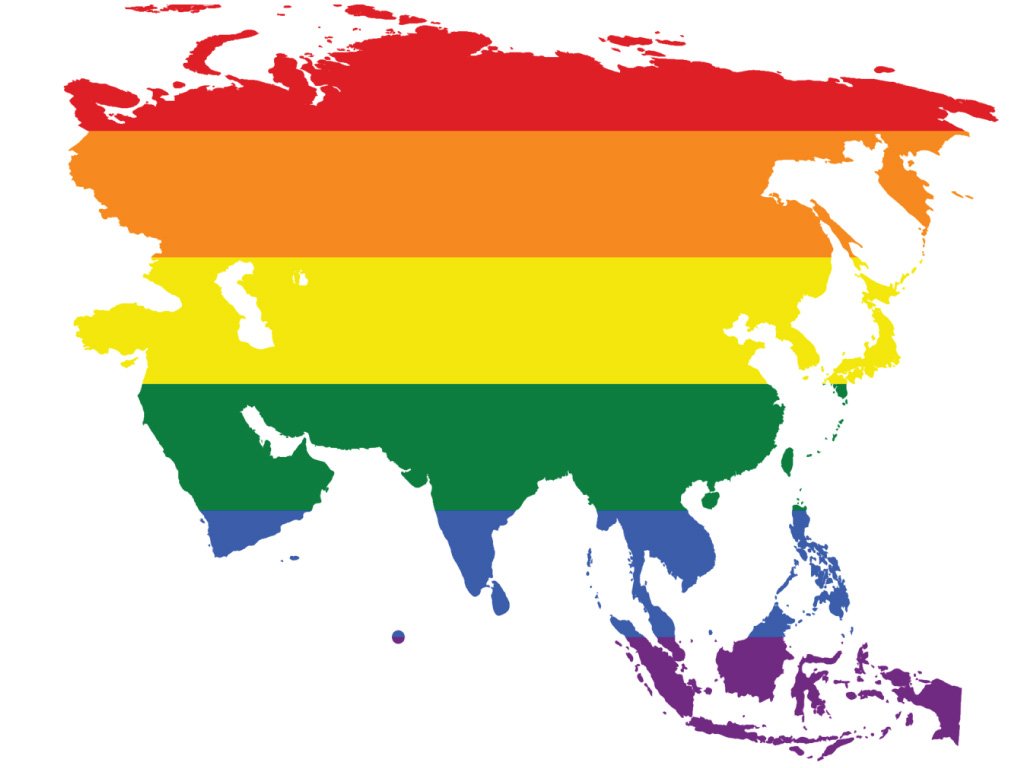
Gay Asians of both genders were later than Americans and Europeans to campaign for LGBTQ+ rights. Now they lead forceful movements in several Asian countries. Rayeesa Daulah reports.
When Asian American actor BD Wong won a Tony Award for his 1988 Broadway debut as a gender-bending Chinese spy in gay playwright David Henry Hwang’s M Butterfly, no one imagined that Wong was actually gay.
Back then, LGBTQ+ rights movements were barely unfolding in Asia. The continent witnessed its first ‘Pride Parade’ in Manila in 1994. The world was still recovering from Tom Hanks’s portrayal in Oscar-winning movie Philadelphia as a white lawyer fighting discrimination for being gay and HIV-infected.
It took Wong 30 years of ‘hiding in the closet’ to come out as gay in 2018, while starring as the openly gay Dr. George Huang in NBC’s Law and Order TV series. Wong later explained that gay characters were often portrayed as negative: “It made me not want to be those things,” Wong said: “This is a kind of denial that a lot of ethnic kids, specifically I think Asian American kids have, where they avoid the issue of the truth of them.”

At the other end of the ‘coming out’ spectrum is openly gay Asian Canadian Saturday Night Live celebrity Owen Yang, who was affectionately bracketed as “acting too much gay on the show” by actress Cher just last December. Wong and Yang represent extremes of the ‘risks and rewards’ narratives of divulging sexual orientation by Asians in the West.

Being openly gay liberated Asian Canadian celebrity Owen Yang to win over the West. Photo: NBC
University of Washington research in 2017 combining race and sexual orientation concluded that a hypothetical gay Asian American man was perceived to be significantly more American than an Asian American whose sexual orientation wasn’t specified. Sympathy was stronger for those whose ethnic roots were in Asian countries that have discriminatory legislation against LGBTQ+ people as compared to those that do not, such as Japan and South Korea.
Across the Atlantic, a post-empire Britain already grappling with cultural and racial integration challenges, has seen deeper pitfalls towards its Asian LGBTQ+ diaspora. In BBC's 2019 Big British Asian Summer it was found that being gay or lesbian in Britain’s stigmatised Asian community was considered unacceptable to the extent that a high number of youngsters have been forced into heterosexual marriages out of a fear of social castigation, or have caused a family split in order to marry a same-sex partner.

Being LGBTQ+ in Asia and the Pacific Project. Photo: UNDP Living in the closet
So how does Asian LGBTQ+ love and identity operate in Asia, the world’s largest continent? The picture is not pretty.
In an age when Western celebrities from Elton John to Ellen DeGeneres and Gen Z Zoomers shape global conversations about freedom of sexual orientation and gender identity, Asia remains perhaps the least LGBTQ+ friendly continent. Asian governments that signed up to the UN Sustainable Development Goals and campaign for LGBTQ+ inclusion remain the last bastions of faith and cultural orthodoxy on sexual orientation.
Three decades after the Manila Pride Parade of 1994, Asia’s LGBTQ+ community is far from securing legal or social protection from discrimination, harassment and violence. From the cautious reforms of Japan, cultural censorship in China to the death penalty in Saudi Arabia, the patchwork of laws, religious edicts and social hostility continues to push millions of LGBTQ+ Asians into the closet – even where legal penalties are absent.
Japan, Asia’s only G-7 nation, removed all criminal bans on same-sex relations and is inching towards limited partnership recognition, yet social conservatism keeps gay citizens closeted.
China, on the other hand, illustrates how tight state control over media and public discourse results in censorship despite formal legislation existing. Taiwan’s legalisation of same-sex marriage in 2019 doesn’t count on UN data as it is not recognised as a sovereign state by most UN member states.
Thailand’s historic same-sex marriage equality law offers a rare example for Asia, but social stigma and limits on transgender legal recognition persist across all classes.

A gay pride parade in Bangkok. Photo: AP/Sakchai Lalit
In Malaysia, religious laws, state crackdowns and online harassment fuel a ‘stay in the closet’ regime while Singapore’s much praised repeal of the infamous section 377A law that criminalised acts of gross indecency between men, coexists with restrictive public policies and political statements against open “promotion”.
The South Asian story is shaped by colonial legacies, religion and recent court battles. Yet, paradoxically, Nepal, the world’s only Hindu state, set an extraordinary example in making landmark legal advances in South Asia such as the 2007 Supreme Court ruling and the 2015 constitutional guarantee of equality for its LGBTQ+, even though family rejection, workplace harassment, and physical violence continue.
India’s 2018 decriminalisation law could not overcome family and workplace discrimination or social stigma and ‘coming out’ still means fear of losing marriage prospects or family support for gay people. The silver lining lies in the host of vibrant Indian LGBTQ+ celebrities from its haute couture fashion industry to Bollywood, including film-maker Karan Johar, openly gay designers Manish Malhotra and Rohit Bal, all being vocal activists, and making the difference in emboldening Indian LGBTQ+ rights, visibility and acceptance.

“Pride in India should mean a moment of celebration, a moment to let people know that we exist, that we have the right to live and love with equality, dignity and respect, without being subjected to stigma and discrimination”. Openly gay ‘royal’ HRH Manvendra Singh Gohil speaking on the Oprah Winfrey Show.
Contrarily, Muslim-majority Pakistan retains sodomy laws despite transgender recognition while Bangladesh recognises a third gender and has expanded transgender rights but retains section 377A.
In parts of Central Asia, such as in Uzbekistan and Turkmenistan there is acceptance of LGBTQ+ communities but no legal framework exists for protection of their rights and freedoms. While nearly two-thirds of UN member states have decriminalised same-sex relationships, those that continue to criminalise them are mostly Asian, African and Arab nations.
Millions of openly LGBTQ+ people around the world celebrated love on Valentine’s Day last month, though in Asia celebrating love takes place in the shadows with fear, shame, and anything but pride. In a world rife with far-rightism, racism and neo-imperialism, Asian governments, faith leaders and civil society must choose whether to cling to old fears and phobias towards gay people, furthering xenophobia, discrimination and social persecution, or to uplift them to equality, dignity, freedoms and inclusion by decriminalising and protecting same-sex relationships. By challenging discriminatory laws and stigma, Asians can bring their LGBTQ+ brethren out of the shadows so they too can love in safety and pride.