Jafar Panâhi is an Iranian film-maker and actor whose films have frequently been banned or censored in the country and who has been imprisoned twice for ‘propaganda against the Islamic Republic’. Even under legal restriction, Panâhi continued to make films without permission, sometimes produced
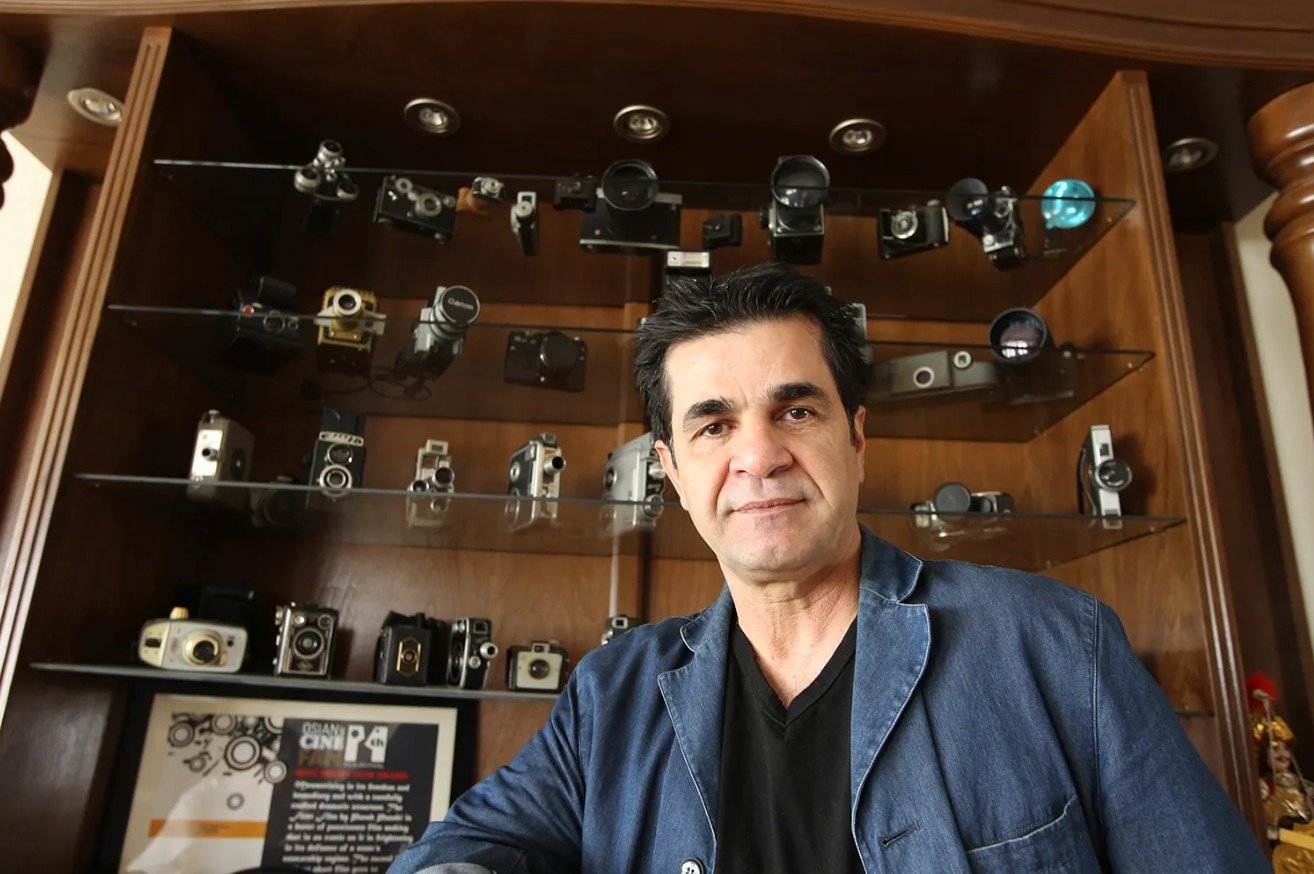
Iranian director Jafar Panâhi, whose films often explore censorship, morality and everyday life in Iran, returns with the darkly comic thriller It Was Just an Accident. Photo: AFP
When Iranian director Jafar Panâhi’s prison interrogator asked him ‘Why do you make these kinds of films?’ he explained that his movies were based on what he was going through ‘so what I was experiencing at that very moment would inevitably appear in a film, in some form or another.’
He reflected on that experience in Taxi Driver, which reveals more about life in Tehran than shelves of academic tomes. Banned from film-making, he made a film called This Is Not A Film.
After a second spell in jail he said ‘I felt compelled to make a film for the people I’d met behind bars. I owed them that film. Even though I’m speaking from personal experience, it aligns with what was happening in Iranian society more broadly – especially with
The Woman, Life, Freedom revolution that began in the Fall of 2022. A great deal has changed during that period.’

In Panâhi’s film, a mechanic named Vahid believes he has encountered the interrogator who once tortured him, setting off a tense moral dilemma.
The will-he/won’t-he hero of the film Panâhi felt compelled to make, It Was Just an Accident, is a garage mechanic, Vahid, who by chance encounters his former torturer, Eghbal. Or almost certainly is his former torturer. Probably his former torturer. Perhaps.
Vahid wants to kill Eghbal. But even if Eghbal has been correctly identified as the torturer, is his murder moral, or would the act reduce the victim to the level of the perpetrator of state violence?

Panâhi’s earlier film Taxi portrayed everyday life in Tehran through conversations inside a taxi, filmed despite a ban on his directing.
The mystery that marks the opening minutes turns to mordant humour and surreal circumstances, as the vacillating Vahid (with Eghbal tied and gagged in the back of his van) gathers up a motley collection of fellow ex-detainees — a headscarf-free wedding photographer, a couple about to be married, the bride-to-be’s former partner — who argue over what action to take. Madcap scenes and arguments give way to a final fevered, dramatic confrontation about personal motivation, morality, justice and human weakness, with Eghbal’s life hanging in the balance as, tied to a tree, the interrogator is in turn interrogated.
A final twist leaves the viewer dangling, and chewing over its meaning. It’s fittingly open-ended because 66-year-old Panâhi is unwaveringly humane, his characters not black or white but complex beings, part good, part bad, part middling along. The twist is telling, too, because it’s a sound, and the earlier absurdist attempts to identify the torturer are based on sound, smell and touch imprinted on the blindfolded victims’ consciousness during interrogations. (‘The fact of never seeing the face of your interrogator is everyone’s experience,’ Panâhi has said.)
He also said in an interview with AwardsWatch that ‘Vengeance and forgiveness are only the façade of the film. They’re only on the surface to keep the plot moving.’

Mahsa Amini protests also known as the Woman, Life, Freedom movement that erupted in Iran in 2022 form part of the social background to Panahi’s reflections on justice, violence and resistance. Photo: Reuters
‘What mattered to me in the film was a fundamental question, and that was what is going to happen in the future? Is the cycle of violence going to continue or is it going to come to an end at some point? And anyway, what is it that’s going to happen in our future?’ An attack by the United States and Israel turned out to be the answer.
He was looking ahead when he told an interviewer that he wanted to make a film about war — not the war that erupted in February 2026, but war in general.

Tehran, where Panâhi continues to live and film despite restrictions imposed by Iranian authorities.
I have an intense dislike of generalisations about countries and people, which are little more than stereotypes and can shift more swiftly than is generally realised. But I am tempted to hint at the link between the film's arresting changes of note (thriller, black comedy, moral tale?) and the quiet irony, humour and tolerance of many Iranians, and certainly of Panâhi himself.
The film’s synopsis says simply: ‘What begins as a minor accident sets in motion a series of escalating consequences.’ That’s like saying the Mona Lisa is a picture of a woman. From that single sentence description, Panâhi has spun a wonderfully entertaining, intellectually fascinating film that further reinforces the intriguing ability of a coterie of Iranian directors to manoeuvre around state intolerance to produce world-class cinema. As Soviet-era Eastern Europe showed, totalitarian rules can spark film-makers to use their wits, creativity and culture to forge gems from the crushing weight of narrow-minded mediocrity.

While promoting his film abroad, Panâhi told Jon Stewart that he intended to return to Iran, where his family and colleagues live. Photo: The Daily Show
Panâhi lives and films in Iran, where his family resides, but has been out of the country for a few months to help promote It Was Just an Accident. What he would face on returning home when the US and Israel attacks stop is unclear, because the shape of the next government is equally unclear. Asked on the Jon Stewart US TV show where he would go next, he replied: ‘Iran. It’s my country … My son, my mother, brothers, my sisters, my colleagues, everyone is there. When half of you is there, then how could half of you be out?’