Iran has been under an internet blackout since the war began at the end of February. This follows an earlier 21-day blackout in January during the nationwide uprising against the Islamic Republic. Together, the two shutdowns mean Iranians have been cut off from the global internet for roughly 72 per cent of the year so far. As Nazenin Ansari reports, this suggests that the core conflict in Iran may not be between Tehran and foreign adversaries, but between the Islamic Republic and Iranian society itself.
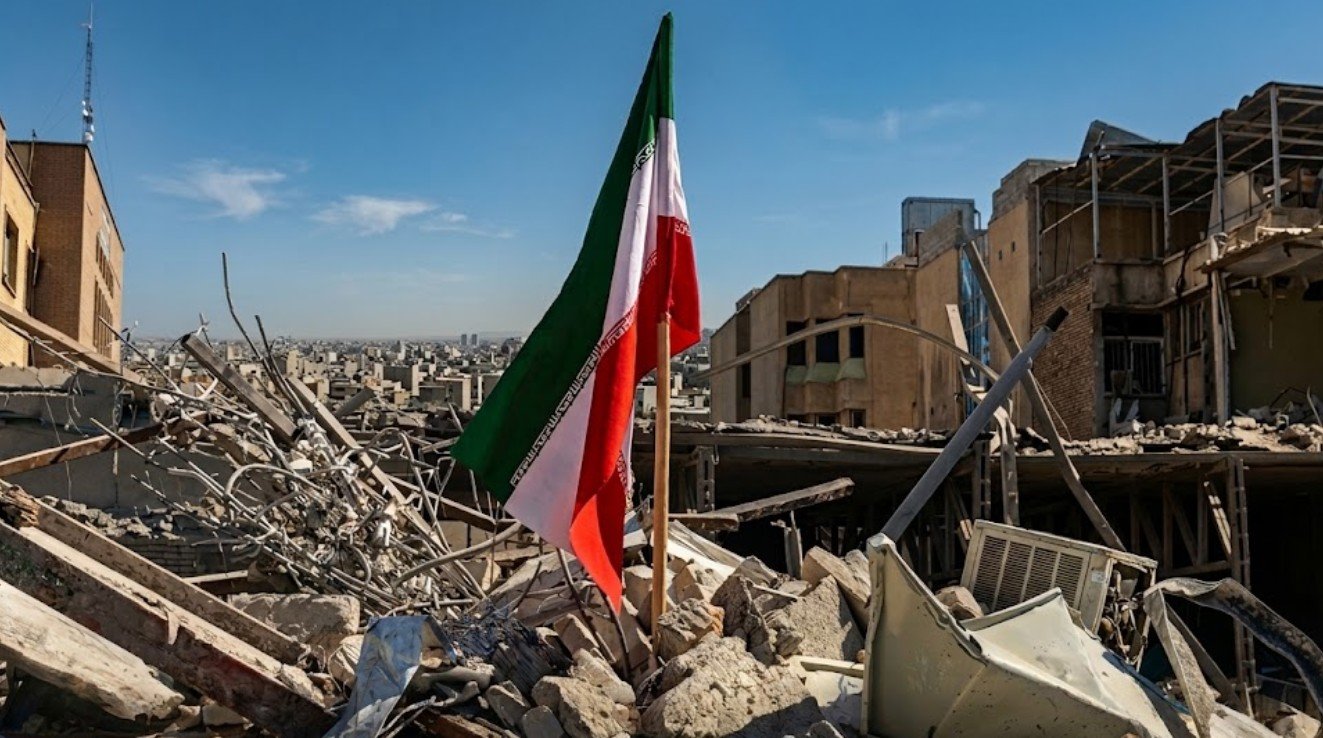
Iran’s prolonged internet blackout has deepened isolation, fear and uncertainty as authorities attempt to contain unrest and control information.
The state's internet blackouts, mass repression, and militarisation of public life are widely seen as signs not of strength, but of a state struggling with legitimacy and governing through fear. The January uprising, dubbed the Sun and Lion Revolution, erupted in key business hubs and quickly spread across the country. In response, state militia and their proxies pursued unarmed protesters with military-grade weapons and snipers. They removed the wounded and the dead from the streets, homes and hospitals. Families had to pay large sums to retrieve bodies; some still have not been able to locate their loved ones. This has been described by some observers as mass killing followed by an attempt to erase evidence of its scale.
Despite the blackout, a network of Iranian doctors and medical staff inside and outside the country produced one of the most detailed early casualty estimates. Led by Professor Amir Mobarez-Parasta, the team used information from hospitals and emergency centres in Iran, along with hospital data and statistical modelling from comparable conflict zones.
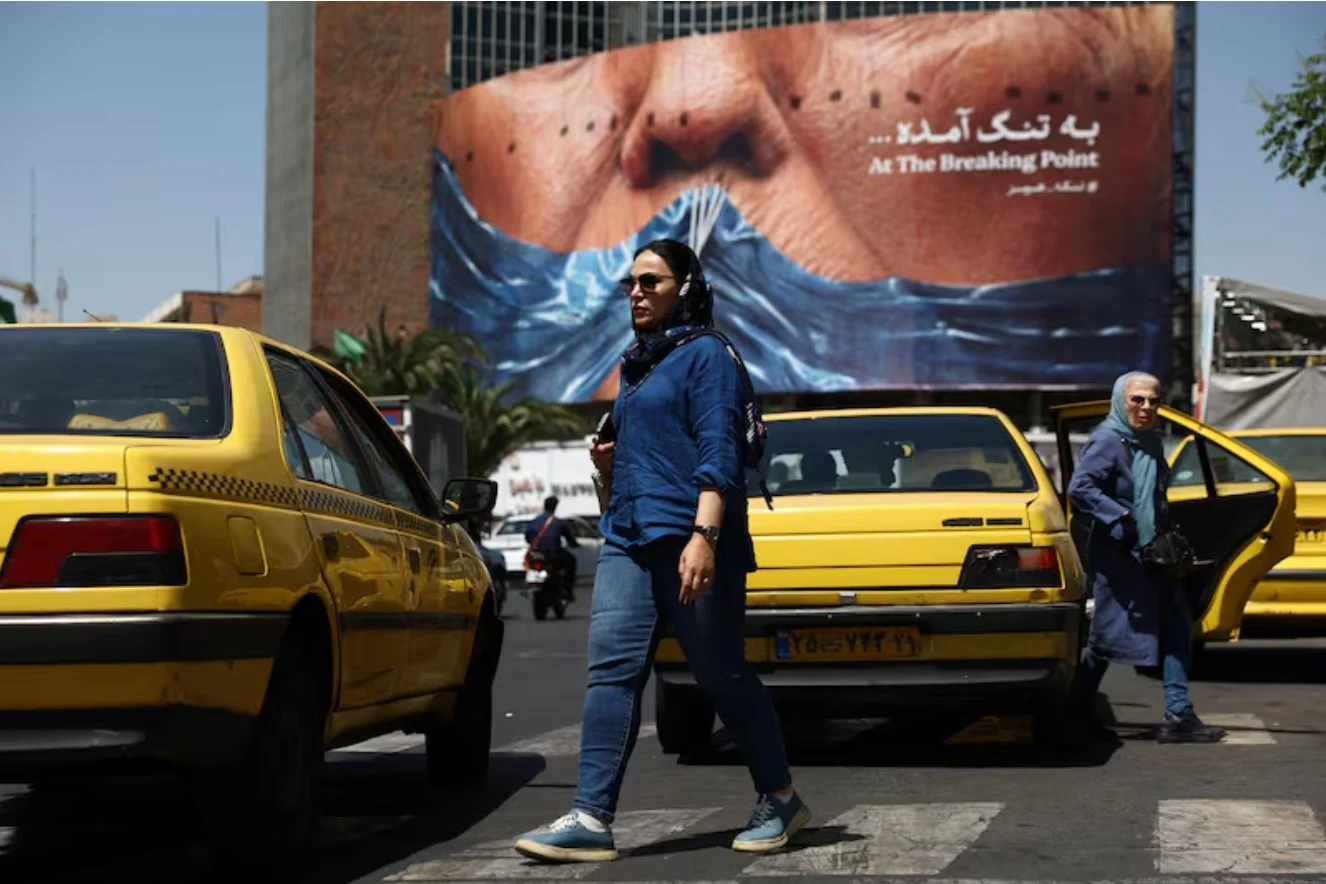
 A poster in Tehran, featuring Mr Trump's face, suggests the failure of the President of the United States in the Strait of Hormuz
According to their report, between 16,500 and 18,000 people had been killed by January 16, warning that the death toll could be far higher as many bodies and wounded protesters never reached hospitals or were removed before registration. Mobarez-Parasta suggested the possible death toll could be closer to 60,000. The researchers also estimated 200,000 to 360,000 wounded, many untreated or hiding at home for fear of arrest.
The scale of the reported killing has drawn comparisons to some of the darkest episodes of modern mass violence. Payam Akhavan, a former prosecutor at the International Criminal Tribunal, described the January crackdown as unprecedented even by the Islamic Republic’s own bloodstained record. In Srebrenica, about 8,000 Bosnian Muslims were massacred in July 1995. By comparison, Akhavan argued, at least twice that number were killed in Iran in half the time.
He described it as a state assault on unarmed young people demanding a better future. He called the official death toll a ‘gross underestimate’, noting that authorities had first claimed 5,000 deaths before reducing the figure to 3,000. “We may not know the exact number because of the internet blackout,” he said, “but by any plausible estimate, this is the worst mass murder in the contemporary history of Iran.’
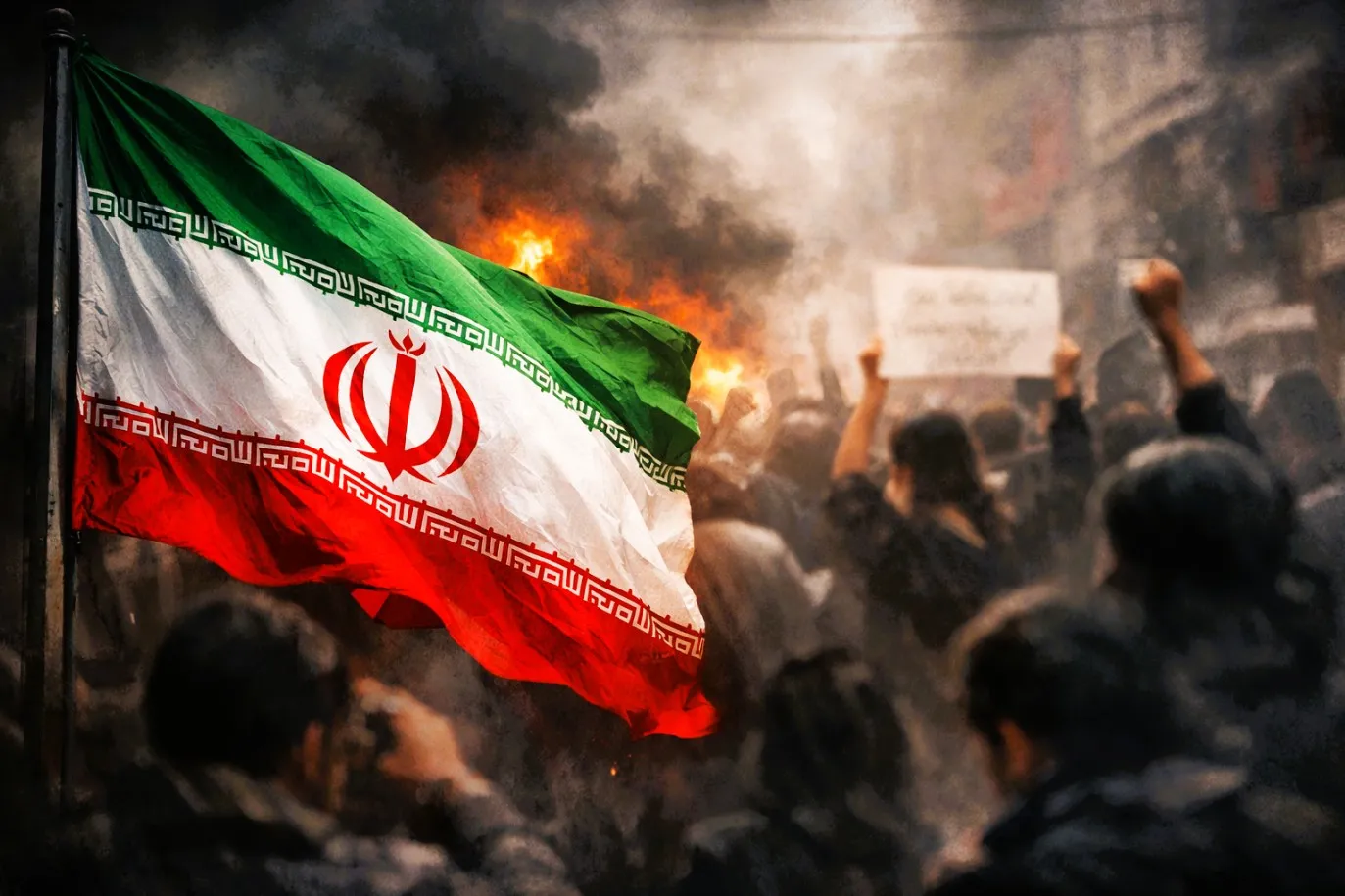
 Protesters gather during the Sun and Lion Revolution, a nationwide uprising that transformed public mourning and economic anger into one of the most direct challenges to the Islamic Republic in decades. Photo: Reuters
What made those days arresting was the scale of the violence and where the protests erupted: in areas once seen as regime strongholds. In Karaj’s Mesbah district, west of Tehran, home to religious families, government officials and figures tied to the theocracy’s ideological apparatus. Similar scenes unfolded in an affluent Isfahan suburb near an IRGC base. Crowds gathered with startling speed, chanting: ‘Long live the Shah.’
On the fortieth-day memorials for those killed, mourning turned into resistance. Families sang and danced, and students protested on campuses, chanting ‘Death to the dictator’, ‘Woman, life, freedom’, and ‘This is the final battle—Pahlavi will return.’ They burned the Islamic Republic’s flag and raised Iran’s pre-revolutionary Sun and Lion flag.
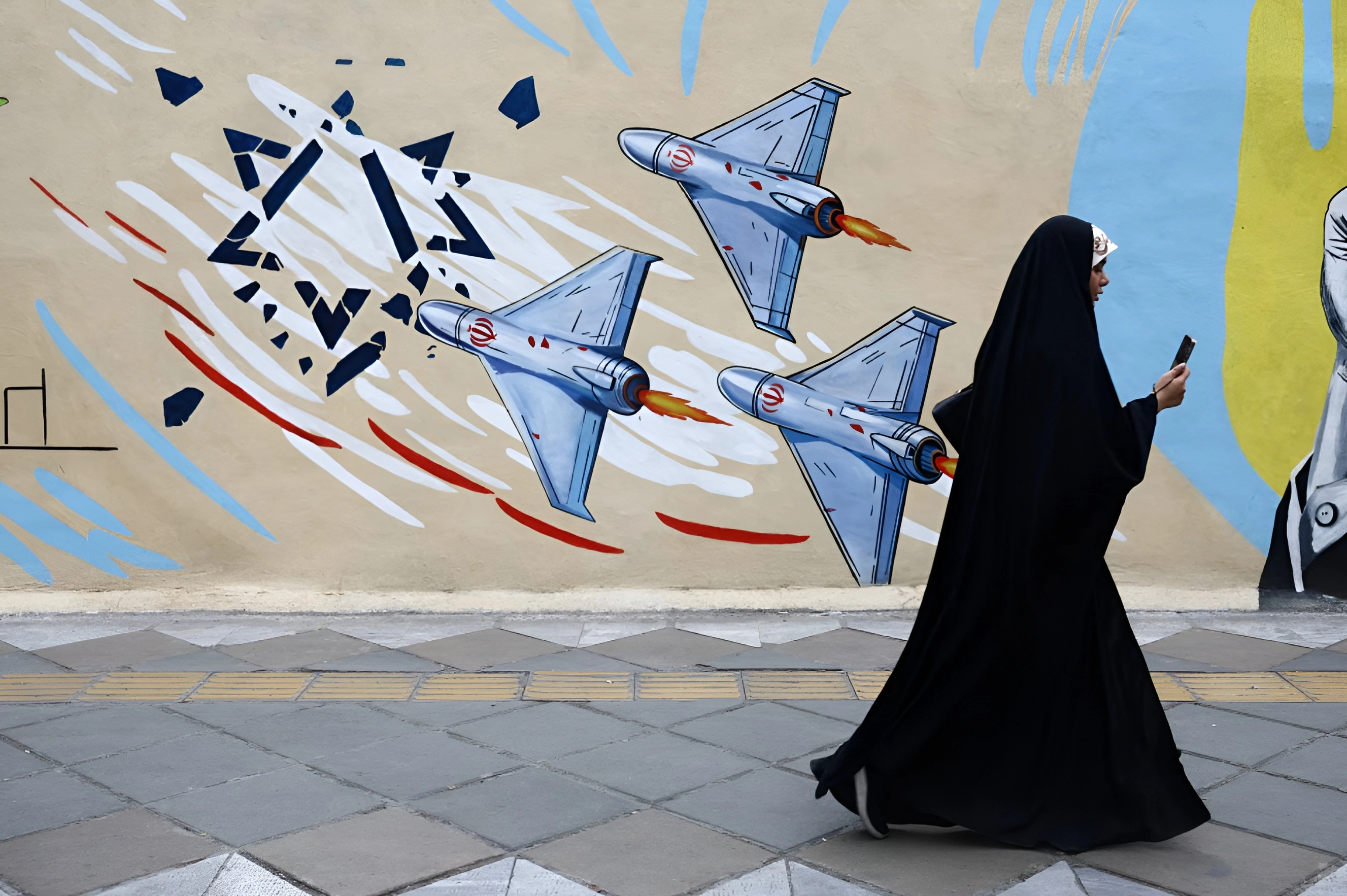
The regime’s actions helped produce this open defiance. For decades, the Islamic Republic channelled national resources not into public welfare, civilian protection or economic renewal, but into militarisation and asymmetric warfare. Instead of building a prosperous country above ground, it invested heavily in military infrastructure below it. It also funded proxy forces across the Middle East and beyond. Amir Ali Hajizadeh, the commander of the IRGC Aerospace Force, who was killed in an Israeli airstrike in June 2025, once boasted that unveiling one underground missile city a week would take more than two years.
Since the US-Israeli strikes, not a day has passed without reports of arrests and executions. At the same time, members of Iraq’s Popular Mobilisation Forces, Hezbollah, Turkish Shia contingents, and Afghan Fatemiyoun fighters have entered or been mobilised inside the country to shield the regime from the Iranian people.
 Iranian police guard a pro-government rally in Tehran as the Islamic Republic attempts to project control and unity amid deepening unrest, internet blackouts and growing public anger. Photo: Reuters
The regime has also turned to staged mobilisation dressed up as national unity. Its ‘Jan-Fada’ or ‘self-sacrifice’ campaign was launched as proof of public readiness to confront the ‘American-Zionist enemy’ and defend ‘Islamic Iran’. State media claimed more than 30 million people had registered, but a website flaw reportedly exposed user IDs suggesting fewer than 4 million actual registrants.
Pro-regime rallies and convoys are also being staged across Iran to project staying power. Tehran municipality alone has boasted of ‘120 large rallies, 400 local gatherings and 400 vehicular convoys’. Participants reportedly are paid for chanting in the streets. Citizens receive text messages advertising performances and free food. Unveiled or partially veiled women are shown singing praise for Basij, and drinking alcohol is celebrated onstage.
This is the crux of the legitimacy crisis: the Islamic Republic now depends on its last loyal constituency, the religious hard-line base, but its staged gatherings trample the values that bind that base together. The war and its aftermath have exposed a fracture inside the ruling establishment over what must be preserved: the Islamic Republic’s ideological core – enforcing Islamic values, anti-Western struggle and the destruction of Israel – or merely its institutional shell, so long as the security apparatus and ruling networks survive. Pragmatists believe the system can endure with a diluted ideology. But the apocalyptic camp appears dominant, seeing war as deterrence and betting that the United States and Europe lack the will to support regime change.
 Pro-government supporters gather in Tehran as the Islamic Republic stages rallies to project strength and national unity amid widening unrest, internet blackouts and a deepening legitimacy crisis. Photo: VCG
The Islamic Republic appears increasingly unable to defend a coherent doctrine and may be weaker today than at any point in its recent history. Its blackouts, executions and displays of unity indicate fear of a society that, despite repression, continues to seek change. The blackout may hide resistance but has not ended it.