The Iran war may be drawing to a close but with no clear conclusion, let alone any clear winner. The initial focus by the US and Israel on the country’s political leadership and its nuclear fuel has shifted towards control of the Strait of Hormuz. Beyond the combatants themselves, non-oil producing nations in Asia who get most of their fuel from the Gulf have been the main losers, as Nicholas Nugent reports.
Tehran under threat during US–Israel strikes, a war with no clear victor but mounting regional consequences. Photo: Reuters
In early April the leader of a 250-year-old nation threatened a 2,500-year-old civilisation that he would ‘bring them back to the stone ages’. Days later he warned that ‘a whole civilisation will die tonight’ adding ‘I don't want that to happen, but it probably will’. Such threats would have sounded ridiculous if they had not been made by an angry leader of the world’s most powerful country.
 Ruins of Persepolis, symbolising Iran’s 2,500-year-old civilisation invoked in wartime rhetoric. Photo: Blondinrikard Fröberg/Creative Commons Attribution
Neither threat was carried out, but they illustrate how a vicious war that started on 28 February had by April become a war of words, threats and blackmail, though not before a great many deaths and much destruction on the ground. A related war has been taking place between Israel and Lebanon, to which the government of Lebanon is not a party.
Far from the onset of a third world war, as some predicted, the mood in late April favoured ‘jaw jaw’ rather than ‘war war’ – talking rather than fighting – to coin an expression attributed to Britain’s wartime leader, Winston Churchill. Yet the threats continued with President Trump writing that if Iran did not take the deal he was offering the United States ‘is going to knock out every single Power Plant, and every single bridge, in Iran’.

Donald Trump announces US–Israeli strikes on Iran on 28 February 2026, marking the start of a conflict that has since yielded no clear winner. Photo: Reuters
President Trump has been obsessed with humbling Iran since his first term of office when he took the US out of the Joint Comprehensive Plan of Action. The JCPOA was negotiated between Iran and the five permanent members of the UN Security Council – the US, UK, France, Russia and China – along with Germany, to limit Iran’s nuclear enrichment programme in return for the lifting of economic sanctions. It was signed in Vienna in July 2015, when Barack Obama was US president.
The JCPOA was endorsed by the UN Security Council, making it a tenet of international law, and approved by Iran’s parliament in October 2015 with 161 votes in favour, 59 against, and 13 abstentions. The US Congress failed to endorse the deal amid strong opposition, but it came into effect with the US government calling it a ‘non-binding political commitment’ which did not need congressional approval. Nuclear-related sanctions were lifted by the UN, the EU and the US in January 2016.
In May 2018 President Trump (who began his first term in January 2017) withdrew the United States from the JCPOA and reimposed ‘the highest level’ of economic sanctions. War between the US and Iran has been building since that time. It was quiescent during Joe Biden’s presidency despite reports that Iran had exceeded the uranium enrichment levels agreed under the JCPOA, but was a preoccupation of Donald Trump when he came back to power fifteen months ago. It seemed like a rash decision when he ended talks and, hand-in-hand with Israel, launched strikes on Tehran on 28 February.
Now the signs are that he wants to wind the war down despite not achieving either of his supposed aims: to force Iran to surrender its stockpile of enriched uranium, ostensibly the casus belli of the war, or to bring about ‘regime change’.
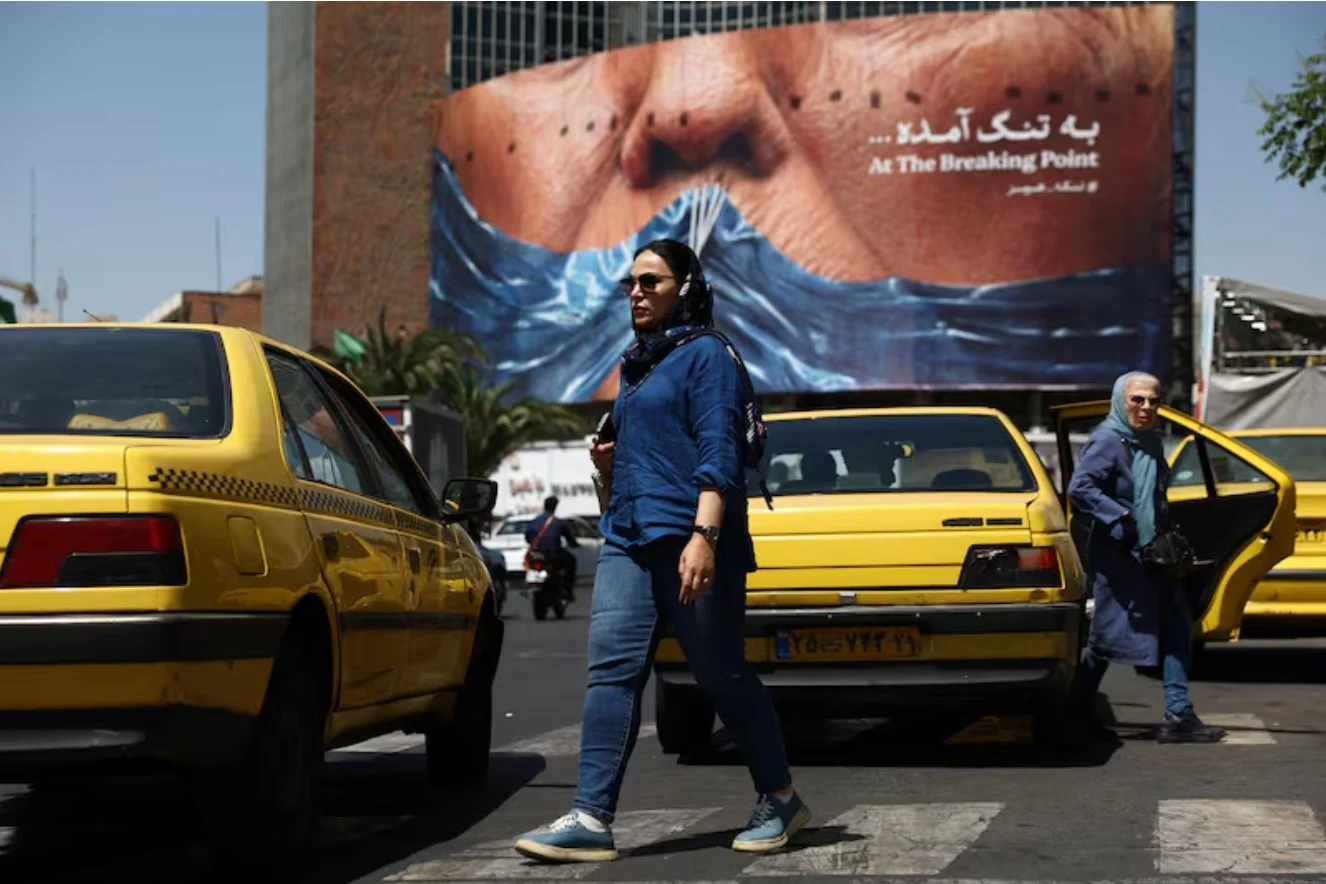
 An Iranian defiance poster reproduced in an international newspaper reflects how the conflict is being framed beyond the battlefield.
After seven weeks of fighting, no side has won or seems likely to win. Iran saw its Supreme Leader and many other senior leaders killed, yet the government of the Islamic Republic remains operational with no signs of surrender. An estimated 3,500 people have been killed, mostly civilians including a significant number of children. The US claims to have sunk or disabled the country’s entire naval force and to have ‘taken control’ of Iranian air space but appears not to have inflicted much damage on the more significant Islamic Revolutionary Guard Corps (IRGC). Iran’s infrastructure has been damaged but its ability to produce and export huge volumes of oil and related products remains intact.
At least 1,500 have been killed in Lebanon since Israel launched intensive bombardment of Beirut and the south of the country aimed, it said, at eliminating Hezbollah, a fighting force allied to the Iranian government. Many Lebanese people have been rendered homeless by the bombing.

In Lebanon, Israeli bombardment has killed over 1,500 people and displaced large numbers of civilians, particularly in Beirut and the south, as fighting against Hezbollah intensifies. Photo: Reuters
Israel itself has come under fire from both Hezbollah and Iran and suffered an undisclosed number of civilian casualties, showing the limitations of its ‘iron dome’ defence system designed to bring down missiles heading for populated areas. The United States has admitted to the deaths of 13 members of its armed forces and lost a number of aircraft – at an air base in Saudi Arabia, over Kuwait and Iraq and in Iran itself. In most cases the pilots were rescued.
So, has anybody won?
Clearly the US and Israel have suffered less severely than Iran or Lebanon, though if economic cost were brought into the equation both countries have spent many millions of dollars fighting the war that they started. What is hard to see is what they have gained. Iran retains its enriched uranium – despite claims that it was ‘destroyed’ by US and Israeli action in the Twelve-Day War last June. The war has resulted in disruption to free passage through the Strait of Hormuz.
The war has raised tension between the US and its European allies in NATO, who have refused to become involved in ‘Trump’s war’. Several have banned US military aircraft from overflying their territory. Arab Gulf states Kuwait, Bahrain, Qatar, United Arab Emirates, Oman as well as Saudi Arabia, have themselves suffered damage from Iranian strikes, which will have undermined their confidence in the US – or indeed the UK – defending them, though some of their leaders, uneasy about Iran’s power, are urging the US to ‘finish the job’. All have suffered damage to their oil and gas exporting ability and thus their economies.
Domestically, President Trump is suffering a backlash even from traditional supporters, with television commentator Tucker Carlson, a Trump supporter, claiming the President has become a slave to the Israeli prime minister, Benjamin Netanyahu, who has visited Washington six times since Donald Trump returned to office. The high price of petrol is likely to cause an anti-Trump backlash at US mid-term elections in November.
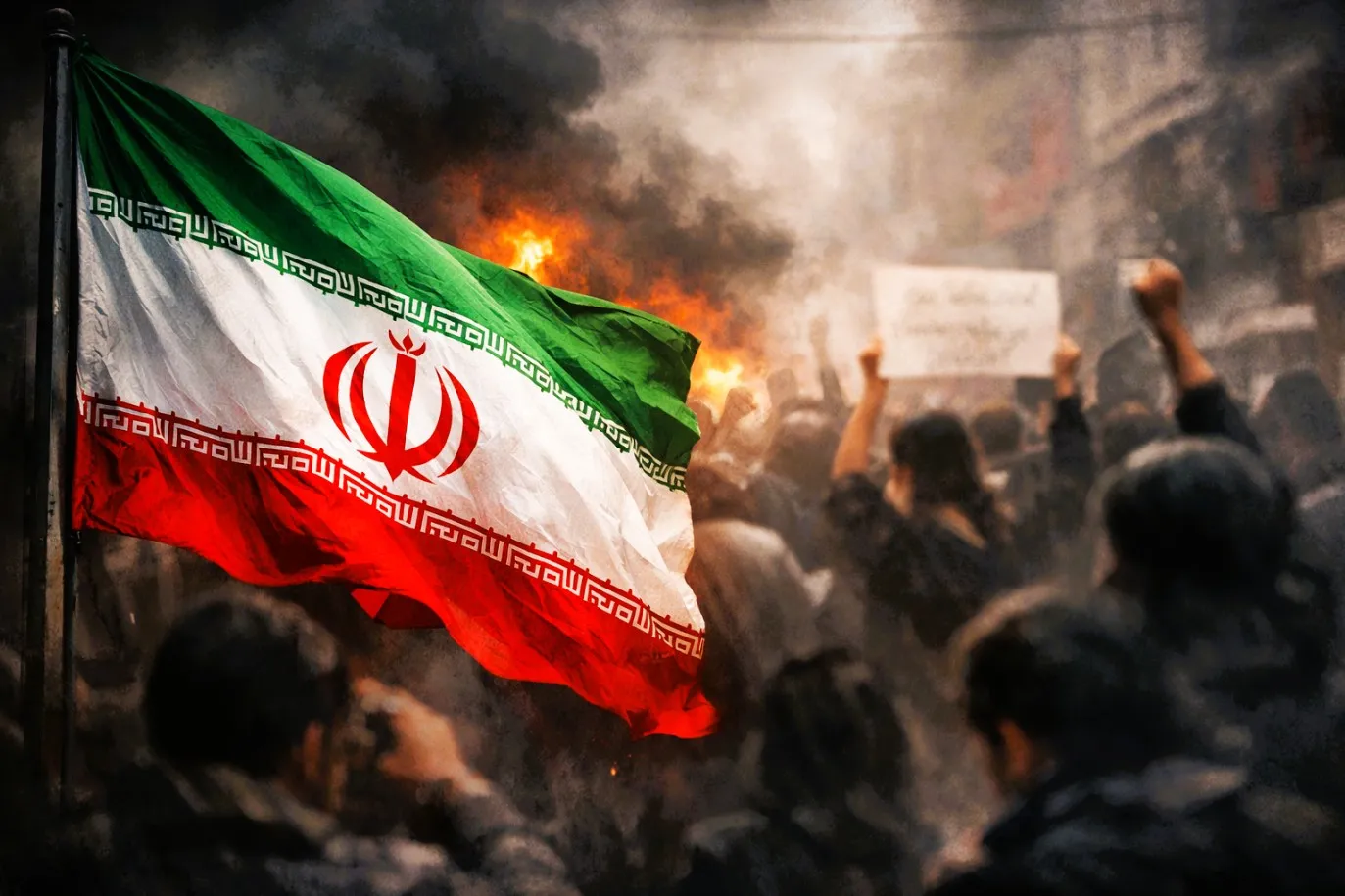
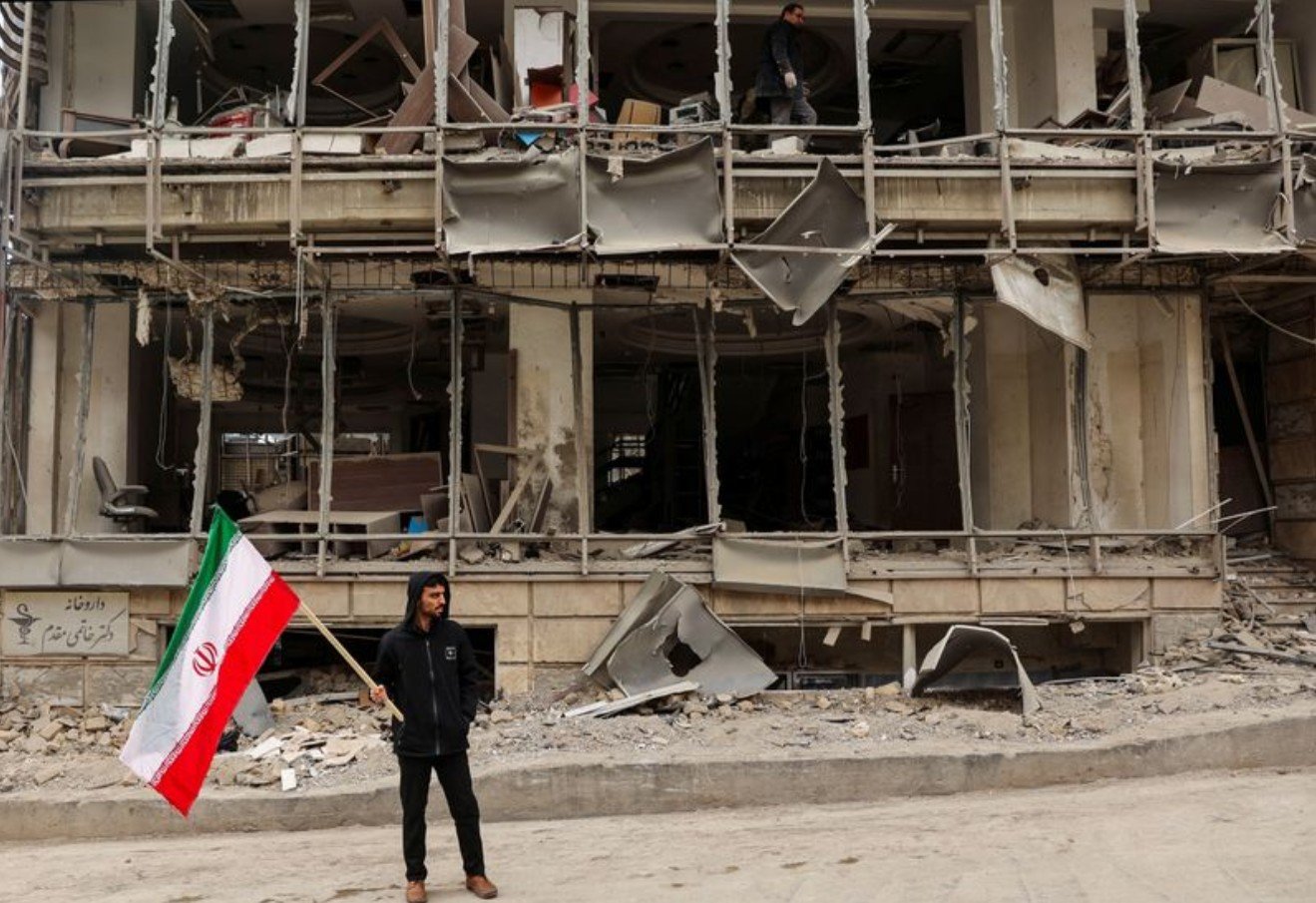
 Civilian areas in Iran bear the brunt of the conflict, with widespread destruction and rising casualties. Photo: Reuters
Apart from the combative nations the greatest impact has been felt by Asian nations who import most of their fuel, fertiliser and related products from the Gulf. Japan and South Korea are understood to have many days stockpiles of fuel, delaying the pain of raised fuel prices. Island nations like Sri Lanka, Taiwan and the Philippines, landlocked Nepal, Bhutan and Laos and even countries with ports like Pakistan, Myanmar and Thailand are severely affected by shortages and resulting rationing. There is expected to be a significant loss of remittances sent home by the millions of Asian workers in the Gulf states many of whom risk losing their jobs. The longer the strait remains closed the deeper will be the economic cost.
There are no winners from this latest Gulf conflict and the world seems a less safe place.