A major problem facing Myanmar’s military leader Min Aung Hlaing, now rebranded as the country’s civilian-style president, is to take control of the myriad ‘scam centres’ - illegal operations that run online fraud schemes such as phishing, fake investments and scam romances. Despite efforts by the country’s army, Myanmar’s scam economy has not been dismantled but is instead dispersing, adapting, and embedding itself more deeply across conflict-hit borderlands, as Nyein Chan Aye reports.
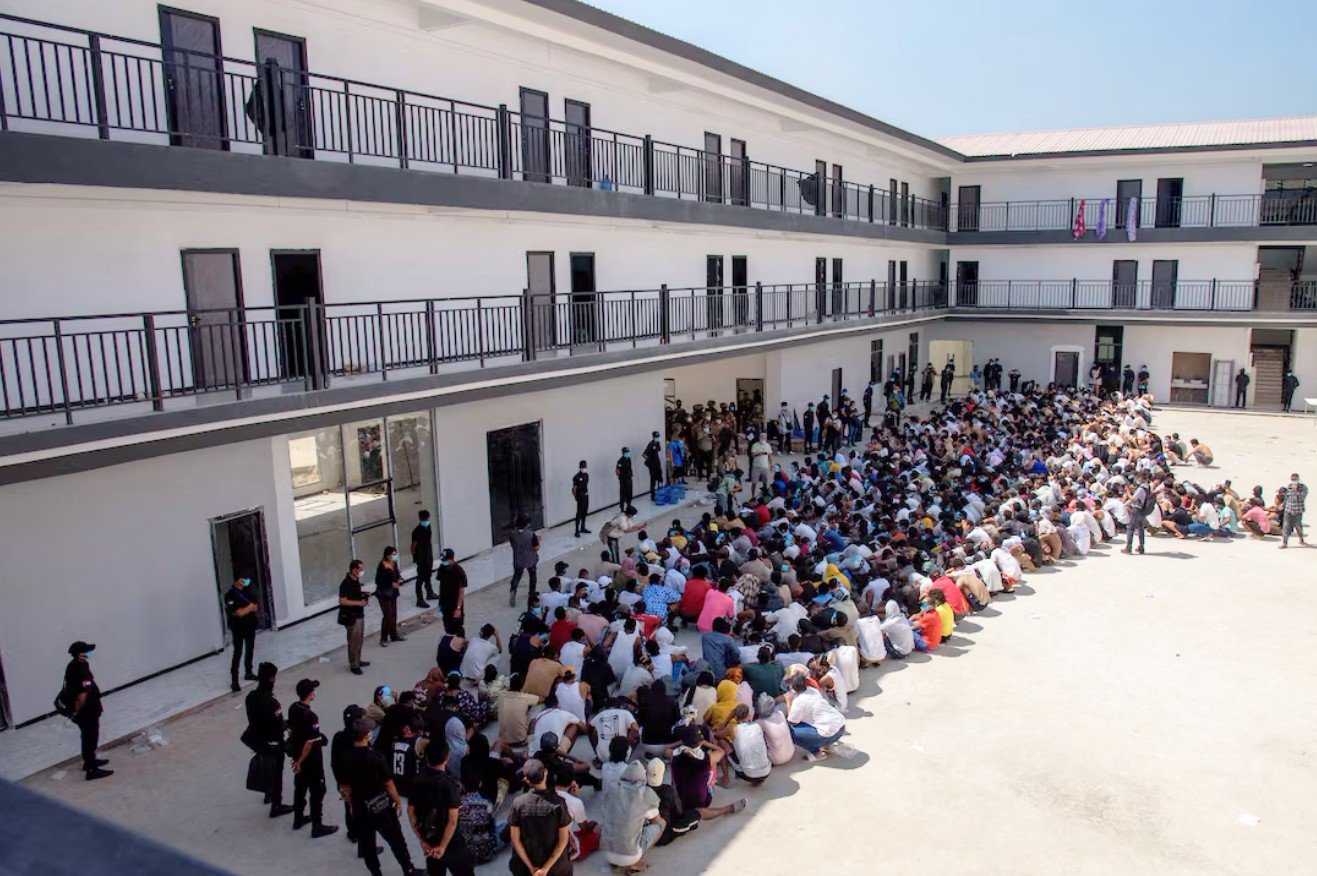
Victims of trafficking remain trapped inside KK Park on the Myanmar–Thailand border, where scam compounds persist as part of a sprawling, protected network of criminal operations. Photo: Reuters
When Myanmar’s army dynamited the buildings in the notorious KK Park compound on the Thai-Myanmar border late last year, the operation looked to international observers like a breakthrough. Workers fled and buildings were damaged. The regime claimed a major crackdown. But on the ground, the wider scam economy barely stopped.
The persistence of scam operations is a reality for Min Aung Hlaing, the general who seized power in Myanmar’s 2021 coup and recast himself as president in April after tightly controlled elections in December and January. One of the first tests of his new administration is whether it can dismantle scam networks protected by local militias closely aligned with the regime, rather than simply staging crackdowns for show.

The demolition of the KK Park complex was presented as a major crackdown, but the broader scam economy quickly adapted and dispersed across the region. Photo: The Global New Light of Myanmar
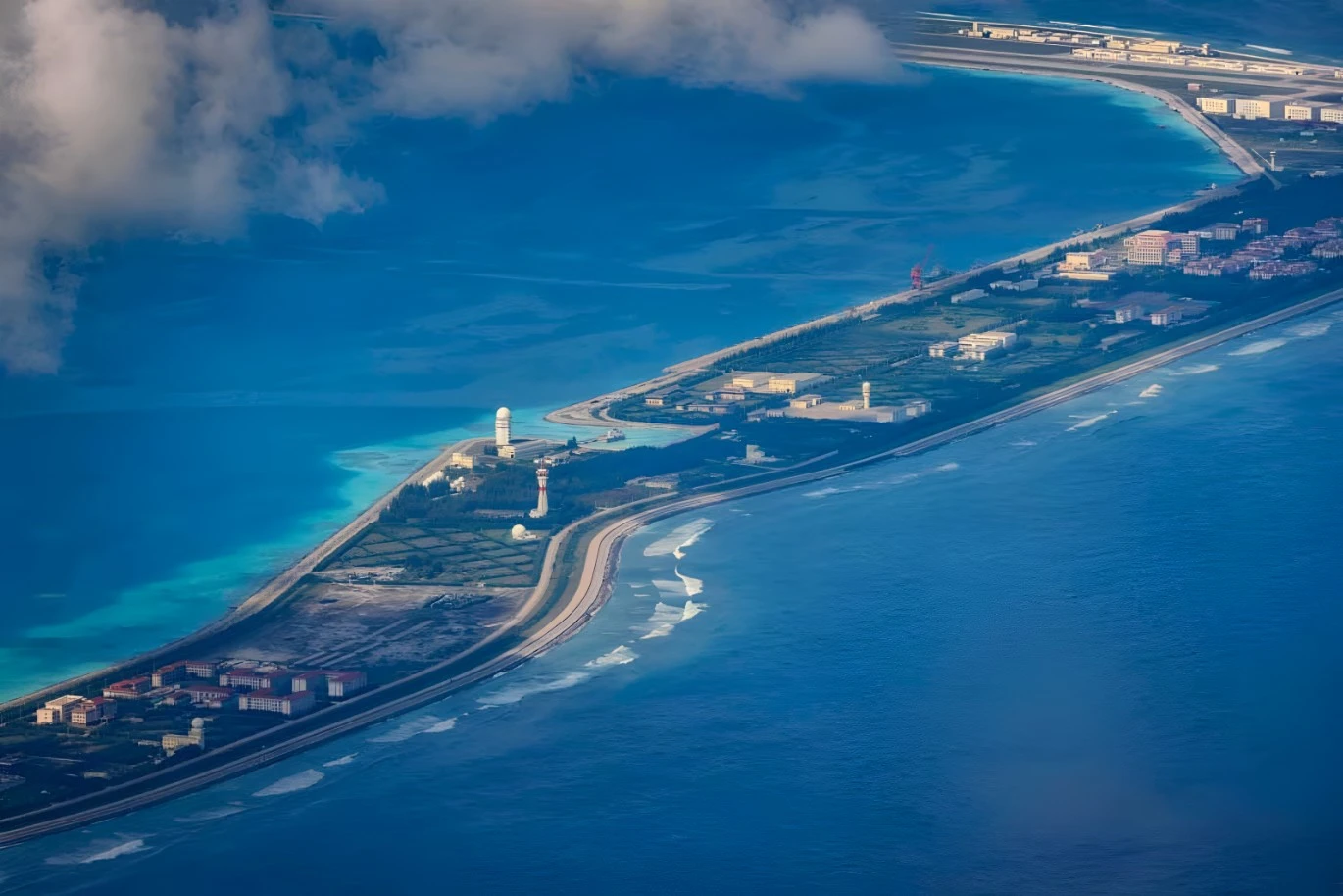
The Myawaddy region, in Karen State in southeastern Myanmar, sits across the border from western Thailand’s Mae Sot. It is not simply a border town. It is part of a conflict-affected belt where militias, traffickers, criminal brokers, business fronts, and state-linked actors overlap. Even when raids happen, the underlying power structures and illicit activity often remain largely unchanged.
Why did the raids not work?
A March report from the Global Initiative against Transnational Organized Crime (GI-TOC) notes that scam centres are not a single model, but a highly adaptable phenomenon: large compounds, small offices, houses, and dispersed nodes form the same criminal ecosystem. Local sources confirm this trend. Aung Min, a businessman near the Myawaddy–Thai border, said the KK Park clearance scattered many workers from China, India, Vietnam, Malaysia, and Africa who then spread across the region. ‘Scamming isn't limited to big buildings; it now operates on smaller scales,’ he said.
 Soldiers stand next to Starlink satellite internet devices as they seize KK Park online scam center in Myawaddy township, Karen State, Myanmar. Photo: The Myanmar Military True News Information Team/AP
A recent visitor to the Three Pagodas Pass area, another border crossing between Karen State and Thailand, described persistent activity. ‘These businesses are still going on,’ he said speaking anonymously for his safety. He noted that many Chinese were present and that Starlink devices – a vital resource for online scams – were visibly in use, with armed escorts. Officials from the DKBA, a Karen armed group in the area, denied that new scam-related facilities are being built, claiming Chinese-backed projects are tied to local industry. But residents disputed this, saying Chinese-built sites are heavily guarded and hard to access.
This persistent cycle helps explain why headline crackdowns haven’t worked. According to GI-TOC’s mapping, scam centres are easily replicated and relocated, and are often embedded in broader networks. As a result, shutting down a single site rarely undermines the underlying business model. Jason Tower, senior expert at GI-TOC, was blunt. Myanmar military actions on the Thai border since October 2025, he said, were ‘largely performative’ and failed to disrupt China-linked scams. The military focused on publicized actions, like attacking selected compounds and destroying equipment. ‘Scam syndicates simply moved elsewhere.’
Since November, Tower said, over a dozen new scam compounds have emerged in Karen State, often in remote areas 5–10 kilometres from the border. Others have appeared further inland, including in places under more direct military control. Large compounds remain active along the Thai border, but some operations have expanded into clandestine sites. ‘The scam syndicates have over 50 compounds along the border,’ he said, ‘and dozens of secret locations to move to during raids.’
Who really runs these operations?
GI-TOC’s latest mapping shows that many large Southeast Asian scam operations are run by China-linked criminal networks that collaborate with local elites and groups. Local armed actors and political patrons protect them. In Myawaddy, the US Treasury has named the Karen National Army (KNA) – formerly the Border Guard Force under Saw Chit Thu – as a central enabler of cyber scams, human trafficking, and smuggling.
 Local militias and armed groups play a central role in protecting scam operations, highlighting the deep entanglement between organized crime and conflict actors. Photo: Reuters
Tower was more direct: ‘Transnational organized crime groups from China run the scam centres,’ he said. They build facilities, set up management, provide technology, manage laundering, and organize recruitment. But in Myanmar, they work with the KNA/BGF, the DKBA, and corrupt elements in the state. That distinction matters. These militias are not neutral; they are longtime allies of the Myanmar military and part of the armed structure the junta relies on to control Karen State and form part of a key trade route to Thailand. Saw Chit Thu even received an honorary title from Min Aung Hlaing in 2023, showing that one of the area’s most prominent scam-linked militia leaders was not an outsider, but a decorated ally.
This local dependence helps explain why even international and regional pressure, especially from China, has limits. Hunter Marston, an adjunct fellow with the Center for Strategic and International Studies’ Southeast Asia programme, told me that Chinese pressure remains ‘probably the number one factor’ behind regional crackdowns. He also sees Beijing’s priorities broadening. Now that Min Aung Hlaing acts as if he has a popular mandate to govern, Marston said, what matters most to him is not only security but also economic recovery.
‘I think what will serve his political interests and legacy is restarting and growing the country’s economy,’ Marston said. Min Aung Hlaing, he argued, needs economic success to justify the coup, and ‘needs China for that’. Scam centres still matter, but as part of a larger calculation: if they badly damage Myanmar’s image or if ‘China is breathing down your neck’ the regime will be forced to act.
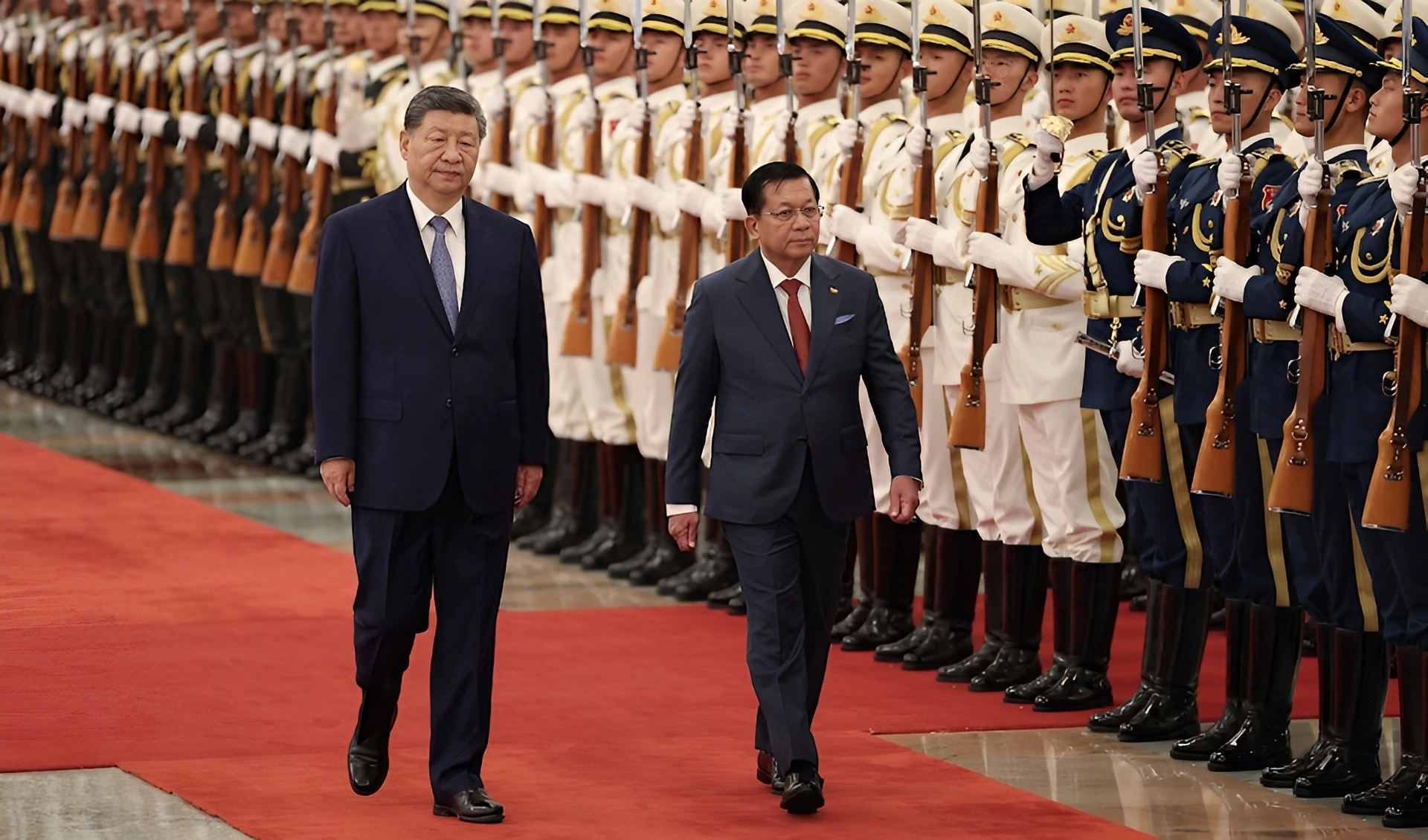
 Min Aung Hlaing faces mounting pressure to curb scam networks while balancing economic recovery, political legitimacy, and reliance on key allies such as China. Photo: Reuters/File Photo
A similar pattern is now visible in Cambodia where, as Marston notes, Chinese pressure has helped drive a tougher response, while Tower argues recent high-profile extraditions and legal changes show action can come when the political cost becomes too high. Yet, Tower is sceptical in the context of Myanmar. He believes the new regime may keep using scam crackdowns as a bargaining chip—performative actions for legitimacy and recognition that avoid underlying business issues. As he put it, ‘The scam centre problem in Myanmar will not be resolved until the current crisis in the country is resolved’. He added that the junta’s controversial election and its civilian-style transition ‘does absolutely nothing to advance change.’