Rare-earths appear to be a mining story. In reality, seventeen obscure elements in the periodic table, known as rare-earths, sit at the centre of global industrial rivalry. Technologies ranging from electric vehicles and wind turbines to fighter jets and semiconductor lithography machines are critically dependent on them, as Sham Banerji reports.
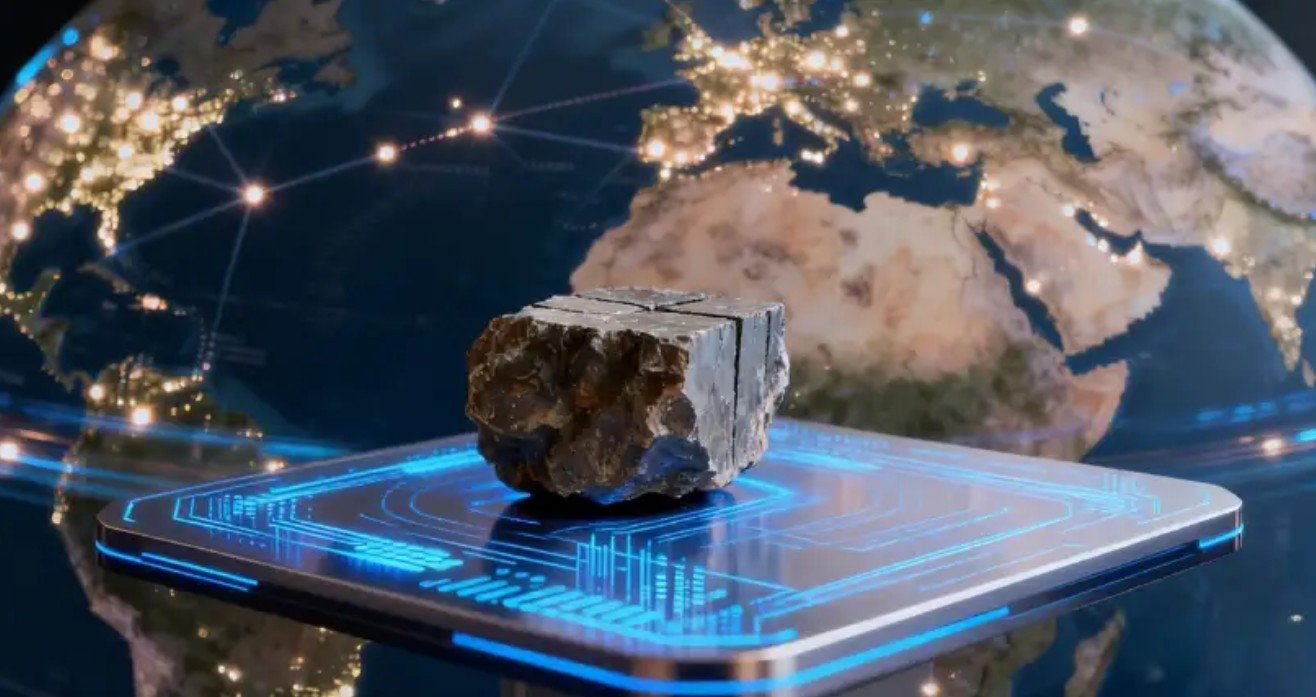
At the 2025 G7 summit in Canada, Ursula von der Leyen, President of the European Commission, held up a rare-earth magnet made in Estonia by a Canadian company using Australian raw materials. The gesture not only captured Europe’s push to build new supply chains, but also illustrated how the rare-earth debate has shrunk to the size of a magnet.
China’s strategic leverage lies in the factories that turn neodymium (Nd) into powerful permanent magnets. Other important uses of rare-earth elements or REEs include as catalysts, ceramics and glass, metallurgical alloys, batteries and polishing materials. According to the US Geological Survey, China supplies over 90% of the world’s processed rare-earths and rare-earth magnets, making them the main chokepoint in trade negotiations. A single F-35 fighter jet contains more than 400 kilograms of rare-earth materials, mostly in permanent-magnet systems such as radar and actuators. It is really a story about magnets.
The attraction of magnets
Ordinary iron magnets are useful, but far too weak and unstable. Precision manufacturing for advanced technologies requires magnets that are small, powerful and able to work reliably at temperatures of 150–200°C. That requirement is met by Nd–Fe–B magnets. Made from neodymium, iron and boron, they are the strongest permanent magnets known, making them vital for the green economy and advanced defence systems. 
They are also critical in semiconductor manufacturing. An extreme ultraviolet (EUV) lithography machine relies on powerful magnets to drive precision linear motors and magnetically levitated platforms that position silicon wafers with precise nanometre accuracy.
In practice, the geopolitics of rare-earths revolves around just four elements: neodymium, praseodymium, dysprosium and terbium. The International Energy Agency (IEA) tracks these four elements separately because they are the ones most critical for manufacturing NdFeB magnets. Magnets weighing only a few hundred grams can determine whether industries worth billions continue to function.
Mother Lode
Bayan Obo in China is widely regarded as the largest rare earth deposit and production site in the world. While China holds roughly half of global rare-earth reserves, its real power lies further down the supply chain. China dominates rare-earth processing accounting for about 85–90% of global refining capacity. Even if they are mined elsewhere, rare-earths often need to be sent to China for the specialised chemical processes required to make them usable. Bayan Obo Rare Earth Mines in Inner Mongolia Photo: NASA Earth Observatory
America has not always trailed China in rare-earths. From 1965 to the mid-1980s, Mountain Pass mine in California was the dominant global supplier and the US was largely self-sufficient in rare-earth elements. China overtook the US in rare-earth production in the early 1990s. This was the result of decades of strategic planning, relaxed environmental regulations and a focus on the more complex downstream steps of separation, refining and magnet-making.
China wielded its rare-earth leverage as early as 2010. It cut export quotas by 40% and briefly halted shipments to Japan during a territorial dispute. It had to back down in 2015 after losing the WTO case brought by the US, the EU and Japan. The net impact was a collapse in prices that crippled other producers, causing some like America’s Molycorp to go bankrupt.
Land Mines
Amid escalating U.S. technology sanctions and tariffs, China’s Ministry of Commerce (MOFCOM) introduced new export-control rules in October 2025. Certain foreign-made products containing even 0.1% Chinese-origin controlled rare-earth content by value could require a Chinese licence. Potentially, this grants China extraterritorial control over global supply chains. The Economist notes that China’s grip on rare-earths is not primarily geological or technological; it rests on the sheer scale and efficiency of its industrial ecosystem. But it warns that ‘Xi Jinping’s weaponisation of rare-earth elements will ultimately backfire. Here’s why.
Washington is aggressively rebuilding its position. With a direct $400 million investment in MP Materials, the Department of Defence is on a path to reviving Mountain Pass as the largest rare-earth mining operation outside China. In February 2026, MP Materials announced Northlake, Texas as its new 10X rare-earth magnet manufacturing campus, backed by more than $1.25 billion in investment. The Pentagon's Department of War specifically describes its rare-earth ambition as a ‘mine-to-magnet’ supply chain, stretching from extraction and separation to magnet production.
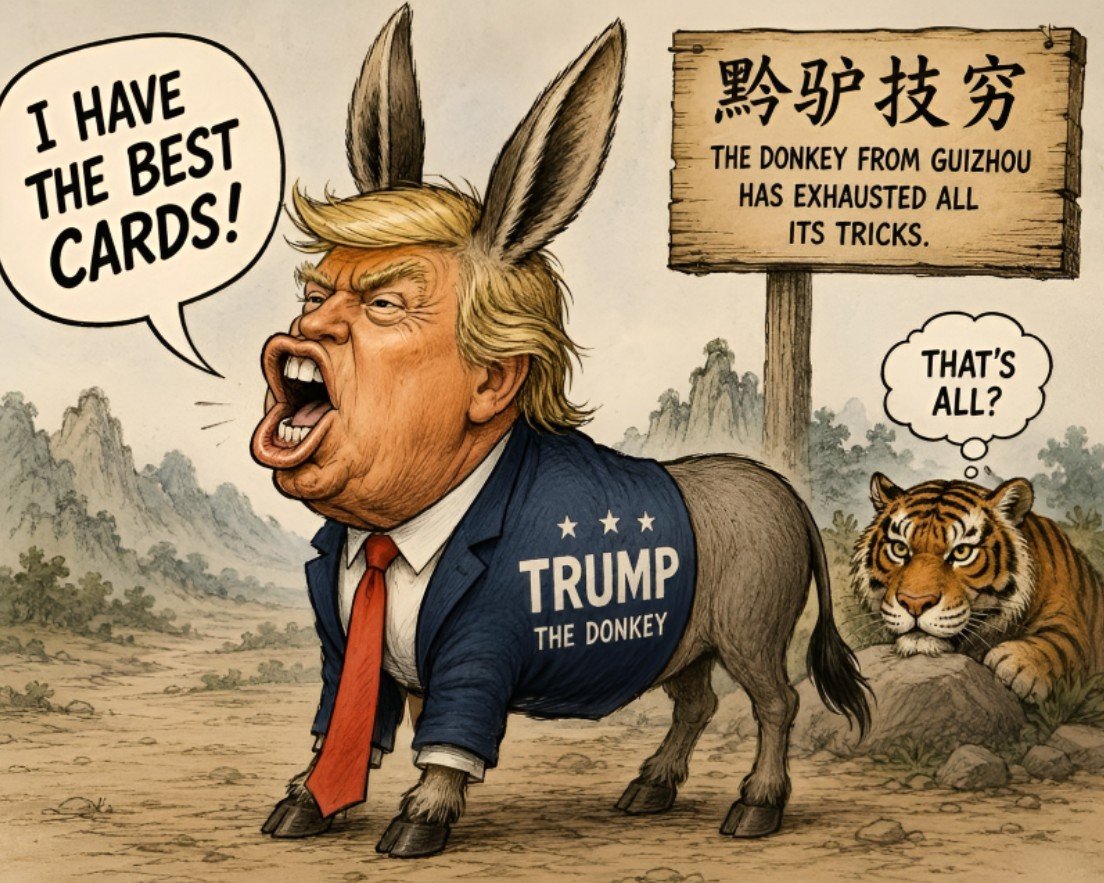
Between Beijing and Washington, the unresolved rare-earth dispute remains stuck in a state of adversarial interdependence. Magnets and chips are bound to rank high on the agenda when the two presidents meet.
The Global Dig — or Race to the Bottom
The Financial Times reports that other rare-earth customers are rushing to diversify away from Chinese suppliers, with more than 30 advanced projects expected to begin production globally within the next five years across Europe, Africa and Australia. Brazil’s Serra Verde has become a favoured rare earth hopeful, securing a $565 million US financing package in 2026, complete with an option for Washington to take a stake. 
India, meanwhile, is moving from rhetoric to state-backed industrial policy. The Indian cabinet approved an $800 million programme in 2025 to establish an integrated permanent-magnet capacity, with production expected to begin by the end of 2026. Japan marked its first import of rare-earths from Australia’s Lynas in 2025, separated and refined in Malaysia.
Still, outside China, no single country possesses all the ingredients needed to build a fully independent rare-earth supply chain on an industrial scale. The emerging strategy is clear: combine domestic investment with international partnerships, linking mines, refineries and magnet plants with alliances.
For now, the United States dominates the technology of semiconductors. But China commands the chemistry of rare-earths.
Some images in this article are AI generated