Post-war reconstruction is in the minds of Arab partners of the United States, who were collateral casualties in the hostilities between the US-Israel alliance and Iran. Indeed, Saudi Arabia, among others, pressed Washington to return to the negotiating table, as The Wall Street Journal revealed.
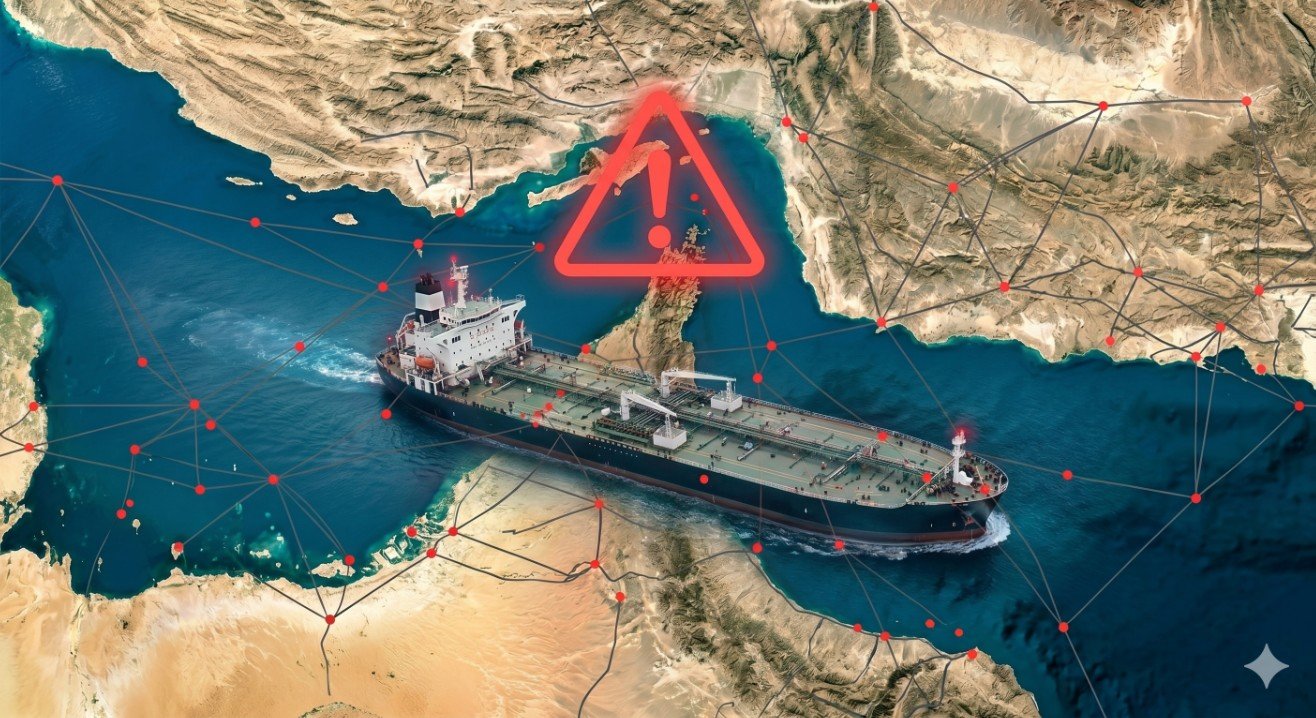
The Strait of Hormuz, the world’s most critical oil chokepoint, became the epicentre of disruption during the US–Israel war with Iran, sending shockwaves through global energy markets and regional economies. Image: AI-generated
Persian Gulf
Post-war reconstruction is in the minds of Arab partners of the United States, who were collateral casualties in the hostilities between the US-Israel alliance and Iran. Indeed, Saudi Arabia, among others, pressed Washington to return to the negotiating table, as The Wall Street Journal revealed.
‘The Arab states,’ a United Nations Development Programme report forecast, ‘could see GDP decline between 3.7 per cent and 6 per cent, equivalent to losses of up to $194bn.’
Arabian Business reported that ‘Elevated oil prices have provided some support in the near term, although lower export volumes have weighed on overall economic performance.’ It projected a contraction of 0.2 per cent in 2026 for Gulf Cooperation Council economies because of disruption in commerce, tourism and energy exports.
Saudi Arabia
The US-Israel war on Iran has had somewhat less impact on Saudi Arabia than on other states in the region. Despite that, Saudi banks were said to be vulnerable to the fallout of a prolonged warfare. Fitch Ratings warned Saudi banks’ asset quality, profitability and funding would come under pressure if the war continues.
Fitch, whose assessment covered 11 banks, described an ‘adverse scenario’. It added, ‘Higher inflation and higher-for-longer interest rates would pressure net interest margins, with increased competition for liquidity raising the cost of funding. Higher interest rates would also put pressure on borrowers, potentially lifting impairment charges and further hurting banks’ profitability.’
 Saudi Arabia has restored the East-West oil pipeline to its full operating capacity of about 7 million barrels a day, reestablishing a critical route for crude shipments to the Red Sea.
However, thanks to a pipeline to the country’s Red Sea coast, Saudi Arabia achieved oil exports at about two-thirds of pre-war levels. Besides, its economy was insulated by decent domestic demand.
United Arab Emirates
Stellantis Middle East, a car distributor, offered free short-term vehicle access to small businesses and community organisations across the UAE, as part of efforts to support local economic activity.
Arabian Business wrote that ‘Hospitality leaders from across the UAE joined together… to form a Tourism Majlis to discuss a recovery plan for the industry following the regional downturn sparked by the Iran crisis.’ The consensus reached was that the sector needs ‘to reinvent itself’.
Property development, sale of flats and houses and leasing of office space to foreign entities have for decades been a money spinner for Dubai, indeed one of the pillars of its economy. Arabian Business noted ‘Dubai’s residential property market entered a more measured phase in the first quarter of 2026, with transaction volumes falling 17 per cent from the previous quarter after three consecutive quarters of record activity.’ The trend continued in April.
Qatar
Qatar Airways, a leading international airline, posted on X: ‘Customers with a confirmed booking on Qatar Airways operated flights for travel until 15 June 2026 are eligible for complimentary date changes up to 31 October 2026…’ This underlined the uncertainty caused by the war, which compelled the concession.
 Commercial aircraft from Qatar Airways sit parked at Doha’s airport after the airline offered flexible rebooking options amid regional airspace uncertainty triggered by the Iran war.
Iranian missile strikes knocked out an estimated one-fifth of Qatar’s liquefied natural gas (LNG) production. To fill this shortfall QatarEnergy and the US company Exxon Mobil secured the Trump administration’s approval to start exporting LNG cargoes from Texas in April.
Arab Gulf Business Insight (AGBI) depicted: ‘Over a few days in early March, Qatar went from forecasts of soaring gas production and GDP growth to halted energy operations and severe economic contraction. This marked the biggest reversal of fortunes among Gulf states as the Iran war upended expectations everywhere.’
Patrick Theros, a former US ambassador to Qatar, was quoted as saying, ‘The biggest victims [in Qatar] are going to be the expatriate community, a large number of whom are going to be sent home.’
Kuwait
Kuwait was on the receiving end of counter-attacks by Iran causing considerable damage to its oil and gas infrastructure.
Kuwait faced a ‘triple whammy’, according to Li-Chen Sim, an associate fellow at the Middle East Institute. The virtual closure of the Strait of Hormuz paused Kuwait’s oil exports, insufficient storage capacity forced down production and this will delay a return to normal operations after the war; a diminution in Qatar’s gas output deprived Kuwait of its primary source of LNG.
Sim warned ‘Kuwait could face rolling blackouts since … it does not have supplies of non-associated gas that it can use domestically. No oil production basically means no gas production in Kuwait’s case.’ State-owned Kuwait Petroleum Corporation halted oil deliveries under force majeure. They may now have been spared the worst.
Bahrain
Bahrain, also a victim of Iran’s retaliation to the US-Israeli assault, moved to shield its economy from the headwinds it faced. It announced a sweeping package of loan deferrals and liquidity support of $18.6bn for the financial sector. That notwithstanding, commentary in AGBI was headlined ‘Bahrain’s finances need help from wealthier neighbours.’
The opinion piece asserted: ‘The conflict has deepened existing fiscal strains and eroded major revenue streams, leaving Bahrain increasingly reliant on external support as it struggles to stabilise its finances and rebuild. The smallest economy in the Gulf Cooperation Council entered the conflict with limited fiscal buffers and a challenging balance sheet.’
Asia’s big four economies
Asia’s biggest economy, China, sources 20 per cent of its crude import from Russia and buys most of the rest from the Gulf. The US Navy’s blockade of the Strait of Hormuz was, therefore, a potential flashpoint between Beijing and Washington. But even the unpredictable Trump would not want to sabotage his scheduled summit with Chinese President Xi Jinping in May.
Japan purchased 80 per cent of its crude requirements from the UAE and Saudi Arabia, but had a stockpile of around 250 days’ supply when the war started. Consequently, it was less anxious than other Asian nations.
 To avoid US sanctions, India has shifted suppliers. It had stopped buying crude from Iran under the Biden administration and towards the end of last year drastically cut its imports from Russia. Then, it was authorised by President Trump to resume trade relations with both. When the US Navy tried to blockade Iranian shipments, India was once again in a quandary. A 60-day buffer stock saved it but with over 65 per cent of its LNG coming from Qatar, the UAE and Oman it could not avert cooking gas shortages.
61 per cent of South Korea’s crude passed through the Strait of Hormuz. So, it switched to sourcing more from Kazakhstan and Saudi Arabia via the Red Sea. By mid-April it had secured 273 million barrels, oilprice.com recorded, which will sustain its economy for more than three months.