Nepal celebrated its new year last month (April) by welcoming a youth-led government from the Rastriya Swatantra Party (RSP), which won a near supermajority in March’s election. Kunda Dixit reports on a mood of cautious optimism among Nepalis that the new government will bring a fresh start for the country.
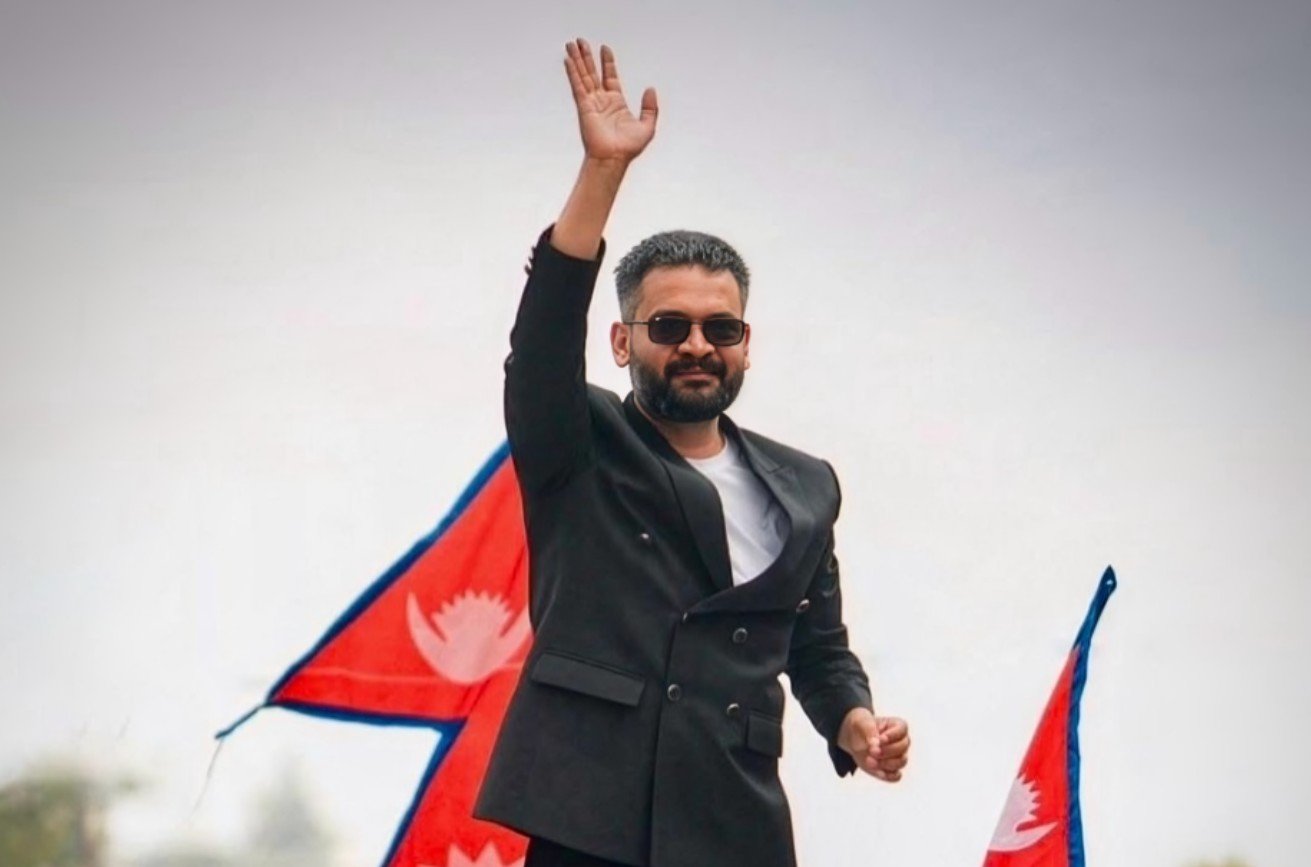
Prime Minister Balendra Shah, a symbol of Nepal’s generational political shift, leads a youth-driven government promising reform and accountability.
Nepal’s new cabinet is unusually well qualified, with ministers drawn from diverse professional backgrounds including economics, engineering, research and journalism, many holding postgraduate degrees. This is the best-educated government Nepal has ever had, and it has gotten right down to work. The first Cabinet meeting last week approved a 100-point blueprint for time-bound delivery based on better governance. It targets a 7% annual GDP growth rate, and doubling the size of Nepal’s economy to $100 billion by 2031.
 The Rastriya Swatantra Party secured a near two-thirds majority in Nepal’s Parliament, sweeping aside traditional political parties. Photo: Reuters
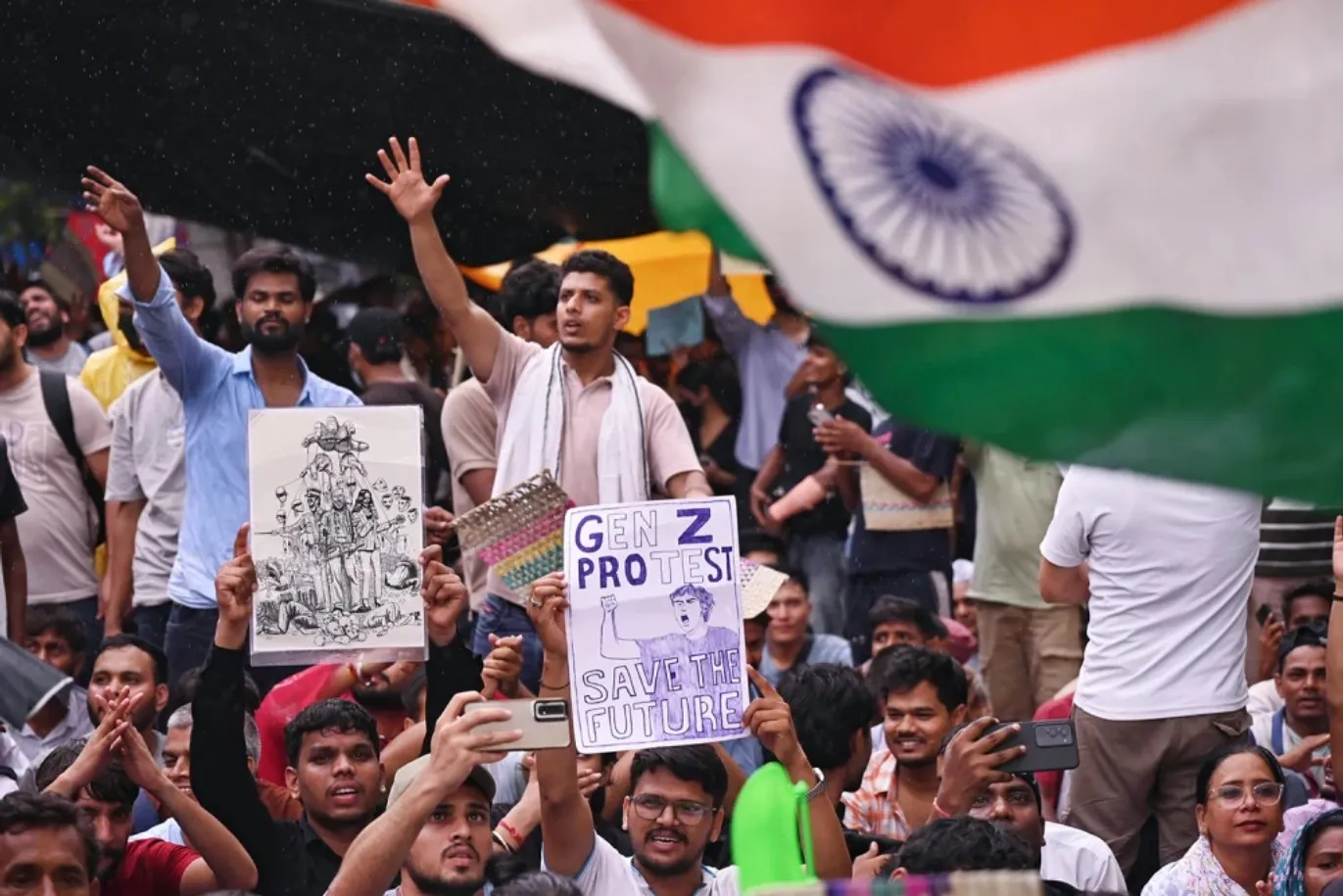
After a decade of conflict, chronic political instability, corruption and lack of accountability, Nepal sits on a mountain of problems. Anger over a lack of jobs, corruption and poor delivery fuelled the Gen Z protests last September that toppled the coalition government, paving the way for an early election.
 Youth-led protests against corruption and unemployment triggered the political upheaval that brought down the previous government. Photo: Reuters
With nearly 60% turnout, the RSP secured 182 seats in the 275-member lower house of Parliament, just two short of a two-thirds majority. The legacy parties were trounced — Marxists, Maoists and monarchists all lost badly. The electoral tsunami swept away both good and bad politicians, though the new faces will also have to prove themselves. On balance, Nepalis seem pleased the old lot was ousted.
The RSP’s ambitious blueprint must address entrenched structural problems to create jobs, boost investor confidence, and clean up the bureaucracy. That is already a formidable task, but the Balendra Shah government has plunged headlong into an economic and energy crisis caused by the Israeli-American war on Iran.
Nepal relies heavily on imported petroleum, much of it sourced via India from the Persian Gulf. Nearly 2 million Nepali migrant workers are employed across West Asia, and remittances from the region are vital to the economy. The jobs and income are now in jeopardy because of the conflict. The government has raised the price of petrol and diesel, announced a two-day weekend, restricted official fuel use and curtailed travel as part of emergency austerity measures. The price of aviation turbine fuel at Kathmandu airport has been doubled, just at the start of Nepal’s trekking and mountaineering season.
 Fuel shortages and rising prices highlight the economic strain on Nepal amid global conflict. Photo: Reuters
The RSP was elected on an anti-establishment platform, but is now itself the establishment. In its first weeks in office, it has put former prime minister K P Oli and his home minister Ramesh Lekhak behind bars for the massacre of youth protesters outside Parliament on 8 September. Businessmen and officials allegedly involved in corruption have also been arrested.
Home Minister Sudan Gurung even summoned the Swiss ambassador to find out about the Swiss bank accounts of politicians. Gurung says he is just following up on his campaign promise to curb corruption and improve service delivery.
 Nepal's former prime minister K P Oli is escorted by police following his arrest in Kathmandu. Photo: Reuters
Prime Minister Shah cuts an enigmatic figure: always dressed in black, wearing Ray-Ban shades, and saying little. He has carefully cultivated a persona of someone who is a do-er, not a talker. He rarely speaks to the press and has recently reduced even his social media communication.
The prime minister has appointed his buddies in an almost all-male kitchen cabinet, adding investigative journalist Deepa Dahal, who exposed corruption in high places in the previous coalition, as an adviser.
Balendra Shah’s reticence and reclusiveness is seen by supporters as a sign that he is different from the previous tried, tested and failed politicians. But there is also criticism that as prime minister the public has a right to know what he is up to, and what his plans are. There are also questions about Shah consulting astrologers and numerologists to time his swearing-in ceremony on 27 March.
Prime Minister Shah has kept tight control over the military by keeping the Defence Ministry, letting his trusted Home Minister Gurung handle the police. And there appears to be a tussle within the party over who should control the intelligence bureau. One vocal critic on social media, researcher Dovan Rai, detects authoritarian tendencies in the man. ‘We need strong institutions, not strongmen,’ she says.
As a rapper, ‘Balen’ Shah sang lyrics in support of the underdog, and lashed out at officialdom. This Robin Hood image helped him get elected mayor of Kathmandu, where his record was a mix of progress and high-handedness. But he also had an impulsive and erratic side, posting bizarre late-night tweets like one in which he wrote: ‘Fuck America, Fuck India, Fuck China’ – drawing comparison with the American president – but deleted it a few hours later.
After India’s Narendra Modi put up a map of pre-colonial ‘Akhanda Bharat’ in Parliament in New Delhi that included Nepal, Mayor Shah hung a map of Greater Nepal on his office wall that includes territory lost to British India after the 1816 war. Such ultra-nationalism may not sit well with Nepal’s giant neighbours.
 Nepal’s relations with neighboring India remain sensitive as nationalist rhetoric resurfaces in domestic politics. Image: AI-generated
On the eve of his swearing-in as prime minister, Shah released a rap song on YouTube titled ‘Jai Mahakali’ with nationalistic lyrics evoking the bravery in battle of the Gorkha conquest in the 18th century and the founding of Nepal as a nation-state.
Officials in New Delhi and Beijing do not seem to know what to make of Shah, while there has been praise from Nepal’s Western donors about the way the country righted the ship of state after last year’s September Storm, held a quick election, and allowed Nepalis to vote decisively for generational regime change.
The three old parties that have taken turns ruling Nepal for the past 20 years underestimated the public rage that fuelled the RSP victory. The Nepali Congress (NC) tried to bring in a younger leadership, but could not win over voters in time. The former Maoist guerrilla commander Pushpa Kamal Dahal won a seat, but his Nepali Communist Party suffered an ignominious defeat. Balendra Shah challenged the UML’s K P Oli in a duel and brought him down in his own stronghold. But none of the three seem to have got the message of the election — that they must reform or perish.
 Balendra Shah and Rabi Lamichhane symbolize both the strength of Nepal’s youth-driven political shift and the fragility of its internal unity, as ambition and rivalry test the stability of the new order.
Nepal’s political shift echoes youth-led movements in Sri Lanka and Bangladesh, but the real challenge now is governance: reviving the economy, creating jobs and managing regional relations.
But the RSP must also be wary of Nepal’s chronic tendency for internal infighting. Prime Minister Balendra Shah is the reason the RSP won such a huge majority, but it is led by Rabi Lamichhane who is also ambitious and would like to be prime minister one day. So far, the two have kept their differences in check. But will this uneasy cohabitation last?