The Council for Foreign Relations (CFR) based in New York explains how Iran is governed. Democracy Asia publishes this extract with the permission of the CFR.
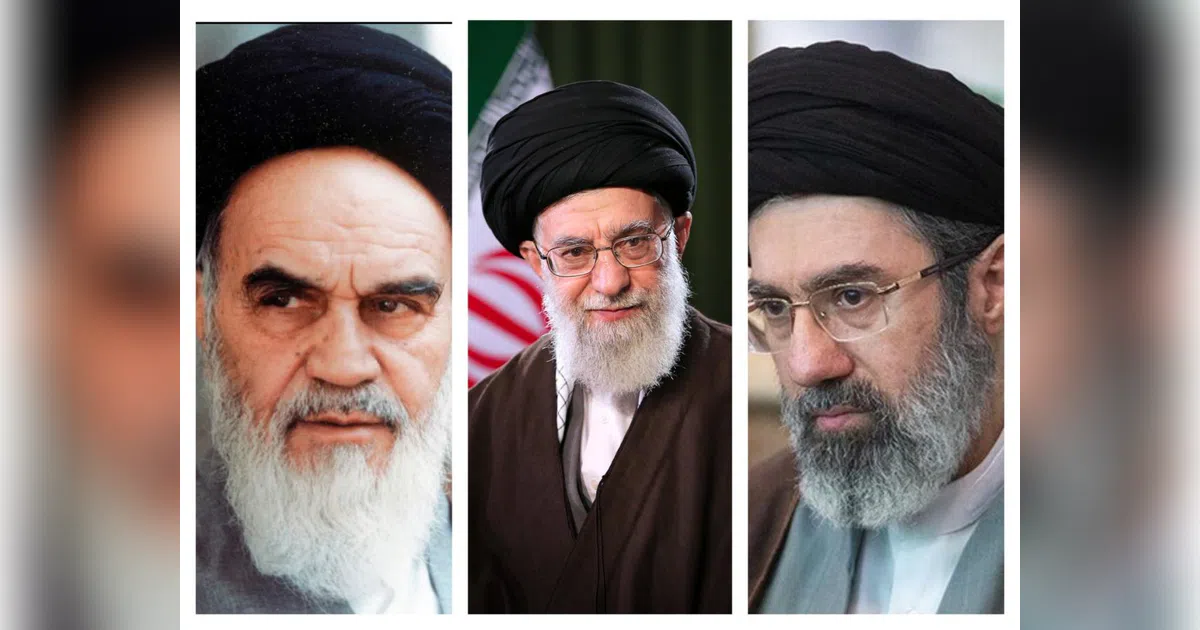
Iran's system of government is not quite a democracy, nor a theocracy. Founding Supreme Leader Ruhollah Khomeini developed its animating doctrine, known as guardianship of the jurist, in the years before the Islamic Republic’s establishment in 1979. Khomeini posited that a just government was possible if religious scholars sat atop it to ensure consistency with Islamic law. This system was put into place with a constitutional referendum after the 1979 Islamic Revolution. The organs of a modern republic—a unicameral legislature (the majlis), an executive led by the president, and a judiciary—were enveloped by a clerical system. (Most of Iran’s clerical hierarchy, however, remains outside this official structure, based in Qom rather than the capital, Tehran.)
Regime hard-liners have further consolidated power across these institutions in recent years. They won control of parliament in the 2020 and 2024 elections, neither of which were considered free or fair.
Mojtaba Khamenei’s appointment has prompted some experts and the Iranian public to speculate that he could continue many of the late Khamenei’s oppressive policies, given his links to the existing establishment. According to analysts, Iranian dissidents, and leaked US diplomatic cables, the hard-line cleric had been an influential figure in his father’s regime. Several news outlets report that he maintains close ties with the Islamic Revolutionary Guards Corps, which he joined from 1987–88 during the Iran-Iraq war. Yet, other analysts contend that Mojtaba could take a more pragmatic approach to reach consensus among hard-liners and reformists. | Structure of the Iranian Regime
One factor that has remained constant throughout Iran’s modern history is the ultimate authority of the supreme leader, the guardian jurist who is effectively Iran’s leader for life, per the constitution. Iran’s constitution designates the office as head of state and affords it vast control under the theory that political authority springs from religious authority. Article 110 of Iran’s constitution outlines the position’s major powers. They include setting national policies and supervising their implementation, as well as commanding the armed forces and appointing military chiefs and the heads of the Islamic Revolutionary Guard Corps (IRGC) and police. Khomeini’s successor, Ali Khamenei, has reportedly influenced the selection of ministers of defense, intelligence, and foreign affairs, as well as science, a sensitive post charged with appointing the heads of universities. Khamenei served as president and as commander of the IRGC before becoming supreme leader until his death in February 2026.
The supreme leader’s authority is not absolute, however. He is elected by the Assembly of Experts, a body of eighty-eight directly elected jurists who are constitutionally mandated with overseeing the supreme leader. In practice, however, they carry out oversight in a secret committee, and it is unclear whether they have ever sought to meaningfully check either Khomeini or Khamenei.
Khamenei’s death triggered the Assembly’s search for Iran’s next leader, a task that has only been conducted once since the Islamic Republic was established in 1979. According to the constitution, the new supreme leader must be a male cleric with religious expertise and political competence, as well as someone who possesses moral authority and is loyal to the Islamic Republic. Mojtaba Khamenei became an ayatollah in 2022, achieving the highest clerical rank after more than a decade of seminary teaching and securing himself a position in Iran’s power circles.
There are also informal constraints on the supreme leader. The position is considered both an arbiter of Iranian politics and a source of emulation, so his direction is meant to both set the course for the republic but also reflect broader consensus among elites. Meanwhile, the supreme leader relies as much on typical instruments of political power – control of media outlets, patronage, and so on – as the religious trappings of his office to influence government and society.
Answering to the supreme leader is the president, who serves as head of government. (Neither office is specifically reserved for men, though no woman has ever been permitted to seek these seats by the regime-aligned electoral authority.) Eligible for a maximum of two four-year terms, the president is charged with executing the country’s laws, setting policy within parameters set by the supreme leader, and conducting diplomacy on the state’s behalf. They nominate members of the cabinet, who must be confirmed by the parliament. They also propose the budget, which must then be passed under the normal legislative process.
The parliament, or majlis, has 290 seats. Its members are directly elected to four-year terms by geographic district, with five seats set aside for religious minorities. The share of clerics holding seats in it has declined—down from more than 50 percent in 1980 to 5.5 percent in 2020—while the number associated with the Revolutionary Guards has increased. As the unicameral legislature, it has broad lawmaking authority.
The Guardian Council is charged with determining whether the laws parliament passes are permissible under the constitution and Islamic precepts. Half of the council’s twelve members are theologians appointed by the supreme leader; the other half are legal scholars selected by the parliament. The Guardian Council also qualifies candidates for the Assembly of Experts, presidency, and parliament, giving it great influence in setting the parameters of Iranian electoral democracy. In the 2016 general elections, the body approved just half of the declared candidates for parliament and one-fifth of those for the Assembly of Experts. It has often weeded out reformist candidates for office. For example, in each presidential election since 2017, it has disqualified Mahmoud Ahmadinejad, the firebrand ex-president who had clashed with Khamenei while in office.
Another body, the Expediency Council, mediates between the parliament and Guardian Council. It was established by decree in 1988 before being added to the constitution in an amendment the following year. The supreme leader, who appoints the council’s members to five-year terms, has since delegated to it the authority to supervise the government. This body is another avenue through which the supreme leader can choose to exercise closer authority over the government.
The Supreme National Security Council is led by the president and includes the parliamentary speaker and chief justice—that is, the heads of all three branches of government. Also on the council are military chiefs and the ministers of state, foreign affairs, and intelligence, as well as two personal representatives of the supreme leader; thus, it includes appointees of both the president and supreme leader. Its constitutional writ is broad; it is charged with setting a wide range of policies that touch on defense and security, responding to threats both foreign and domestic.
‘The Islamic Republic of Iran’s Power Centers’ can be viewed at https://www.cfr.org/articles/islamic-republics-power-centers
This is published with the permission of the Council for Foreign Relations. For more analysis and articles on Iran visit: CFR.org