With February’s election giving the Bangladesh Nationalist Party a two-thirds majority in parliament and bringing to an end 18 months of a non-elected interim government, Professor Dr Mohammad Tarikul Islam questions whether democracy has been restored.
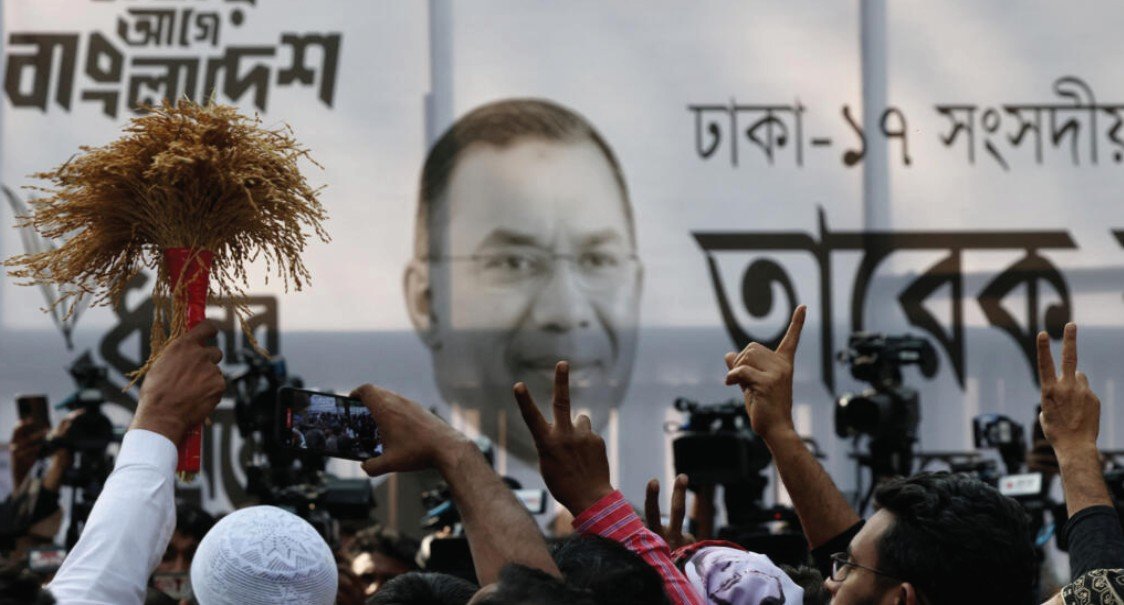
Supporters celebrate the outcome of the 2026 parliamentary election, widely seen as a turning point in Bangladesh’s democratic journey. Photo: Reuters
Unlike previous polls, the 2026 parliamentary election marks a turning point in Bangladesh, an important chapter in the country's political and social history. The election was generally viewed as a test of whether the nation could resume its democratic norms following years of contentious elections, boycotts, street clashes, and mounting public dissatisfaction. Nearly 60 percent of the country's citizens exercised their right to vote. Putting aside various concerns, the voting day was spent by the citizens in celebration, enthusiasm, and new dreams for the country.
Under the interim administration, the Election Commission was able to conduct an orderly and participatory process. In a country where elections mean creating panic in the minds of the people, this is no ordinary achievement. It has proven that Bangladesh is capable of holding peaceful and participatory elections. But ballot papers alone cannot ensure democratic practices countrywide. The real question now is: will the moment of returning to democratic processes through peaceful elections be limited to the transfer of power? Or will it be a real shift towards just governance based on inclusion, institutional integrity, and gender equality?
 Citizens line up at polling stations to cast their votes during the 2026 parliamentary election, reflecting strong democratic participation. Photo: Reuters
The events leading to this election were extraordinary. For decades, Bangladesh has experienced cycles of political polarisation, institutional stagnation, and periodic mass mobilisations. Yet, the July 2024 movement was different. It was not confined to students or a particular demographic; it was a national awakening. Citizens from diverse backgrounds united under a single demand: reform, accountability, and an end to monopolistic political domination.
 Youth participation is reshaping Bangladesh’s democratic trajectory. Photo: Dhaka Tribune
The election that followed this movement was not merely a contest for parliamentary seats; it was a referendum on the state itself. There was greater opposition participation in the 2026 elections than in previous cycles, and there was obvious competition in several areas, although Bangladesh Awami League was banned from engaging in political activity or participating in the election following its overthrow in 2024. Turnout statistics indicated significant participation particularly among young voters. Confidence that each competitor had an equal chance is just as important to true healing as participation.
The election appears to have reopened democratic space. It brought back competitiveness, made power transfers easier, and increased political engagement. These accomplishments are not insignificant. Even small advances matter after a protracted argument. The victory of the BNP alliance, therefore, is more than a transfer of power. It is a moral affirmation of the people's agency and a symbolic reclamation of the democratic space that had been eroded over years of partisanship.

Election officials seal ballot boxes under the supervision of the Election Commission during the national election. Photo: AFP
However, this victory carries a dual weight. There is joy and exhilaration of having exercised the right to vote in a fair, transparent, and meaningful manner. On the other hand, there is an overwhelming expectation that the new government must immediately address systemic deficiencies and restore public faith in the state machinery.
The Bangladesh Nationalist Party (BNP), led by Tarique Rahman, has won more than a two-thirds majority in the 13th National Parliament. In a post-election press conference, Tarique Rahman called on everyone to remain united. He said: ‘Paths and opinions may differ, but we are all one in the interest of the country.’ He also valued the views of every democratic political party participating in the election to ensure no evil force can establish fascism in the country. These bold statements and acts from a political leader are rare from the perspective of Bangladesh.
The opposition party has been welcomed to form a shadow cabinet. Even the deputy speaker position has been kept for the opposition. The government is thinking of reforming government institutions on the basis of democratic and constitutional principles. The peaceful coexistence of the ruling party and the opposition party gives us a message of democratic practice, like Western democracy. If civil and constitutional liberties are ensured, then we may say that the 2026 election has opened a door for democracy in Bangladesh.  Tarique Rahman greets supporters in Dhaka after his party won the national parliamentary election. Photo: Mahmud Hossain Opu/AP
However, consolidation and restoration are not the same thing. If institutions continue to be personalised, if opposition voices feel uneasy, or if legislative frameworks limit free discussion, democratic recovery is vulnerable. Either new forms of dominance can be established or democratic norms can be rebuilt with a powerful legislative majority. The decision will depend on how power is used in the years to come.
Certainly, 2026 may be seen as the start of democratic transformation if the new administration fortifies parliamentary oversight, changes electoral legislation to improve openness, safeguard media independence, and guarantees judicial autonomy. However, the promise of restoration may wane if institutions become too tightly aligned with administrative authority and competition narrows once more.
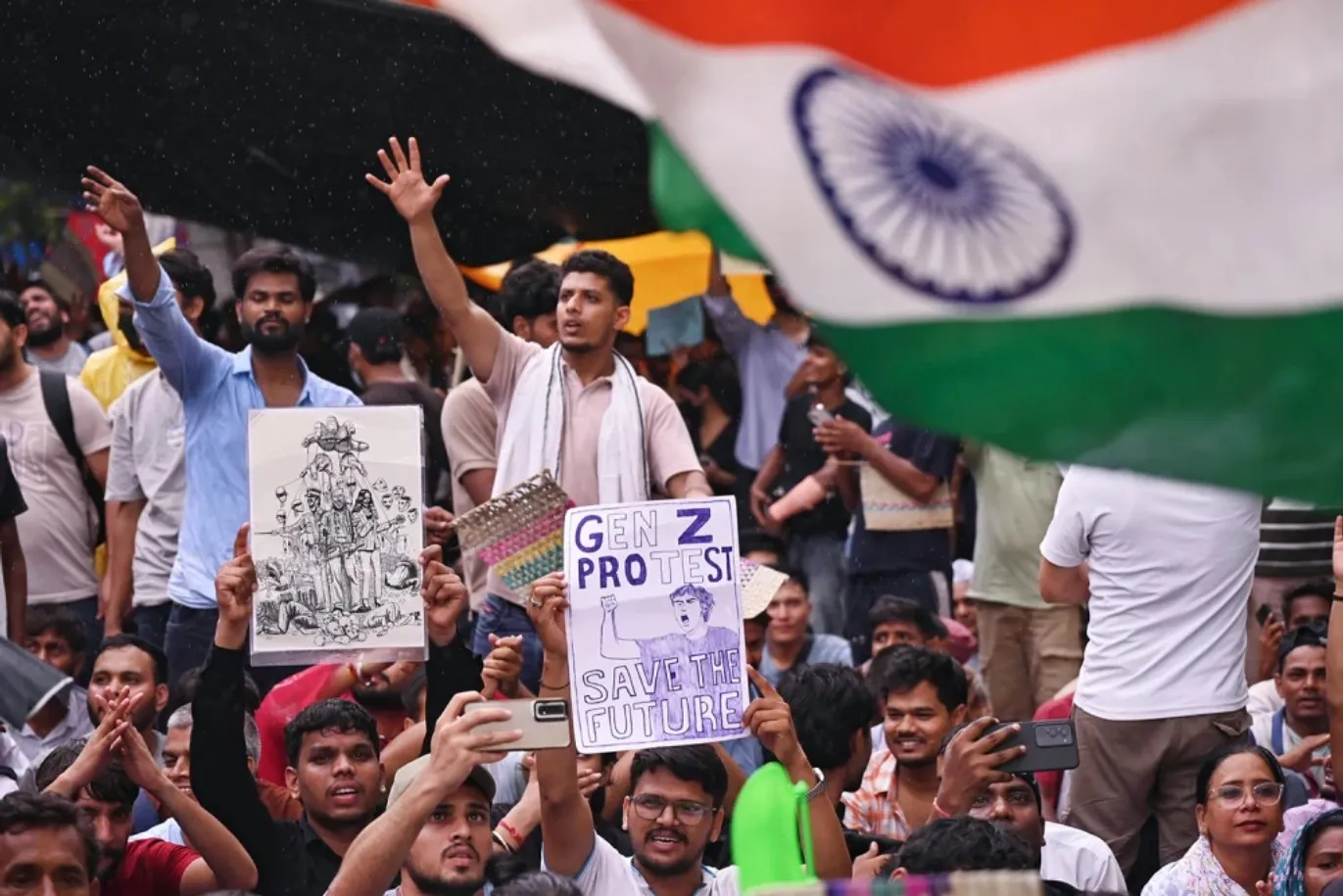
To ensure continuity of the democratic journey, the government needs to follow some rules and norms. The aspirations of more than one-third of the population’s youth add another dimension to this mandate. For young Bangladeshis, democracy is not just the right to vote every five years – it is equality of opportunity, merit and the assurance that talent will be recognised regardless of social or political background. To address this problem, the government needs to institutionalise transparent, merit-based recruitment in government jobs, while simultaneously creating entrepreneurship among the youth. Corruption has become the single most damaging factor in eroding public trust.  Mass protests during the 2024 political movement reflected widespread public demand for reform and democratic accountability. Photo: Rajib Dhar/AP
The BNP-led government entered office with a clear promise to restore democratic practices and ensure peaceful coexistence. While it is far too early to draw definitive conclusions, the initial signals have generated cautious optimism among citizens who have long sought a more competitive and participatory political environment. Early gestures toward dialogue, administrative restraint and institutional normality matter because they set the tone for what follows.
Restoration, if it is to be genuine, must endure beyond the initial celebratory period. It will be measured by how the government treats dissent, how parliament functions, how courts assert independence and how institutions resist partisan capture. The vote in 2026 was a significant step. If the current trajectory continues and reforms deepen over time, it may indeed be remembered as the beginning of a true democratic recovery. The coming five years will determine whether this moment becomes a milestone or merely a hopeful pause in Bangladesh’s political journey.