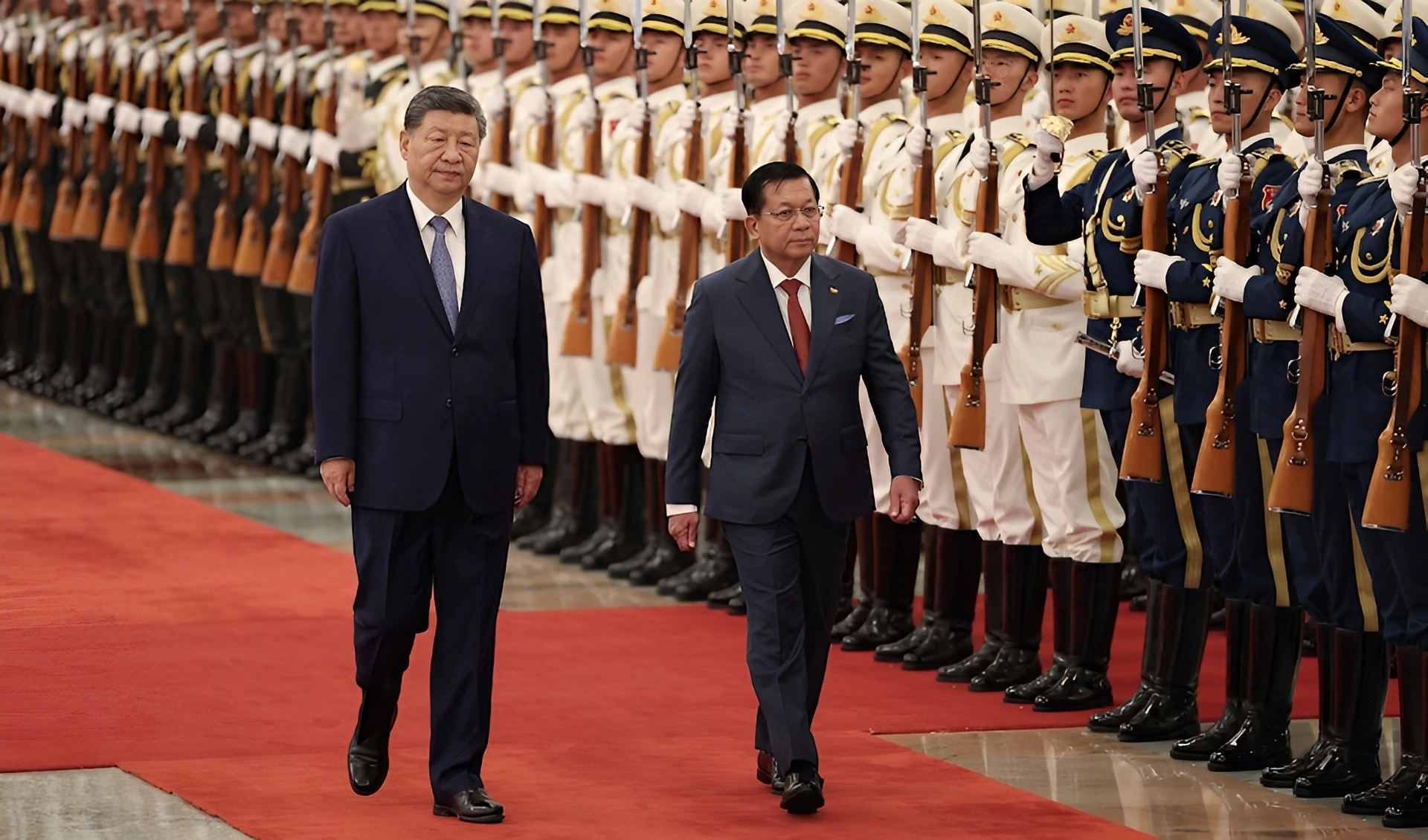
An air strike on a hospital in Kabul on 17 March, which Taliban officials blame on Pakistan, killed more than 400 people and took the conflict between Pakistan and Afghanistan to a more serious level. Mediation by Saudi Arabia, Qatar and Turkey led both countries to declare a ceasefire for the Eid holiday, but there are no signs that the distrust between the neighbours is close to being resolved, as Iftikhar Firdous reports.
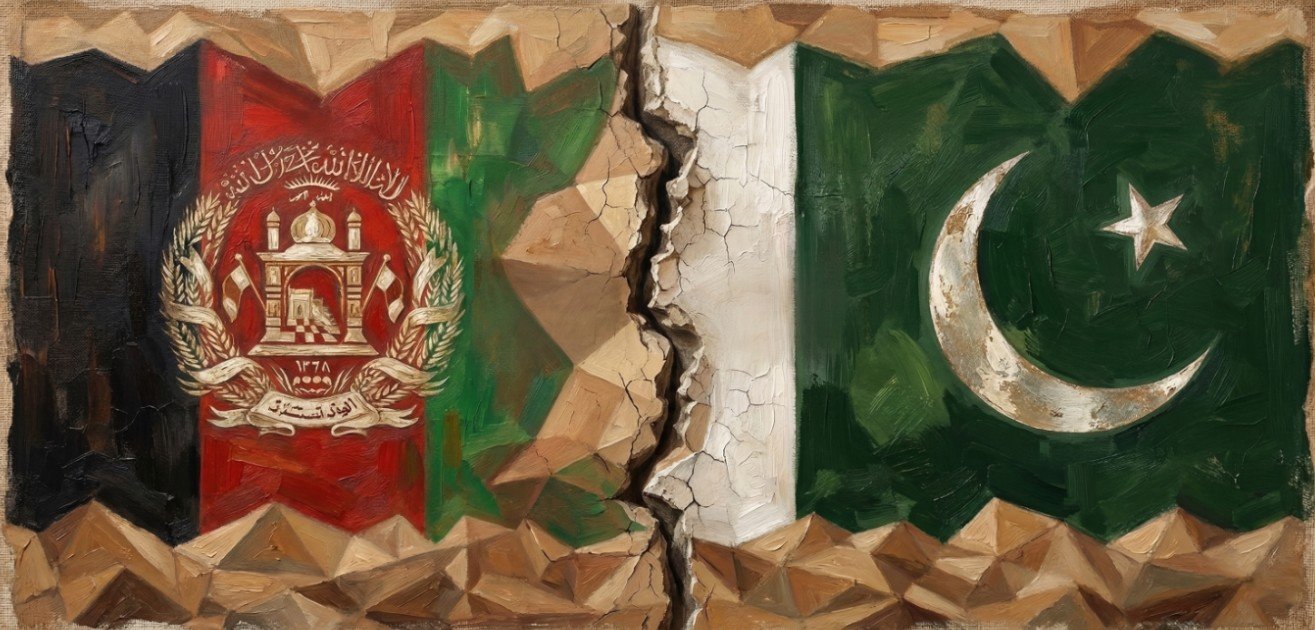
Pakistan and Afghanistan are locked in a deepening confrontation shaped by militant violence, border disputes and decades of unresolved historical mistrust.
The relationship between the Taliban rulers of Afghanistan and Pakistan has come full circle. Pakistan was once accused by the West of supporting the Afghan Taliban, but now Pakistan accuses the Taliban of harbouring anti-Pakistan militants and facilitating cross-border attacks. This shift is shaped by a historical dispute over the colonial Durand Line, long regarded as the de facto border between the countries.
When the Taliban took control of Afghanistan, Pakistan’s hope was to settle its ‘terrorism’ problem and bring an end to the centuries-old disputes. It did not take long for Islamabad’s anxieties to be triggered when the Taliban first cajoled Pakistan into talking to the Tehrik-e-Taliban Pakistan (TTP), the largest faction of the Pakistani Taliban, that has claimed responsibility for thousands of attacks inside Pakistan – and then denied their presence in Afghanistan once the talks failed.
‘There are no militants in Afghanistan, there are only refugees,’ said the late Khalil Haqqani, the minister for refugees of the Taliban government. Haqqani was once seen as Pakistan’s proxy within the Taliban and the statement was widely seen in Pakistan as a betrayal. The first time Pakistan bombed Taliban-ruled Afghanistan was just eight months after the withdrawal of US/NATO forces in April 2022.

The reported strike on a hospital in Kabul marked a dangerous escalation, bringing the conflict between Pakistan and Afghanistan to a far more serious level. Photo: Reuters
Every time Pakistan accused its neighbour of allowing militants to cross into Pakistan to carry out attacks, the Taliban denied they are allowing them to operate inside Pakistan. Initially seen as a cautious diplomatic approach to avoid confrontation, Pakistan subsequently concluded that the Taliban do not recognize the Durand Line as the border demarcation. The Taliban’s official communication refers to it as the ‘Fictional line, drawn by Durand’.

At the centre of the dispute lies the Durand Line, the 1893 frontier that Pakistan regards as an international border but many in Afghanistan have never fully accepted.
The dispute between Pakistan and Afghanistan has been shaped significantly by the historical and political controversy surrounding the concept of ‘Pashtunistan’. The roots of this dispute lie in the contested legitimacy of the Durand Line, now the 2640-kilometre-long international border first demarcated in 1893 between British India and the Afghan Emirate under Amir Abdur Rahman Khan. Following the creation of Pakistan in 1947, Afghanistan refused to recognise the Durand Line as a border, arguing that it divided ethnic Pashtun populations across two sovereign states.
The Pashtunistan movement emerged in the mid-20th century as a political demand advocating either an independent Pashtun state or the unification of Pashtun-majority areas within Afghanistan. Afghan leaders under King Zahir Shah and later governments supported the idea diplomatically, which contributed to strained relations with Pakistan.

A displaced Afghan family shelters in Nangarhar after fleeing clashes between Pakistani and Afghan forces at a border crossing, 4 March. Photo: Reuters.
Pakistan has consistently maintained that the Durand Line is a legitimate and internationally recognized boundary inherited under the principle of uti possidetis juris that newly formed states adopt the borders of the previous state, a doctrine often applied in post-colonial state formation.
Prior to the 1947 partition of the Indian subcontinent, leaders supporting the Pashtunistan movement argued that Pashtuns living in the North-West Frontier Province (now Khyber Pakhtunkhwa) and the tribal areas should be given the right to self-determination. They believed Pashtuns should have the choice to join Afghanistan, form an independent state, or remain with Pakistan. However, with the creation of Pakistan and the 1947 referendum, the issue was sidelined. It lingered mainly as a topic of discussion in the southern districts of what is now Khyber Pakhtunkhwa and the former Federally Administered Tribal Areas (FATA).
During the 1950s and 1960s, tensions between Afghanistan and Pakistan intensified, leading to frequent border disputes. In 1973, Sardar Mohammad Daoud Khan overthrew Afghanistan's monarchy, established a republic, and assumed the presidency. To unify the country and strengthen his rule amid internal threats from leftist groups, Daoud revived the Pashtunistan issue, advocating for Pashtun self-determination.

What began as mutual mistrust and failed negotiations has hardened into a militarised frontier, with recurring attacks, ceasefires and reprisals destabilising the region. Photo: AFP
In 1976, Daoud and Pakistani Prime Minister Zulfikar Ali Bhutto agreed to reduce support for proxies and ease the Pashtunistan dispute, but this accord quickly collapsed after Daoud's assassination during the 1978 Saur (April) Revolution and Bhutto's execution in 1979.
Despite diminished prominence, the Pashtunistan question continues to affect Afghanistan–Pakistan relations, especially regarding border disputes and nationalism. The Taliban's rise brought new complexities, although in their first tenure during the 1990’s they did not officially challenge the Durand Line. In recent years, disputes have manifested in skirmishes along the border and disagreements over refugee movements and security cooperation. Pakistan constructed a border fence and ended the autonomous status of the tribal areas,
integrating them into mainstream Pakistan. This did not evoke much reaction from the Ashraf Ghani government at the time. The talks ultimately collapsed over a key demand: the Pakistani Taliban insisted on overturning the constitutional amendment that ended the autonomous status of the tribal districts. This effectively revived the Pashtunistan question in a new form, detached from its earlier leftist framing.In other words, the Pashtunistan question had effectively re-emerged in a new form, away from the leftist ideals.
Each time Pakistan has asked the Afghan Taliban to control cross-border terrorism, the Taliban have characterised it as ‘Pakistan’s internal problem’ while simultaneously calling for a political settlement. By the end of 2025, three and half thousand Pakistanis had been killed, mostly in the border regions.
Low-intensity attacks and intermittent ceasefires have paved the way for an escalating conflict that risks becoming prolonged and deeply destabilising for the region.