Japan was not at the table when Donald Trump and Xi Jinping agreed to a ‘constructive relationship of strategic stability’ in Beijing. It did not need to be. At the time of the Beijing talks its navy was engaged in a seven-country naval exercise off the Philippines, writes Howard Zhang.
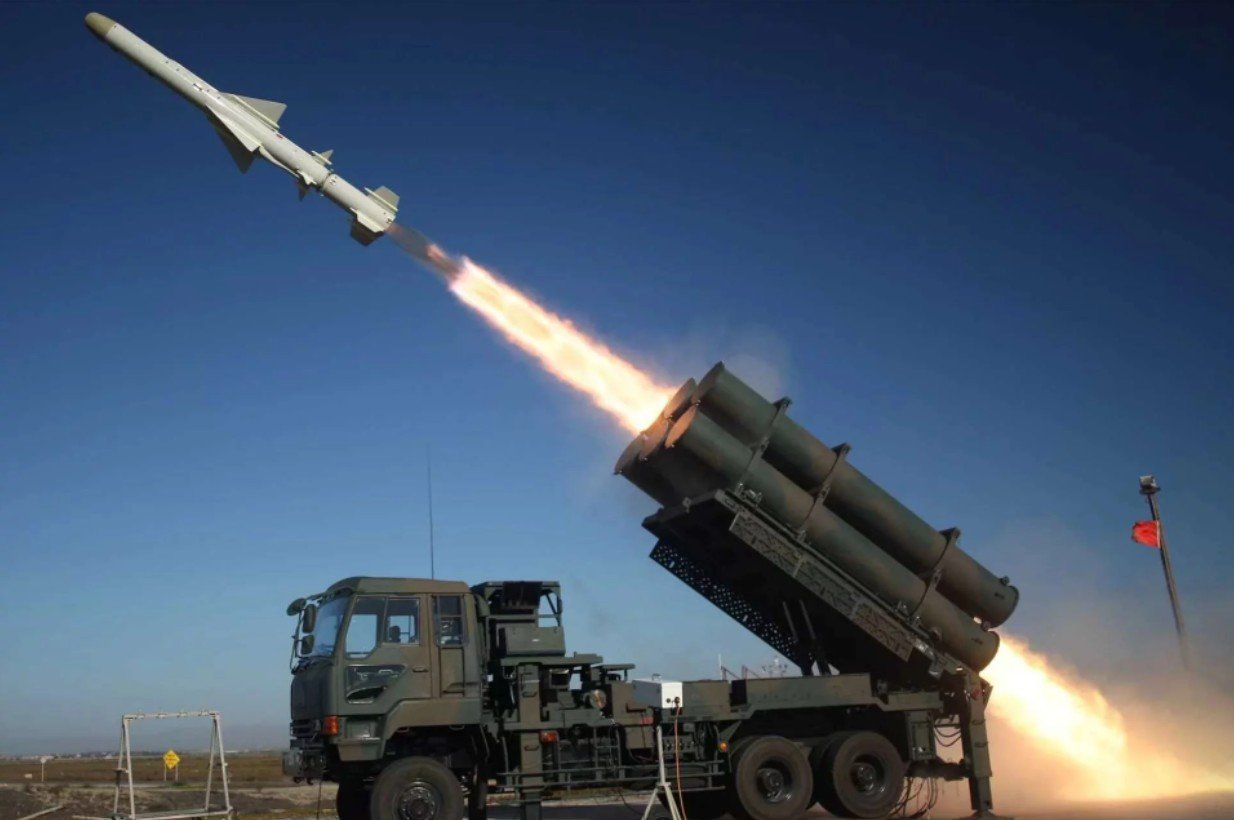
Japanese forces launch an anti-ship missile during Balikatan 2026 in northern Luzon, signalling Tokyo’s most assertive military posture beyond its borders since the Second World War. Photo: Japan MoD
In the morning of 6 May, on a strip of sand dunes on the north-western coast of the Philippines island of Luzon, a Japanese launcher vehicle fired two Type 88 surface-to-ship missiles into the South China Sea. The target, a decommissioned Philippine Navy corvette, was 75 kilometres offshore. It sank within six minutes. It was the first time Japan had fired an offensive missile from foreign soil since 1945.
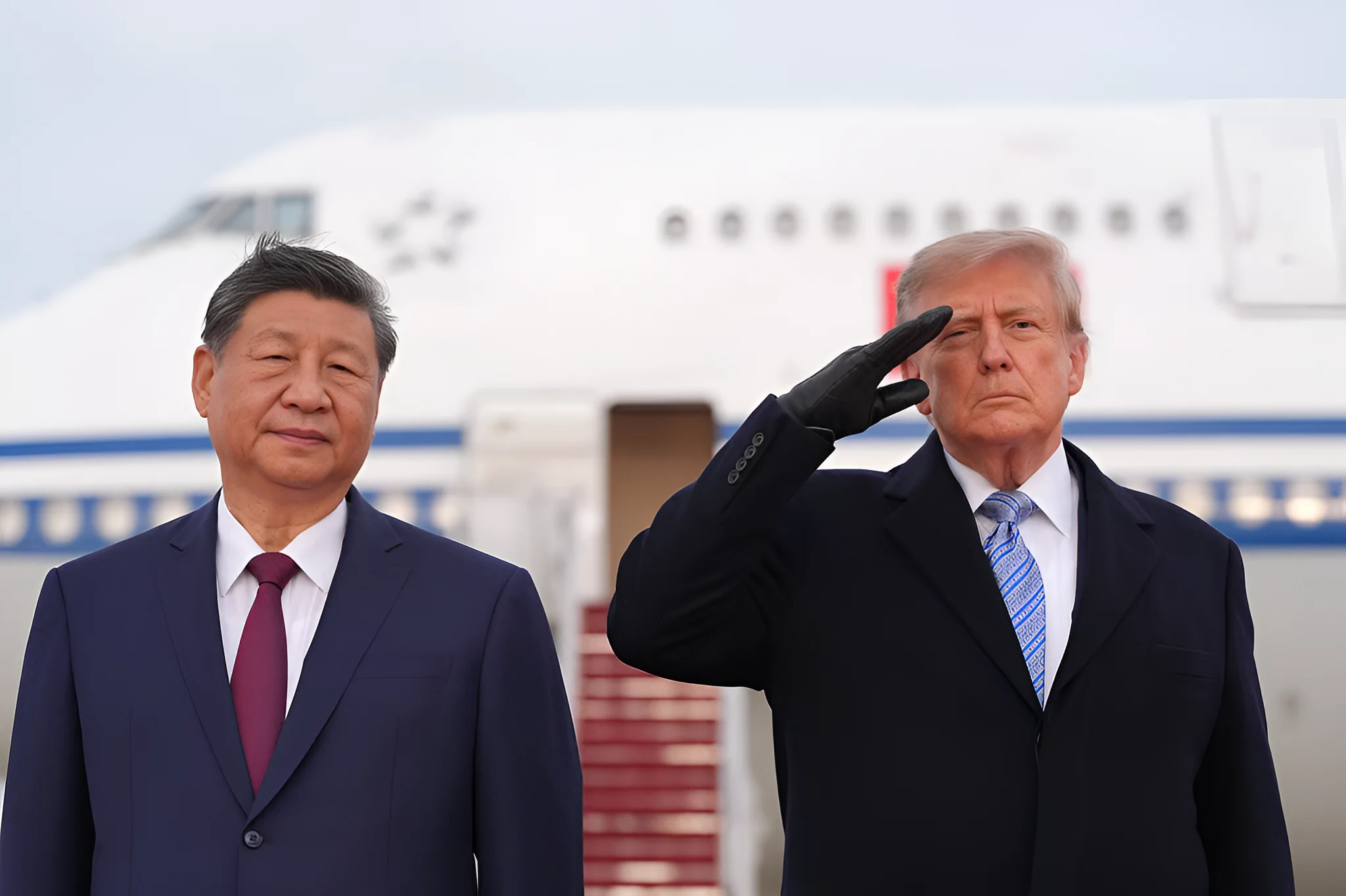
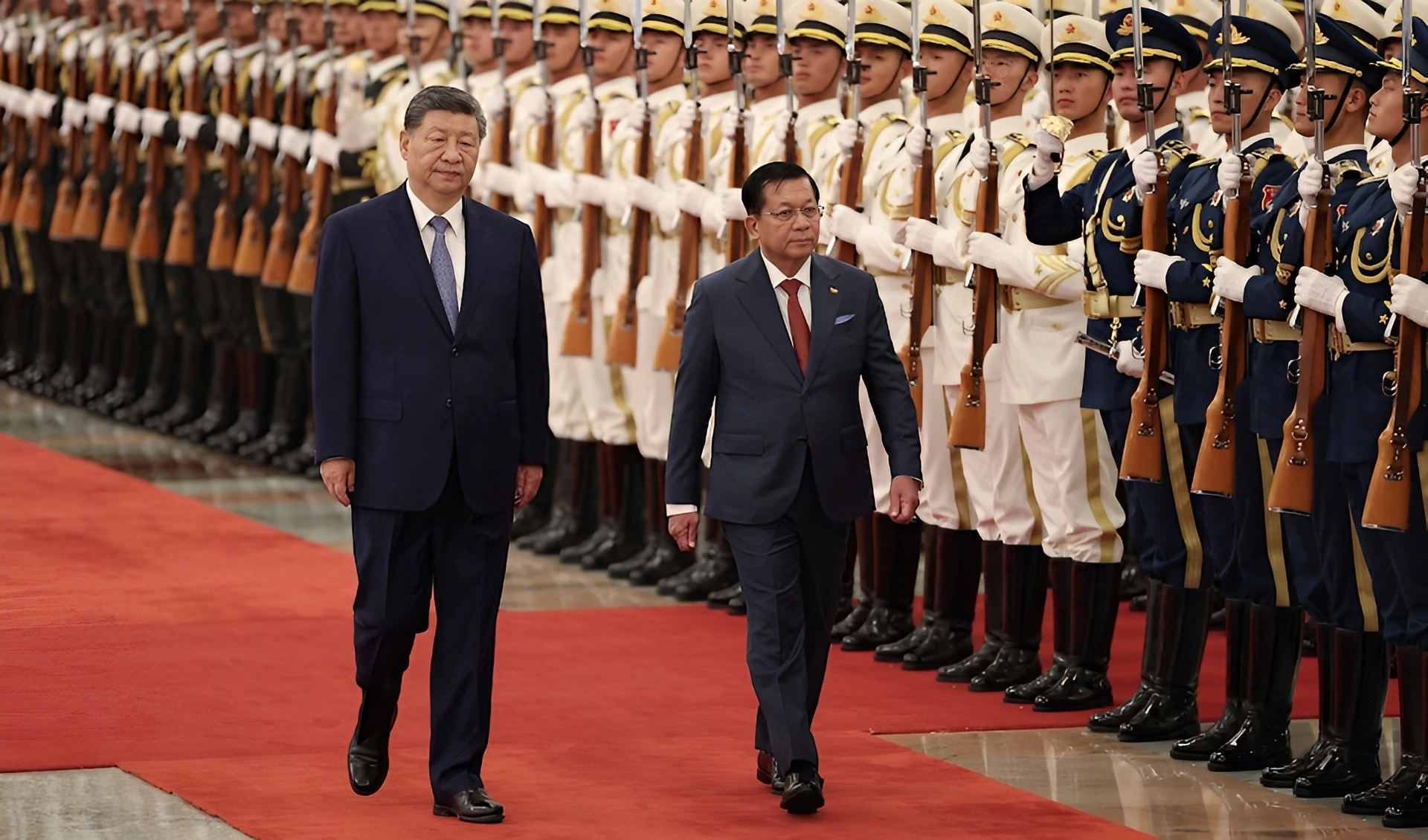
The story was noted by defence correspondents and promptly buried. It was swallowed by the Iran conflict and the diplomatic pageantry of a Trump-Xi summit, where the two leaders agreed to pursue what is framed as ‘a constructive relationship of strategic stability’. Xi pushed Trump on Taiwan. Japan was not mentioned.
That absence is striking. The world’s two superpowers convened to negotiate the architecture of Asia, and the country, sitting astride its most critical waterways – the narrow straits through which China must pass to reach the open Pacific – did not feature on the agenda. Japan, for its part, is not waiting on the outcome.
The shot that sank more than a corvette
Exercise Balikatan 2026 brought together nearly 17,000 personnel from the Philippines, the United States, Japan, Australia, Canada, France and New Zealand. Japan participated not as an observer, as in previous years, but as a full combat contributor, deploying around 1,400 troops alongside warships, aircraft and missile systems. A Reciprocal Access Agreement between Japan and the Philippines, quietly ratified in September 2025, made the deployment legally possible.
The choice of launch site was deliberate. Ilocos Norte sits 400 kilometres south of Taiwan, facing the Luzon Strait, one of the few deep-water corridors through which Chinese warships moving from the South China Sea can access the wider Pacific. The scenario being rehearsed – layered coastal defence against hostile naval forces – maps precisely onto the contingency that planners in Tokyo and Washington have spent years wargaming.
China’s Foreign Ministry condemned the exercise as Tokyo’s first overseas offensive missile launch in eight decades, a characterisation that was accurate, though incomplete. The operational significance runs deeper: the Type 88 fired at Balikatan is already being phased out in favour of the upgraded Type 12, which combines GPS-assisted guidance with a range approaching 1,000 kilometres and is now being deployed across the south-western islands near Okinawa. The transition signals not a one-off demonstration but a sustained change in posture.
What does all this mean?
The Chinese navy cannot move freely into the Pacific. They must pass through chokepoints running from southern Japan through the Ryukyu Islands, past Taiwan and through the Philippines – the first island chain. Japan sits across its northern section, impossible to outflank or bypass. That geographic fact gives Tokyo a form of leverage no American carrier group fully replicates: unlike US forces, which can in theory be kept at a safe distance, Japan is already there.
 The first island chain stretches from Japan through Taiwan to the Philippines, forming the narrow maritime corridor China must cross to access the Pacific.
China’s long-term naval strategy has assumed that American power can be displaced progressively westward. A militarily capable Japan, permanently embedded in the critical geography, disrupts that calculus permanently. Japan is not attempting to match China hull for hull. Tokyo’s investment logic is different: make the narrow seas China must cross as dangerous as possible to transit.
 Japan is investing heavily in submarines, long-range missiles and maritime surveillance to make the western Pacific’s narrow seas harder for Chinese naval forces to cross. Photo: Japan Maritime Self Defence Force
The Type 12 missile lets Japan threaten hostile vessels far beyond the coastline. Combined with American ground-launched Tomahawks, also fired during Balikatan 2026, missile coverage of the Miyako and Luzon Straits is becoming overlapping and mutually reinforcing. Japan’s submarine fleet, autonomous drones and seabed surveillance networks add another layer of uncertainty: even a smaller force creates serious problems for a larger navy transiting confined waters on a deadline. The lesson from Ukraine – that the side which sees first can matter as much as the side with the larger force – has been absorbed in Tokyo as thoroughly as anywhere.
Rewriting the post-war script
For most of the post-war period, Japanese power was constrained from within. Article 9 of the 1947 constitution, which renounces war as a sovereign right and forbids the maintenance of ‘land, sea and air forces’. Successive governments preserved the letter of the text by reinterpreting its meaning – first to permit a Self-Defence Force, then collective self-defence in limited circumstances, and most recently the acquisition of offensive ‘counter-strike’ weapons. The prohibition still constrains overseas deployment, doctrine and procurement, but each loosening has required political capital previous prime ministers were reluctant to spend. That reluctance has now gone.
The hardware reflects a budget shift that would have been unthinkable a decade ago. Tokyo is on course to double defence spending to around 2 per cent of GDP by 2027 – the largest sustained military build-up by any Japanese government since the war. The five-year plan funds the Type 12 upgrade, hypersonic research, an expanded submarine fleet, satellite reconnaissance and the stockpiles of long-range munitions that a sustained Pacific contingency would require.
Tokyo’s rhetoric has shifted too. Sanae Takaichi, who became prime minister in October 2025, told the Diet that a Chinese military move against Taiwan could constitute a ‘survival-threatening situation’ for Japan – the legal threshold that permits the Self-Defence Forces to exercise collective self-defence alongside an ally. No previous prime minister had said so in plain terms. Beijing called the remarks ‘provocative’ and responded angrily; Takaichi declined to retract them.
 Prime Minister Sanae Takaichi has pushed Japan further away from its post-war military restraint, linking Taiwan’s security directly to Japan’s survival interests. Photo: Cabinet Secretariat/CC BY 4.0
The alliance that nobody signed
In April, Tokyo’s cabinet approved the export of lethal military equipment – warplanes, warships, missiles, drones – to partner nations, ending a post-war arms sales restriction. The Philippines is the most immediate beneficiary, already receiving TC-90 maritime patrol aircraft and potentially retired Japanese destroyers.
What is forming is a networked maritime defence architecture along the first island chain: Japanese missiles and submarines, American forward-deployed strike systems, Philippine basing arrangements, Australian defence co-operation and growing participation from allied countries. No collective security treaty has been signed, but the practical architecture of one is taking shape through hardware compatibility, shared intelligence and exercises like Balikatan.
Japan’s transformation is structural: it does not require Washington’s permission, does not depend on the détente holding, and will not pause while the great powers negotiate their relationship or work out what a ‘constructive relationship of strategic stability’ actually means.
The indicator worth watching is whether Japan’s Type 12 missiles appear in the Philippines on a permanent basis and whether Manila agrees to that in writing. If they do, the first island chain will have become something qualitatively new – and no formula for strategic stability will change the geography that follows.