The people of Myanmar have been to the polls to choose members of two national and fourteen state assemblies. Nicholas Nugent questions what difference the polls will make in a country riven by civil war.
The people of Myanmar have been to the polls to choose members of two national and fourteen state assemblies. Nicholas Nugent questions what difference the polls will make in a country riven by civil war.
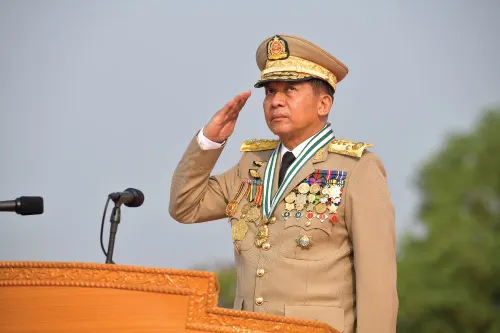
Myanmar’s military chief Senior General Min Aung Hlaing called elections in the hope of restoring order to a country riven by conflict since an army coup in February 2021 put it under martial law. A country that has been ruled by its army for longer than it has enjoyed anything close to democratic rule is once again testing the waters of democracy though there is little expectation of significant change.
Many political parties refused to register calling the election illegitimate. They include the National League of Democracy, previously led by Nobel Peace laureate Aung San Suu Kyi, which took 82 per cent of the poll at elections in 2020, though the army disputed the result. Hence the party that led the country to qualified democracy in 2015 has not taken part in polling, which was carried out in three phases on 28 December, 11 and 25 January. Hence no party was in a position to beat the military-led Union Solidarity and Development Party (USDP) for seats in the Pyithu Hluttaw or National Parliament, whose membership is in any case supplemented by officers nominated by the military.

Voters cast ballots at a polling station under heavy security during Myanmar’s national elections. Photo: AFP
Preliminary election results show USDP to have a comfortable lead in both national assemblies.
The military government is clear that a main objective of the election is to restore the 2008 constitution, which instituted power sharing between the army and civilian leaders. A law criminalising disruption of polling was introduced and more than 200 people are reported to have been charged with that offence including two in the city of Yangon sentenced to 49 years hard labour each for putting up anti-election posters.
According to International Crisis Group (ICG) Myanmar adviser Richard Horsey these limitations make the elections “devoid of credibility”. He calls them a procedural mechanism “for the junta to shift from the post-coup state of emergency back to constitutional rule”. The military rulers hope to legitimise the military role in government alongside elected civilian bodies, a strategy with which neighbouring Thailand has had some success as, in the 1960s, did the armed forces in Indonesia where they dubbed this military-civilian blend ‘guided democracy’.

Low voter turnout marked elections boycotted by major opposition parties. Photo: Reuters
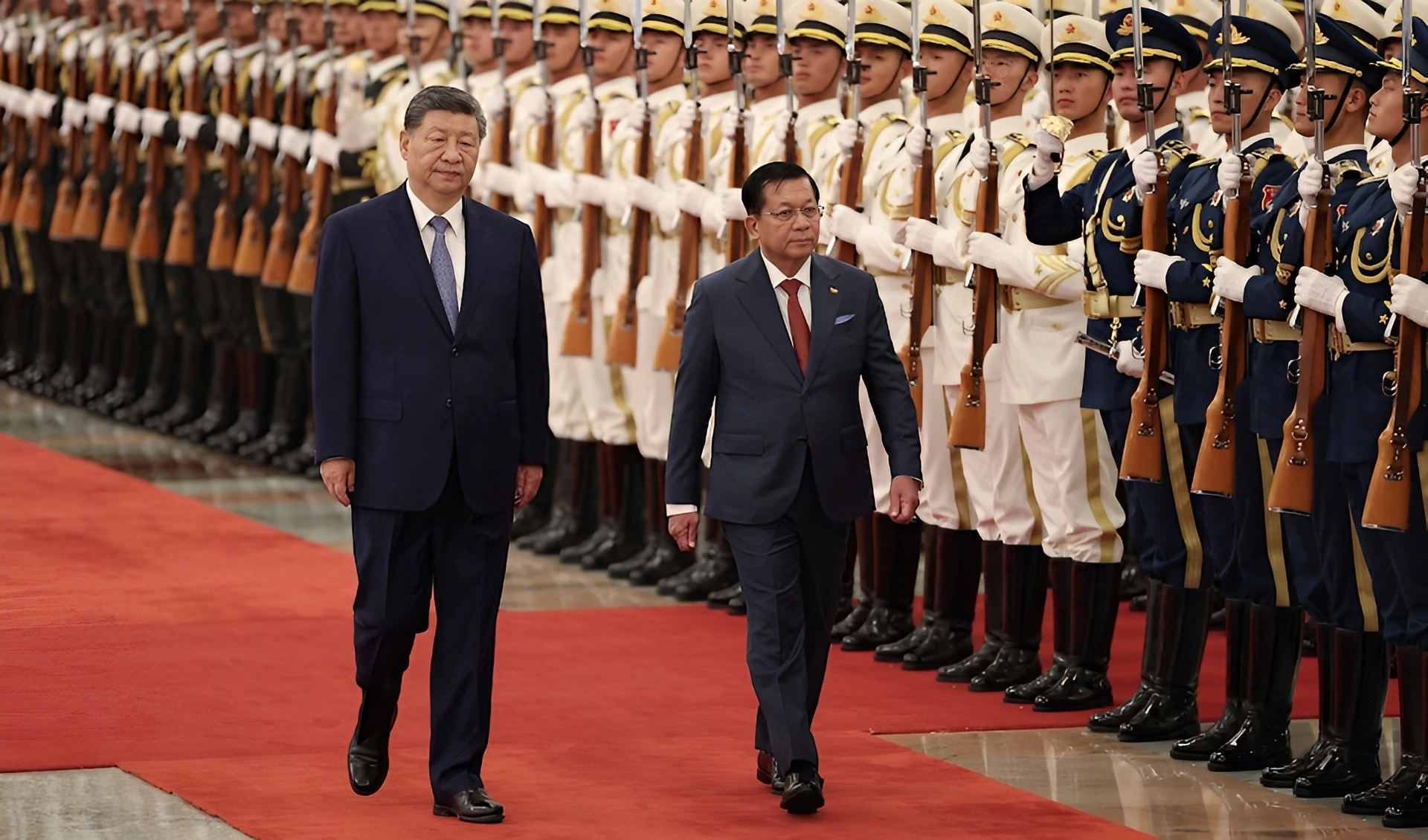
Encouragement for these elections came from China, Myanmar’s northern neighbour. According to Benedict Rogers of Fortify Rights, Beijing sees Myanmar as a crucial geostrategic playground vital for securing its interests. He says China seeks stability in the war-torn country “to protect its economic pursuits: border trade corridors, infrastructure investments, access to rare earth minerals, jade and energy.” None of Myanmar’s fellow members of ASEAN have supported the holding of the election. By holding it the country’s leaders will be hoping ASEAN governments will end their partial boycott of the country.
A main challenge for the authorities was gaining access to the people. The army has had major success over the past year in extending its reach but much of the country remains outside its control because of the insurgency of ethnic armed organisations and People’s Defence Force who together control a significant part

Families flee their homes as fighting between Myanmar’s army and resistance groups continues. Photo: AFP
of Myanmar. The United Nations has estimated that 3.5 million of the country’s population of around 53 million have been displaced from their homes as a result of warfare between the army, known as the Tatmadaw, and insurgent armies. According to reports, elections could not take place in as many as 65 of the country’s 330 townships or constituencies. Where elections have taken place there were only polling stations in towns under government control.
In northern Kachin state voting took place in only nine of the state’s 18 townships as a result of challenges to central authority by the Kachin Independence Army. In the west of the country the government controls so little of Rakhine State, where the Arakan Army hold sway, that voting took place in just 3 of the state’s 17 townships. As voting took place there in mid January there were reports of heavy fighting around the state capital, Sittwe. A press

Former civilian leader Aung San Suu Kyi remains imprisoned following the 2021 military coup. Photo: AFP
release put out by a human rights group in predominantly Christian Chin State to the north says the streets were deserted on election day in the two (out of nine) townships where polling took place. The military-led USDP claimed victory on an exceptionally low turnout.
Flawed though the elections were, Myanmar citizens and foreign governments will be watching to see what happens next. Richard Horsey of the International Crisis Group expects “a resounding USDP victory and a continuation of army rule with a thin civilian veneer”. He says this will not ease the country’s political crisis nor weaken the resolve of a determined armed opposition. One assumption is that Senior General Ming Aung Hlaing will formalise his own position as president and pass the role of commander in chief of the army to a new occupant. USDP leader Khin Yi, a former general, is expected to be given a senior position in government.
After the 2015 election which brought Aung San Suu Kyi to power as State Counsellor the army clearly thought they ceded to civilians too much of the power they regarded as theirs by right. A key this time will be how much power is genuinely conceded to civilians rather than to soldiers who have discarded their uniforms. Former State Counsellor Aung San Suu Kyi, now aged 80 and denied contact even with her sons, and former president U Win Myint are not expected to be released from prison. They have been held since the 2021 coup with at least 22,000 other political prisoners, though 6186 were released on 4 January, the 78th anniversary of Myanmar’s independence. The UN’s Special Rapporteur on human rights in Myanmar, Tom Andrews, said “You cannot have a free, fair or credible election when thousands of political prisoners are behind bars, credible opposition parties have been dissolved, journalists are muzzled, and fundamental freedoms are crushed.”
The people of Myanmar – and before it Burma – have had a sorry existence since the nation came into existence following the end of British rule. The nation’s first leader, Aung San – father of Suu Kyi – was assassinated with members of his cabinet shortly before the country gained full independence in 1948. Ethnic insurgency against the government started immediately in reaction to the dominance of government by the overwhelmingly Buddhist ‘Bamar’ people of the country’s central plains.
General Ne Win led a bloodless army coup in 1962, later gaining election and becoming prime minister. Ne Win and his military successor Saw Maung held supreme power until the emergence of Aung San Suu Kyi as a civilian political leader in 1988. Her triumph in a 2012 by-election and at national polls in 2015 and 2020 put her at the head of an army-managed government – army rule with a civilian face – till the February 2021 coup d'état. There are no indications that a change as significant of that of 2015 will take place in Myanmar following the latest polls.