The story of the unravelling of the Raj (as Britain’s Indian Empire was known) has been told time and again: as political history, social history, personal memoir and feature film; as ‘end of Empire’ ignominy, rebirth of India, the making of a new Muslim nation or a tragic episode of communal frenzy.
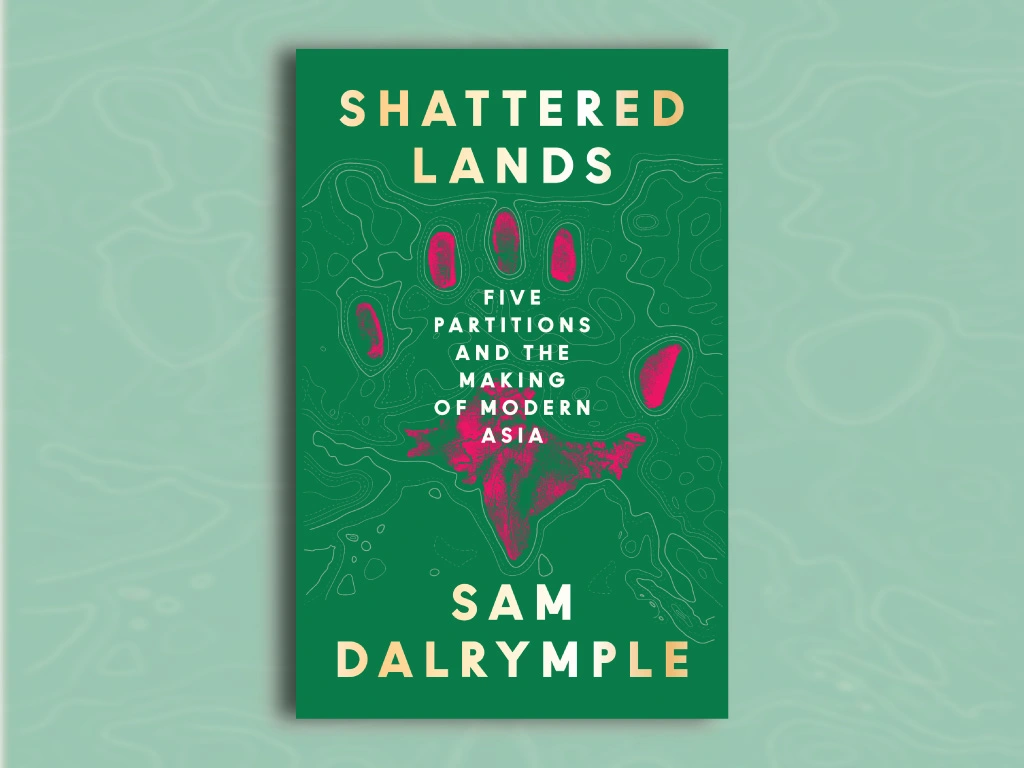
The story of the unravelling of the Raj (as Britain’s Indian Empire was known) has been told time and again: as political history, social history, personal memoir and feature film; as ‘end of Empire’ ignominy, rebirth of India, the making of a new Muslim nation or a tragic episode of communal frenzy. But never quite like this.
Sam Dalrymple’s success in Shattered Lands is to find a fresh and compelling way of retelling a familiar narrative. He makes excellent use of personal testimony and oral history to deliver a human dimension to a series of political tremors which remade the map of Asia. And he frames this epic account much more broadly, in timeframe and in geographical scope, than most histories of the demise of British India and the nation-building that stemmed from it.
How many partitions delivered independent nations out of the Indian Empire? The conventional answer is two. The ‘Great’ Partition of 1947 which saw British India dissected to create two independent nations, Hindu-majority India and mainly Muslim Pakistan, unleashed one of the most profound tragedies of a turbulent century.Up to three million people died and perhaps fifteen million became refugees as communities which had long been intertwined set upon each other with appalling savagery. Then in 1971, the two wings of Pakistan were rent asunder and the new nation of Bangladesh was formed amid carnage and forced migration similar in scale to that witnessed a generation earlier. These three successor nations to the Raj – India, Pakistan and Bangladesh – now have a combined population of almost two billion and are home to one-in-four of those who live on our planet. They also share some of the world’s most militarised borders.
Dalrymple argues that there were, in all, five partitions which tore apart imperial India and that out of the Raj have come as many as twelve modern nations: not just the three most obvious, but also Burma, Nepal, Bhutan, Yemen, Oman, the UAE, Qatar, Bahrain and Kuwait. The argument is at times over-stated, but the basic proposition is well researched and presented. The breaking up of British India began, the book suggests, in 1937, when Burma (now Myanmar) was carved out from the rest of the Raj. Dalrymple convincingly argues that Burma was linked economically, culturally and by population movement with the eastern flank of India. One of the most impressive aspects of Shattered Lands is the surefooted recitation of a history which is not as well-known as it should be: the rise of Burmese nationalism, abetted by Japanese wartime occupation, resulting in the grant of independence in January 1948, followed by a political tailspin, retreat into geopolitical isolation and the expulsion of almost all Indian landowners, merchants and skilled workers.
The second partition is nothing like as clear-cut. This is the uncoupling from India of Britain’s territories and protectorates in the Gulf and the southern part of the Arabian peninsula. These had been, largely for administrative convenience, ruled as part of the Raj. There were ancient links between Yemen and Hyderabad and between Oman and coastal Pakistan. Indeed, Oman ruled over the enclave of Gwadar on the Arabian Sea, now the site of the major Pakistani port being built with Chinese support, until as late as 1958. This severing of the Arabian peninsula from India started in 1937 and was completed shortly before the British left the sub-continent a decade later. It was another twenty years before the final British pull-out from what was once the most westerly wing of the Raj with the handing over of Aden to South Yemen. Dalrymple presents the connections between Britain’s Arab lands and India in an engrossing manner but to describe this administrative reordering as a partition is stretching the meaning of the word. 
The other ‘forgotten’ partition retold is that of princely India. When the Raj ended, hundreds of princely rulers had to decide to which independent nation they wished to accede. For most, there was no decision to be made. If they were surrounded on all sides by one or other soon-to-be independent nation, that was the one they had to join. A few of the large states hankered after independence. And the most tricky situations came where princely rulers were of a different religion from most of their subjects, notably in Junagadh (in what is now Gujarat), Hyderabad and Kashmir. The princes were slow to sign up – barely a quarter had done so by the deadline set by the departing British. And India eventually resorted to a military invasion to incorporate Hyderabad in 1948, entailing serious loss of life and triggering large-scale population movement. Kashmir was the only substantial princely state to be split in two, not by colonial diktat but as the outcome of war between India and Pakistan.
If the continuing Kashmir conflict is the most obvious unfinished business of Partition, Dalrymple convincingly argues the other faultlines have arisen in part because of the manner in which the Raj unwound. In Baluchistan, the roots of a decades-long insurgency are to be found in the manner in which Pakistan secured its hold on this vast region on its western flank.
The Muslim Rohingyas in Arakan were unhappy to be hived off from their co-religionists in East Bengal, and this encouraged the authorities in Burma/Myanmar to see a long-settled community as outsiders. Naga leaders could not understand how London could countenance full independence for Nepal and Bhutan, two Himalayan monarchies over which the British considered they had informal oversight, without offering the same concession to other hill peoples. To compound the Nagas’ sense of grievance, they were split in two by the border between India and Burma.
This is Sam Dalrymple’s first book and he writes with a vigour and elegance which is a match, at least, for his father, the distinguished Delhi-based historian, William Dalrymple. Shattered Lands offers no new overarching argument for the cause of Partition and does not seek to assess whether religion, language or (to use the academic lingo) imagined community is the most appropriate basis for nationhood. But there is at times a calling to account: a sense of outrage, for example, about the ‘vile and contemptible’ weaponising of rape by both sides in the 1971 war, the most grievous aspect of which was the herding of Bangladeshi women by the Pakistani army into what amounted to rape camps.
Throughout, Dalrymple displays not simply intellectual curiosity but compassion too. Perhaps the vivisection of Britain’s empire in Asia could not have been avoided, but the appalling human consequences of repeated partitions remain a warning: if you tamper with borders, take care!