The digital realm has given rise to a new lexicon of dissent where ephemeral online artefacts, based on Japanese ‘anime’ cartoon characters popular with Gen Z, mutate into symbols of political resistance. Madhavi Ravikumar compares modern modes of protest across Asian cities.
The digital realm has given rise to a new lexicon of dissent where ephemeral online artefacts, based on Japanese ‘anime’ cartoon characters popular with Gen Z, mutate into symbols of political resistance. Madhavi Ravikumar compares modern modes of protest across Asian cities.
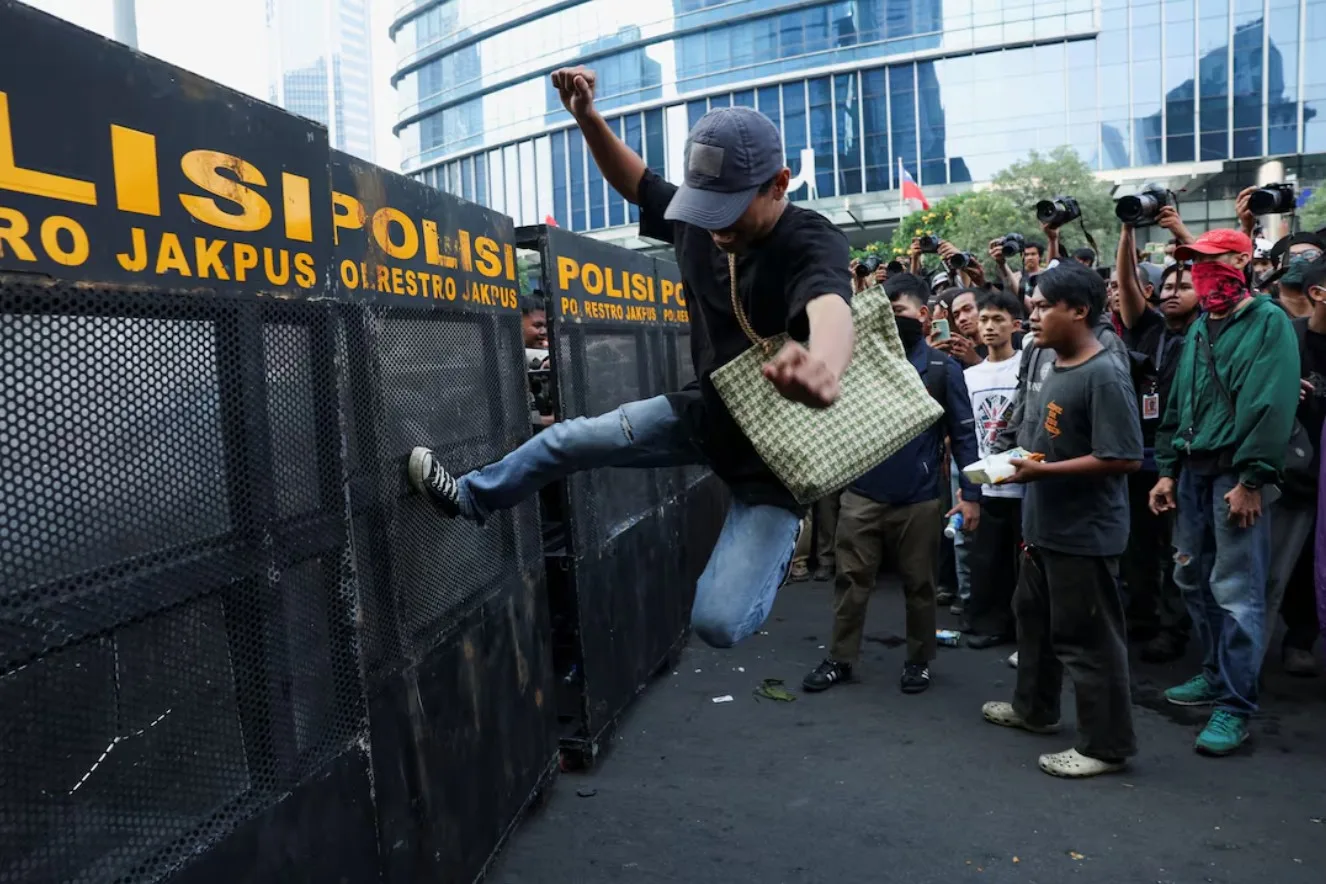
In the sweltering summer of 2025, as Indonesia geared up to celebrate 80 years of independence, an unlikely emblem appeared not in comic panels but on Jakarta’s streets: a grinning skull wearing a straw hat, the Jolly Roger of Monkey D. Luffy from One Piece. Created by Japanese ‘manga’ artist Eiichiro Oda, One Piece is among the world’s most popular anime franchises. It follows Monkey D. Luffy, a young pirate who sails across oceans challenging corrupt rulers and authoritarian empires in search of freedom. His straw hat and skull-and-crossbones flag have become globally recognizable symbols of resistance to unjust power, making them easily adaptable as political metaphors.
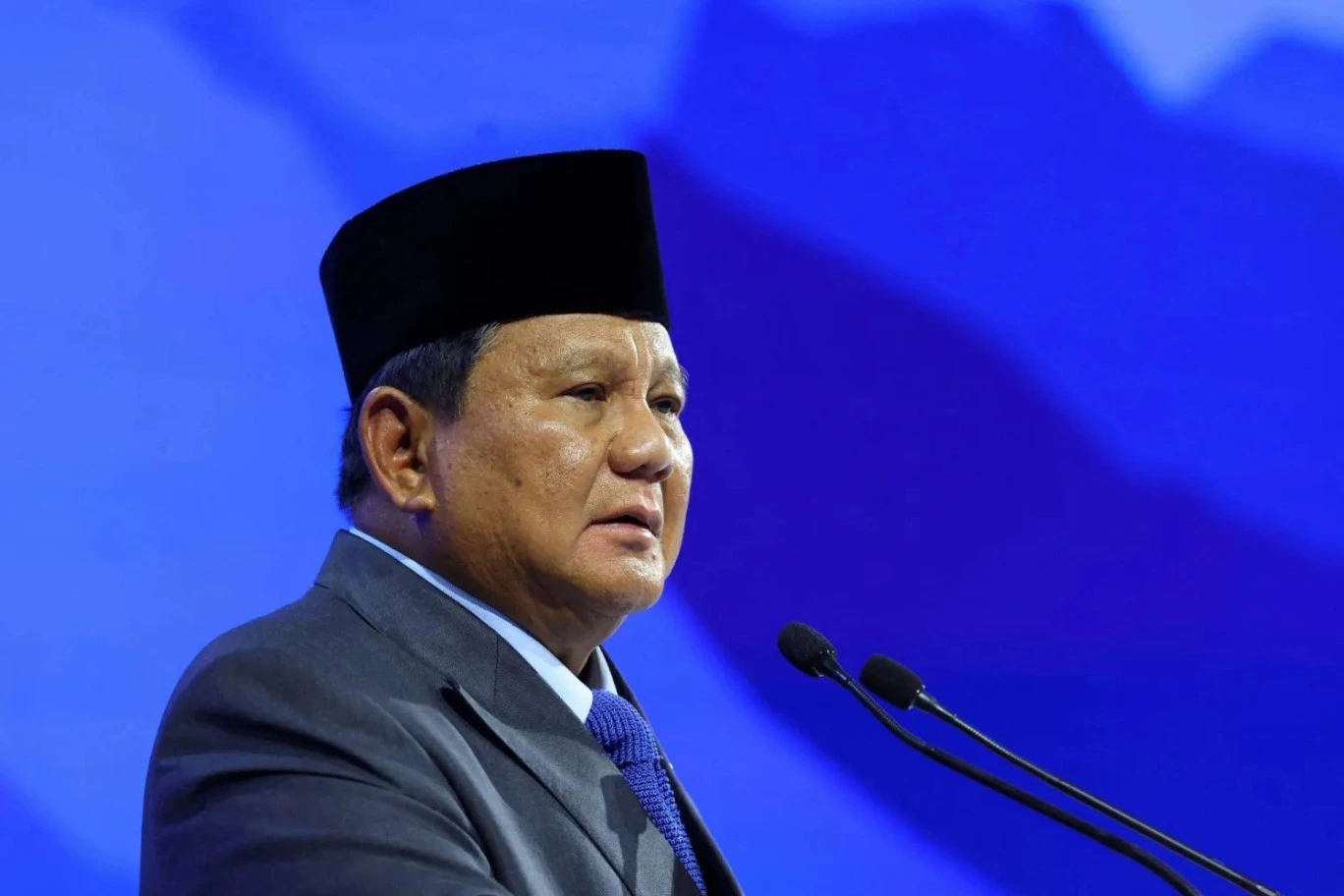
What began as a protest by truck drivers opposing vehicle-overload regulations quickly evolved into a nationwide symbol of anger against President Prabowo Subianto’s administration, spreading in homes, on motorcycles and as graffiti in Javanese cities including Solo, Surabaya and the capital Jakarta. Far from a cultural curiosity, the episode exposed the deliberate ambiguity of meme-driven activism – accessible enough to evade immediate suppression yet vague enough to risk dissolving demands into spectacle.
The initial trigger was economic. New transport regulations jeopardised the livelihoods of truck drivers already operating at the margins. They responded by flying Luffy’s pirate flag. It was fictional resistance against a tyrannical ‘World Government’ reimagined as protest against a real one. The emblem spread across urban Indonesia amid rising frustration over 16 percent youth unemployment and sweeping budget cuts. The state reacted swiftly. Police confiscated flags and erased murals. Ministers warned of criminal penalties under laws governing the desecration of national symbols.
However, repression only amplified visibility. Protesters responded to accusations of sedition with humour. “It’s just anime,” became a common retort as well as a playful denial and political provocation. The flag’s cartoonish design allowed dissent to hide in plain sight, a strategy referred to by Limor Shifman, a communication professor at the Hebrew University of Jerusalem, as meme “polysemy” – multiple meanings coexisting under a single symbol.
On the ground, meanings were unequivocal. Imam Santoso, a truck driver, explained that he flew the flag because regulations “threatened our economic survival”. Student Ryanto Kusnadi added: “The government has forgotten ordinary citizens. Luffy fights injustice—that is how Indonesians feel today.” What made this revolt distinctive was its architecture: decentralized, leaderless, organised through encrypted Discord servers and TikTok livestreams. Memes not only symbolised dissent, they orchestrated it.
From meme to regime crisis
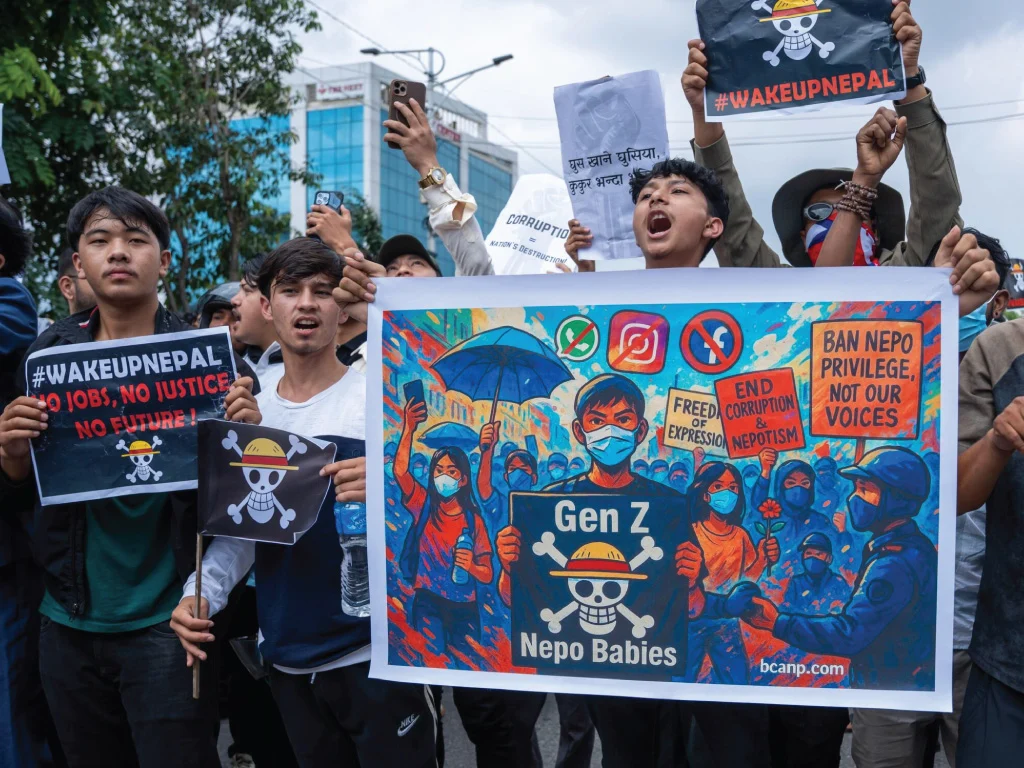
By September 2025, the ‘Straw Hat’ flag leapt across the Himalayas. Nepal’s government abruptly shut down 26 social media platforms under new registration rules. Though the ban was lifted within

Jakarta, Indonesia. August 29, 2025. The One Piece pirate flag flies as students protest the death of Affan Kurniawan, killed after being hit by a police armored vehicle. Photo: Toto Santiko Budi/Shutterstock
hours, anger had ignited. Youth unemployment hovered near 20 percent; thousands of young Nepalis left the country daily for overseas labour. Gen Z protesters projected the One Piece narrative on to local politics, portraying Prime Minister K.P. Sharma Oli’s administration as the oppressive ‘World Government’. The flag was draped across Singha Durbar as protesters stormed the parliamentary complex in Kathmandu. Online a parallel ‘e-election’ emerged, where users voted for interim leaders using Luffy avatars – a “digital plebiscite that foreshadowed Oli’s resignation,” according to Nepal-based digital rights researcher Anil Gurung.
When security forces opened fire on demonstrators killing dozens, protests escalated. Oli resigned days later. However, the victory proved fragile: the interim government quietly reinstated social media restrictions. Meme-driven mobilisation had toppled a leader but not the system that produced discontent.

A demonstrator shouts slogans during a protest against corruption and the government’s decision to block several social media platforms, in Kathmandu, Nepal, on September 8, 2025. Photo: Navesh Chitrakar/Reuters
The pirate flag’s next appearance was in the Philippines. On 21 September, tens of thousands gathered at flooded Luneta Park in Manila for what has been dubbed the Baha sa Luneta, protests against corruption in flood-control spending. Waving Luffy’s Jolly Roger beside Palestinian flags, protesters held placards reading: “We’re not fish, but why do we live in water?”
Here too, the meme adapted seamlessly, absorbing local concerns while retaining a universal anti-authoritarian message. Vendors sold straw hats in tribute to Luffy. A youth protester, Irvan Sodirin, explained that Luffy symbolised fighting injustice despite overwhelming odds. The outcome mirrored Nepal and Indonesia: visibility without structural negotiation. No significant policy reversals followed. The meme’s dissemination outpaced its political leverage.
The alchemy of memes
Scholarly research explains why this symbol travelled so effectively.

Protesters hold signs denouncing corruption linked to flood control projects in Manila, the Philippines, September 21, 2025. Photo: Lisa Marie David/Reuters
Shifman defines ‘memes’ as cultural entities that propagate through imitation and remixing, thriving on simplicity and humour. In Asia’s Gen Z protests, the ‘Straw Hat’ flag functioned as visual shorthand – circumventing censorship while forging collective identity. Memes operate through accessibility, ambiguity, and amplification. In Indonesia, Luffy’s hat was superimposed onto national symbols with captions such as “True freedom isn’t red and white—it’s straw-hatted,” referencing the colours of Indonesia’s flag. Protesters insisted “It’s just anime” while officials accused them of treason. This ambiguity generated what Shifman calls “mimetic logic”: emotional engagement that turns spectators into participants.
However, meme activism entails some risks. Shifman cautions that polysemic symbols can become “empty signifiers”. In Nepal, a leaderless organisation slid quickly into violence once repression intensified. In Indonesia, raids only amplified visibility – a textbook case of the so-called Streisand effect, where attempts at suppression intensify public attention but fail to produce negotiation channels. Indonesian truck drivers, Nepali students and Filipino environmentalists share the same skull insignia, yet their material requirements diverge. In the absence of institutional frameworks, solidarity is merely symbolic.
Lessons from India
Gen Z in India has weaponised memes to critique policies like the Agnipath recruitment scheme or the repealed farm laws, with viral edits of Modi as an admiral of a World Government attracting millions of views. Movements such as Shaheen Bagh in 2019-20 illustrated that enduring offline organisation – women-led sit-ins, community kitchens, and religious solidarity – surpass viral moments. The 2022 Kanjuruhan Stadium incident in Indonesia, where police tear gas incited a crush killing 135, remains as a collective trauma echoed in truck drivers’ testimonies, reminding us that meme symbols can humanise rage but not shield bodies from state violence.
Globally, these dispersed emblems “touch a nerve” but lack the institutional cohesion of traditional student-led movements, leaving them vulnerable to fragmentation once the algorithmic spotlight fades. Memes ignite urban centres but bypass villages where landlessness and agricultural distress persist.

Young activists document protests on smartphones, underscoring how digital platforms have become central to contemporary political mobilisation. Photo: AFP
Pixels to power—or perpetual spectacle?
Can Gen Z convert meme rage into systemic reform? The record remains thin. Nepal replaced a prime minister but retained restrictive laws. Indonesia’s flag protests reshaped discourse but not policy. The Philippines witnessed moral outrage without legislative consequence. These are disruptions, not transformations. Governments trembling before a cartoon pirate confirm its performative dominance, not its diplomatic efficacy. Memes mobilise crowds; they do not formulate budgets, design welfare schemes, or rewrite constitutions.
In One Piece, Luffy’s voyage succeeds because he has a crew, a ship, and a destination. Real revolutions require unions, federations, policy blueprints, and institutional alliances. For now digital revolts remain performances of dissent rather than architectures of change.
The treasure is not the flag, it is the federation that follows.