Since early January Iranians have been on the streets protesting as the value of the rial falls, creating a cost of living crisis and raising questions as to whether Supreme Leader Ayatollah Khamenei can survive this latest rebellion against his rule. Kasra Naji reports.
Since early January Iranians have been on the streets protesting as the value of the rial falls, creating a cost of living crisis and raising questions as to whether Supreme Leader Ayatollah Khamenei can survive this latest rebellion against his rule. Kasra Naji reports.
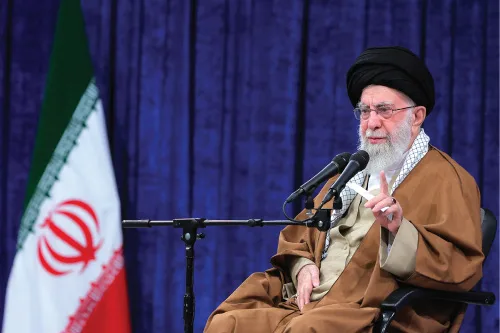
during the 12-day war last June, when Israel first attacked, Iran’s beleaguered supreme leader, Ayatollah Ali Khamenei, was taken to a secret hideout for his safety. When he issued a short video statement from hiding a few hours later, the 86-year-old ayatollah in black robe and turban with his flowing white beard, appeared calm and collected, if slightly shaken. “Israel has made a big mistake; it will haunt it for a long time,” he said.
Israeli attacks had taken out the entire top brass of the Army and the Revolutionary Guard Corps in the first hour of aerial rocket and bombing attacks and US planes would go on to carry out bombing raids on nuclear sites. There was a real chance that the Ayatollah’s whereabouts were being tracked with the aim of eliminating him. But besides recording his video message to reassure his supporters, Ayatollah Khamenei, as commander-in-chief of the armed forces, quickly appointed new commanders. He was telling his supporters and the nation at large – as well as Israel – that he was alive and well and still in charge.

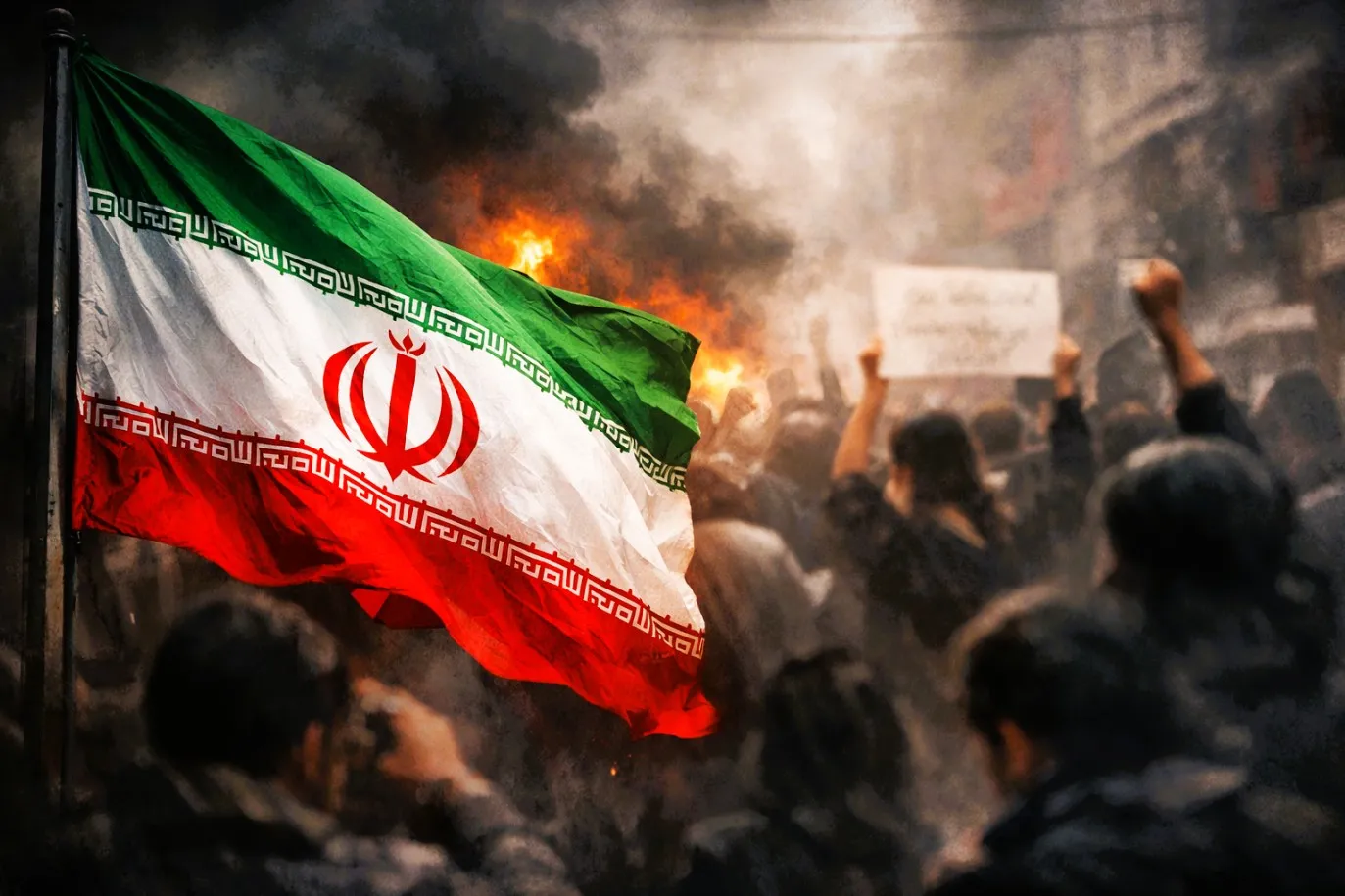
Iranians protest against rising prices and economic hardship, as the country faces its worst cost-of-living crisis in years. Photo: TempoEnglish
To a vast majority of people in Iran, however, he himself was responsible for creating the conditions for the calamity. He had spearheaded the idea that Israel must be wiped off the map. Iranians did not rally around the leader or the regime as the government later claimed. Instead, they opted to support their families and neighbours at a time of great uncertainty.
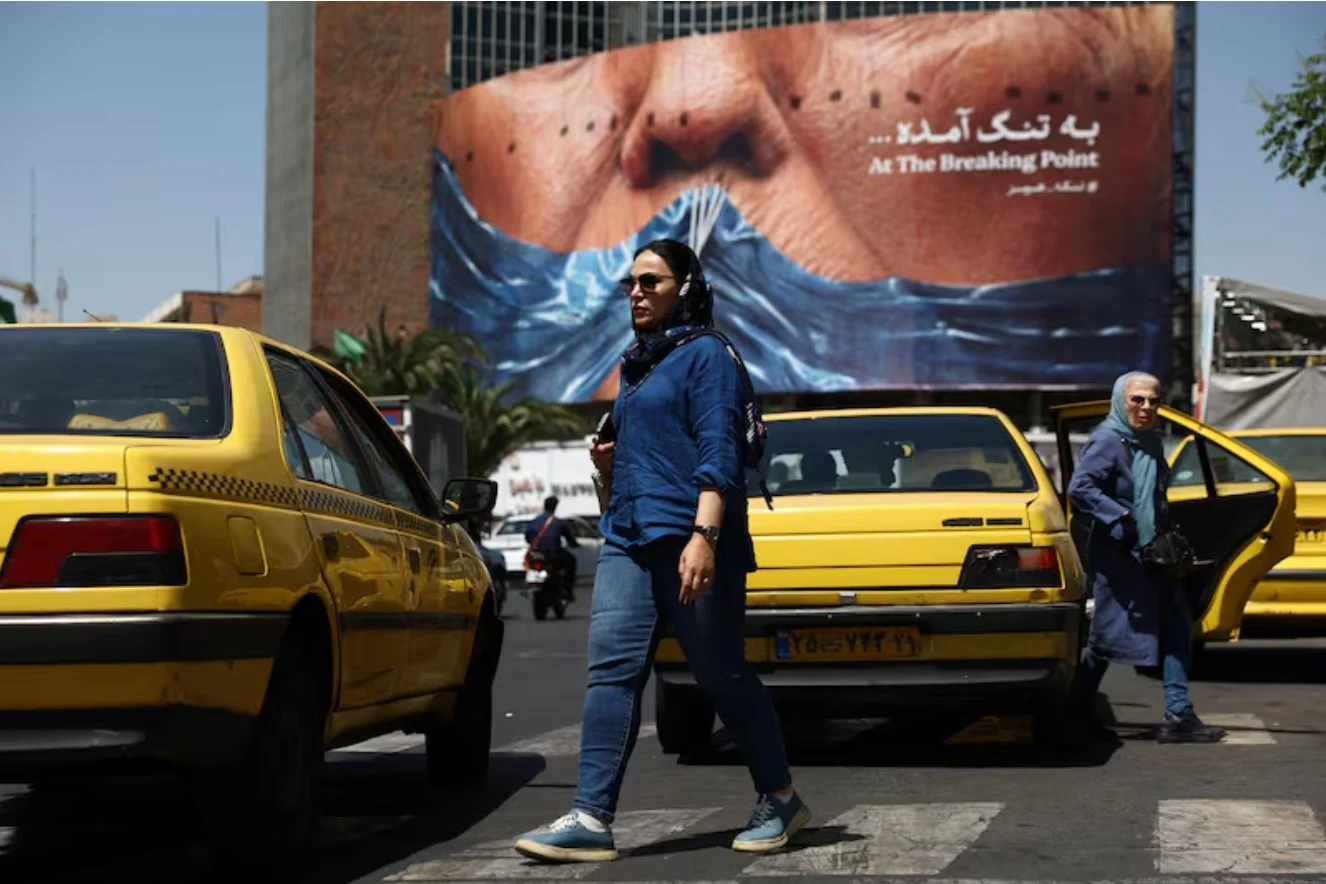
In January’s unrest across the country, protesters have been calling for the Ayatollah’s overthrow, believing he is the main architect of their impoverishment and Iran’s misfortunes. The unrest was triggered by the constantly falling value of the currency, the rial, which had made doing business impossible. But it soon became about much more, and especially about the sharply rising cost of living, which has left many feeling destitute.
Over the years, Khamenei has single-mindedly pursued a nuclear policy that has brought Iran the most stringent international sanctions after Russia. Sanctions have brought the economy to its knees, a situation made worse by rampant corruption and poor

Iranians exchange currency as the rial continues to plunge, fuelling inflation and public anger. Photo: The Sunday Guardian File Photo
management. Staunchly anti-Western, Iran’s spiritual leader has cut Iran off from much of the world, causing it to lean on Russia and China for support. He pursued a policy of expanding Shi’ite Islam throughout the Middle East, where Sunni Muslims are in the majority. He chose Bashar al-Assad as an ally in Syria. He provided arms and money to Hezbollah in Lebanon and to a variety of Palestinian armed groups. He poured billions of dollars into Venezuela to gain a foothold in Latin America.
Ayatollah Khamenei has been in charge since 1989 when the leader of the Iranian revolution, Ayatollah Ruhollah Khomeini, died of old age. The so-called Assembly of Experts, a council of dozens of top clergymen, chose Ayatollah Khamenei the next day as the new leader of the Islamic Republic. He was a senior cleric at the time and a trusted aide to the leader of the revolution. As the Friday prayer leader of the capital, Tehran, he had donned military fatigues and spent a considerable amount of time at the front during the war with Iraq. Now increasingly a hated figure

People walk past closed shops following protests over a plunge in the currency's value, in the Tehran Grand Bazaar, Tehran, Iran, December 30, 2025. Photo: Reuters
within Iran, in his 36 years at the helm “the leader”, as he is known to his supporters, has amassed vast powers that have given him control over the government, parliament, the judiciary, and the armed forces. He has created a form of theocracy which he heads with the ideal of building a pure Islamic society.
In parliamentary elections, candidates are vetted by the so-called Guardian Council before they are allowed to stand. This process has increasingly been used to “purify” parliament by barring candidates who are suspected of not being sufficiently in line with the Islamic Revolution. The head of the council is appointed by the supreme leader. It is widely known that before final candidate lists are published, they must have the leader’s approval. The result is a parliament of some 290 members who

Members of Iran’s Revolutionary Guard Corps stand watch during demonstrations, a key pillar of support for the supreme leader. Photo: Reuters
are in effect not elected but selected to align parliament with the leader’s policies. The head of the judiciary is also appointed by the leader, usually from among senior clerics he trusts.
The president is the head of government and is elected directly by the people. But here too candidates must be vetted by the Guardian Council, whose head consults the leader before the names are officially released. In the last election, the name of Massoud Pezeshkian, a relative moderate, was added to the list at the last minute by the leader to avoid the possibility of a major boycott, as many Iranians felt only hardliners favoured by the leader were being allowed to run.
The leader also directly chooses some government ministers while others are selected by the president and presented to the leader for final approval. Only then can parliament give a vote of confidence to each proposed minister. The leader chooses the minister of intelligence, the minister of foreign affairs, and the interior minister, who answer only to him. Ayatollah Khamenei also appoints the top commanders of the armed forces – both the Army and the Revolutionary Guard. They are the main base of support for his regime. Many of them he knows personally from his time at the front during the 1980s Iran-Iraq war. Many are well past retirement age. He is also directly in charge of spending from the strategic reserve fund, billions of dollars’ worth of foreign exchange. As the country’s top religious leader, he also receives religious taxes and dues from the faithful.
As he has amassed more power, Ayatollah Khamenei has increasingly taken charge not only of strategic policies but also of decisions on all manner of issues. During the Covid pandemic, when nations around the world including Iran were clamouring for more vaccines, he went on television and publicly ordered the government not to import vaccines made in the United States or the United Kingdom saying he did not trust those countries or their vaccines.
Iran’s 12-day war last June was seen by many as a major turning point. They felt things had to change fundamentally if Iran was to avoid another war. Yet Ayatollah Khamenei did not change tack. Instead, he has doubled down on the same policies at the cost of losing even more of his ardent supporters. He is counting on the Revolutionary Guard Corps and other security forces to keep him in power. While Israeli Prime Minister Benjamin Netanyahu focuses on Iran’s ballistic missile programme and President Donald Trump threatens to intervene, promising to make 2026 the year to “Make Iran Great Again,” Ayatollah Khamenei, who will be 87 in April, is facing formidable forces stacked against him.