Former Pakistani prime minister Imran Khan has been in prison for more than three years as the military establishment tries to erase him from the national consciousness. Umber Khairi reports.
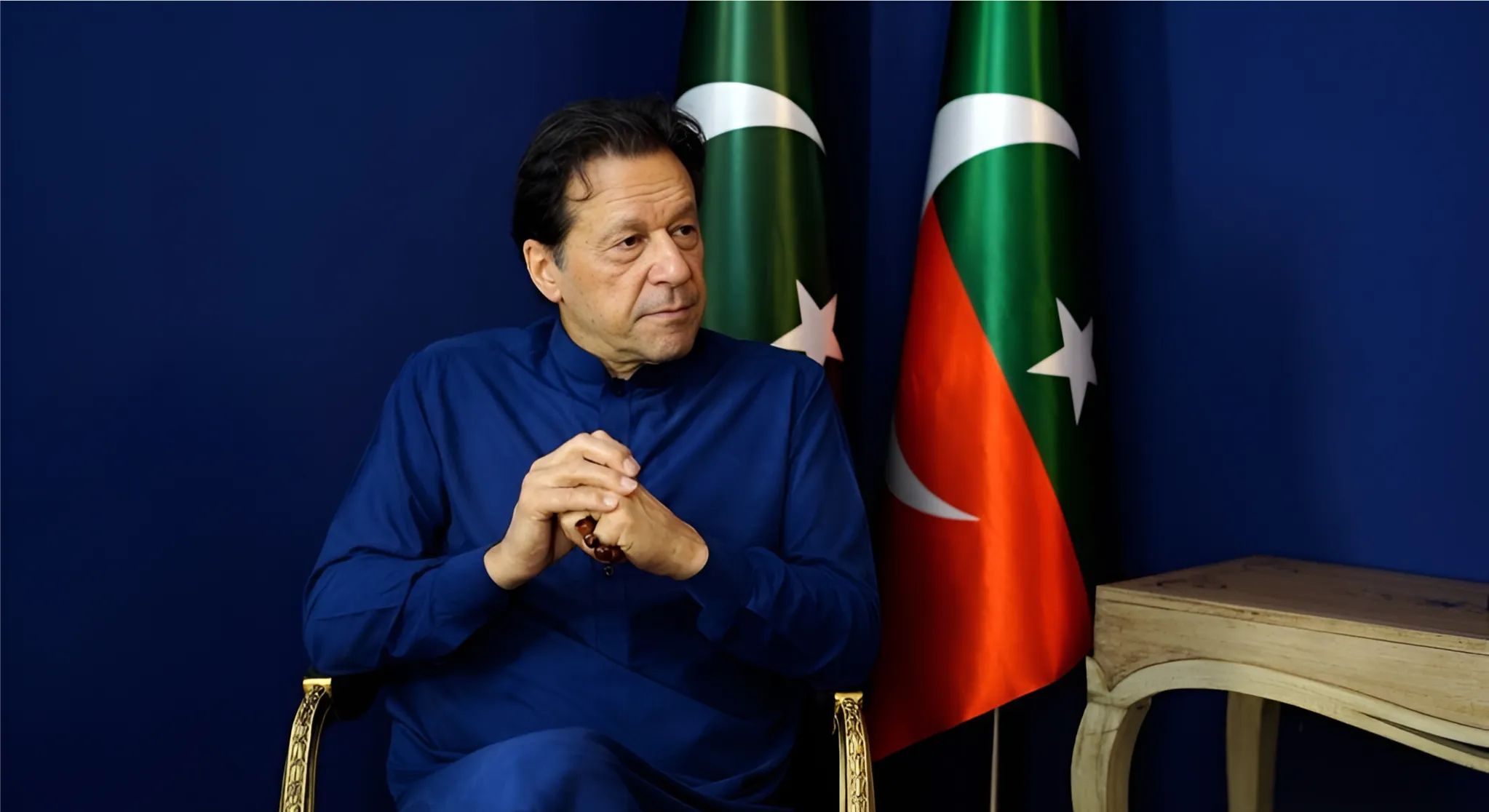
Imran Khan, Pakistan’s former prime minister and 1992 Cricket World Cup-winning captain, has been in prison for more than three years. His continued detention has not ended his political influence. Photo: RFE/RL’s Radio Mashaal
Imran Khan, once one of the world’s most exciting cricketers and a former elected prime minister of Pakistan, has been in prison for over three years. Pakistan’s military-controlled authorities ensure that he is never seen in public, and almost no images of him have surfaced since. The last public footage of him is from August 2023, when he was arrested at his home in Lahore. Despite a brutal crackdown on his party and supporters, support for Khan remains strong at home and abroad. Repeated appeals for his release – he is held in what his lawyers describe as solitary confinement at Adiala jail in Rawalpindi – have come from human rights groups, UN officials, former cricket captains, international parliamentarians and his family. Yet none has been heeded, as Western governments seem unwilling to antagonise Pakistan’s Chief of Defence Forces, Field Marshal Asim Munir.
Health issues and court orders
Earlier this year, Khan – who is now 74 – complained of failing sight in his right eye. A report to the Supreme Court by one of his lawyers, Barrister Salman Safdar, who visited him in February at the court’s request, said Khan had lost nearly 85 percent of the sight in that eye. On 18 August, the court ordered that he be moved within two days to the privately run Shifa International Hospital in Islamabad. The authorities refused, saying this would be ‘discriminatory’ because it would grant the former prime minister special privileges. Instead, Khan has been treated at the government-run Pakistan Institute of Medical Sciences (PIMS) in Islamabad, where he is taken in the dead of night to avoid publicity or photographs. According to the hospital, on his latest visit, in the early hours of 11 November, he was given his sixth injection to treat central retinal vein occlusion (CRVO).
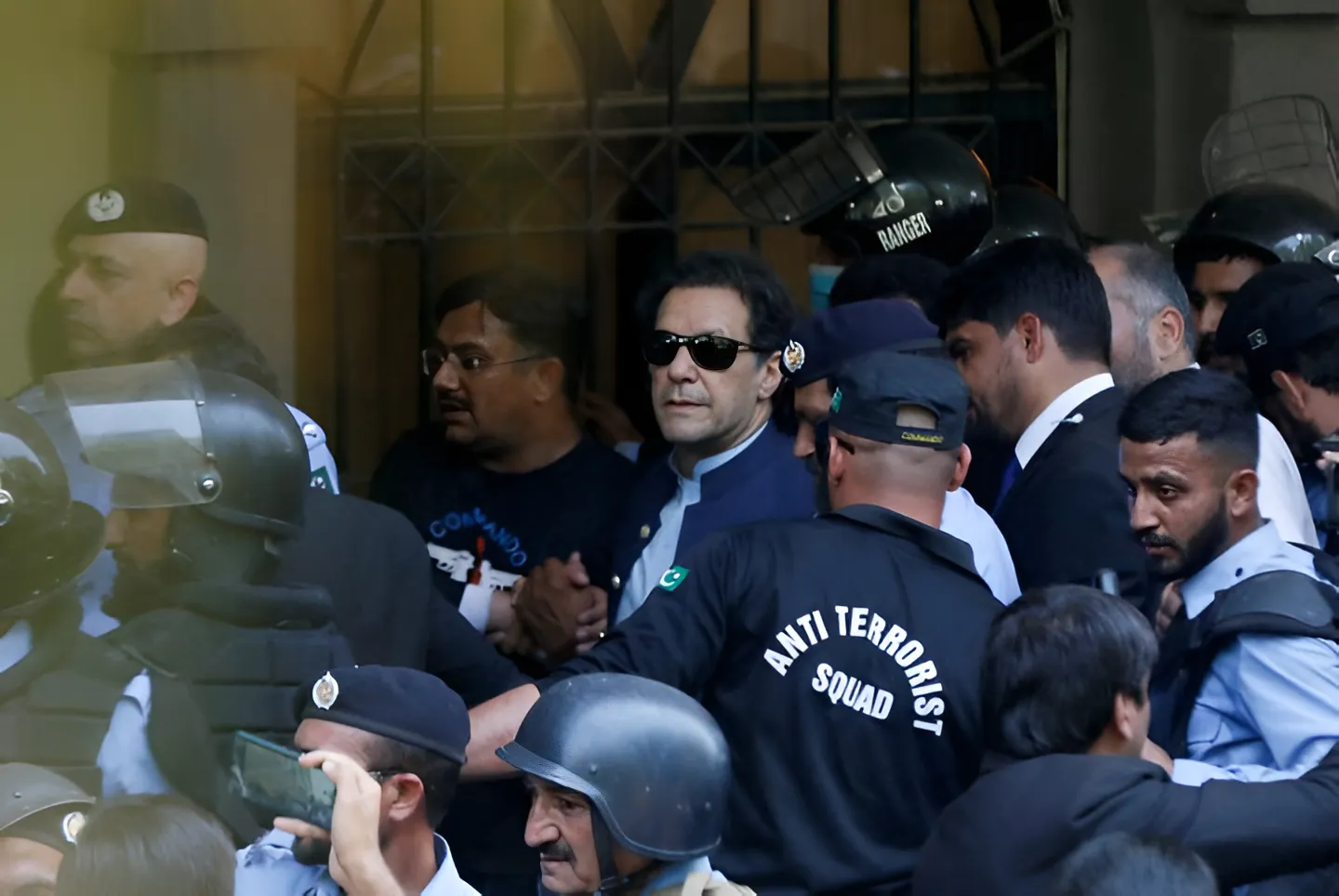 Security officers escort former Pakistani prime minister Imran Khan to the Islamabad High Court in May 2023, when he was briefly arrested. He has been in prison since August 2023. Photo: Akhtar Soomro/Reuters
The conditions he is held in are just as worrying. According to a report by Osman Samiuddin in Equator earlier this year, Khan is kept in a room six feet by eight feet, in an eight-cell block where the other cells are empty except one used as a kitchen. Visits by family and lawyers are rare and hard won. Relatives are told they must not ‘do any political activity’, a rule that has been used to deny further visits.
The erasure of Imran Khan
Since Khan was removed from power in April 2022 by a parliamentary vote of no confidence, which both his supporters and independent journalists say was engineered, Pakistan’s military establishment has worked to erase both him and his party, Pakistan Tehreek-e-Insaf (PTI). TV channels were told not to say his name on air; absurdly, he was to be referred to only as ‘Baani PTI’, or ‘PTI founder’.
Khan is also being airbrushed out of sporting history. He has been edited out of official footage of the 1992 Cricket World Cup, which Pakistan won under his captaincy. At a state event honouring Arshad Nadeem, the javelin gold medallist at the 2024 Olympics, a montage of Pakistan’s greatest sporting achievements left out the 1992 win altogether. The state even prosecutes indirect references to him, such as his prisoner number, 804 (‘aath sau chaar’). Supporters still allude to him most often as ‘kaptaan’ (captain).
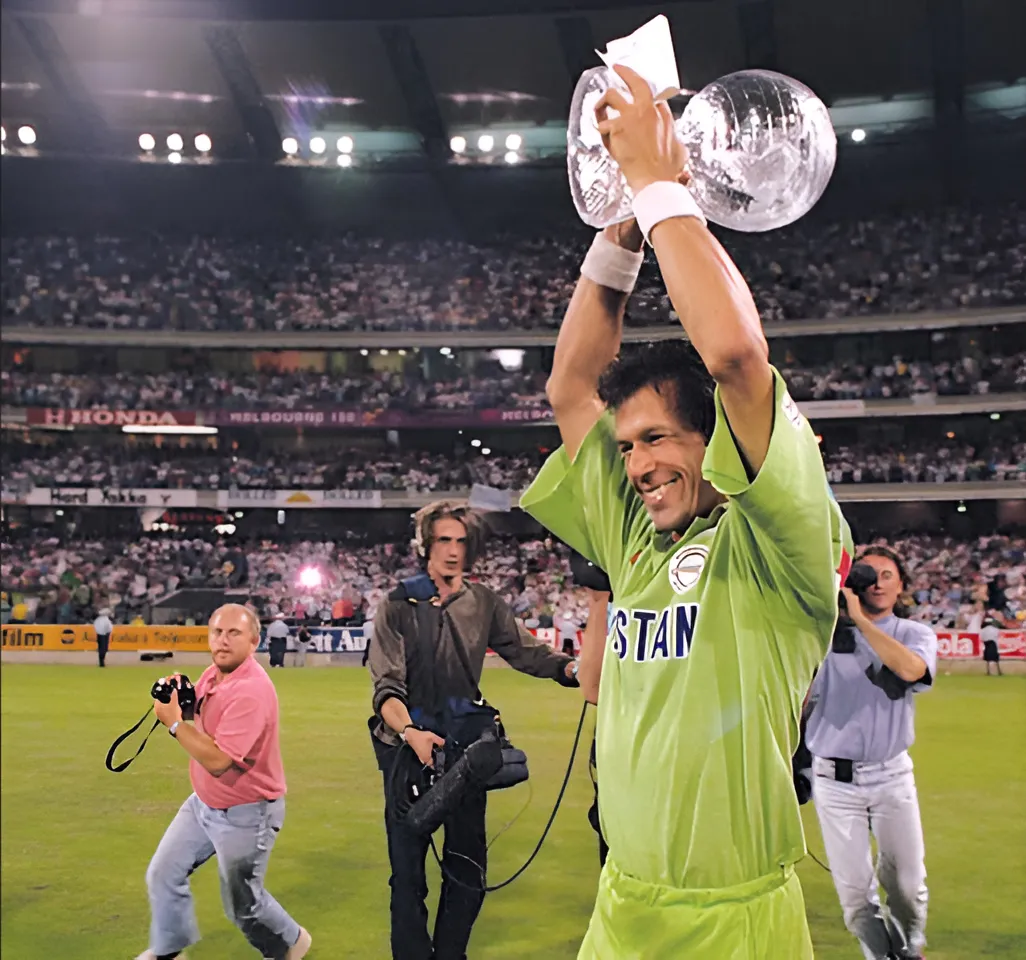 Imran Khan led Pakistan to victory in the 1992 Cricket World Cup. His removal from official sporting footage has become part of the wider effort to erase his public legacy. Photo: Getty Images
For more than four years, the military establishment has tried to divide and destroy the PTI. Before the February 2024 election, the courts stripped the party of its cricket-bat symbol because it had not held valid internal elections, forcing its candidates to stand as independents while Khan was in jail. Despite these restrictions, the PTI did extremely well in the election, largely because of well-coordinated campaigning and social media messaging.
Meanwhile, a compliant media reports supposed rifts among senior leaders over strategy and between Khan’s family and the party, and even between his jailed wife, Bushra Bibi, and his sisters. Such insinuations steadily erode the party’s credibility. The state’s crackdown on PTI protests has been brutal. In November 2024, protesters marched on Islamabad, most of them from Khyber Pakhtunkhwa (KP), the north-western province where the PTI was in power. Live coverage was suspended. One independent journalist who toured hospitals that night to count the dead and injured was picked up from a hospital car park and charged with possessing narcotics. How many people were killed or detained on the night of 26 November has never been established.
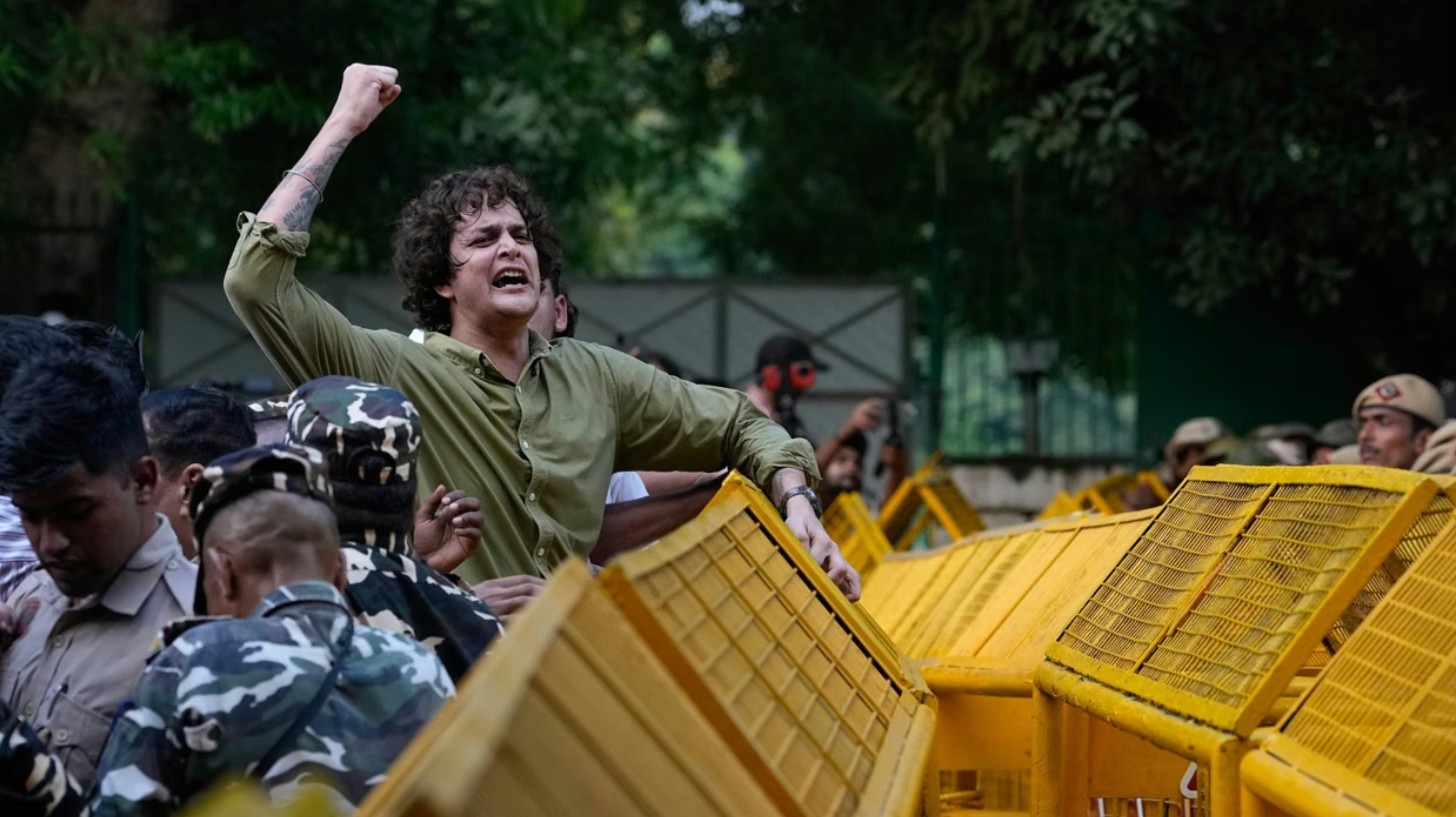
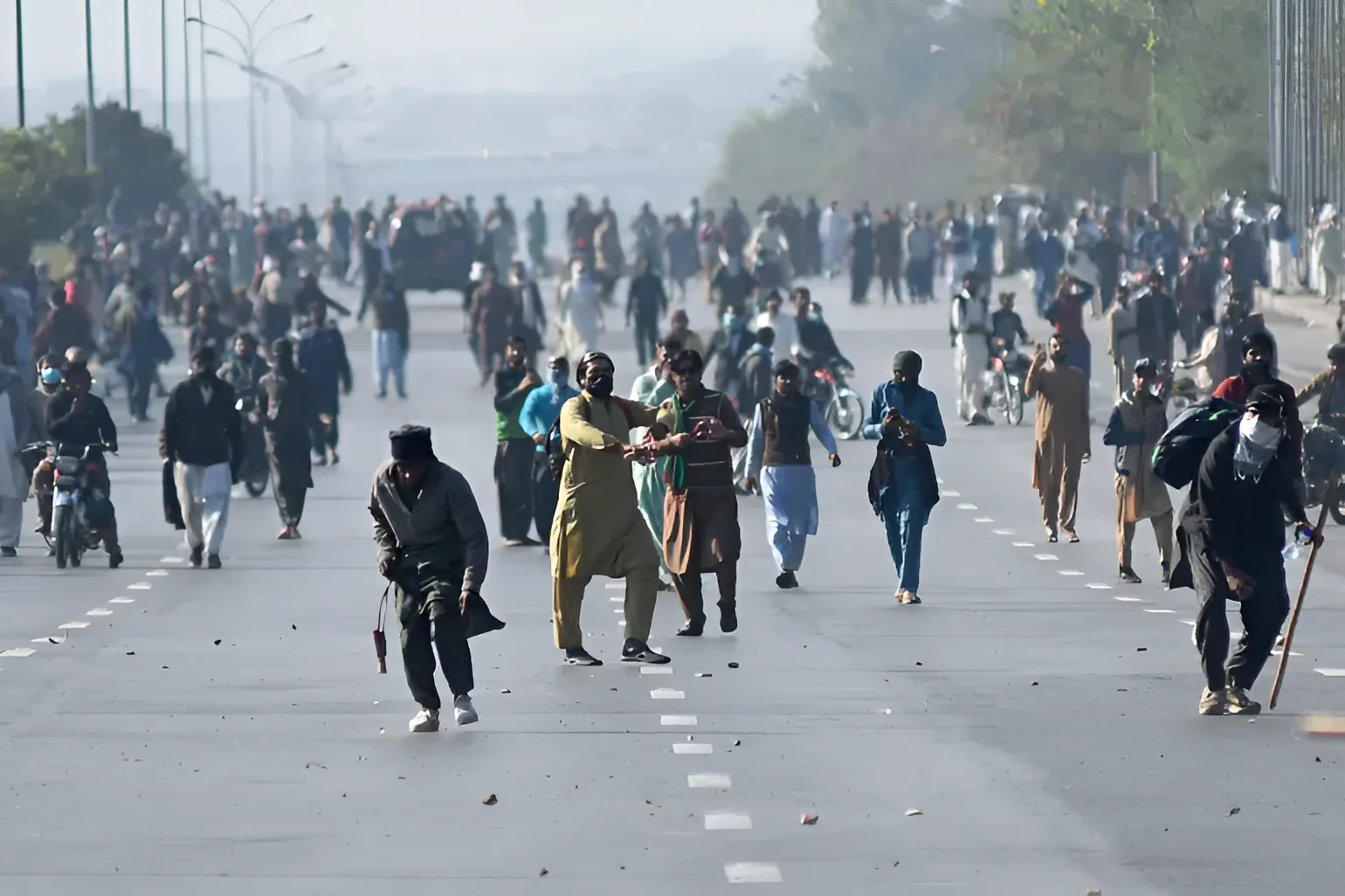 Supporters of Imran Khan and the PTI took to the streets in November 2024, as authorities intensified their crackdown on the party. Photo: WK Yousufzai/AP Photo
On 11 October, the federal government neutralised the one province the PTI governed by imposing an emergency and governor’s rule in KP. The province is now run by a federally appointed governor, and its elected chief minister, Sohail Afridi, was taken into ‘preventive custody’ immediately and has been in detention ever since.
The cases
Khan is serving sentences from at least three convictions, with other cases pending, so even a successful appeal would not free him. One conviction is for selling state gifts; another, also with his wife, is for taking land as a bribe from the property tycoon Malik Riaz. That case is bizarre. In 2019, Riaz settled a money-laundering investigation by Britain’s National Crime Agency. Under the deal, £190 million (about US$250 million) was to be returned to the state of Pakistan. Instead, it was used to pay a fine Riaz owed to a Pakistani court. Around the same time, Riaz gave more than 50 acres of land to a trust run by Khan and his wife for a university project – a gift Khan’s enemies later labelled a bribe. Riaz was understood to have had good communication channels with both politicians and senior military officials for many years, and the arrangement could hardly have happened without a nod from, or a cut for, the powerful establishment.
Enemy of the state or political prisoner?
Observers see Khan’s imprisonment as a fight for survival between him and the Field Marshal, much like that between Zulfikar Ali Bhutto and General Zia-ul-Haq decades ago: neither man is safe while the other is in power – or even alive. The enmity is partly personal. Khan backed a rival general to become army chief and, as prime minister, reportedly removed Munir as head of the ISI after about eight months, when Munir apparently suggested an inquiry into alleged corruption by Khan’s wife. Munir has insisted that Khan is an enemy of the state and a traitor.
Khan’s supporters say he remains in prison because Washington wants it so. The Americans, they argue, have distrusted him since he met President Vladimir Putin in Moscow in February 2022 and then publicised a confidential diplomatic cable that, he said, showed the US wanted him removed. Certainly, Western governments have done little to press Pakistan’s military ruler to free him, and are unlikely to while the Field Marshal remains a useful ally in the US–Iran conflict and Pakistan’s army stays close to Saudi Arabia.
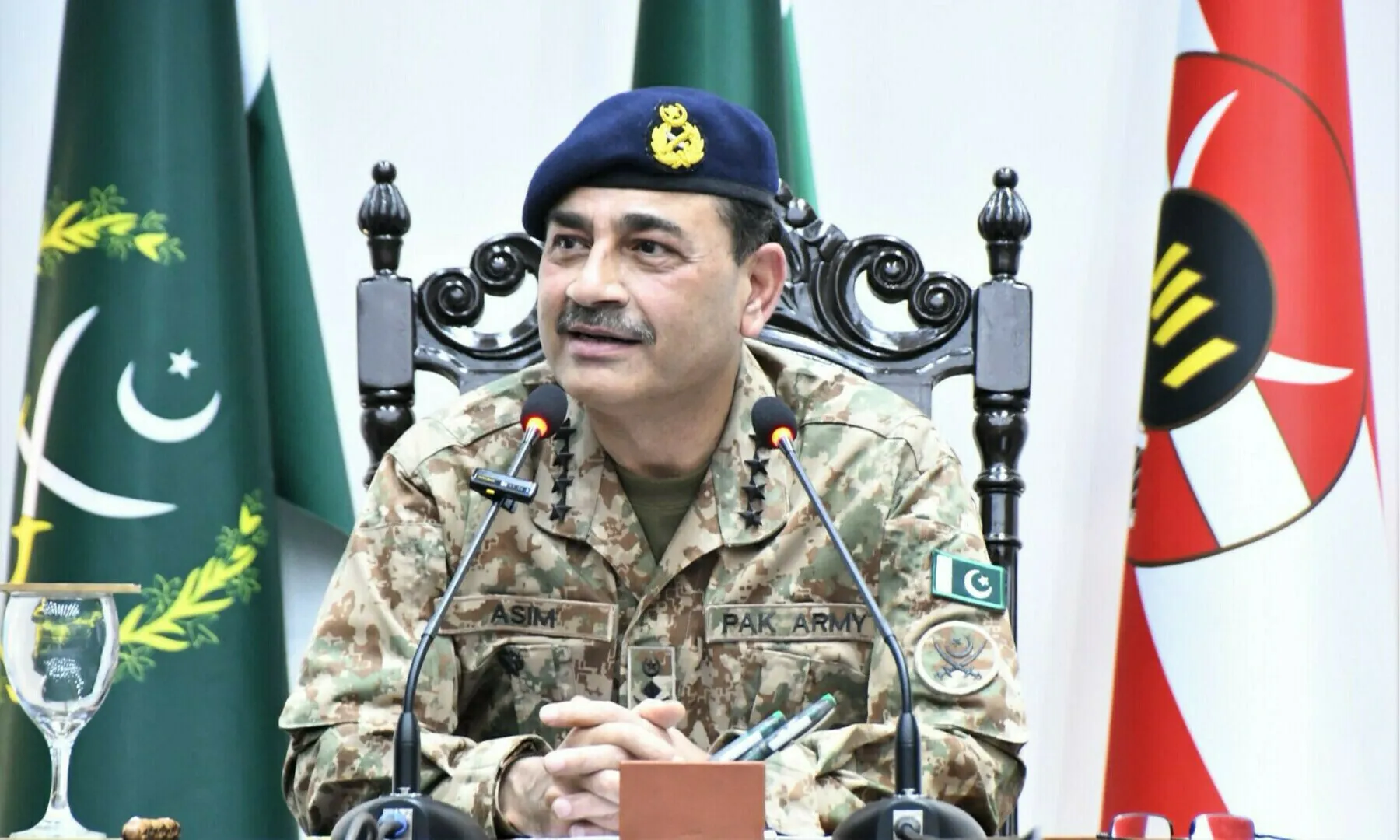 Pakistan’s military chief, Field Marshal Asim Munir, has become a central figure in the political struggle surrounding Imran Khan’s imprisonment. Photo: ISPR/File
Morsi’s fate?
Some of Khan’s PTI colleagues have warned that he could die in custody, as Mohamed Morsi, Egypt’s first freely elected president, did in 2019. Morsi died almost six years after the military overthrew him. Whatever the cause – some suspected poisoning – the international media barely noticed, and nobody in the ‘free world’ seemed perturbed that an elected president had died in a military ruler’s custody. The cheerleaders of the Arab Spring had little to say. Given that precedent, Khan’s release seems unlikely. What remains to be seen is whether the state can erase him from the memories of Pakistanis – or will simply turn him into a hero and a martyr.