The streets of India’s main cities have become a testing ground for institutional accountability. Protests against the Special Intensive Revision (SIR) of electoral rolls and demands for Chief Election Commissioner Gyanesh Kumar’s resignation have brought student organisations, opposition parties and the youth-driven Cockroach Janta Party (CJP) together. Madhavi Ravikumar considers the implications for Narendra Modi’s government.
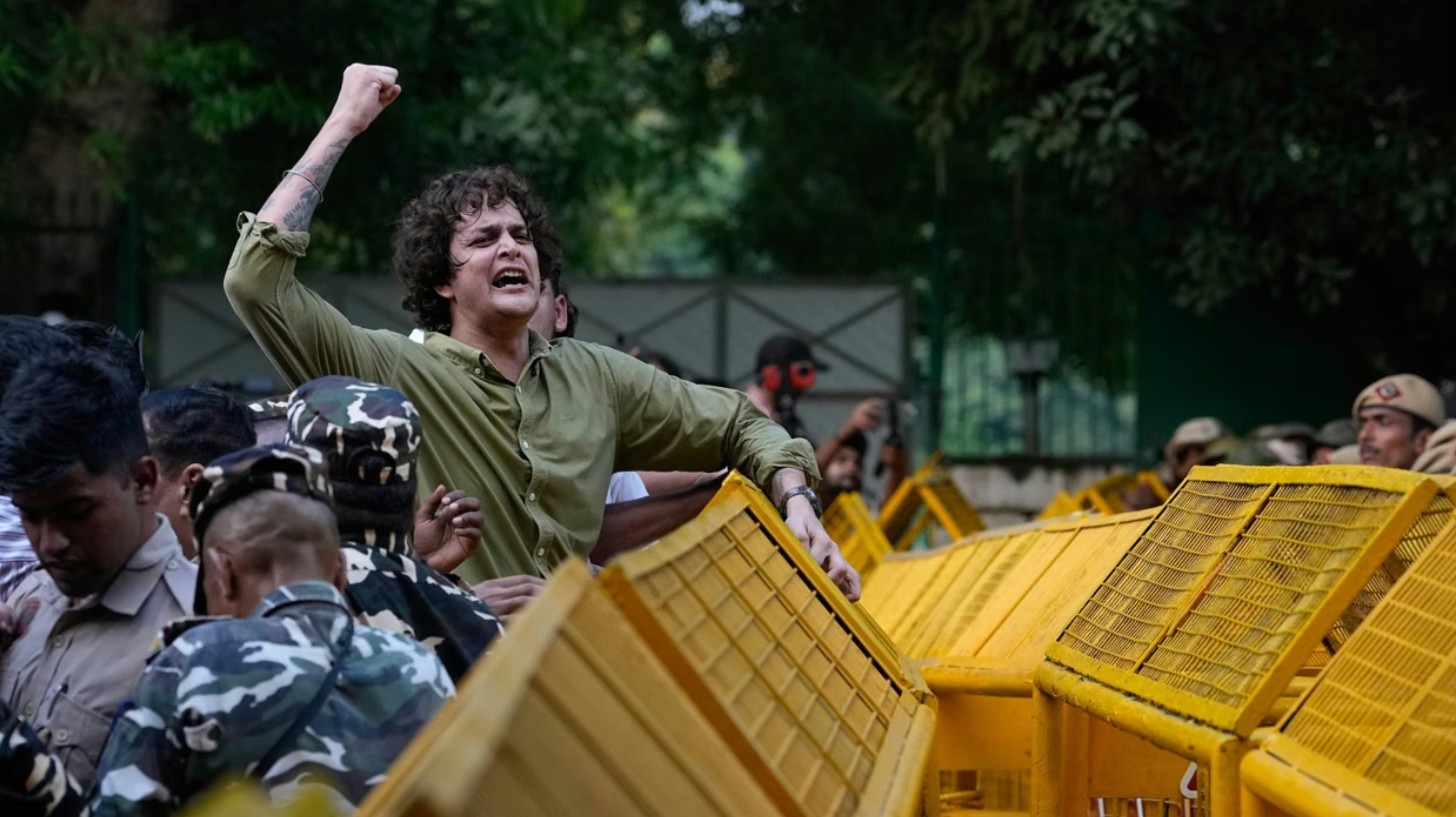
A protester climbs a police barricade during a march in New Delhi demanding the resignation of Chief Election Commissioner Gyanesh Kumar, reflecting growing tensions over electoral transparency and institutional accountability. Photo: Manish Swarup/AP
India’s famed democracy is going through something of a crisis. With roughly 130 million names removed from voter lists during the SIR, protesters fear widespread disenfranchisement, particularly among marginalised communities. The Election Commission says most of those removed had died, moved away or were duplicate entries. In Hyderabad, demonstrators sang a Hindi version of Bella Ciao, renamed the exercise ‘Special Intensive Resistance’ and alleged that it amounted to a National Register of Citizens (NRC) through the back door – a proposed citizenship register that critics fear would target Muslims and the poor. Their demands centre on constitutional safeguards, electoral transparency and institutional accountability.
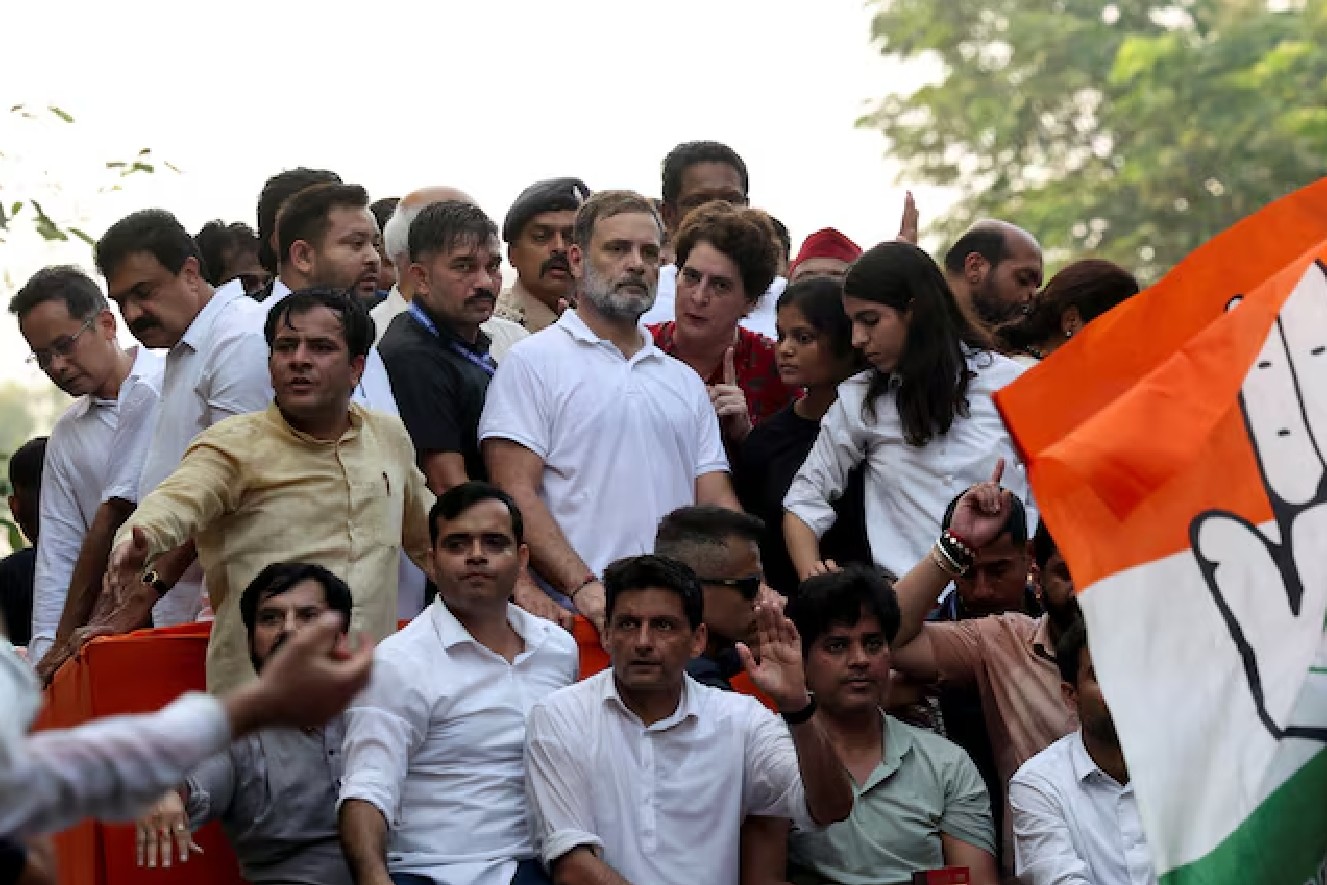 Rahul Gandhi and Priyanka Gandhi join opposition leaders marching
towards the Supreme Court in New Delhi to protest the controversial
revision of voter lists, amid wider concerns over electoral transparency
and the Election Commission’s accountability. Photo: Reuters
Public scrutiny intensified following a 23 September investigation by Ritika Chopra in The Indian Express, which revealed that two of the commission’s three members, Election Commissioners, Sukhbir Singh Sandhu and Vivek Joshi, had recorded at least 14 objections over ten months to decisions allegedly taken without their knowledge or against their advice. These covered voter registration, the deletion and restoration of names, the centralisation of the voter database and court appeals. The Election Commission acknowledged the notes but maintained that decisions were unanimous. The revelations nevertheless raised serious questions about internal deliberation, transparency and institutional independence within the body entrusted with safeguarding India’s electoral process.
Further concerns emerged from The Wire’s reporting that Tata Consultancy Services (TCS) has run ERONET 2.0, the software that manages the electoral rolls, since 2023 – an arrangement the Election Commission never announced. Coming on top of the commissioners’ objections and the mass deletions, this raises broader questions about public oversight, private contractors and accountability in India’s increasingly digitised electoral machinery.
From examination halls to electoral resistance
The present mobilisation builds on the summer’s examination protests. In May, Chief Justice of India Surya Kant’s comparison of unemployed youth with ‘cockroaches’ (he later said he meant people with fake degrees) inspired activist Abhijeet Dipke’s satirical question: ‘What if all cockroaches come together?’ The resulting Cockroach Janta Party mobilised young people through social media and sustained demonstrations at Jantar Mantar, Delhi’s designated protest site, following a paper leak of the national medical-school entrance examination. Education Minister Dharmendra Pradhan resigned on 25 July amid mounting public pressure, describing his departure as necessary to prevent ‘anti-national forces’ from exploiting the agitation. The movement declared victory. Its significance, however, extends beyond a ministerial resignation: grievances over educational opportunity have increasingly converged with demands for electoral accountability, suggesting a widening crisis of confidence in public institutions.
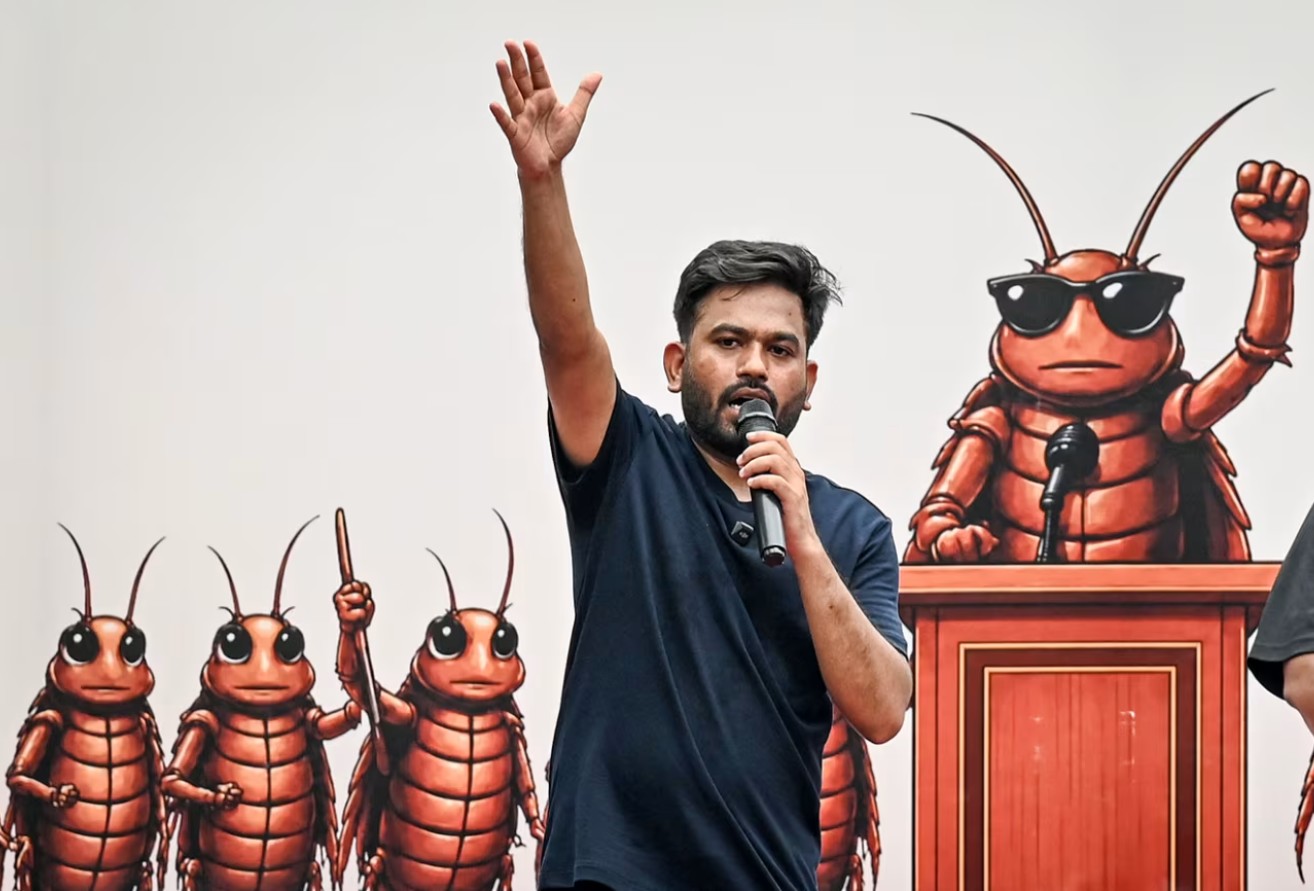 Abhijeet Dipke addresses protesters; his satirical question inspired the
Cockroach Janta Party. Photo: Getty Images
When the state confronts dissent
The state’s response to the street protests intensified concerns about democratic freedoms. On 10 and 11 October, barricades, transport restrictions, internet suspensions and preventive detentions disrupted demonstrations in Delhi and several other cities. CJP leaders, opposition figures and activists were among those detained. The Committee to Protect Journalists documented the detention of at least 43 journalists and reported incidents of obstruction and assault. The committee's Kunal Majumder described the incidents as ‘deeply troubling and a blot on India’s democratic traditions’. The treatment of reporters has raised concerns about press freedom and the constitutional right to document public dissent.
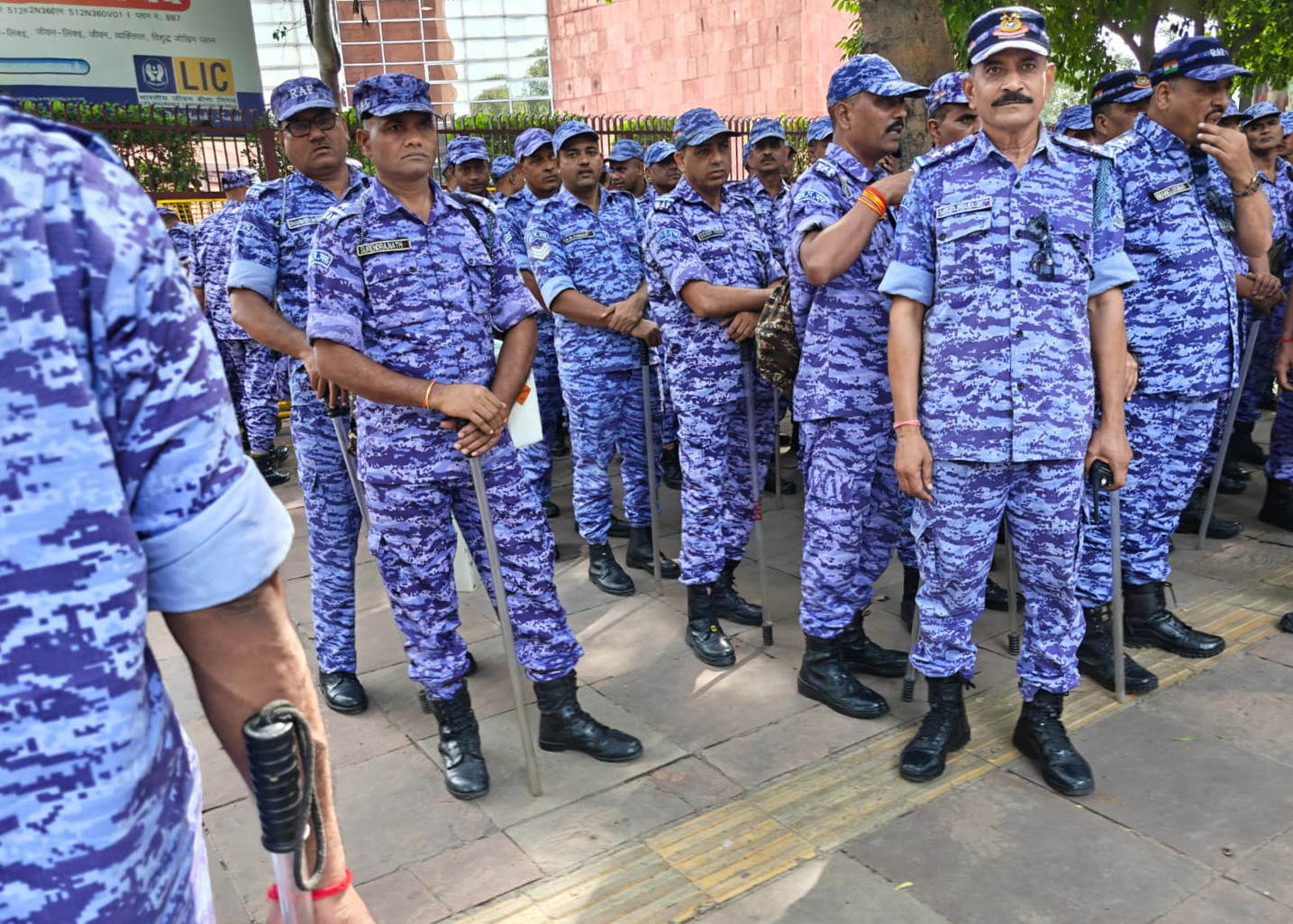 It was reported that 20,000 armed security personnel were brought to the
capital ahead of the Cockroach Janta Party's 16 October protest, as
authorities tightened security around demonstrations demanding the
Election Commission chief's resignation. Photo: Democracy Asia
Judicial scrutiny has added another dimension. The Supreme Court has sought the Election Commission’s response to the disputed decisions, though it declined to suspend the Chief Election Commissioner, and has directed that journalists and lawyers covering the protests must not be obstructed. After his release, CJP spokesperson Saurav Das, held with Dipke on 10 October, accused the government of fearing politically awakened youth. The protesters’ slogan, ‘Cockroaches never die’, captures the movement’s defiance and its transformation of a derogatory label into a collective political identity.
A generation losing faith in institutions
These protests retain a distinctly constitutional character. Student organisations invoke voting rights, opposition parties demand electoral accountability, and petitioners seek judicial scrutiny. Yet beneath these demands lies deepening generational insecurity. India'’s young people confront persistent unemployment, unequal educational opportunities and intense competition for public-sector employment. For millions of young Indians, competitive examinations represent a pathway to social mobility. Allegations of examination irregularities and electoral-roll exclusions therefore reinforce perceptions of institutional failure. The convergence of economic insecurity, digital mobilisation and institutional distrust has given recent protests their distinctive political momentum.
The Modi government faces a political dilemma. Conceding demands for the Chief Election Commissioner’s resignation would carry institutional implications far beyond a ministerial departure, potentially intensifying scrutiny of electoral administration. However, continued restrictions on demonstrations risk deepening generational alienation. The government maintains that electoral-roll revisions are necessary for accuracy, while protesters question their transparency and fairness. Meanwhile, the CJP’s meme-driven mobilisation demonstrates how satire can transform political disillusionment into collective action, blurring the line between online expression and street politics.
Youth resistance beyond borders
India’s unrest reflects a broader pattern of youth mobilisation, although its political trajectory differs from movements elsewhere. In Bangladesh, student protests against quotas in government jobs escalated into the 2024 uprising that ended Sheikh Hasina’s rule. In Nepal, anger over corruption and restrictions on social media toppled Prime Minister KP Sharma Oli’s government in September 2025. Both movements demonstrated how youth grievances could expand into challenges to political authority. India’s protests, by contrast, have largely focused on institutional accountability within the existing constitutional framework.
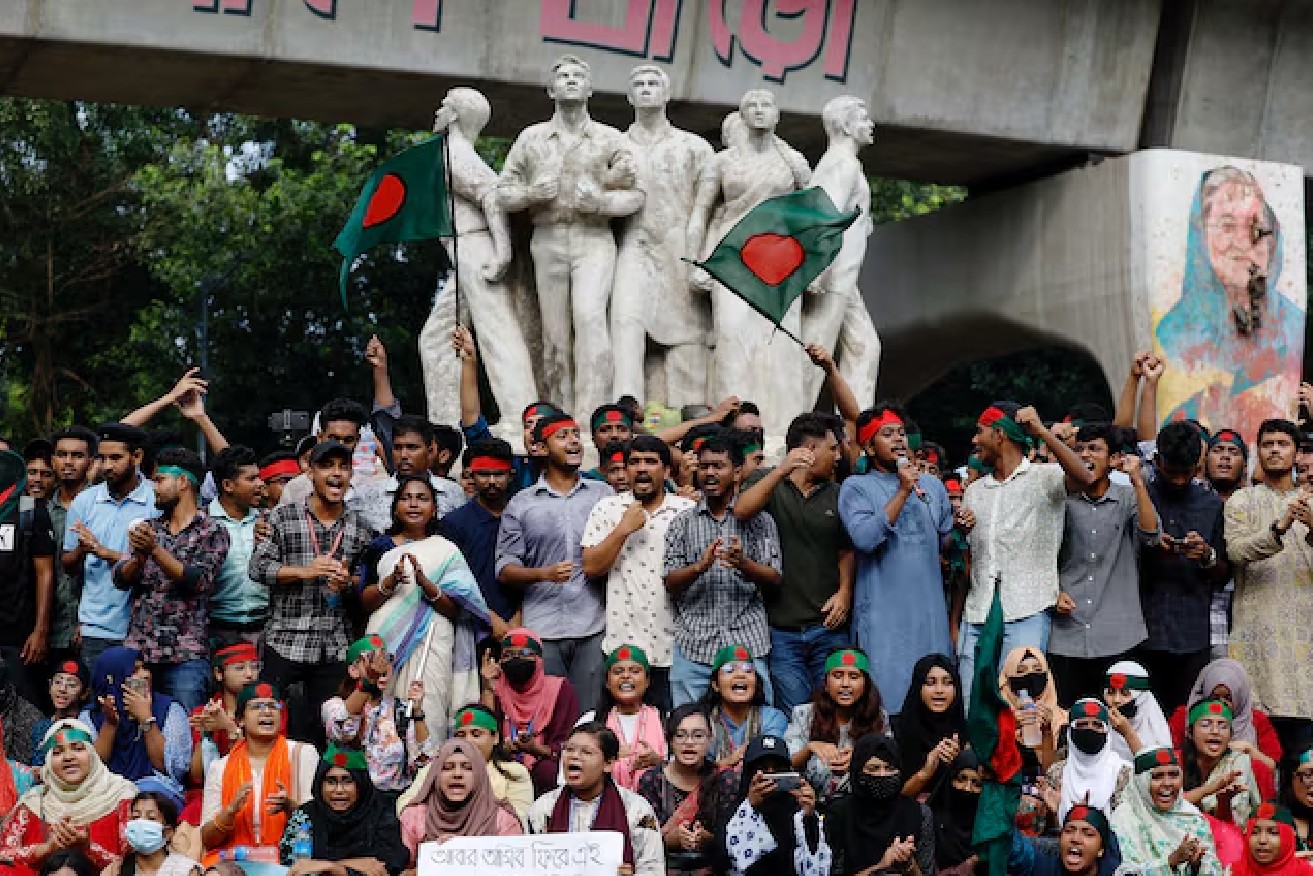 India’s youth mobilisation echoes student protest elsewhere, like here in
Bangladesh, where grievances over fairness and opportunity grew into
wider demands for accountability. Photo: Reuters
Beyond Asia, student movements reveal similarly diverse expressions of generational discontent. In France, high-school students have blockaded hundreds of schools since September over teacher shortages and crumbling buildings. German pupils have staged school strikes against a new military service law that many fear will bring back conscription, while Serbia’s sustained student-led mobilisation following the deadly 2024 collapse of a railway-station canopy in Novi Sad has placed corruption and state accountability under scrutiny. In Brazil, students have marched against the presidential bid of Flávio Bolsonaro, son of the jailed former president Jair Bolsonaro. Although their demands differ, these movements reveal how education, economic insecurity, militarisation and democratic accountability increasingly intersect in youth politics. Their outcomes, however, depend on national political conditions, organisational capacity and state responses – and online visibility does not automatically translate into political change.
What distinguishes India'’s emerging youth mobilisation is its insistence that democratic institutions fulfil their constitutional responsibilities. Rather than demanding wholesale regime change, protesters are questioning whether educational, electoral and judicial institutions can deliver fairness and accountability. Their mobilisation also raises difficult questions about representation: whose voices dominate these movements, and whether digitally visible activism can accommodate the experiences of marginalised youth. The larger question is whether sustained public pressure can produce institutional reform, meaningful political participation and renewed democratic trust. For India'’s young generation, the outcome may shape its relationship with democracy for years to come.
The streets have spoken across continents. The institutions must now decide whether they will listen.