The Indian Army’s induction of AI-enabled robotic mules to replace some 4,000 live pack animals is yet another inevitable, but bittersweet, instance of modern technology changing how troops are logistically sustained in some of the country’s most inhospitable terrain. This report from Delhi is by Rahul Bedi.
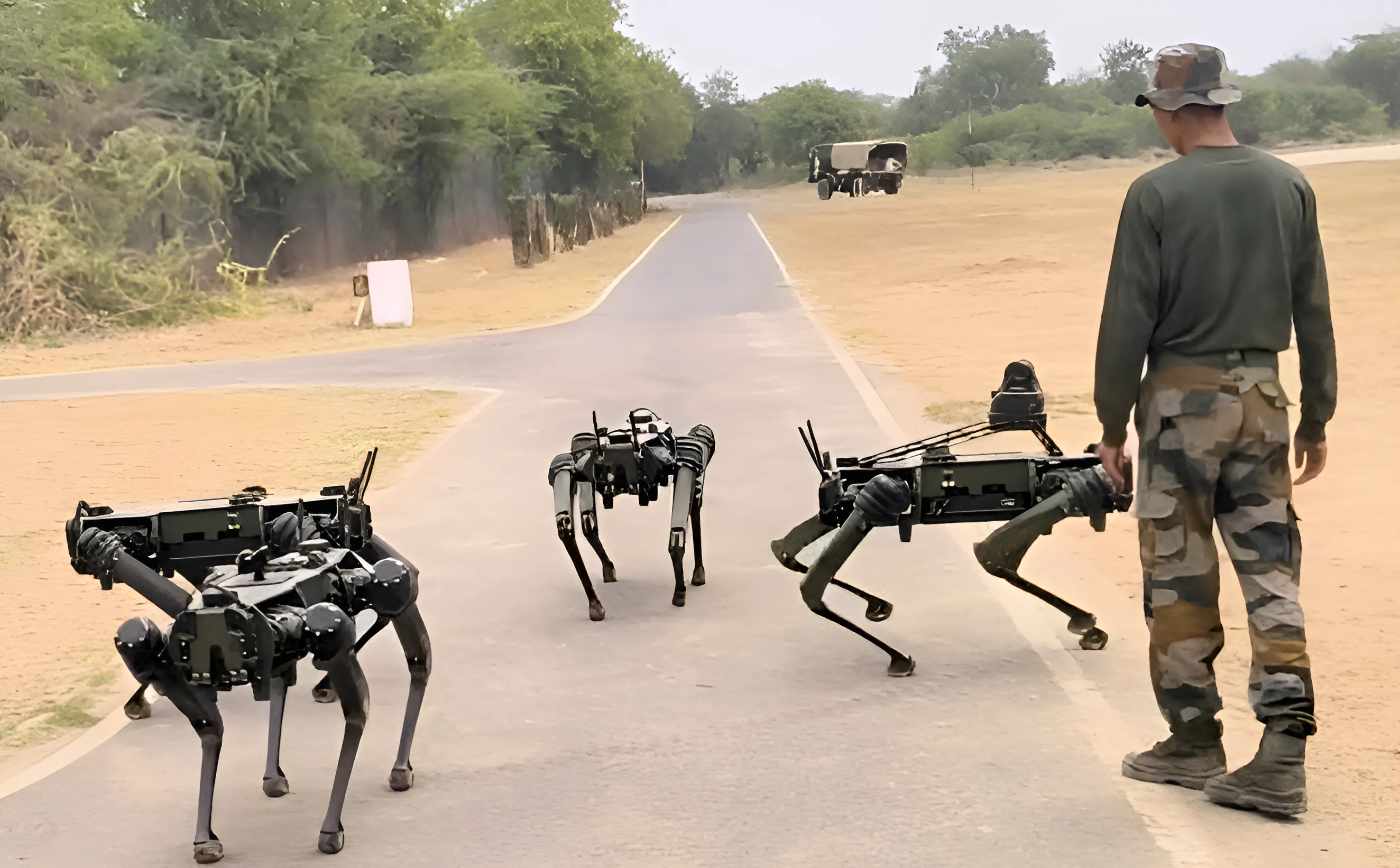
The Indian Army is introducing AI-enabled robotic MULEs to take over some of the logistical duties traditionally performed by live mules in difficult terrain. Photo: Indian Army
After almost two centuries of carrying ordnance, munitions, rations, fuel, medicines and other essential supplies to troops in remote mountain posts and other inaccessible locations across India, these sure-footed animals are gradually making way for their mechanical namesakes: four-legged, matte-black robots, rather aptly christened MULEs, short for Multi-Utility Legged Equipment.
The transition from mules to MULEs is more than a clever coincidence of nomenclature, as the latter will not only take over some of the former’s logistical tasks but also undertake surveillance and reconnaissance, carry specialised equipment and potentially assist in bomb disposal. In short, the Army’s dependence on four-legged transport in difficult terrain has not quite ended; it has simply acquired a very different set of legs.
These 51-kg robotic quadrupeds are the latest addition to an expanding logistical network of roads, helicopters and specialised vehicles that have steadily reduced the Army’s reliance on animal transport. Yet none of these alternatives has entirely replicated the live mules’ ability to negotiate narrow tracks, steep inclines and treacherous terrain while carrying substantial loads.
Furthermore, the prospect of their imminent replacement is being viewed with considerable nostalgia by serving and retired Army personnel, particularly those who have served in high-altitude formations and other remote areas.
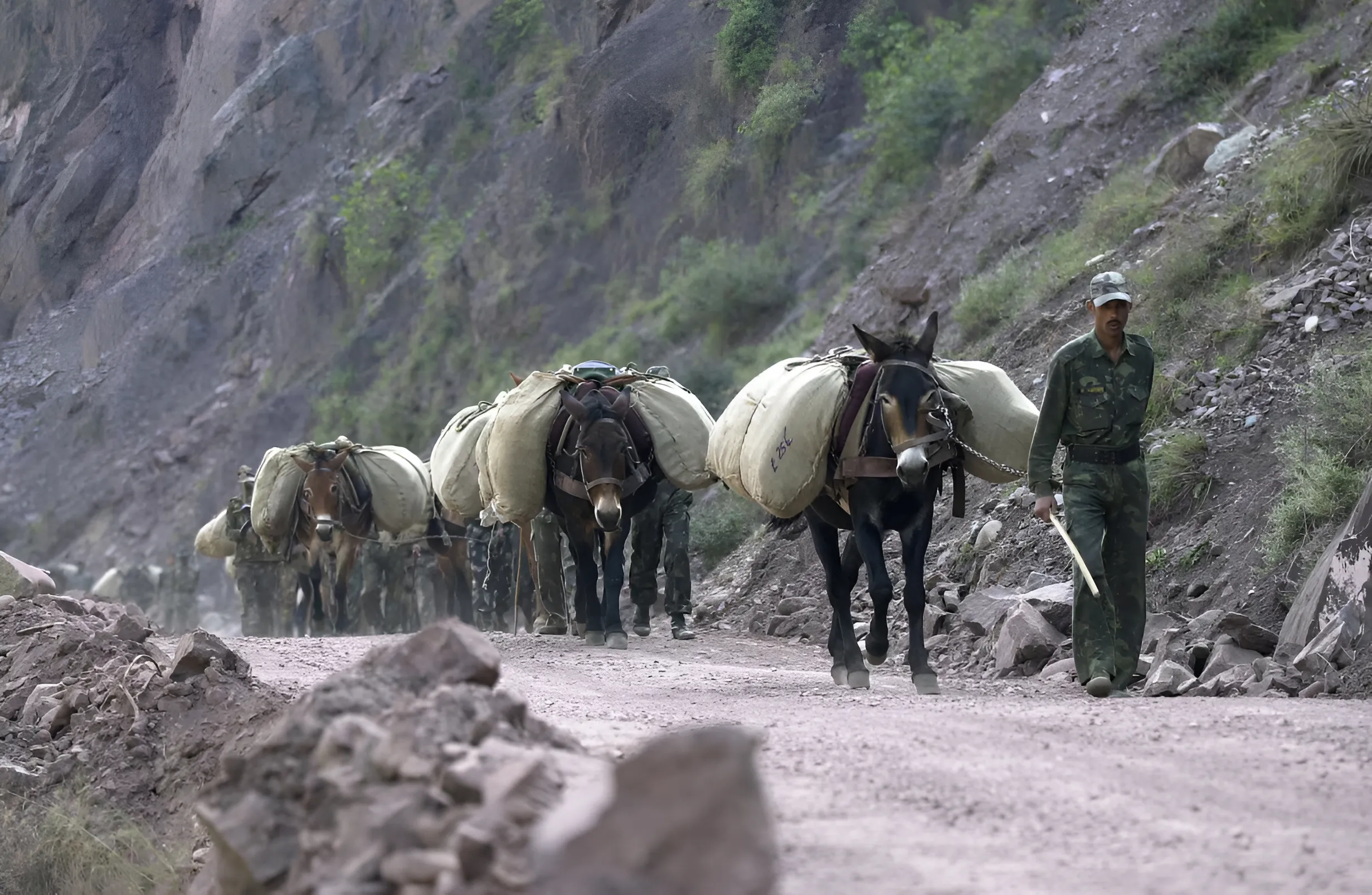 For generations, military mules carried essential supplies to Indian soldiers stationed in remote mountain posts and inaccessible terrain. Photo: Deshakalyan Chowdhury/Getty Images
Many of these soldiers recall how these animals repeatedly ferried vital supplies – and, often, hope and succour – to isolated troops when every other means of transport had failed. Hardy, sure-footed and remarkably resilient, they pressed on through bitter cold, snow and, at times, even enemy fire. Their ability to cart loads exceeding 80 kg over precipitous terrain, with relatively little supporting infrastructure compared with motorised transport, made them invaluable to the Army.
‘Mules have been major force multipliers in both World Wars and in numerous local conflicts, ensuring the uninterrupted supply of stores and ammunition to frontline troops,’ recalled a retired Army Service Corps officer, whose Animal Transport (AT) battalion received the Indian Army Chief’s citation for bravery for its service under enemy fire during the 1999 Kargil War with Pakistan, fought in mountain terrain at altitudes exceeding 5,000 metres. Declining to be named, as he was not officially authorised to speak on the subject, the officer said that the mules’ contribution in Kargil extended well beyond merely carrying loads: time and again, they had enabled troops to remain operational in areas where roads were non-existent, and which helicopters and mechanised transport could not reach.
The officer recalled the special relationship that developed over time between muleteers and their animals, which required familiarity, patience and an understanding of their individual temperaments. Consequently, most muleteers, he said, eventually came to regard their mules as ‘comrades’ rather than beasts of burden, an affection reflected in the names they were given. And though each mule was identified by an embossed hoof number, it acquired a more personal identity through names like Kalu (Blackie), Chhota (Little One), Tez (Swift), Golu (Chubby), Dheeth (Obstinate), Bhola (Simpleton), Nakhrewala (The Fussy One) and Dabang (Fearless). More colourful names included Bandook Singh (Gun Singh), Shaktiman (The Powerful One), Sheikh Chilli (The Fanciful Dreamer) and Majnu (The Lovesick One). ‘These names,’ the officer said, ‘were not merely whimsical, but often reflected the animal’s appearance, temperament or peculiar habits, giving the otherwise impersonal business of military logistics a distinctly human touch.’
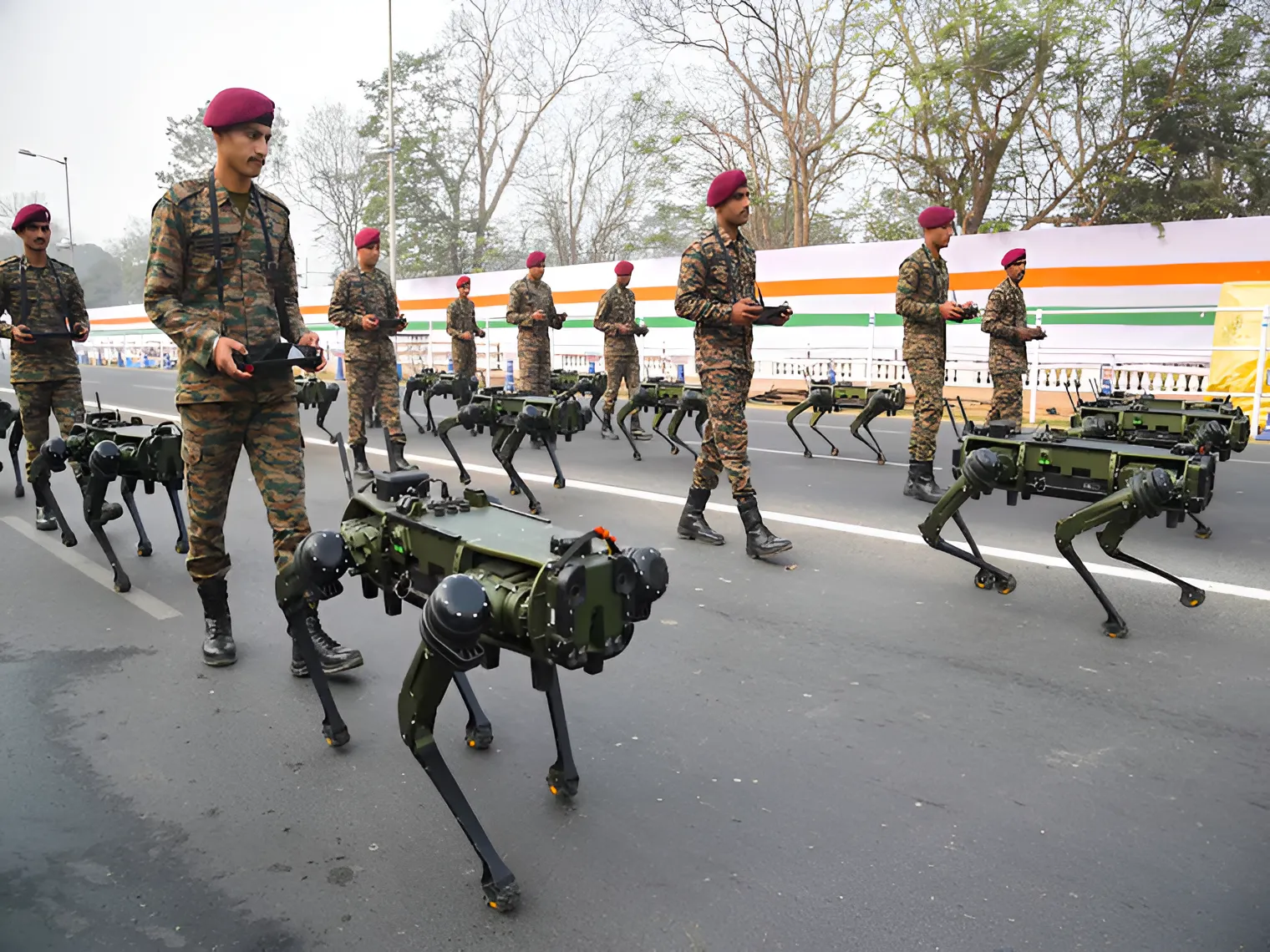 The Indian Army’s robotic mules ahead of the Republic Day parade rehearsal in Kolkata on 24 January 2025. Photo: Debajyoti Chakraborty/ Getty Images
India’s Army inherited its animal transport system from the British Indian Army at Independence in 1947, when mules were indispensable to military operations in mountainous regions. At the time, it is estimated to have possessed over 20,000 mules, whose numbers subsequently increased with the raising of the Army’s mountain formations. The Army Service Corps, in tandem with the Remount and Veterinary Corps, the Army’s animal-care and veterinary service, was responsible for their management, breeding and training at multiple centres in northern and central India.
The Indian Army’s mule companies rendered gallant service in both World Wars, operating across multiple conflict theatres. In the First World War, they deployed to the Middle East and East Africa, carrying supplies and dismantled artillery across terrain that wheeled transport could not negotiate. In the Second World War, four mule companies, known as Force K6, served with the British Expeditionary Force in France in 1939–40. After four years in Britain, they returned to India in 1944 to join the Burma campaign, where mules proved vital to sustaining troops in the jungle.
Thereafter, mules served in every war independent India fought with its neighbours – China in 1962 and Pakistan in 1947–48, 1965, 1971 and 1999. They were employed in two broad categories: General Service (GS) mules, which carried supplies, and Mounted Artillery (MA) mules, which transported ammunition and dismantled guns. Until the 3.7-inch mountain howitzer was phased out in the 1970s, teams of mules carried its components, in eight separate loads, to high-altitude locations where the guns were assembled.
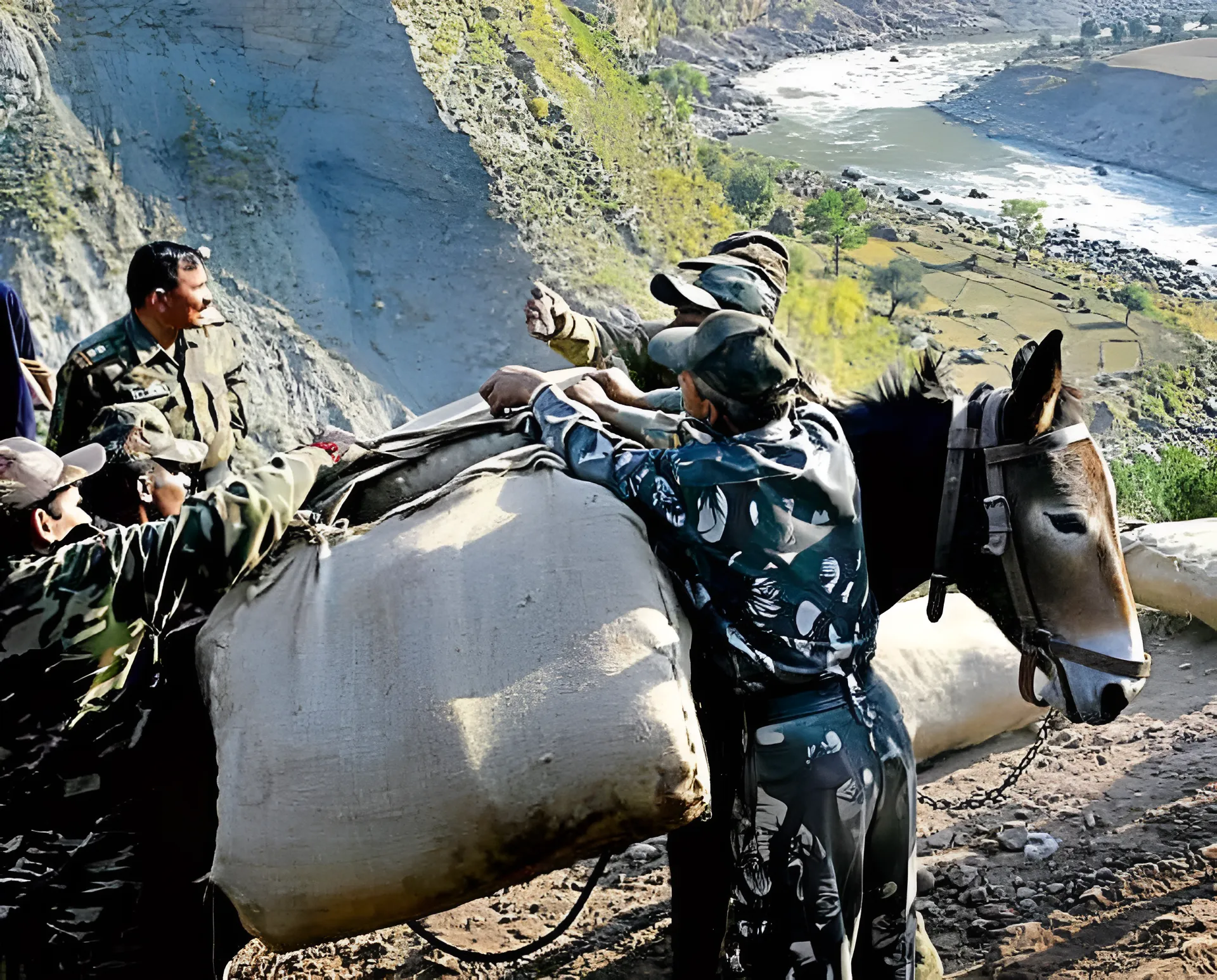 Military mules supported Indian Army operations across difficult terrain, transporting supplies, ammunition and artillery equipment during successive conflicts. Photo: Bloomberg/Getty Images
Some mules, like Pedongi, who was named after the first battle area to which she was deployed in northeast India, became legends in the Army. After more than three decades of service carrying artillery equipment, ammunition and supplies to heights of more than 5,000 metres, she was listed in the 1997 Guinness Book of World Records as the world’s longest-serving military mule.
Captured by Pakistani forces during the 1971 war along with other Army transport animals, Pedongi escaped a fortnight later and made her way back across 20 km of mountainous terrain, carrying enemy ammunition and a machine gun. Decorated for her exploits, she became the mascot of the 53 Animal Transport Company, featured on Christmas and New Year greeting cards. Even a lounge at the Army Service Corps officers’ mess in Delhi Cantonment was later named in her memory.
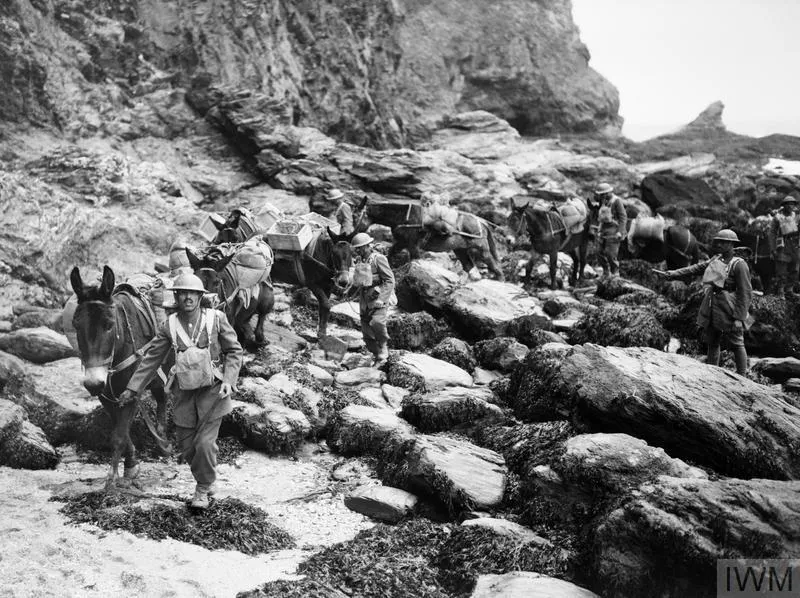 Indian Army mule handlers navigate rocky terrain during an exercise in the UK in 1940, illustrating the long-standing role of pack animals in military logistics. Photo: Lt E G Malindine
Another celebrated animal was the Grey Mule of the Madras Engineer Group – then known as the Queen’s Own Madras Sappers and Miners – whose military career began in 1891, serving on the North-West Frontier (now in Pakistan) and in Tibet, and in Egypt and Palestine during the First World War.
Sold off in Egypt after the war along with thousands of other military mules, it somehow found its way back home to Bangalore Cantonment in March 1922, its improbable homecoming echoing that of Warrior, the celebrated British cavalry horse whose exploits during the same war were recounted by his owner, General Jack Seely, in his 1934 memoir My Horse Warrior. Warrior’s story is often likened to Michael Morpurgo’s novel War Horse and Steven Spielberg’s 2011 film adaptation, though Morpurgo’s tale was not based on it.
Such stories, however, belong to a different military age. The modern Indian Army, increasingly reliant on automation, artificial intelligence and unmanned systems, has little room for the flesh-and-blood logistics that once sustained its operations. Admittedly, robotic MULEs will need neither fodder nor veterinary attention, and though they may eventually prove efficient and dependable, for several generations of Indian soldiers they will lack the individuality and character that made their predecessors part of Army folklore.