Following the drama of the ‘Monsoon Revolution’ in 2024 and an eighteen month period of army-backed civilian-led interim rule, Bangladesh goes to the polls this month to choose a new government. Syed Zain Al-Mahmood asks whether the elections can deliver the change the people are demanding.
Following the drama of the ‘Monsoon Revolution’ in 2024 and an eighteen month period of army-backed civilian-led interim rule, Bangladesh goes to the polls this month to choose a new government. Syed Zain Al-Mahmood asks whether the elections can deliver the change the people are demanding.
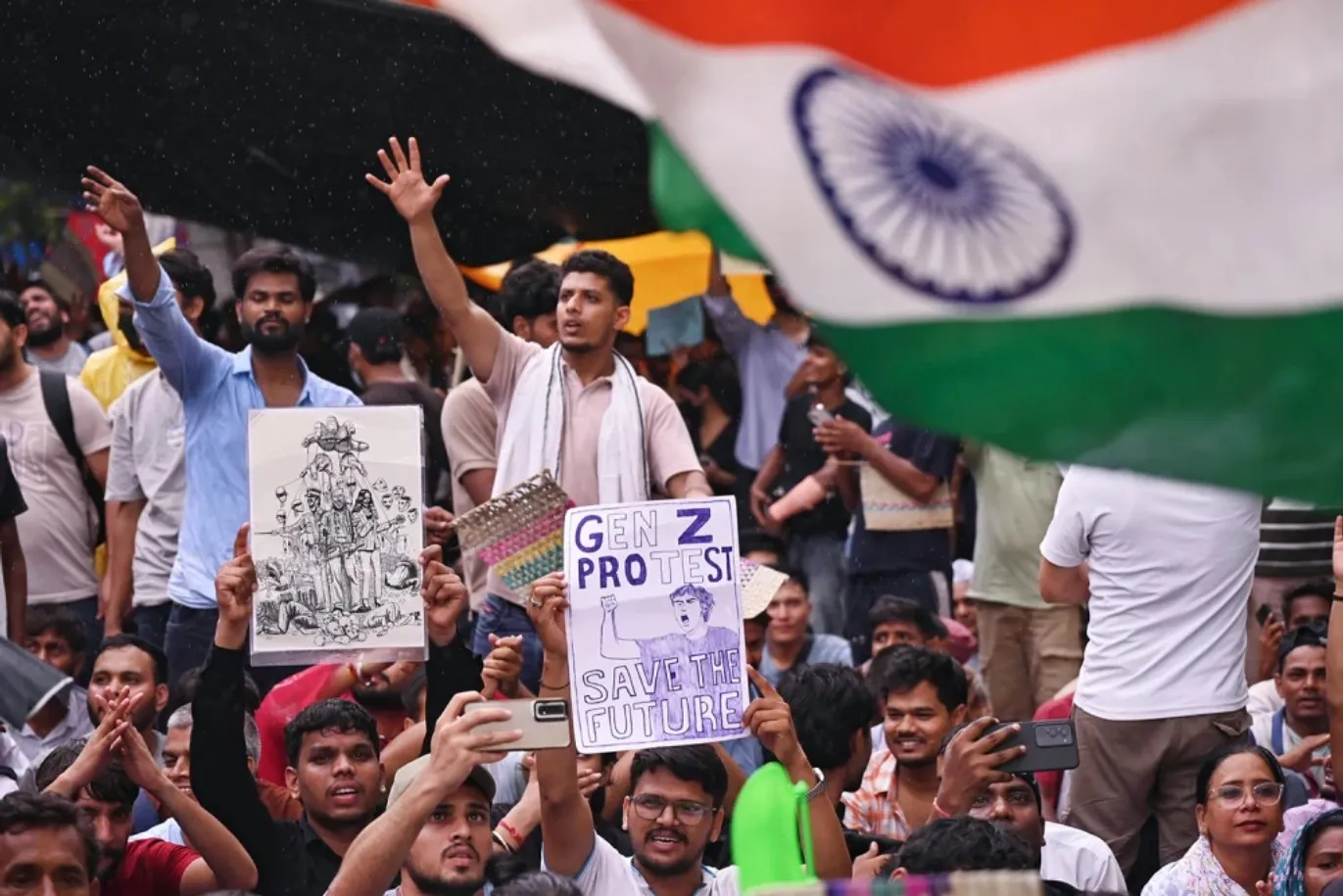
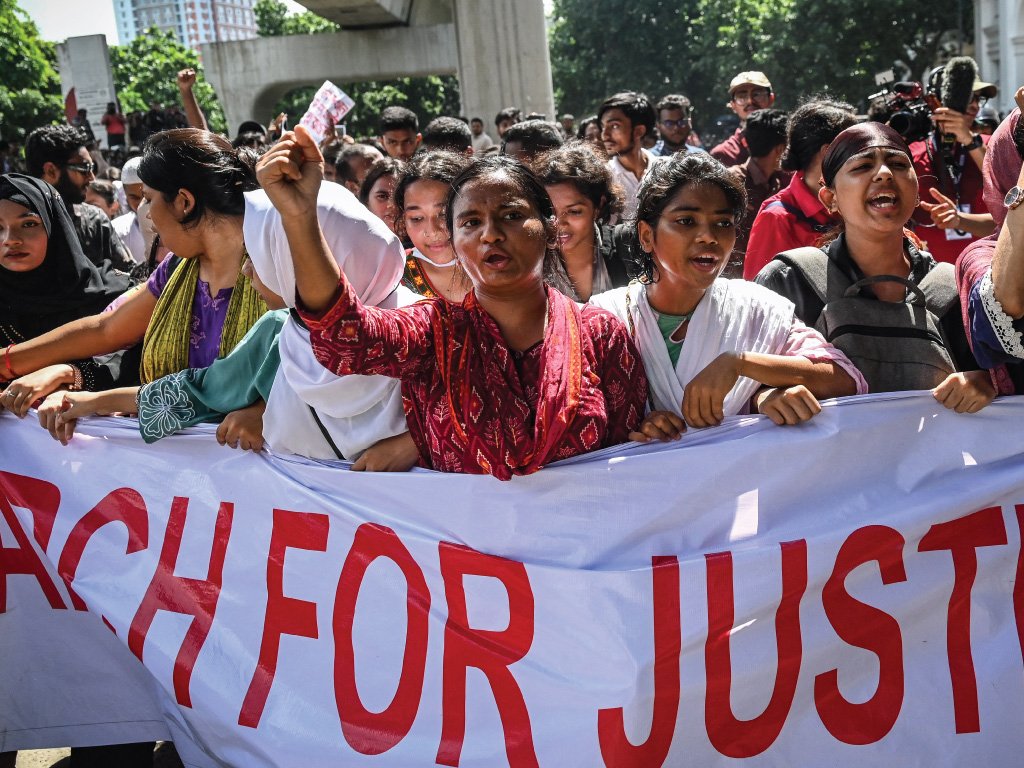
As Bangladesh faces national elections the country stands at a crossroads. The central question facing its people is whether elections will translate the popular demand for change into a durable and credible democratic order. The protests that erupted in July 2024 were sparked by anger over public sector job quotas which heavily favoured ruling party supporters. Their rapid escalation revealed deeper frustrations. Years of political repression, weakened opposition parties, and shrinking civic space had produced a sense that the political system no longer responded to ordinary citizens, especially young people. Students, professionals, and urban middle-class groups rallied not just against a policy but against what they saw as a closed and unaccountable governing structure.
A security crackdown and attacks on protesters by supporters of the ruling Awami League failed to contain the unrest and instead broadened it intensifying public anger. The state’s authority eroded dramatically. The authoritarian playbook of curfews, arrests and an internet blackout raised the stakes – and reinforced the notion of a regime fighting for its survival.

Demonstrators gather in central Dhaka as nationwide protests spread across Bangladesh in mid-2024. Photo: AFP
When the violent police crackdown, which left more than a thousand people dead, failed to quell the unrest, Prime Minister Sheikh Hasina turned to the army. As armoured personnel carriers rolled out onto the streets, the Gen Z protesters feared the worst. Bangladesh’s armed forces, after all, were deeply entangled in coups and counter-coups during the 1970s and 1980s.
But the army that confronted the 2024 crisis was not the army of that earlier era. Over the past three decades, it has rebuilt a measure of credibility at home and abroad, in part through playing a prominent role in United Nations peacekeeping missions abroad. As one of the world’s largest troop contributors, the Bangladeshi military has developed strong institutional incentives to avoid actions that could damage its international standing or jeopardize future deployments. As mass demonstrations swelled and tens of thousands of protesters marched toward the prime minister’s residence, senior generals reportedly concluded that the use of force would only deepen the crisis – and told Hasina that her time was up.
Unlike in neighbouring Pakistan or Myanmar, where political crises have often resulted in direct military rule, the Bangladesh army this time chose not to seize power, instead making way for a

Bangladesh army personnel stand guard on a street in Dhaka during the political crisis of 2024. Photo: AFP
civilian interim government. A younger generation of mid-ranking officers, closely attuned to public sentiment and unwilling to use force against protesters, played a critical role in persuading their senior leadership to withdraw support from the Hasina government. The military assumed a behind-the-scenes role creating the conditions for a civilian-led transition.
What followed was not a clean transition but a period of uncertainty. An interim government led by Nobel laureate Muhammad Yunus took charge amid high expectations and fragile conditions. Its mandate – to stabilize the country, restore order, and organize credible elections – has proven far more difficult than anticipated.
Political intimidation, sporadic violence, and localized unrest have exposed how deeply institutions were politicised under prolonged one-party dominance. Reform promises, while ambitious, have run up against practical limits: weakened enforcement capacity,

Muhammad Yunus, head of Bangladesh’s interim government, addresses the nation amid efforts to stabilise the country and prepare for elections.
competing political interests, and widespread mistrust of authority. For many citizens, the pace of change feels slow, even as the risks of disorder remain visible.
Economic growth and democratic deficit
International observers have long viewed Bangladesh through the lens of economic performance. Growth rates averaging five to six percent helped reduce poverty, expanded manufacturing and integrated the country more deeply into global supply chains. These gains were real and helped sustain external support for a government increasingly criticised at home for nepotism and corruption. But economic progress did not resolve underlying political tensions. Youth unemployment remained high, corruption perceptions deepened and upward mobility lagged behind expectations.
For a generation raised with digital connectivity and global exposure, economic stability alone was not enough suggesting that development without a political voice is ultimately unsustainable.
The most striking feature of Bangladesh’s uprising was the central role played by young people. Students organised protests, shaped messaging, and mobilised support with remarkable speed. Social media allowed grievances to circulate widely and helped forge a shared sense of purpose across regions and social groups.
Yet the post-uprising period has revealed a critical gap: the absence of clear political pathways for this energy. Established parties are dominated by older leadership and entrenched networks, while newer political platforms linked to the protest movement lack organisation and national reach. As a result, much of the momentum that drove the fall of the previous regime has struggled to find institutional expression. Without mechanisms to convert mobilisation into representation, frustration may deepen.
The challenge for Bangladesh’s transition is not simply holding elections, but ensuring that a politically awakened generation can participate meaningfully in shaping what comes next. The fragility of the transition was starkly underscored by the killing of Osman Hadi, a prominent figure associated with the post-uprising political landscape. His death sent shock-waves through the country, triggering protests and renewed fears about political violence.
The end of the old political era
The death in December of Khaleda Zia, a former prime minister and long-time opposition leader, has further reshaped

An inked finger from a past election in Bangladesh, as the nation prepares to vote again amid demands for deeper political change.
Bangladesh’s political landscape. For decades, politics revolved around the rivalry between Zia and Hasina, dubbed “the battle of the begums”, a rivalry that critics say centred around personalities and crowded out institutional development. With both figures now absent party politics are fragmented and uncertain. Whether new leadership can emerge without replicating old patterns remains an open question.
Bangladesh’s internal changes have also affected its external relationships, most notably with India. New Delhi had long backed Hasina, who fled to India after her ouster. Her presence there has fuelled suspicion in Dhaka and contributed to diplomatic strain. Both countries have strong incentives to avoid a lasting rupture. Trade, security cooperation, and regional stability remain shared priorities. How Bangladesh recalibrates its relationship with India – asserting autonomy while maintaining cooperation – will shape the regional impact of its democratic transition.
Elections and their limitations
This month’s elections are seen as a critical test. They are necessary to restore constitutional legitimacy and move beyond interim rule. But elections alone cannot resolve the deeper challenges exposed by the uprising. Credible voting depends on security, trust in institutions, and the acceptance of outcomes by competing forces. Even a well-run election may leave unresolved questions about governance, accountability, and inclusion. The deeper task for Bangladesh, a significant nation of 170 million people, is to rebuild institutions capable of constraining power and accommodating political pluralism over the long term.
Bangladesh’s trajectory matters beyond its borders. A successful transition would challenge the notion that economic growth in South Asia must come at the expense of political openness. It could offer a rare example of democratic renewal in a region grappling with polarisation and democratic backsliding.
Failure, by contrast, would reinforce a more pessimistic lesson: that popular uprisings can remove leaders without transforming systems. What is clear is that the demand for change has already been unmistakably voiced. Whether the political process can now honour that demand will define not only Bangladesh’s future but its role in shaping democratic norms in South Asia.