The people of Nepal go to the polls this month (5 March) after last year’s violent street protests and army intervention followed by a peaceful period of interim government. Kunda Dixit reports from Kathmandu.
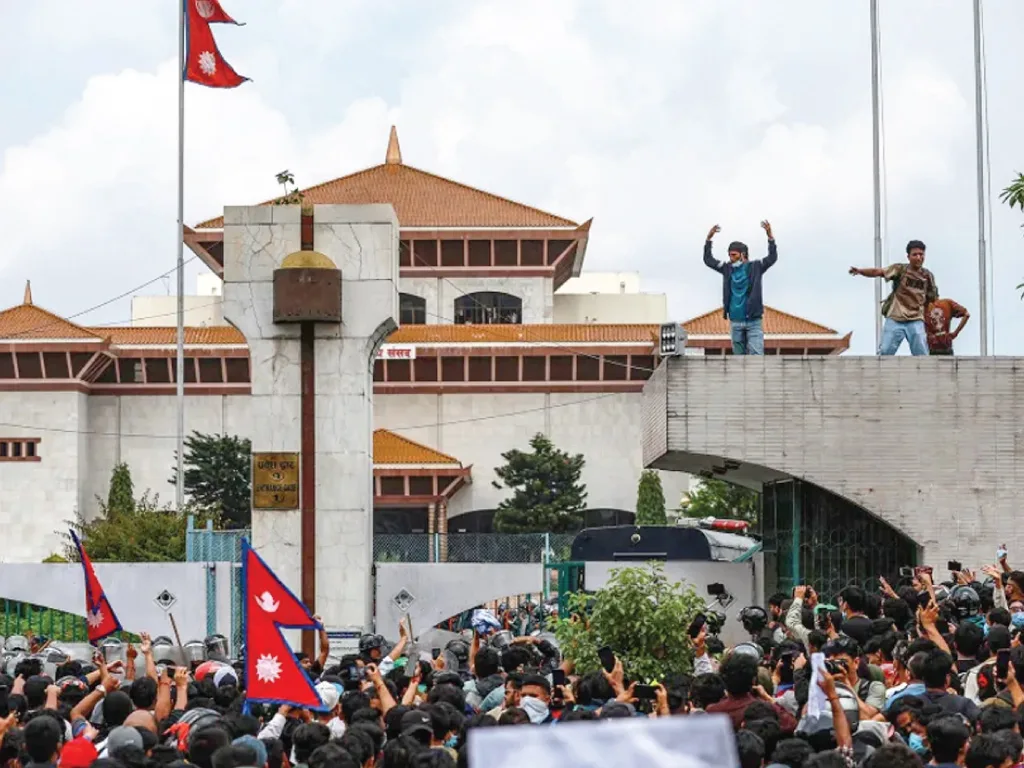
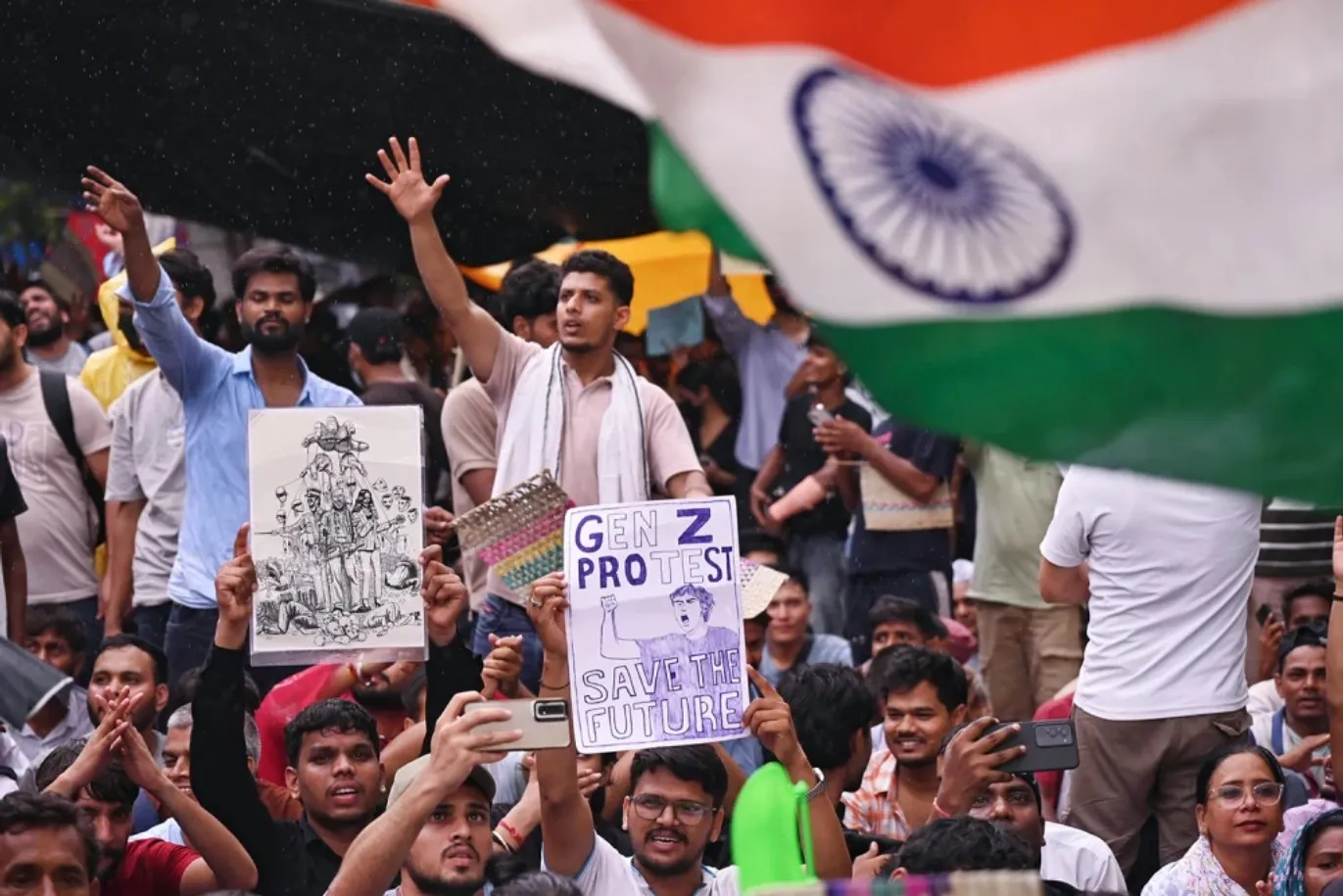
Even by the standards of Nepal’s turbulent political history, 2025 was a landmark year. Security forces opened fire on a student-led rally on 8 September, killing at least 19 people as protesters tried to storm Parliament. Anger boiled over into violence the next day.
Parliament, the Supreme Court, government buildings, businesses and hotels – including international chains – burned, shrouding Kathmandu in acrid smoke. Within 30 hours, Prime Minister KP Sharma Oli had resigned and the government fell.
A yawning political vacuum followed until the Nepal Army stepped in to bring the president, youth activists and their nominees together to try to form an interim government.
Tech-savvy youth groups went on the social media platform ‘Discord’ to vote for an interim prime minister. This may have been the first time anywhere that a social media platform so blatantly shaped the future course of government. Their first choice for prime minister was the populist Kathmandu mayor and rap singer Balendra Shah, but he declined. Their next was former chief justice Sushila Karki, who was hurriedly sworn in as Nepal’s first female prime minister. One of her first acts was to recommend dissolving Parliament.

Fire rages through the Singha Durbar, the main administrative building for the Nepal government, in Kathmandu on September 9, 2025. Photo: AFP
Karki is known for her integrity and fierce independence, and she laid out an ambitious plan to hold federal elections within six months. Despite some early missteps, she put together a cabinet of capable and respected technocrats.
In December, Karki told editors she was facing pressure – even threats – from the very activists who had installed her as prime minister. She also faced opposition from legacy parties that initially refused to take part in the election. Gen Z activists were themselves divided: some demanded that the constitution be scrapped, others wanted Oli and his home minister arrested for the massacre outside Parliament and still others insisted corrupt leaders be tried immediately.

Former chief justice Sushila Karki is sworn in as Nepal’s first female prime minister, tasked with leading an interim government and organising fresh elections. Photo: AFP
Prime Minister Karki told everyone she met that her primary duty was to hold the election and that she would step down as soon as a new government was sworn in. She worked to get every group that could potentially disrupt the election on board.
She cajoled the two main legacy parties, the Nepali Congress (NC) and the Communist Party of Nepal (Unified Marxist-Leninist – known as UML) to field candidates; she sought to keep royalists who want a return to the monarchy within bounds; and assured youth leaders that their aspirations would be honoured.
More importantly, she kept postponing the release of the final report from the judicial commission she formed to investigate the killings and arson on 8–9 September until after the election. Naming names and prosecuting the guilty at such a sensitive time could have sparked street protests and jeopardised a free, fair and peaceful vote.
Nepal’s digital natives were inspired by student-led protests in Bangladesh in 2024 that brought down the Sheikh Hasina government and by clashes outside Indonesia’s parliament in late August 2025. Some of the same ‘nepo kids’ memes and icons (tagged #NepoKids, #NepoBabies) were used to denounce corruption in high places.
Unlike in Bangladesh – and earlier in Sri Lanka – the 8 September rally in Nepal was not against a despotic regime, but to protest a functioning but flawed democracy in which elected leaders had long ceased to be accountable.

Rabi Lamichhane, founder of the Rastriya Swatantra Party, remains a polarising figure as legal troubles shadow his political ambitions.
Calling the regime collapse in Nepal a ‘Gen Z Uprising’ would not be accurate. True it started with a youth-led rally in which an abrupt government ban on social media sites was a tipping point. But the following day’s violence and vandalism were closer to anarchy. Anyone who had a grievance against anyone else was out on the streets to loot and burn. Some Gen Z activists were themselves shocked by the events of 9 September.
Bangladesh has held its elections in which the Bangladesh Nationalist Party (BNP), led by Tarique Rahman, emerged triumphant, while the student leaders who led the 2024 uprising have not done so well. It is too early to tell which way Nepal’s own election will go, but early indications suggest the Rastriya Swatantra Party (RSP) and its prime ministerial candidate, former mayor Balendra Shah, will do well.
The RSP was formed a few months before the 2022 federal elections by populist former TV anchor Rabi Lamichhane. Propelled by social media campaigning, the RSP became the fourth-largest party in Parliament and Lamichhane served as home minister in a coalition government. But after scandals involving US citizenship and alleged fraud involving cooperative depositors, Lamichhane found himself behind bars. He is now out on bail, but his legal troubles complicate any bid to lead a future government even if his party wins.

Former Kathmandu mayor Balendra Shah, a populist figure with strong youth support, is emerging as a key contender in the election. Photo: AFP
Ex-mayor Balendra Shah also swept the 2022 mayoral race in Kathmandu with a populist digital campaign. After the September protests, Shah and Lamichhane found it mutually beneficial to cooperate. The RSP needs a charismatic prime ministerial candidate to propel itself to victory, while Shah needs a party platform. Both men are ambitious, so it remains to be seen whether the alliance will endure after the election. The RSP does have other competent technocrats and the hope among many Nepalis is that voting for the RSP, despite its past, will help move the country’s economy forward.
Nepal’s history is replete with half-finished revolutions, from pro-democracy movements against the absolute monarchy to the Maoist armed struggle from 1996–2006, each promising new beginnings that have never fully materialised.
The fear is that it will be the same this time. A lot will depend on which way people vote. Nepal has always had high turnout in its elections and this time it is expected to be even higher.

Women of different generations wait to cast their ballots in Kathmandu, highlighting the inclusive and high voter turnout expected in Nepal’s post-crisis election. Photo: UNDP
There are nearly a million new first-time voters – mostly young people eager for change. Unlike Bangladesh, where more than 500,000 expatriates cast postal ballots, an estimated 4 million Nepalis abroad cannot vote. Nepalis abroad are migrant workers in India, the Gulf, Malaysia, South Korea and Japan, and they are mostly anti-incumbent, blaming the legacy parties for failing to create jobs at home, which forced them to migrate.
The youth-led regime change has had some positive impact on the legacy parties as well. In January, the centrist Nepali Congress elected 49-year-old Gagan Thapa as party president, ousting Sher Bahadur Deuba, who has been Nepal’s prime minister five times since 1995. This has injected new energy into Nepal’s ‘grand old party’. In the two communist parties, UML and the Nepali Communist Party or NCP, elderly politicians who have served as prime minister multiple times have kept a tight grip on leadership.
Former prime minister Oli, for example, has refused to step down and has not publicly expressed remorse for what happened in September. This is expected to cost him dearly in the election despite the UML’s strong organisational base nationwide.
He is up against ex-mayor Balendra Shah, who is contesting in the same constituency. In most past elections in Nepal, incumbents have lost, but the choice has always been restricted to the three main established parties. This time there are new, youthful faces, and Nepal’s nearly 19 million registered voters have a real choice.