In a landmark judgment, the International Court of Justice has ruled that Myanmar’s government committed genocide against the Rohingya community of Rakhine State during the military’s 2017 operations, in which an estimated 10,000 people were killed and hundreds of thousands fled to Bangladesh. The court ordered Myanmar to allow refugees a safe, voluntary and dignified return, but their homeland is no longer under the Myanmar government’s control. Most of Rakhine is now controlled by the Arakan Army, whose treatment of the Rohingya remains contentious. Nyein Chan Aye reports.
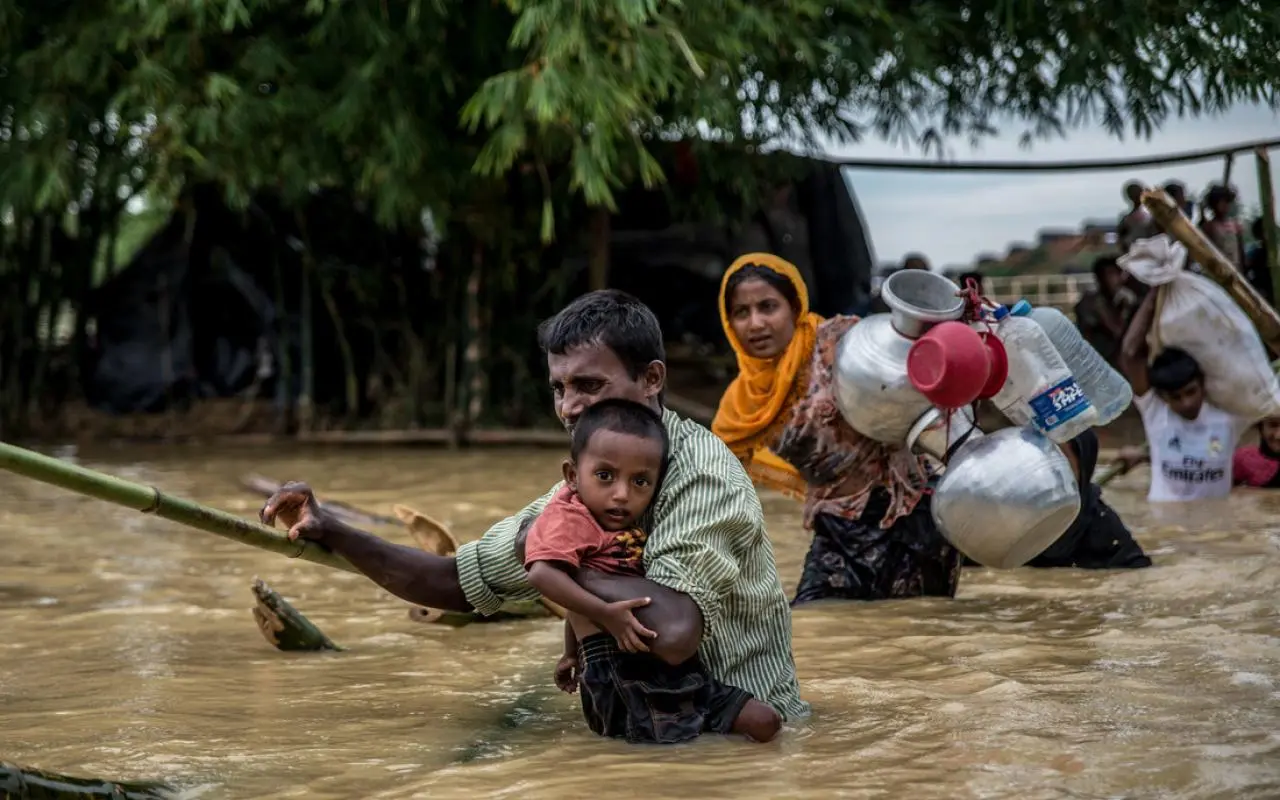
Rohingya refugees in Bangladesh face an uncertain future following Myanmar's 2017 military crackdown and ongoing barriers to safe return. Photo: Aurélie Marrier d’Unienville
Rakhine is home to the mainly Buddhist ethnic Rakhine, its largest community, and the predominantly Muslim Rohingya, its second largest. Many Rakhine and other Myanmar citizens reject the name ‘Rohingya’, calling them ‘Bengalis’ and portraying them as migrants from Bangladesh. Rohingya consider themselves indigenous to Rakhine. Myanmar’s military and ultra-nationalists have further inflamed these divisions through discriminatory policies.
More than 750,000 Rohingya fled to Bangladesh during the military’s 2017 crackdown, but hundreds of thousands remain in Rakhine. Across most of the state, the military no longer governs. With Myanmar’s military confined to three enclaves in Rakhine, the Arakan Army, an ethnic Rakhine movement fighting Myanmar’s government for self-rule, commands the rest. This raises the further question as to whether the Rohingya and other minorities belong in a state dominated by ethnic Rakhine. Last month’s ruling was the first time the International Court of Justice has found a state responsible for committing genocide. It also ordered Myanmar to make reparations and to investigate and punish those responsible.
The battle for Sittwe
After the 2021 coup, the Arakan Army resumed its offensive in November 2023, seizing most of Rakhine. In September, the military counterattacked from Sittwe towards Ponnagyun and from Kyaukphyu, with thousands of troops and air and naval support. ‘Within a month the ground offensive had stalled,’ said Kyaw Hsan Hlaing, a PhD candidate at Cornell University. A military landing on Ngapyi Island met resistance; fighting continued into November as the Arakan Army pressed Sittwe.
The military retains Sittwe, Manaung Island and part of Kyaukphyu – ‘around 10 percent of Rakhine State by area’, according to Thomas Kean of International Crisis Group. The Arakan Army controls 14 of 17 townships and Paletwa in neighbouring Chin State. ‘For the military, losing almost an entire state is unprecedented,’ Kean said. Taking Sittwe would make the Arakan Army the first of Myanmar’s many ethnic armed groups to capture a state capital.
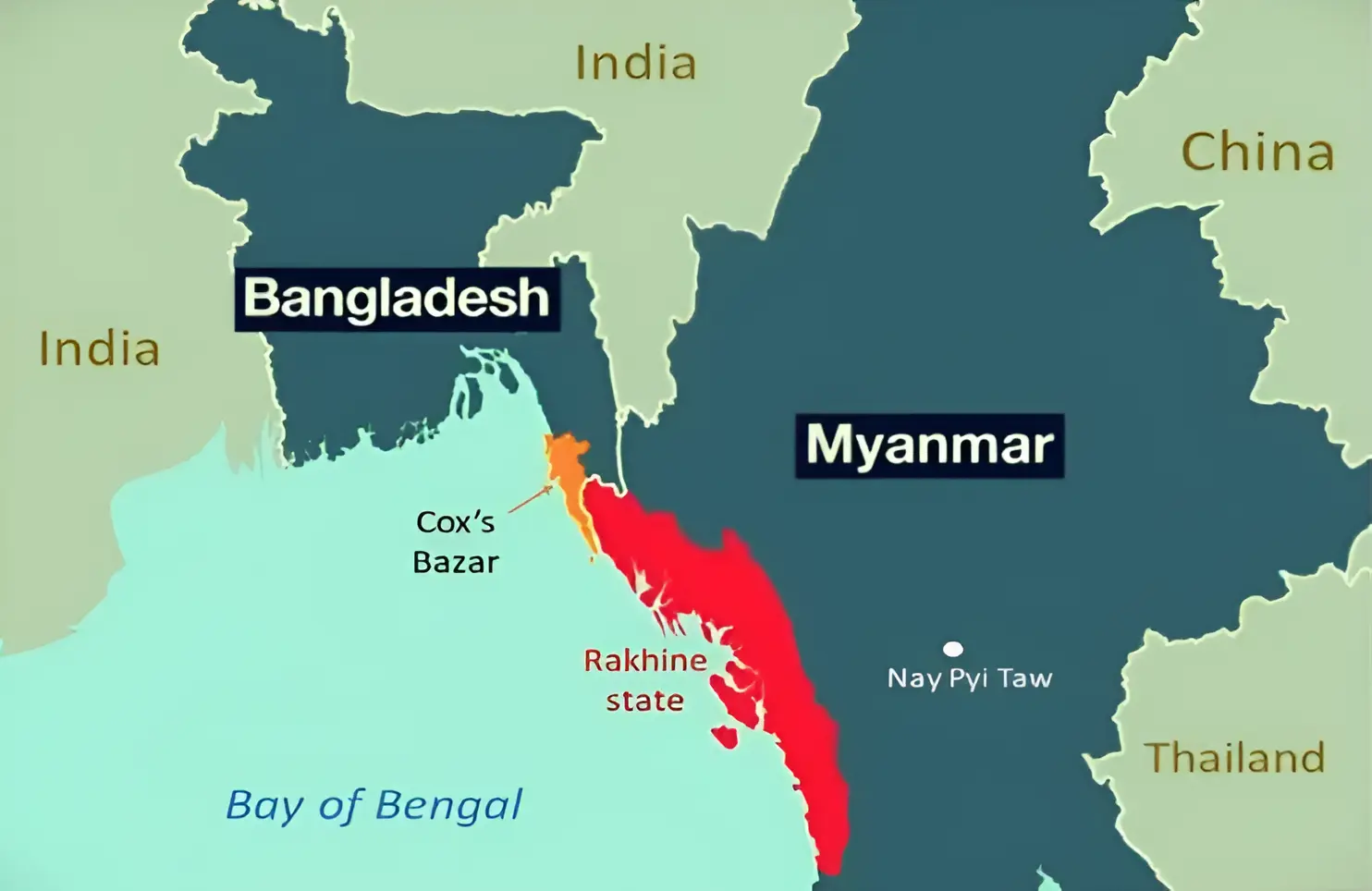 Rakhine State lies along Myanmar’s western coast, bordering Bangladesh and the Bay of Bengal. Cox’s Bazar, where many Rohingya refugees have sought shelter, lies across the border. Map: News Arena Network
Kyaukphyu hosts Chinese pipelines; a deep-sea port is planned. ‘Whoever holds Kyaukphyu has leverage over China,’ Kyaw Hsan Hlaing said. The military has struggled to retake ground but continues attacks on civilian areas, displacement camps and infrastructure. Kyaw Hsan Hlaing said: ‘I read that as an effort to make Arakan Army rule as painful as possible for the people living under it.’
Governing under siege
The Arakan Army calls its approach ‘fight while building, build while fighting’. Its political wing, the United League of Arakan (ULA), runs courts, police, taxation, schools and clinics. ‘It has built more of an administration than I expected,’ said Kyaw Hsan Hlaing. ‘The problem is how it governs.’ Since late 2023, the military has restricted trade, aid, telecommunications, electricity and banking in Arakan Army-held areas. This year, it has tried to choke off cash by disrupting mobile-money agents, Kean said.
A resident reported medical syringe prices rising from 1,000 to 5,000 kyat; a displaced man in Mrauk-U put consultations at 20,000 kyat. He described makeshift schools packing ‘20 to 60 kids into a single house’. The ULA has announced medical and nursing schools and Arakkha National University despite wartime shortages and insecurity, the Center for Arakan Studies reports.
Routes through Bangladesh and India’s Mizoram State offer relief. The centre’s November report estimated 500,000–600,000 displaced people in Arakan Army-held areas. ‘The long-term challenge is to turn military success into an administration that earns public trust,’ said Aung Marm Oo, editor-in-chief of Rakhine-based Development Media Group.
The ULA’s Arakkha Lottery pledges half its proceeds to roads, schools and clinics. Aung Marm Oo called it ‘a test of the administration’s transparency and accountability’, urging public accounting.
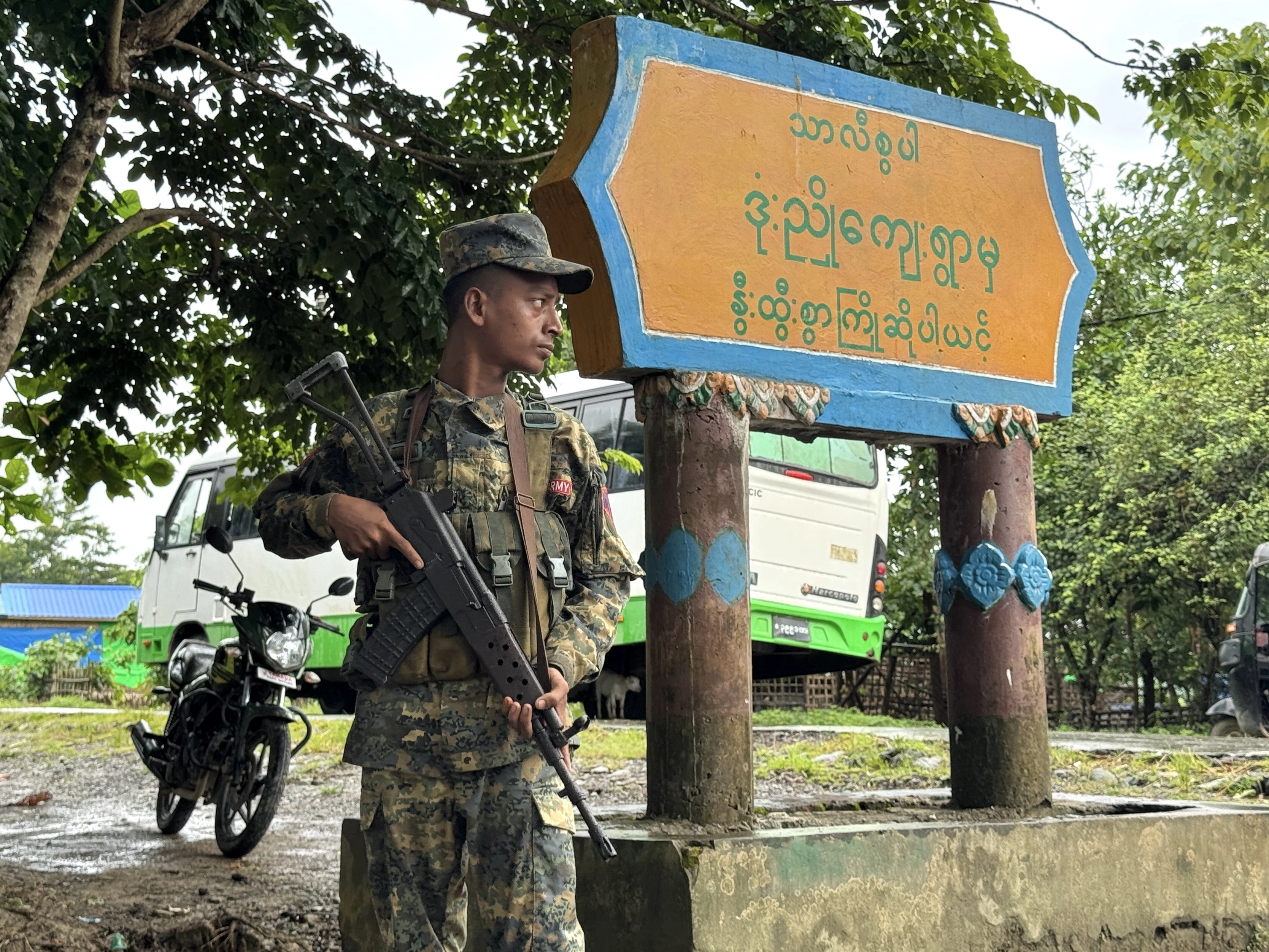 The United League of Arakan has established administrative structures in areas controlled by the Arakan Army, including courts, schools and healthcare services. Photo: ANU Myanmar Research Centre
The Mrauk-U man put it differently: ‘Rather than asking whether people “trust” the ULA, I’d say the public relies on them. If you ask anyone here whether they want the old government back, nobody will say yes.’ Kyaw Hsan Hlaing said young men and women face two years’ conscription and travel restrictions. Another resident said recruitment deprives Rakhine and minority families of breadwinners.
A question of belonging
For Rohingya in Maungdaw and Buthidaung, Aung Kyaw Moe, chair of the Rohingya Consultative Council, said people remain in ‘survival mode’, with restrictions on movement, livelihoods and aid.
Anasar, a Rohingya activist in Bangladesh, relayed a Buthidaung contact’s account of barriers to farming, fishing and healthcare, and alleged unpaid labour carrying Arakan Army supplies. An August UN report documented allegations of forced labour, recruitment, detention and discriminatory restrictions under Arakan Army rule, alongside military abuses. In May, Human Rights Watch identified more than 170 Rohingya villagers killed or missing after an alleged Arakan Army massacre at Hoyyar Siri in 2024. The Arakan Army denies responsibility.
Its spokesperson’s office told Democracy Asia: ‘None of these allegations ever happened on the ground, they are all completely fabricated.’ It did not answer questions about civilian administration or minority representation.
The Arakan Army promises an Arakan for all, appointing Muslim village officials, hiring teachers and reopening mosques in Maungdaw. Yet Kean said these gestures ‘have been outweighed by continuing reports of abuses and discrimination’. Aye Thein, a University of Toronto researcher, doubts the ULA will repeat successive governments’ strategy of dividing communities. But discriminatory restrictions, if substantiated, ‘would undermine the political legitimacy of whoever is in control’, he warned.
Arakan Army leaders reject ‘Rohingya’ as an ethnic designation but advocate rights for all legitimate residents. Aye Thein said the name matters, alongside ‘the right to office, education, right to freely travel, and equality before the law’. He said Rakhine and Rohingya must eventually share power, though ULA leaders and Rakhine society seem unready.
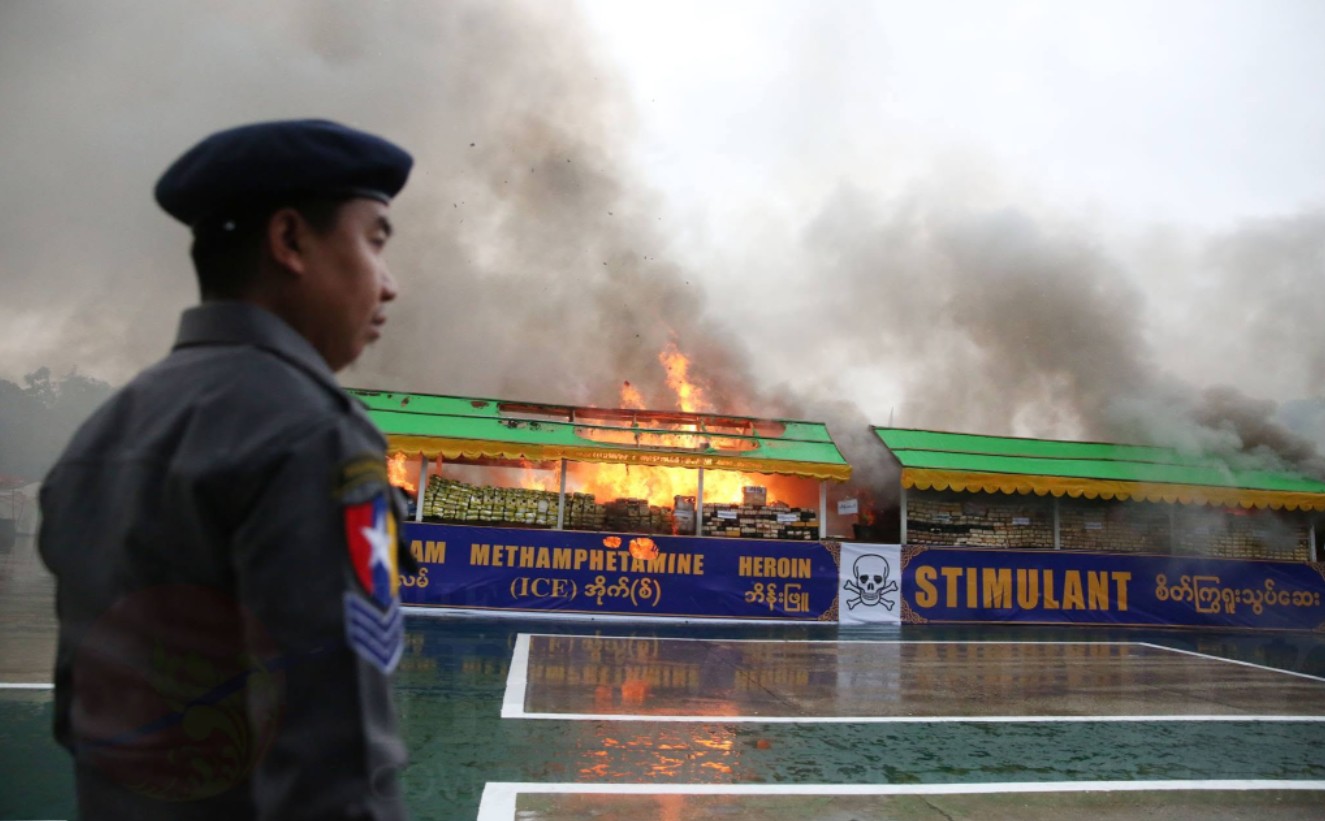
The military forcibly recruited Rohingya in 2024; some Rohingya armed groups sided with it. Kean said support for the Rohingya militant groups ARSA and RSO has declined; they are increasingly viewed as ‘criminal organizations profiting from the drug trade’. Sporadic attacks remain a danger, he warned, reinforcing the Arakan Army’s view of Rohingya civilians as a security threat. Anasar questioned the groups’ claims to defend Rohingya: ‘I don’t see anything like that on the ground.’ Aung Thura Ko Ko, a visiting scholar at Cornell’s Southeast Asia Program, urged authorities ‘to distinguish armed actors from civilian communities’.
Who decides the future?
Bangladesh confirmed contact with the Arakan Army over the Rohingya crisis; trade links it to India’s Mizoram State, while Beijing backs the junta publicly and maintains Arakan Army contacts to protect its investments. These contacts are not formal recognition, but Naypyitaw, Myanmar’s capital, is no longer the only address for Rakhine. Aung Thura Ko Ko said Bangladesh’s engagement ‘could create opportunities for humanitarian cooperation, border stability and eventual refugee repatriation, although substantial obstacles remain’.
‘In practice, it’s building a state,’ Kyaw Hsan Hlaing said, referring to the Arakan Army’s ambition for a status ‘not inferior to confederation’. He added: ‘Militarily, I expect a stalemate through the dry season.’ Sittwe remains the test. Kean warned a siege ‘would drain its forces and put civilians at grave risk’. Inclusion depends on ‘when and how the war ends’ and whether Arakan Army leaders treat Rohingya ‘as constituents rather than as a threat’, he said.
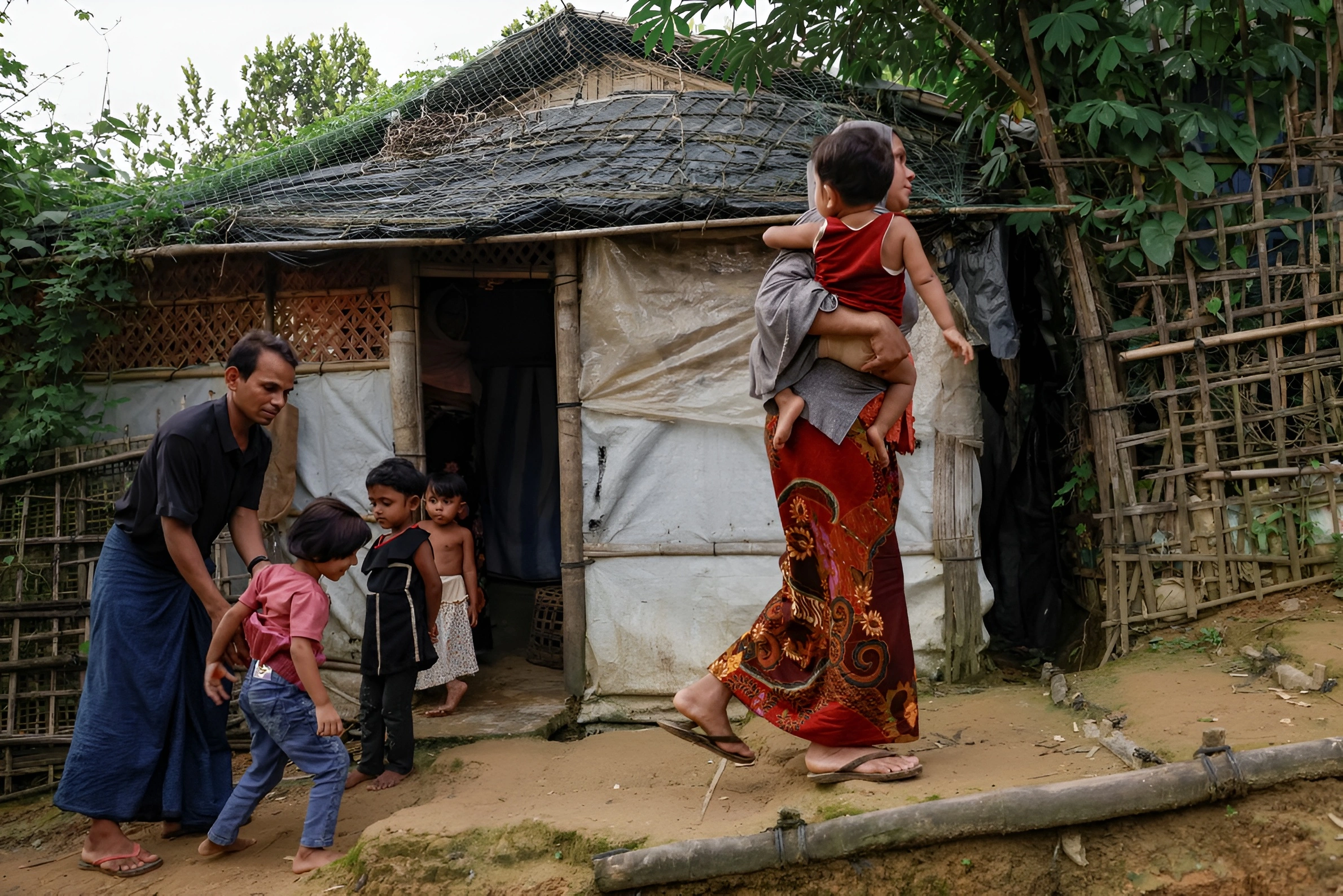 A family who fled from Buthidaung, Myanmar, at a refugee camp in Cox’s Bazar, Bangladesh, on 25 June 2024. Photo: Mohammad Ponir
For Aung Kyaw Moe, the test is whether Rohingya ‘can live as equal members of society, rather than simply whether the authority governing their territory has changed’. Kyaw Hsan Hlaing put the wider question this way: ‘The question I care about most is what kind of government this becomes. Right now, it is a one-party system.’