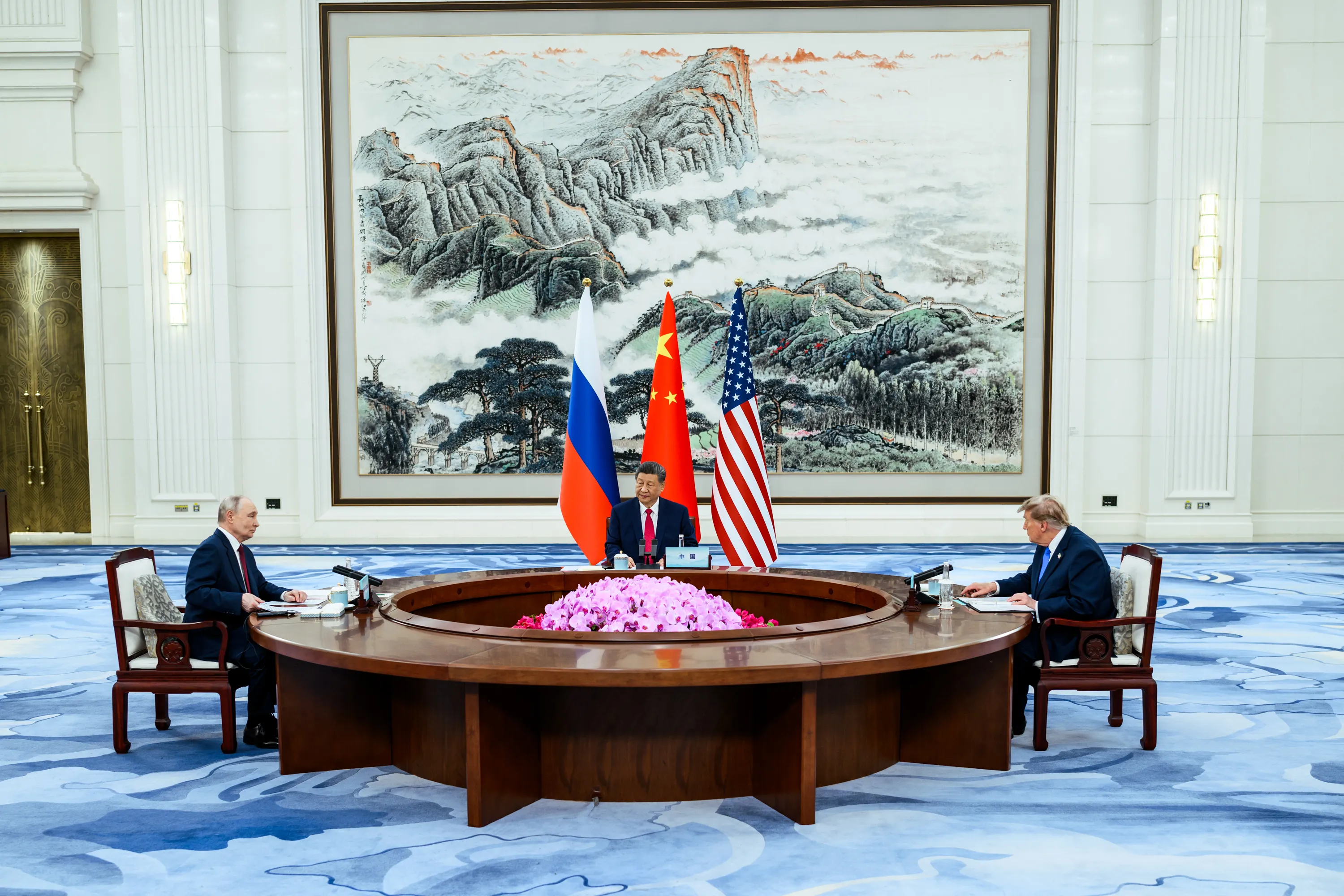
US President Donald Trump meets Chinese President Xi Jinping and Russian President Vladimir Putin at a trilateral meeting on the sidelines of the APEC summit in Shenzhen, China, on 19 November 2026. Photo: Daniel Torok/Official White House Photo
APEC
Twenty-one economies – 12 of them Asian – are members of the Asia-Pacific Economic Cooperation or APEC. Formed in 1989, it represents more than 60 per cent of global GDP. Its leaders' summit was held in November at Shenzhen. However, instead of restricting itself to addressing economic crises arising from the series of economic shocks starting with the outbreak of the Covid pandemic in 2020, followed by the Russian invasion of Ukraine and the conflicts pitting the United States and Israel against Iran, host China opted to feed US president Donald Trump's ego.
The Guardian flagged, 'Beijing will have home advantage'. In his second term at the White House, Trump has fancied 'G2' or 'G3' confabulations on global affairs or a one-on-one with China or a tripartite with China and Russia. So, what occupied centre stage at APEC was a trilateral meeting between Trump, Chinese president Xi Jinping and Russian president Vladimir Putin.
In 1945, US president Franklin Roosevelt, British prime minister Winston Churchill and the supremo of the Soviet Union Josef Stalin met at Yalta to carve out spheres of influence in Europe after the Second World War. The outcome of Yalta 2.0, though, was unlikely to be binding on Ukraine or Iran; not even on Taiwan, which China adamantly wants to appropriate.
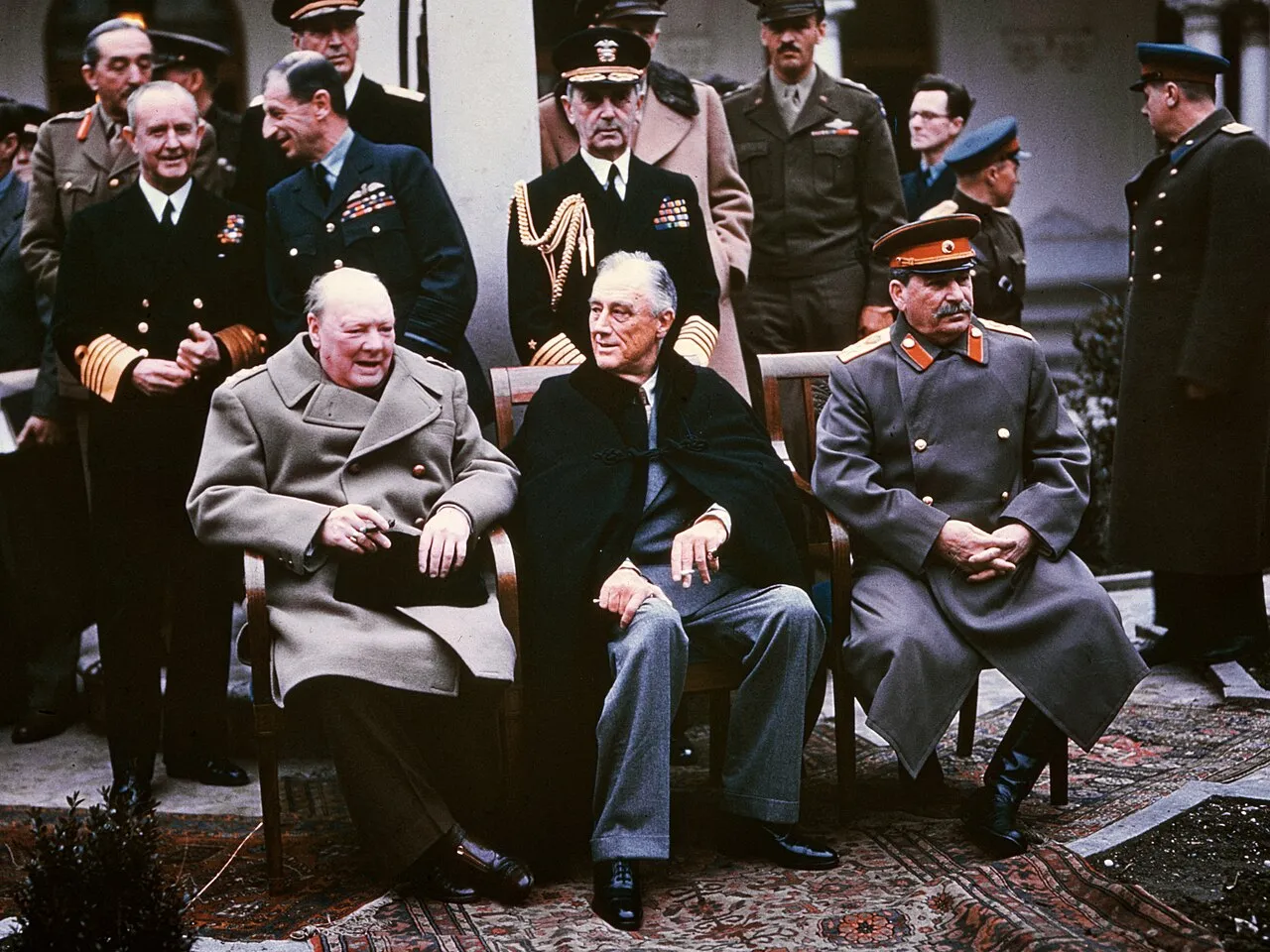 The leaders at the Yalta Conference in February 1945: (from left) British Prime Minister Winston Churchill, US President Franklin D. Roosevelt and Soviet leader Joseph Stalin. The conference shaped post-war arrangements in Europe. Photo: Public Domain
By pandering to Trump, Xi may in his national interest have extracted a degree of near-term stability in China's economic relations with the US. The US's interest is in nuclear arms control, perhaps code for containing Iran; while the Kremlin's object was to retain its bargaining power vis-à-vis Ukraine.
Xi’s push for a Free Trade Area of Asia-Pacific (FTAAP), while winning brownie points from most attendees, faced resistance from the US, the South China Morning Post reported.
China
On the eve of the APEC parleys there was sobering news for the Chinese leadership. 'China's economy showed fresh signs of sluggishness in October as factory production slowed and consumption remained weak, calling into question how long the world's second-largest economy can rely on exports to underpin growth,' Reuters signalled.
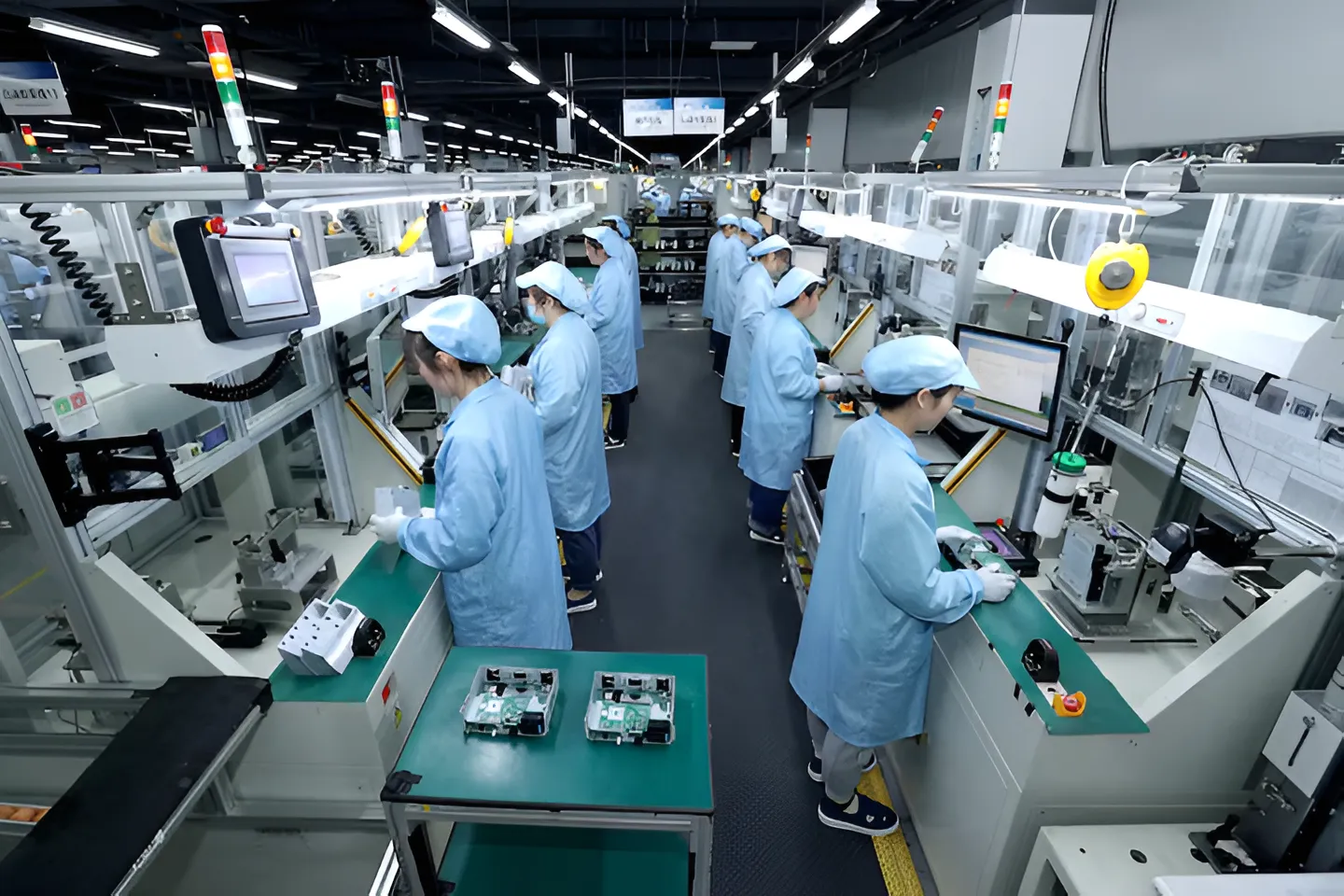 Workers at a manufacturing facility in China. Manufacturing and exports remain important drivers of the country's economic growth. Photo: Reuters
It continued, 'An AI-driven export boom has powered China's economic growth this year and looks set to shelter overall growth from external and domestic headwinds in 2027. But imbalances in the country's growth model may persist, or even widen, as solid manufacturing and overseas demand lessen policymakers' urgency to shore up weak domestic demand.' Yet, the bottom line was China's trade surplus reached $1.04 trillion in the first 10 months of 2026.
ASEAN
The APEC meet was preceded by Association of Southeast Asian Nations (ASEAN) heads of government assembling in the Philippines, which, too, Trump attended, following his first overseas trip after the chastening results in midterm elections in the US. ASEAN's agenda appropriately focussed on AI supply chains and governance and green energy transition.
Traditionally, most of ASEAN's 11 member states have maintained close ties with the US. But Jayant Menon, a Singapore-based economist, was quoted by the Guardian as saying that such nations have been 'laying the groundwork for a future with reduced dependence in the United States'.
An alternative ASEAN-China equation, though, is hampered by tension between four of its constituents – Brunei, Malaysia, the Philippines and Vietnam – plus non-member Taiwan – with the People's Republic over territorial disputes in the South China Sea.
ASEAN-Canada
But the Manila meet announced 'substantial conclusion of the ASEAN-Canada Free Trade Agreement (ACAFTA) negotiations', a Canadian government release communicated. It's another feather in Canadian prime minister Mark Carney's cap. Indeed, he was present at the 49th ASEAN summit as a guest of the chair President Ferdinand Marcos Jr. of the Philippines.
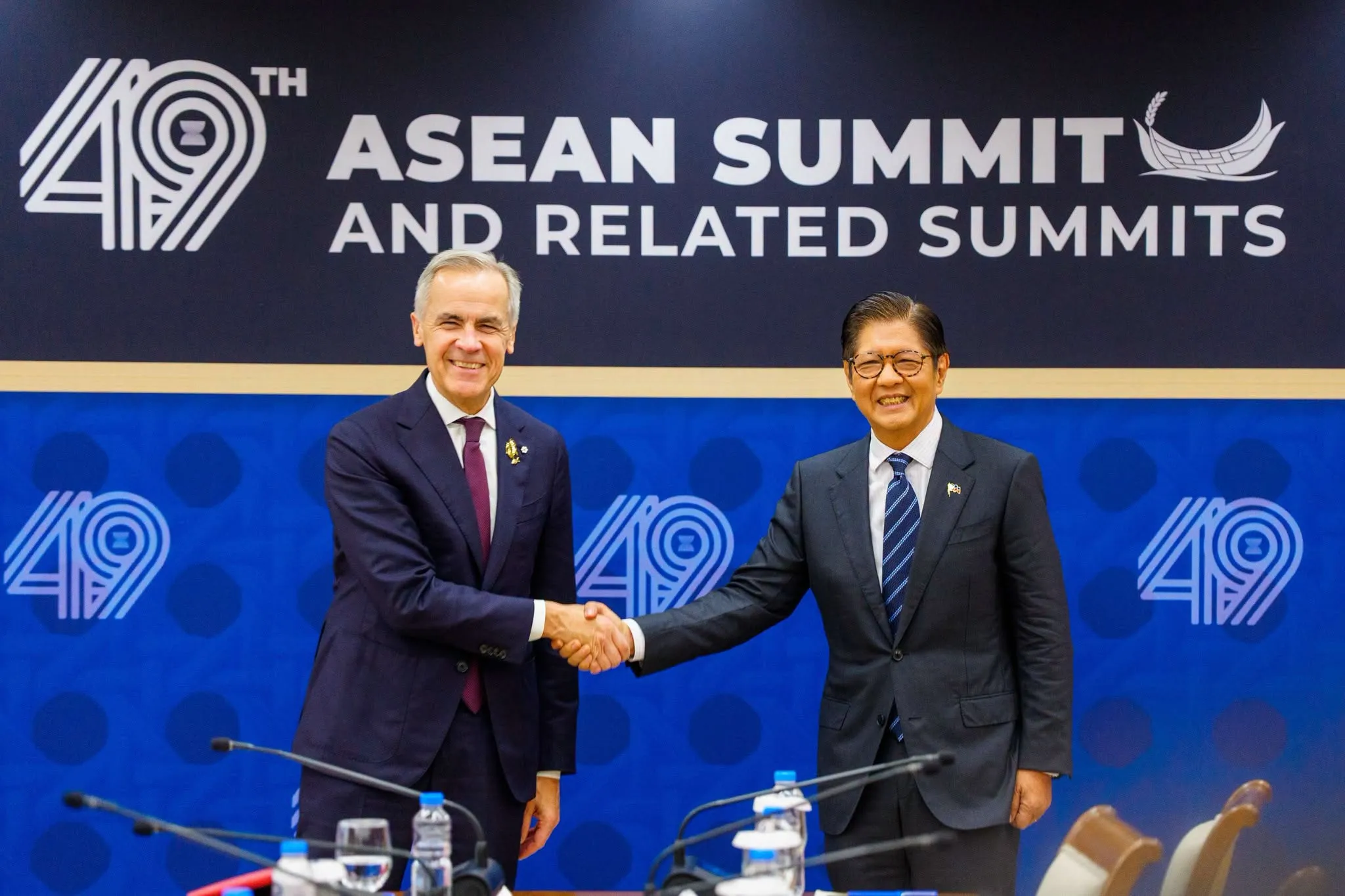 Canadian Prime Minister Mark Carney meets Philippine President Ferdinand Marcos Jr. during the ASEAN summit in Manila. Photo: Reuters
'In a more dangerous and divided world, a dense web of connections holds strong,' Carney said. ASEAN has a population of 700 million people and a $6 trillion economy. ACAFTA is expected to add nearly $2 billion to Canada's GDP.
Japan
Meanwhile, news from Asia’s second biggest economy was downbeat. 'Japan's economy contracts for the first time in a year,' the Financial Times headlined. It added, 'Weak consumer spending and record-breaking rains (the longest stretch of wet weather since records began in 1886) damp GDP growth and complicate interest rate plans.'
In the July to September quarter, Japanese government data showed an annualised 0.1 per cent contraction in real GDP compared with the previous three months. That was Japan's first drop into negative growth in four quarters; but fell short of a 0.3 per cent forecast by a poll of economists.
India
Public sector Coal India is the world's largest coal miner. Mahanadi Coalfields, headquartered in the eastern Indian state of Odisha, was in November its third subsidiary to go public this year. It is seeking a valuation of up to $9.55 billion.
'The sale is part of the Indian government's divestment programme aimed at raising funds, broadening ownership in state-run companies and improving government standards,' Reuters reported.
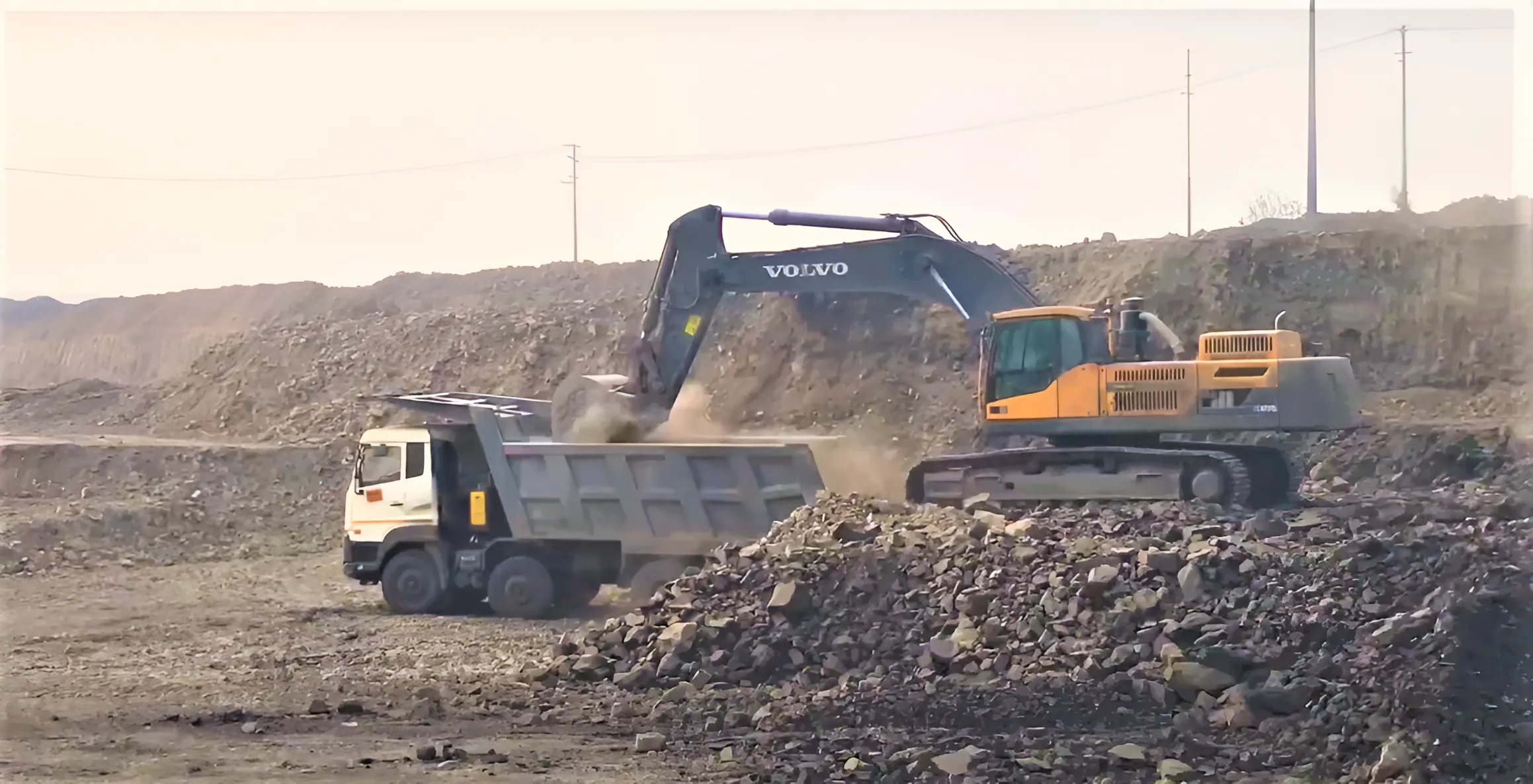 An open-cast coal mine in Odisha, India. The government is pursuing changes in the ownership and operations of state-run coal companies. Photo: The Energy and Resources Institute
India's dependence on fossil fuels is unlikely to dissipate in a hurry, since its renewable energy output hasn't quite taken off. In fact, Coal India's present endeavour is to improve efficiency to reduce reliance on coal imports.
Nvidia Affair
Jensen Huang, co-founder of AI giant Nvidia, resigned as the company's chief executive after admitting he had engaged in an extramarital affair with Alice Huang (the two are not related), a senior executive at the Singapore-headquartered data centre firm Megaspeed.
Alice was a guest at a dinner hosted by Jensen at a restaurant in Taipei on 22 May 2025 during Computex, the island's top tech expo. 'At one point,' Agence France Presse described, 'Jensen Huang can be seen putting his arm around Alice Huang as she kisses him on the right cheek, press livestreams show.'
According to AFP, 'US intelligence reportedly circulated a memo this spring alleging Alice Huang was an asset of China's Ministry of State Security.' Beijing has denied the charge.
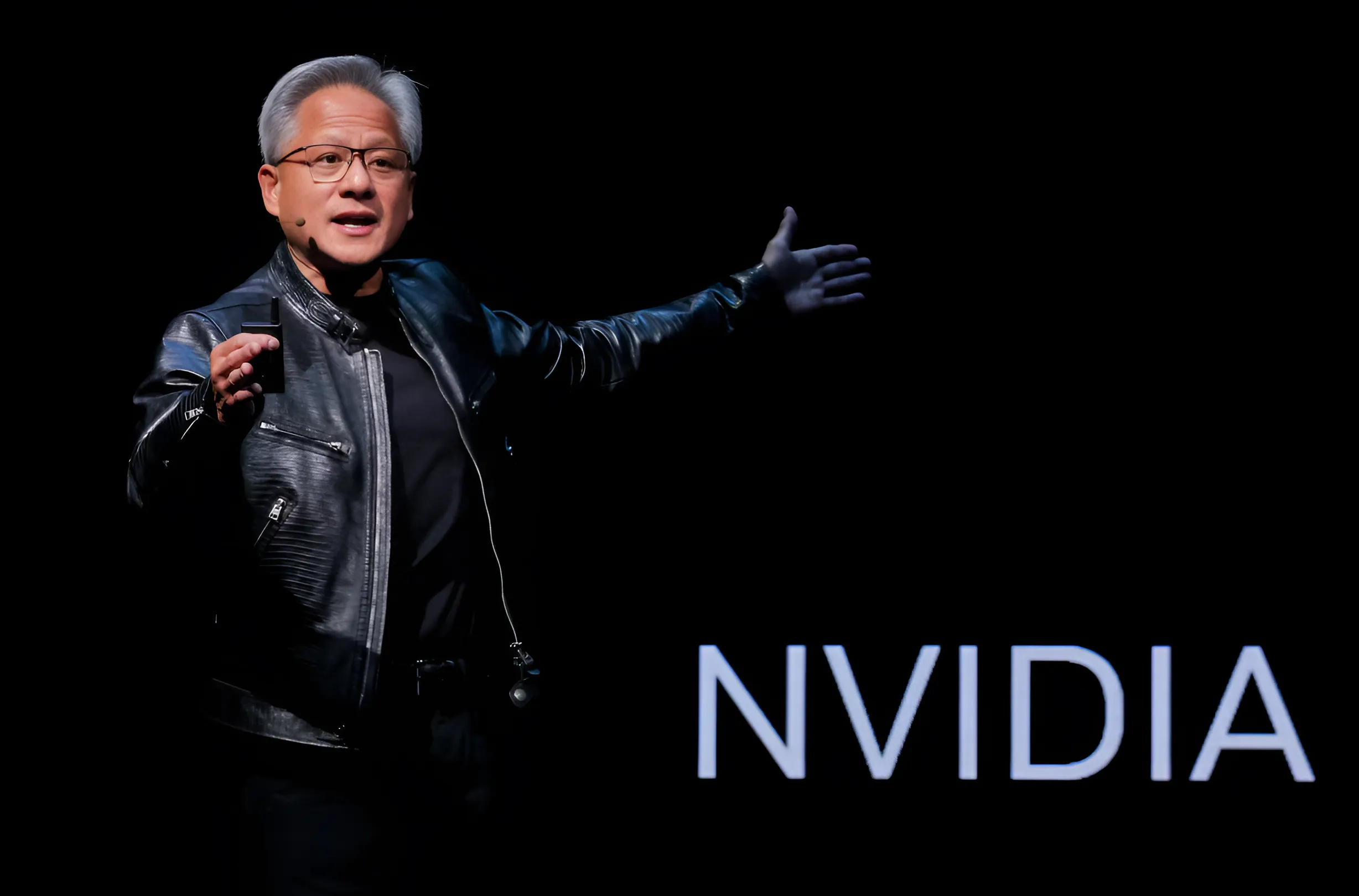 Nvidia co-founder Jensen Huang, whose company remains central to the global artificial intelligence and semiconductor industry. Photo: Reuters
Jensen Huang, lately a close informal adviser to Trump, spent years lobbying against curbs on sales of advanced AI chips to China. Last year, Trump cleared Nvidia's H200 chips for export there over objections from China critics in the US Congress.
At one point in November, the scandal sent Nvidia shares plunging by as much as 13 per cent, wiping off $600 billion of its market value. Its results for the third quarter of 2026 showed a revenue of $115.8 billion, a robust 20% up from the previous quarter and 103% up from a year ago.