In September Saudi Arabia quietly confirmed what currency traders had long suspected: it was walking away from mBridge, the China-led digital platform built to let central banks settle cross-border payments without touching the US dollar. Riyadh had joined with some fanfare in 2024, part of a broader hedge against Washington's financial reach, even as it continued describing its own BRICS status inconsistently – a full member one week, merely 'an invited country' the next. Its quiet mBridge exit, confirmed to the Financial Times, is a small but telling data point in a much bigger argument: is the world really abandoning the dollar, or just making noise about it? Sam Tully weighs the evidence.
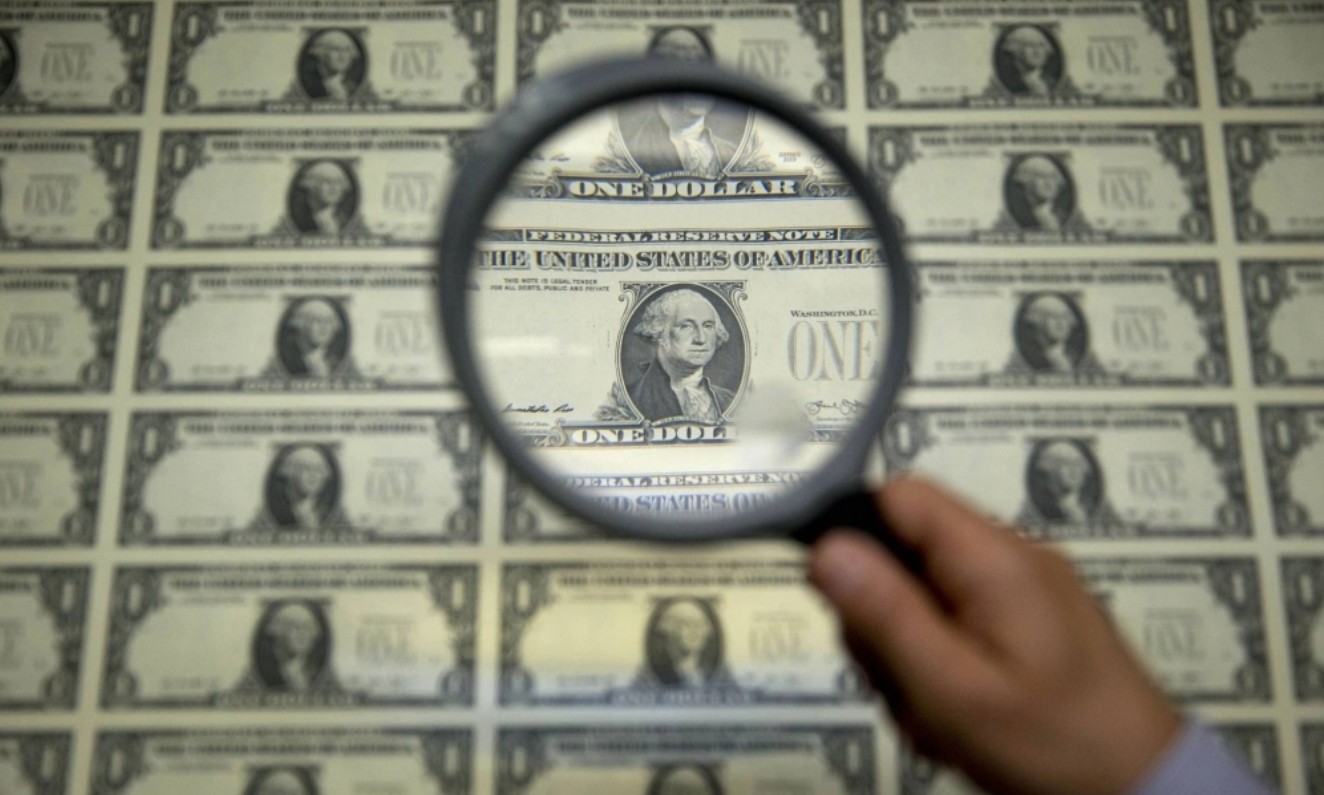
The US dollar remains the world’s dominant reserve currency, but growing geopolitical tensions and efforts to develop alternatives have fuelled debate over the future of the global financial system. Photo: Bloomberg
Whether you are taking a taxi in Kabul or tipping a porter in Kolkata, if you hand over a large enough US dollar bill, you will find a happy recipient. That is one small example of the power of the dollar, which is still the world's only genuinely universal currency. Even in Asia, home to two of the world's most populous countries with huge economies, and venerable currencies of their own, the Chinese renminbi and Indian rupee are still years away from being as freely tradable as the greenback.
There are other ‘reserve currencies’, including the euro, yen and even the pound sterling, whose own eclipse as the world's dominant currency was really sealed by the Bretton Woods agreement in 1944. Ever since then the dollar has dominated the foreign currency reserves held by central banks all over the world, and is by far and away the most freely traded currency, used to trade in everything from oil to iron ore, soya beans to semiconductors.
The US dollar remains the world’s dominant reserve currency, but growing geopolitical tensions and efforts to develop alternatives have fuelled debate over the future of the global financial system. Photo: Bloomberg
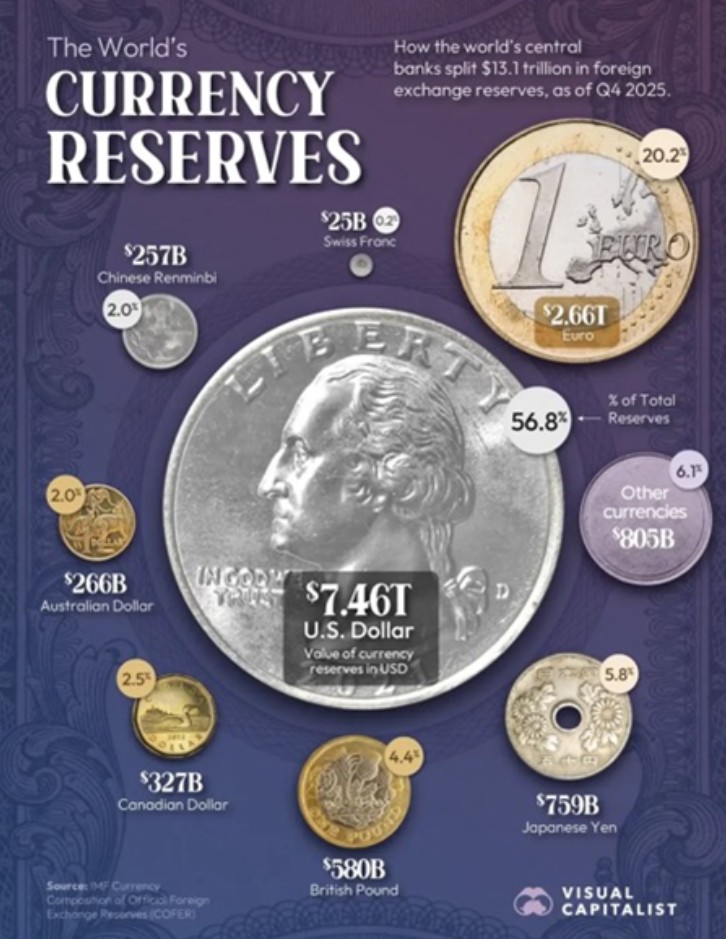
The world's central banks hold US$13.1 trillion in foreign exchange reserves; the dollar still accounts for well over half. Source: IMF COFER data, via Visual Capitalist, Q4 2025.
But there are winds of change. A roiling of global tariffs, ongoing wars at key choke points for trade, disrupted policy outlooks, rising inflation, expanding deficits in the US and Western economies and substantive realignments of key international relationships are all contributing to the increasing narrative of ‘de-dollarisation’.
At the moment one key focus is on oil prices, for example. By definition the crude oil price, whether Brent Crude or West Texas Intermediate, is denominated in dollars. Those prices have risen sharply, partly because of the war in Iran and the resulting closure of the Strait of Hormuz. Iran, one of the key protagonists in this war, has also been subject to biting economic sanctions made even more effective by the United States' ability to block any transactions that require dollar settlement. If Iran wants to trade its own oil, it has to find other ways to do it.
 Oil tankers passing through the Strait of Hormuz highlight
the link between global energy trade and the US dollar’s
dominance. Photo: Reuters
Historically a reserve currency status relied on some key characteristics. These included scale and a ready and transparent market to buy or sell, even in very large amounts – generally referred to as ‘liquidity’. It also relied on trust, that there would be visibility of economic and fiscal policies which would manage the expectations for a stable outlook for that currency. This would provide comfort to another central bank that the store of value held in that reserve currency would not erode significantly over time.
In the case of the United States, a combination of fiscal constraint, Federal Reserve independence and a commitment to global free trade underpinned that trust. This was cemented by the financial architecture of currency trade and settlement, centred in New York. With US federal debt now north of $40 trillion and rising, dramatically changing and inconsistent tariff policies, and some question marks over the commitment to maintaining the Fed's independence in rate setting, the world has changed significantly and it is therefore no surprise that alternatives are being considered.
Trust in the US dollar has been further eroded by the willingness of the United States to impose sanctions, even against other nations where it has traditionally enjoyed good relations.
There are ready-made alternatives to the dollar, including the renminbi, euro and Japanese yen among others. Even so, these currently represent a small if rising share of central bank holdings across the globe and each have challenges of their own. The renminbi is subject to capital controls and policy making is opaque. The euro has scale but while monetary policy in the 21 countries of the eurozone is coordinated, fiscal policy is not, and there have been significant and disruptive divergences. Also, economic growth is at best tepid. The yen also suffers due to low growth expectations in Japan and low rates due to very high levels of domestic debt.
Other alternatives to holding the dollar as the main reserve currency include gold, the safest haven historically, and recently central banks have been buying more gold and even transferring physical gold reserves from the USA to Europe. Gold, however, does not pay interest, and liquidity, particularly for physical bullion, is no match for currency.
 The dollar's share of global reserves has fallen from over 70 per cent in the
early 2000s to around 57 per cent today – with the slack taken up largely
by smaller, ‘non-traditional’ currencies rather than the euro, yen or
pound. Source: IMF COFER; Arslanalp, Eichengreen and Simpson-Bell
(2022, updated)
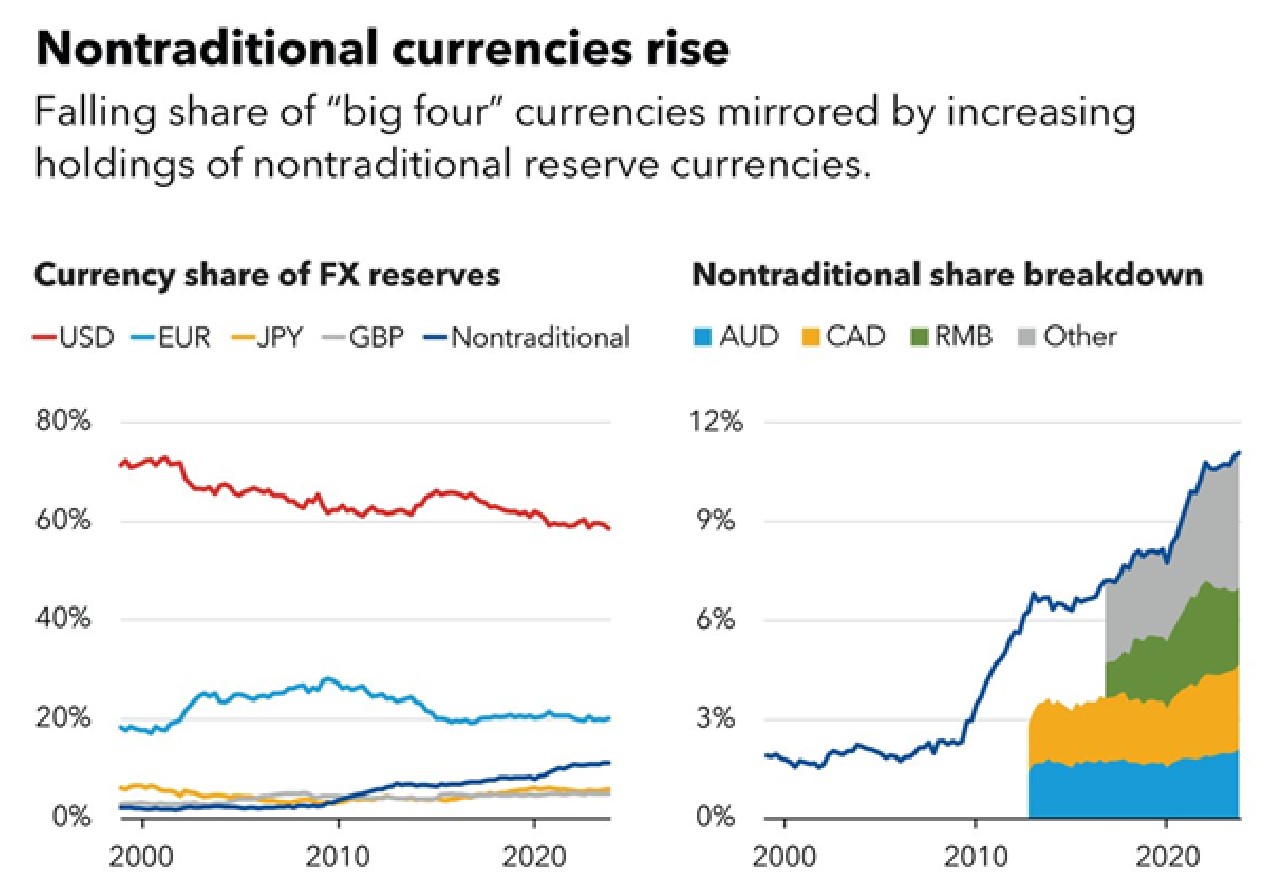
The dollar's share of global reserves has fallen from over 70 per cent in the early 2000s to around 59 per cent today – with the slack taken up largely by smaller, ‘non-traditional’ currencies rather than the euro, yen or pound. Source: IMF COFER; Arslanalp, Eichengreen and Simpson-Bell (2022, updated).
There is also cryptocurrency, which should be a hedge against inflation but has proved to be exceptionally volatile – another characteristic anathema to central bankers.
For countries in Asia and others in the ‘Global South’, there is a rising sense of urgency to come up with alternatives to the dollar, both for their own reserves but also for trading and settling between their economies without having to always use existing international financial infrastructure.
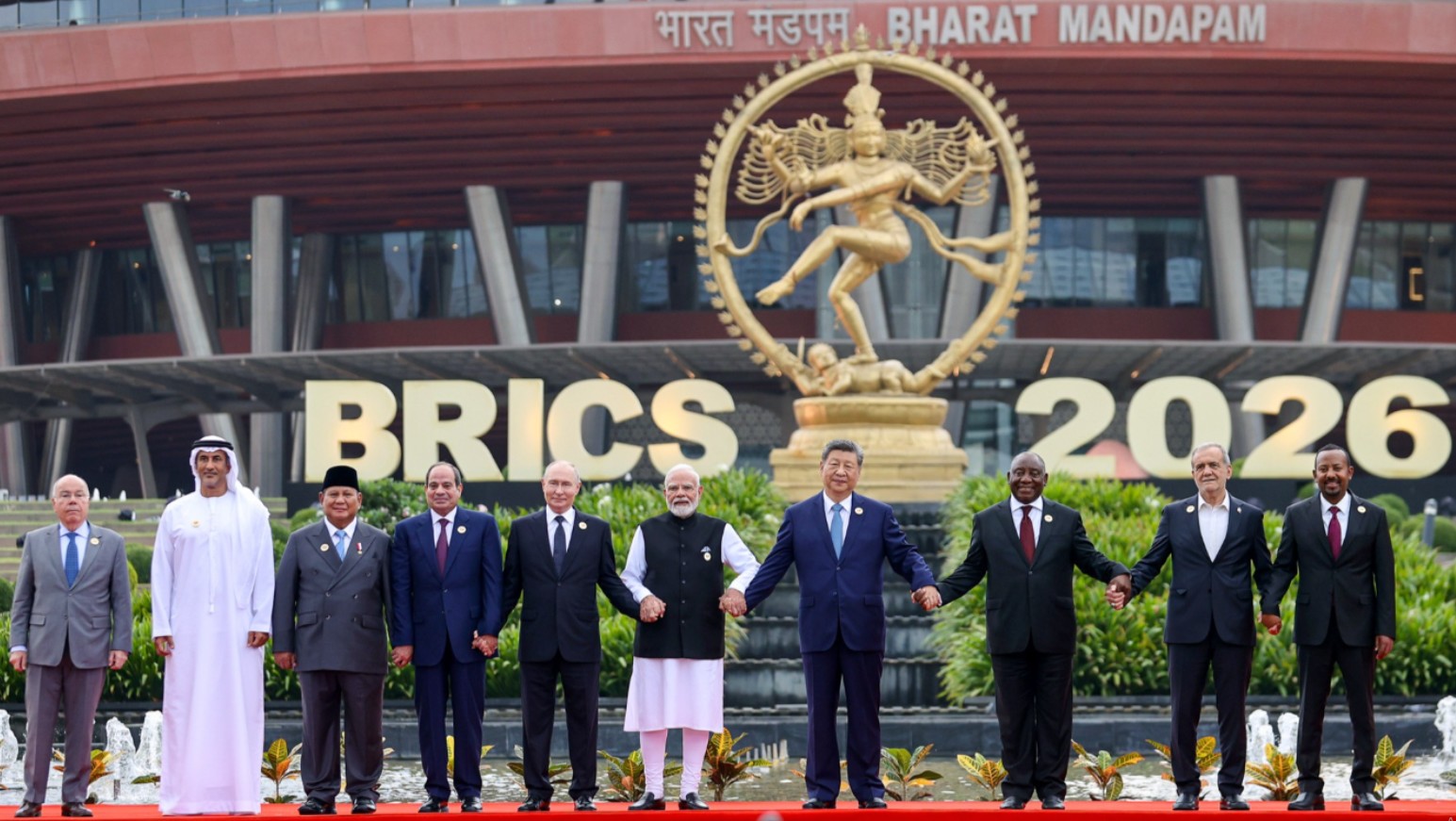
This has underpinned proposed measures at the Shanghai Cooperation Organisation and BRICS to develop alternative settlement arrangements involving a combination of currencies including the renminbi, rouble and rupee, and, in BRICS's case, the rand. Saudi Arabia – invited to join BRICS from 2023, though it has never confirmed full membership, variously describing itself since as a member and as merely an invited country – joined mBridge, the China-led cross-border settlement platform, in 2024. It completed a proof-of-concept trial in May 2025 before formally withdrawing in September 2026, according to the Financial Times, while continuing to peg its riyal to the dollar. Another favoured option is the expansion of bilateral currency swaps as an alternative to dollar settlement, such as the longstanding rupee-rouble arrangement between India and Russia.
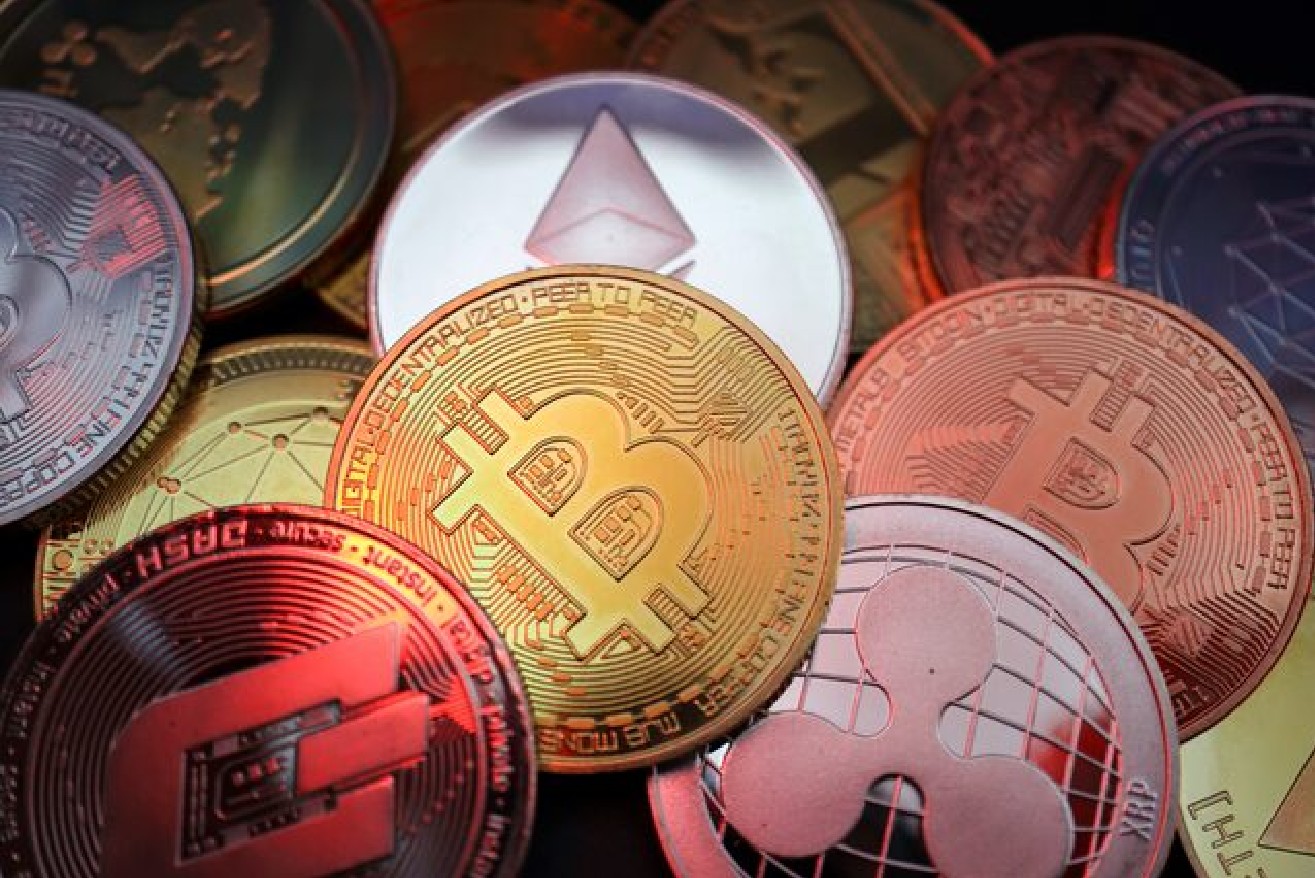 Representations of cryptocurrencies, including Bitcoin and Ethereum,
illustrate alternative assets considered as countries explore options
beyond the US dollar. Photo: Reuters/Florence Lo.
There are also numerous inherent frictions to scaling these alternatives. Geopolitical strains within the new blocs, as well as economic imbalances, might only be enhanced. India and China are a case in point. India is currently watching the US and China draw closer even as its own trade deficit with China – which reached around $112 billion this year - has more than doubled since 2020. Even as it seeks to grow its own manufacturing base, it is hugely reliant on the import of key elements in the supply chain from its northern neighbour.
So, there is a move away from the US dollar for sure, and there are even voices within the US policy establishment who would welcome a weaker dollar to boost their own exporters, for example. Given the scale of its dominance, the depth of the international financial infrastructure and architecture that supports this, and barriers to scaling up alternatives, its status may be declining – but this will take time, though perhaps less than we might think.