In theory, last February’s national election has restored Bangladesh’s democracy after a period of authoritarian rule was ended by the July-August 2024 protest. In practice polling has restored the once powerful Bangladesh Nationalist Party, founded by former president Ziaur Rahman, and now led by Tarique Rahman. Long-time Bangladesh watcher Nicholas Nugent considers to what extent democracy has been restored.
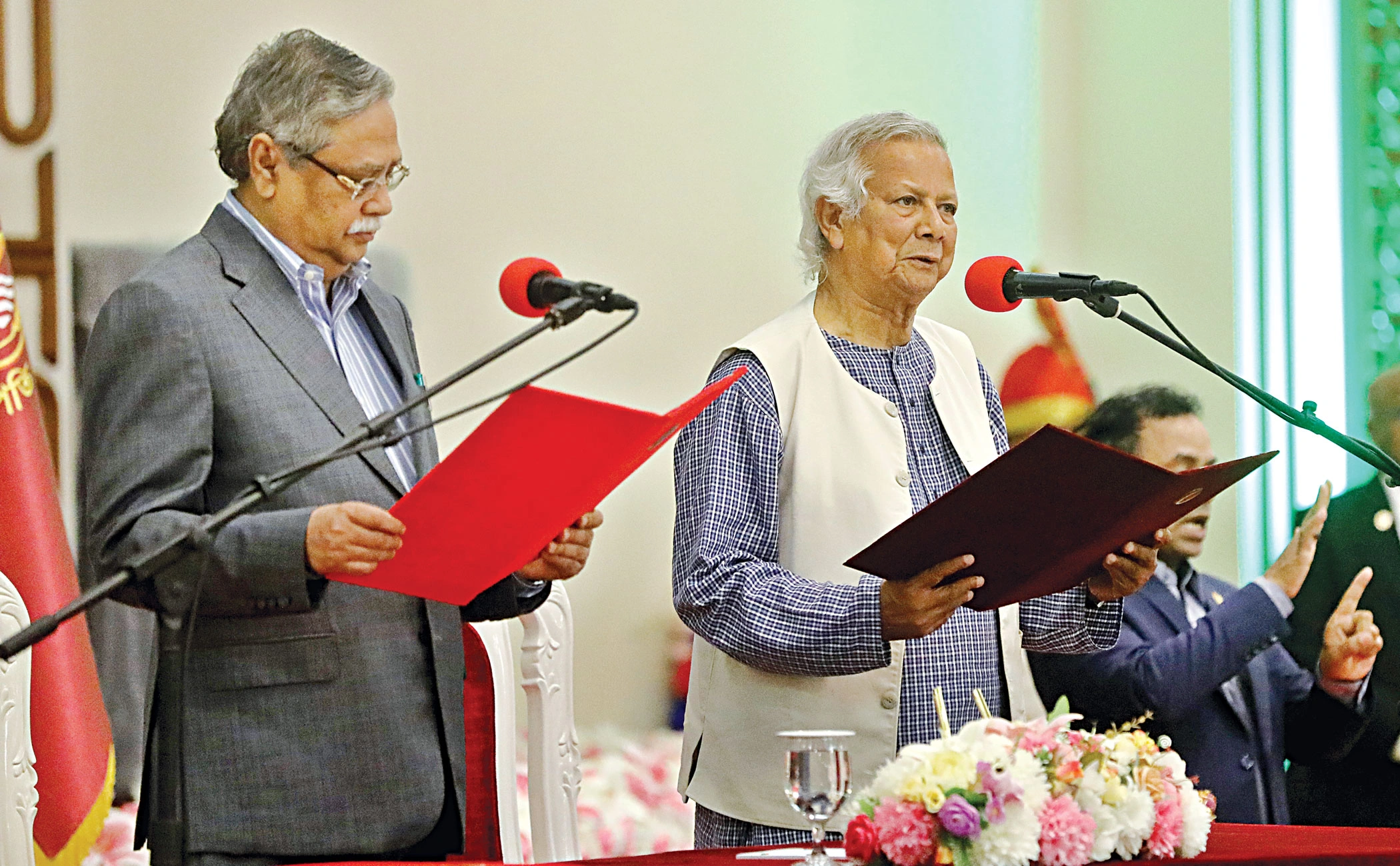
Muhammad Yunus was sworn in as Chief Adviser in August 2024 following the fall of Sheikh Hasina's government, leading Bangladesh's interim administration toward constitutional reforms and national elections. Photo: PID
Bangladesh’s July 2024 elections led to an uprising against authoritarian rule by Sheikh Hasina’s Awami League. There were accusations the election lacked any vestige of fairness, as there had been during polls her party won in 2014 and 2018. This time students took their discontent onto the streets of the capital, Dhaka. Hundreds were killed when Sheikh Hasina ordered the security forces to open fire – as many as 1,400 according to a subsequent report by the United Nations Human Rights office.
The killings failed to quell the protests and on 5 August Sheikh Hasina recognised that her time was up and fled to safety in India. Parliament (the Jatiya Sangsad) was dissolved, ending the Awami League's 15-year rule. The army attempted to restore order to the streets while protesters took their revenge on Awami League ministers and party members. It was said that Gen Z had brought about the fall of the elected government.
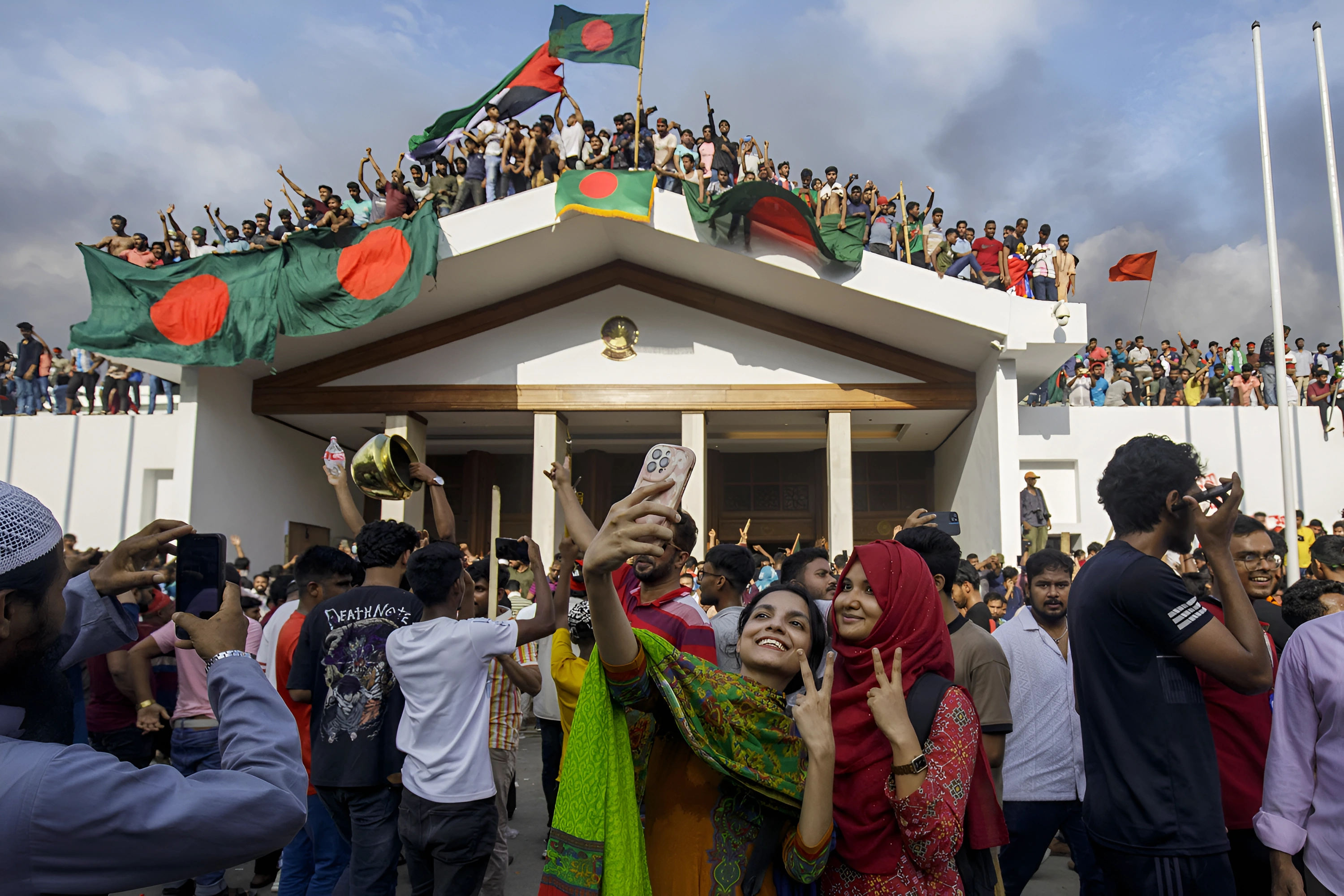 Student demonstrators celebrate in Dhaka after Sheikh Hasina left office in August 2024, ending 15 years of Awami League rule. Photo: Collected
Rather than take power itself, as was usual in Bangladesh, the army followed the suggestion of student protesters in handing power to their nominee, Nobel Peace laureate Muhammad Yunus, a widely respected figure in Bangladesh and beyond, who had himself been persecuted by Sheikh Hasina’s government. Three days after Sheikh Hasina fled, he was sworn in as Chief Adviser at the head of an interim government tasked with restoring order, reforming key institutions, and preparing for credible elections. The choice of Yunus as interim leader was widely welcomed.
During the period of interim rule, political parties and individuals involved in the overthrow of the Awami League government agreed a 28-point agreement known as the July Charter. This codified a consensus for reform of the country’s constitution and electoral laws, as well as of the judiciary and the state administration, which had become politicised under the Awami League.
A key test of the interim government was the holding of elections. It was criticised for taking 18 months, much more than the Constitution's 90-day provision and three times longer than Nepal's post-uprising transition. Yet the Yunus-led government, working with the Election Commission, were considered to have done a satisfactory job, though the banning of the Awami League was criticised by human rights groups as a blemish on the country’s project to restore democracy.
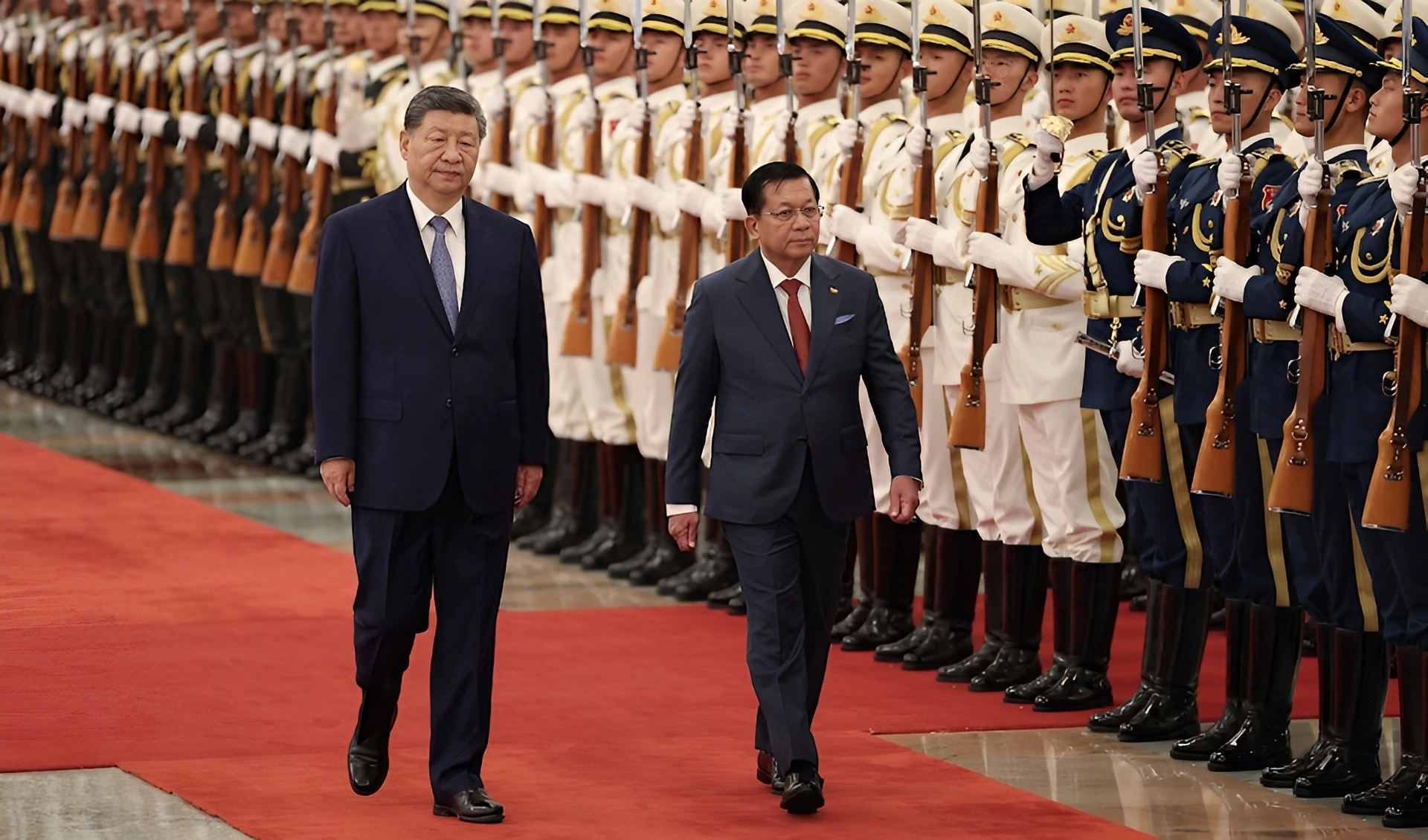
Despite fears of violence, the elections were peaceful; nearly sixty per cent of eligible citizens turned out to vote on a day that was treated as a national celebration. The winning party, the Bangladesh Nationalist Party led by Tarique Rahman, gained a two-thirds majority, an initial mark of success for the country. With the army back in barracks, it could be said to have set a democratic example for neighbouring Myanmar, where elections six months ago confirmed in power military men dressed as civilians.
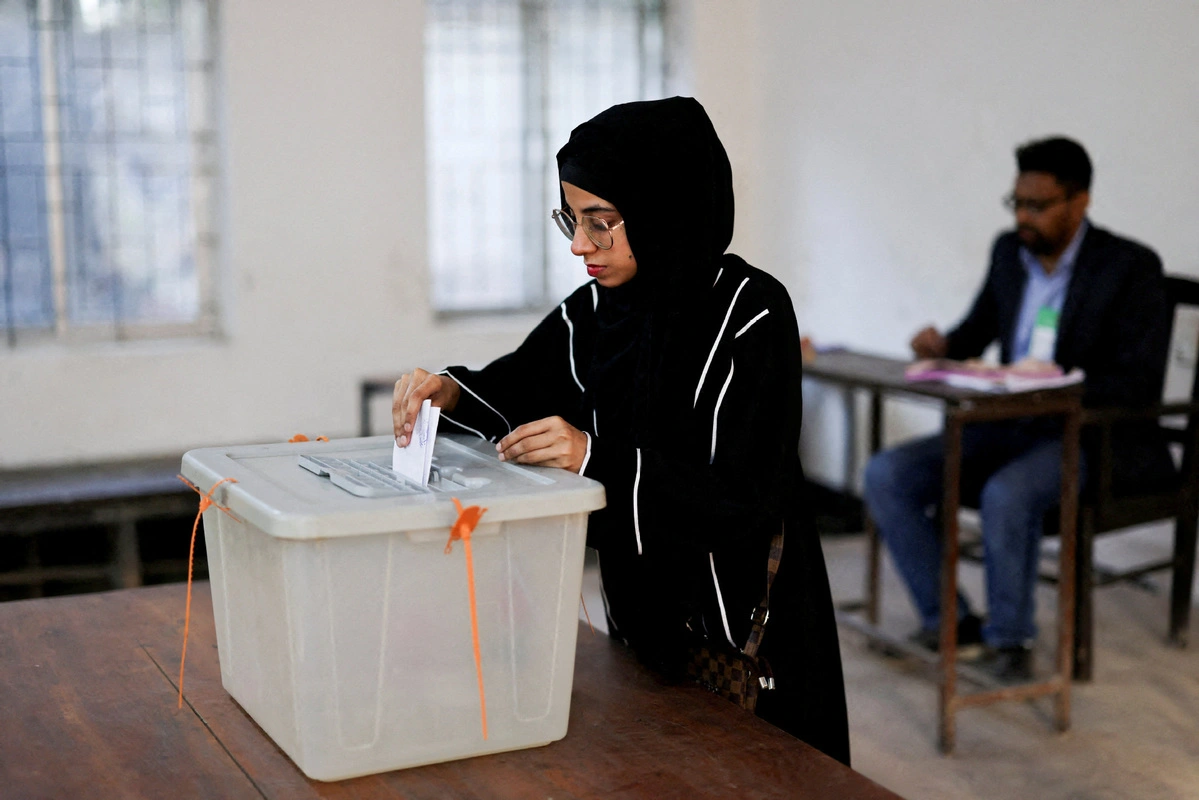 Bangladeshis cast their ballots during the February 2026 general election, the country's first national vote following the 2024 political transition. Photo: Collected
However, the BNP government has been accused by the opposition Jamaat-e-Islami-led alliance, which represents many of those involved in the 2024 protests, of dragging its heels over agreed reforms. This would have included restoring the principle of secularism, which was in the country’s 1972 constitution but was removed in 1977 when Tarique Rahman’s father was in power. These reforms were endorsed by voters in a referendum alongside the parliamentary election.
Rather than lifting the ban on the Awami League, the BNP government passed it into law, consolidating the BNP’s dominant position in Bangladeshi political life, but leading to further criticism that it was anti-democratic, especially given the Awami League’s association with the formation of the nation in 1971. The International Crisis Group says that a ban on the party is not sustainable in the long term. The failure so far to implement the July Charter has damaged the victorious party’s claim to have restored parliamentary democracy. Dr Tarikul Islam, professor of politics at Dhaka’s Jahangirnagar University, says ‘democracy is an evolving process rather than a one-time achievement’. He believes the BNP-led government is ‘more liberal than at any time before’.
There have been other obstacles to progress beyond the government’s control. The closure of the Strait of Hormuz has had a devastating impact on Bangladesh as almost all the country’s oil and gas comes from the Gulf. Garment factories, which under Sheikh Hasina had become a mainstay of the economy, have been forced to reduce output or close completely causing large numbers of workers to lose their jobs. 40 million Bangladeshi citizens depended for their livelihoods on the clothing industry which provided four-fifths of the country’s export earnings. According to Thomas Kean of the International Crisis Group ‘the conflict in the Middle East will not just drain government coffers – it could potentially push millions of Bangladeshis back into poverty’.
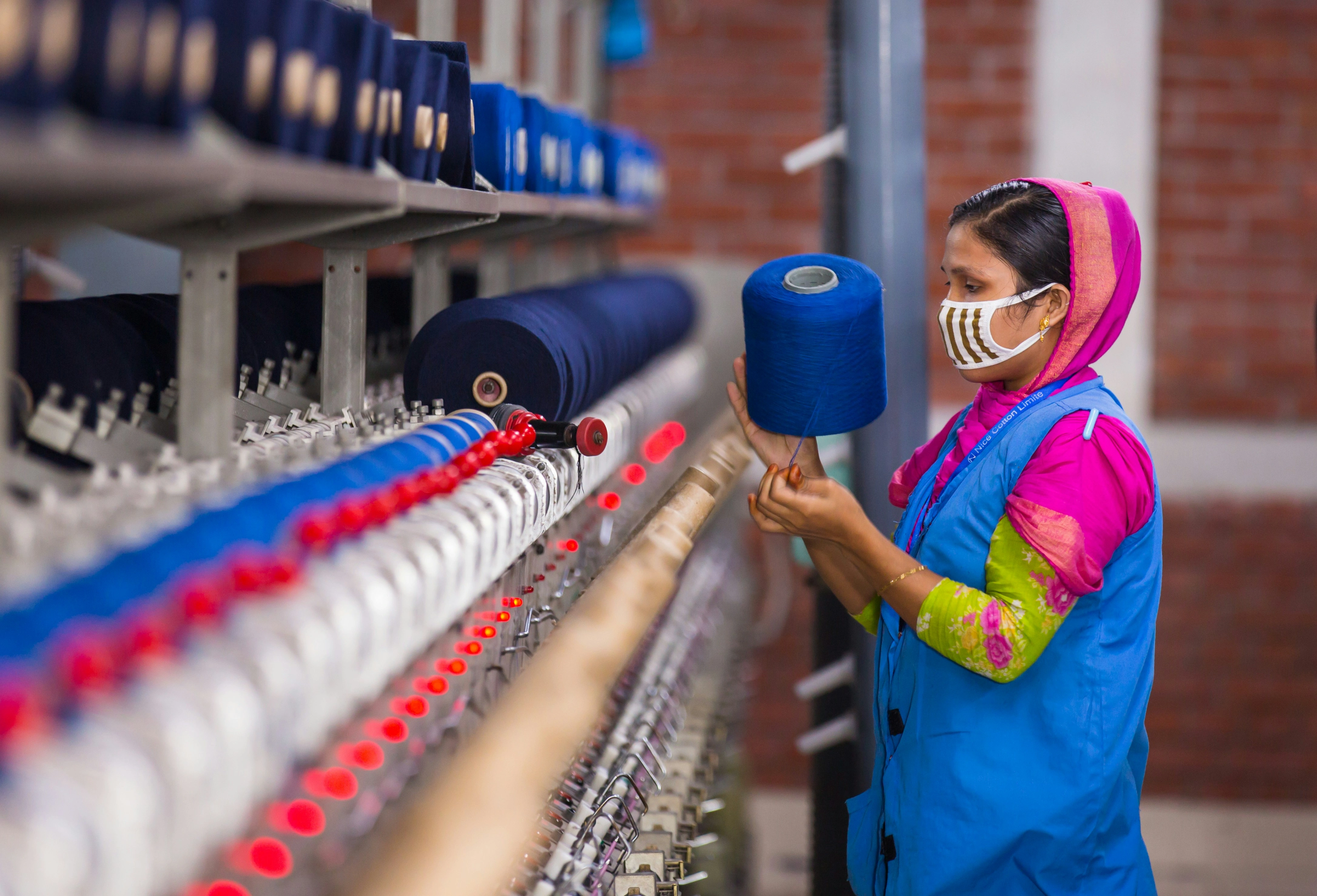 Bangladesh's garment industry remains the backbone of the country's economy but has faced mounting pressure from higher energy costs and weakening global demand. Photo: Shanjir H.
India’s refusal to extradite Sheikh Hasina to face trial in Bangladesh may have been inevitable. In a Reuters interview published in July, Hasina said she and senior Awami League figures plan to return to Bangladesh by December and surrender voluntarily, despite the death sentence handed down in absentia in November 2025 – a gesture she framed as exposing what she called politically motivated prosecutions. The decision by Prime Minister Tarique Rahman to make his first overseas visit to China, rather than India, marks a re-prioritisation of foreign policy. During the visit it became clear that the new government plans to award two major projects, developing Mongla port and the Teesta River, to Chinese companies. Sheikh Hasina had promised them to Indian companies.
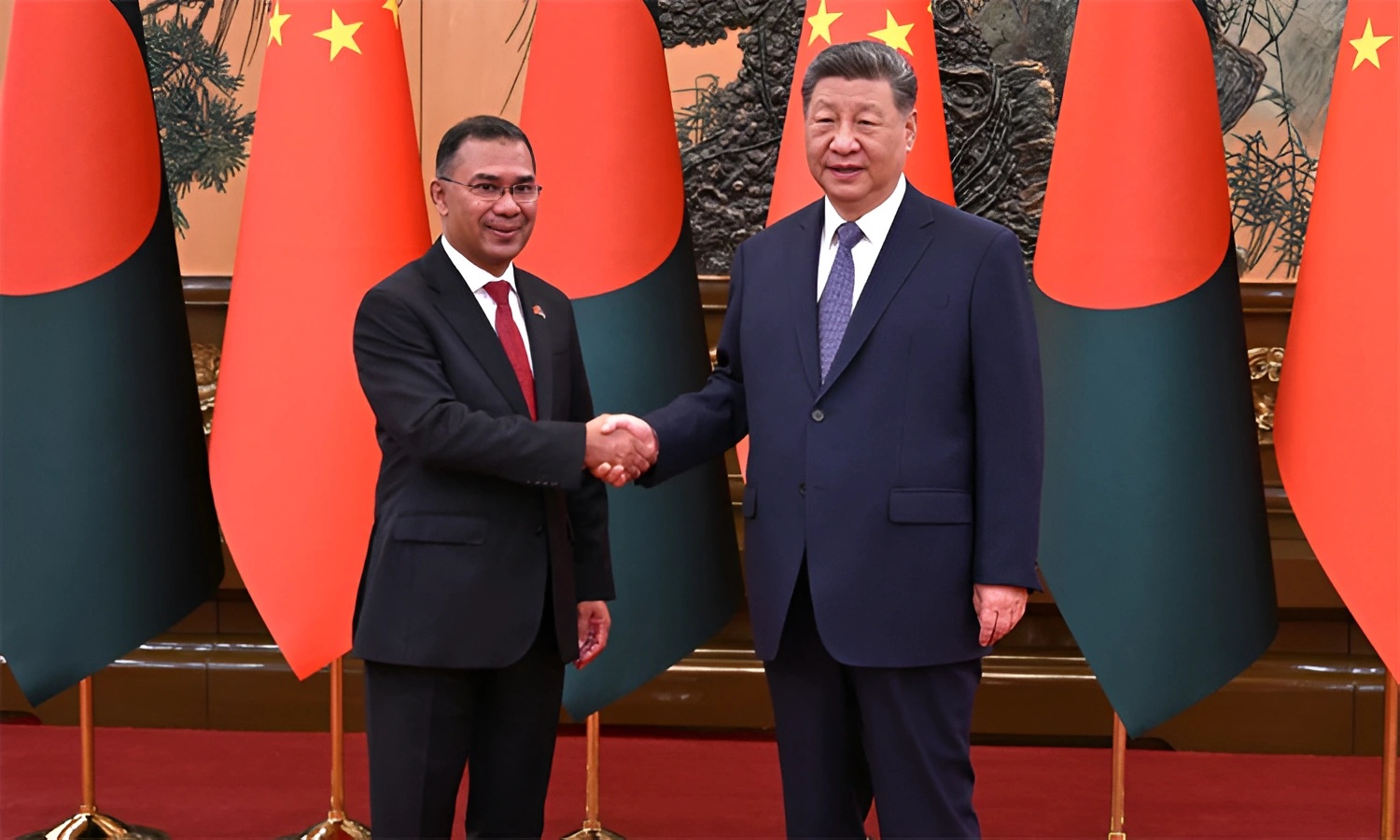 Bangladesh's new leadership has signalled a shift in regional priorities, strengthening ties with China while relations with India remain under strain. Photo: PMO
Another dip in relations with India came after May’s state election gave control of West Bengal, which neighbours Bangladesh, to India’s ruling BJP. Since then there has been an increase in forcible expulsion across the joint border of Muslims whom India says infiltrated illegally from Bangladesh. Critics see this as part of the BJP’s Hindu-ification drive. Bangladesh has yet to resolve the considerable problem of the 1.2 million Rohingya refugees earlier forced into the country from Myanmar.
Tarique Rahman’s government has an uphill task ahead. According to Professor Islam, ‘greater attention should be given to strengthening institutional accountability and enhancing the independence and capacity of public institutions’. A big test will be whether parliament is enabled to function effectively with a role for the political opposition. There is also a need to solve the problem of large numbers of unemployed young people, which lay at the heart of the 2024 unrest.
The country has come far since Sheikh Hasina was ousted two years ago. Looking back over the 15 years of authoritarian rule and departure from norms of democracy, it is clear it still has a long way to go, though Professor Islam argues that the government’s performance ‘is more satisfying than at any time since the independence of Bangladesh’. Expressing itself content with the election and transfer of power, the International Crisis Group noted: ‘There is now an opportunity to strengthen this step toward peaceful, democratic competition and make sure it is not a one-off occurrence.’