Pakistan’s army chief has been in the limelight as a peace broker on the international stage. But there are no talks or mediation for dissent at home, as Umber Khairi reports.
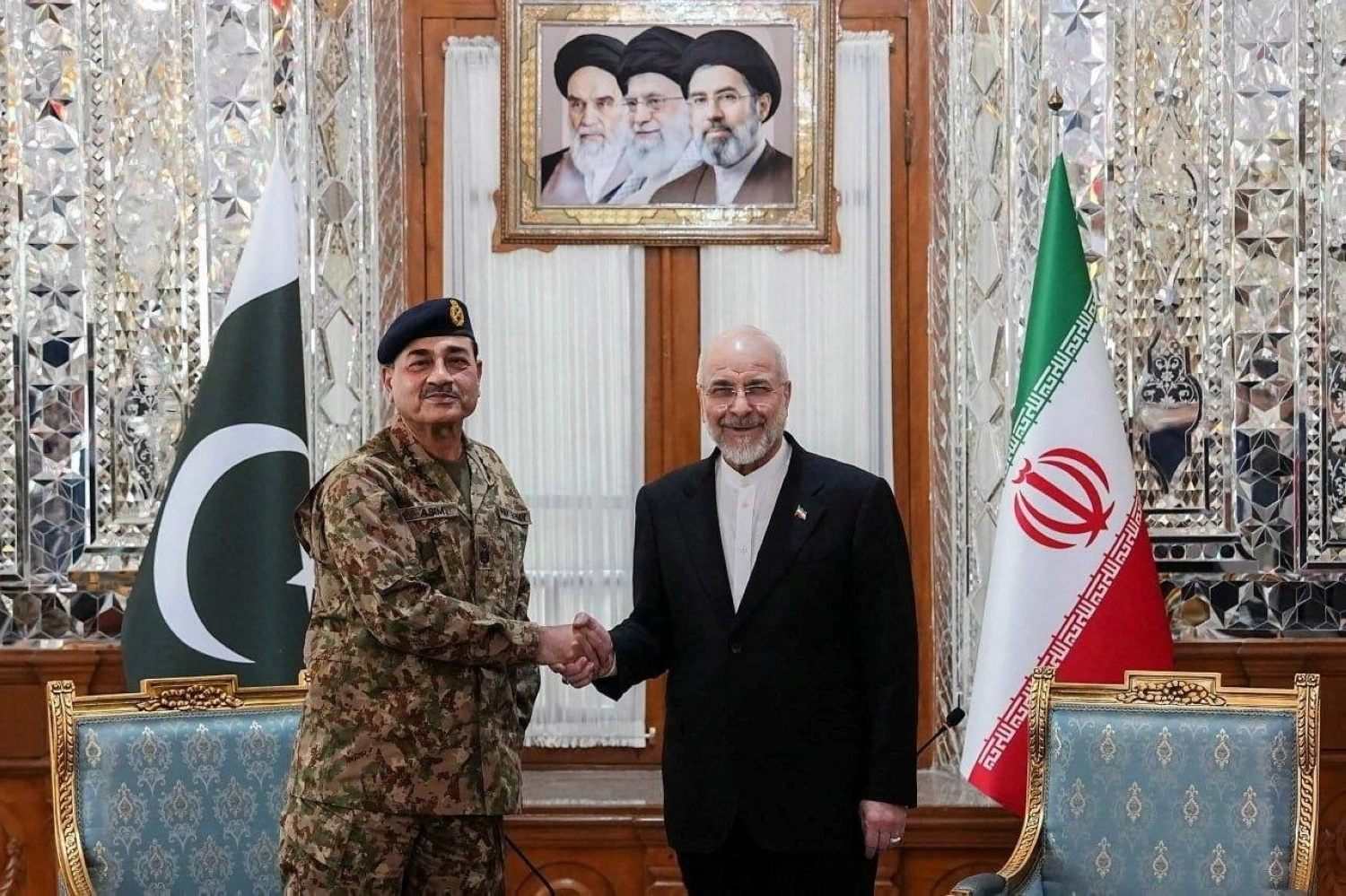
Field Marshal Asim Munir (left) meets Iranian Parliament Speaker Mohammad Bagher Ghalibaf in Tehran. Munir has become Pakistan’s leading diplomatic figure on the regional stage. Photo: Iranian Parliament Speaker Office/WANA via Reuters.
As a consequence of the Israeli-US war on Iran, Pakistan’s army chief, Field Marshal Asim Munir, has emerged on the world stage as a peace broker, featuring more prominently in talks and meetings than the country’s prime minister. However, as many observers have pointed out, this ‘peacenik’ approach does not apply domestically – there are no talks, mediation or tolerance for any conflict within Pakistan.
This situation – ‘peacenik’ internationally but ruthlessly intolerant at home – can seem contradictory, but actually is nothing new. It is a policy which Pakistan’s military rulers have stuck to over the years. General Zia-ul-Haq, who presided over a regime with zero tolerance for any political or social protest, enjoyed a very positive image on the international front because he had allied Pakistan with the US war against the Soviets in Afghanistan. Another of Asim Munir’s predecessors, also a self-appointed field marshal, Mohammad Ayub Khan, allied Pakistan with the US bloc during the Cold War and tried to persuade his anti-American compatriots that the Americans were ‘Friends not Masters’, the title he gave to his 1967 book.
So, Field Marshal Asim Munir is following a pattern, the only difference being that, so far, he has not awarded himself a non-military title – unlike most predecessors of the country. The man President Donald Trump has referred to as his ‘favourite field marshal’ has gone from strength to strength internationally – mainly due to two wars. The first was the India-Pakistan conflict in April-May 2025, in which at least 130 people were killed and military sites on both sides were attacked.
Pakistan got the US to intervene diplomatically and somehow managed to emerge from the weeks of fighting with a more favourable image than India. The second conflict is, of course, the Israel-US war on Iran where Pakistan emerged as a mediator bringing the Iranians and the Americans to the negotiating table in Islamabad.
Pakistan has kept communication channels open with countries and groups condemned by the international community and it is precisely these contacts which allow it to take on the mantle of ‘mediator’. Its ties with China helped connect Washington and Beijing in the early 1970s; its historic links with the Afghan Taliban made it an important participant in the peace talks facilitated by Qatar during President Trump’s first term. But successes on the international stage cannot solve Pakistan’s economic or regional problems if no attention is paid to domestic issues, such as two ongoing insurgencies in the country.
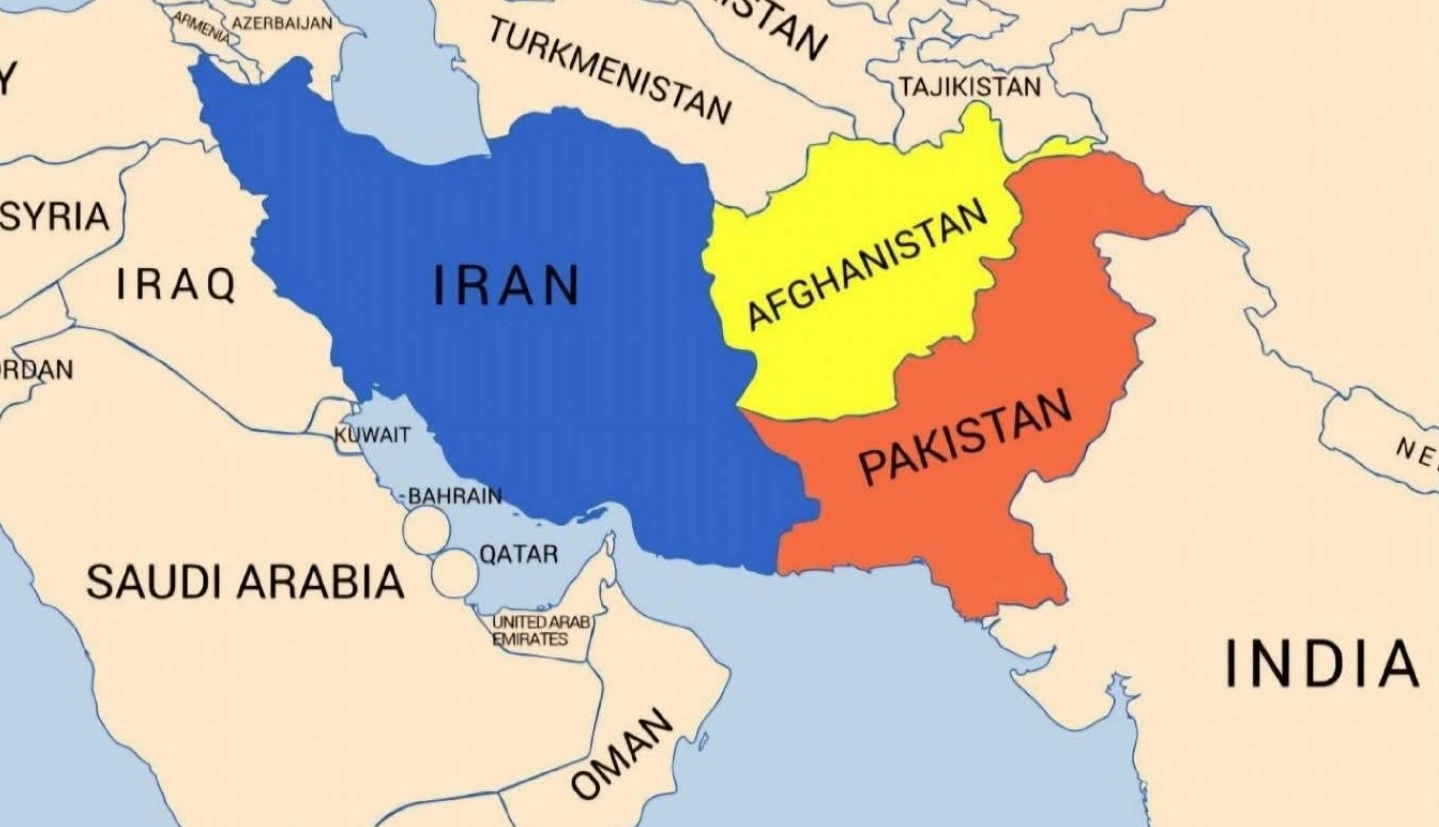 Pakistan's strategic location has allowed it to play a mediating role in regional conflicts while facing growing security challenges along its own borders. Map: Collected
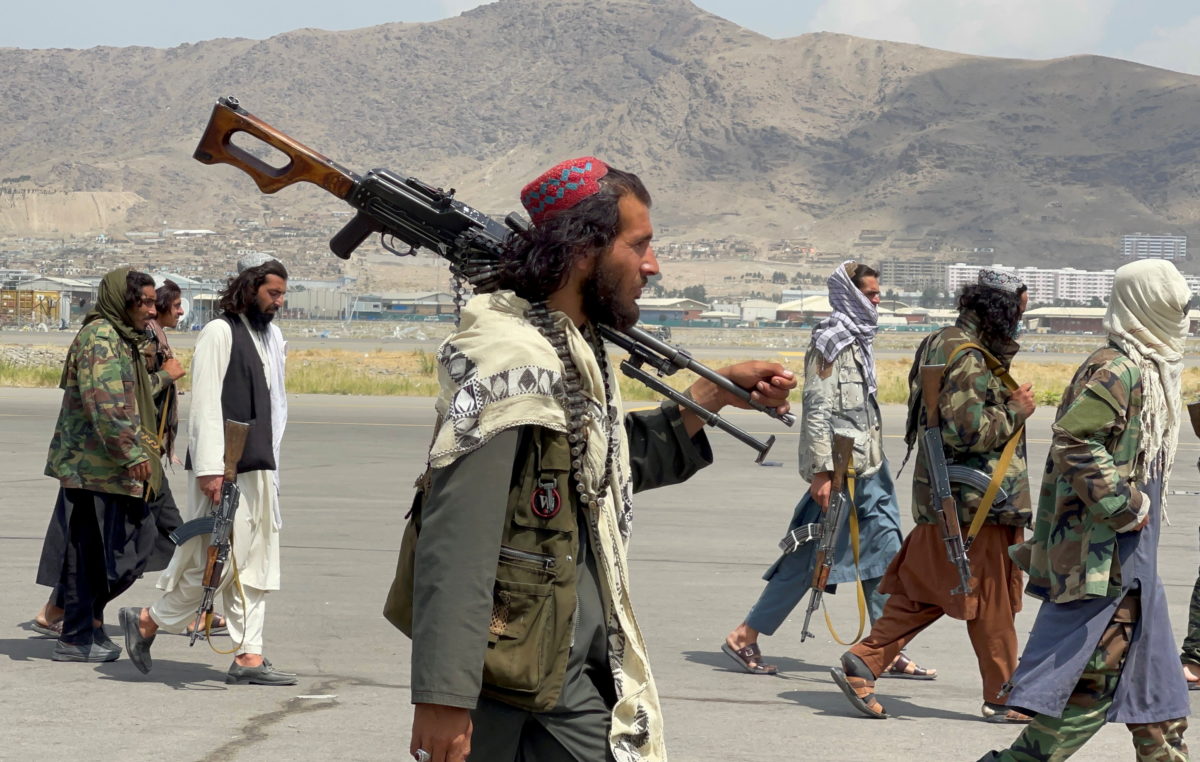
Pakistan faces two insurgencies, in the north and west of the country, but the nature of both struggles is very different. The Tehreek-e-Taliban Pakistan (TTP) movement in the north is linked to religious ideology and once had close links with the military. It is largely Pashtun and operates along the Pakistan-Afghan border.
Our enemies in the North
At the height of the militancy in Pakistan 2008-2014, the TTP was responsible for a number of major attacks on army installations and key sites including an attack on the army’s headquarters in Rawalpindi, an attack on a naval base in Karachi, an attack on Karachi International Airport, an attack on an army training school in Charsadda in which 67 young graduates were killed and an attack on the Army Public School (APS) which killed 149 students and teachers.
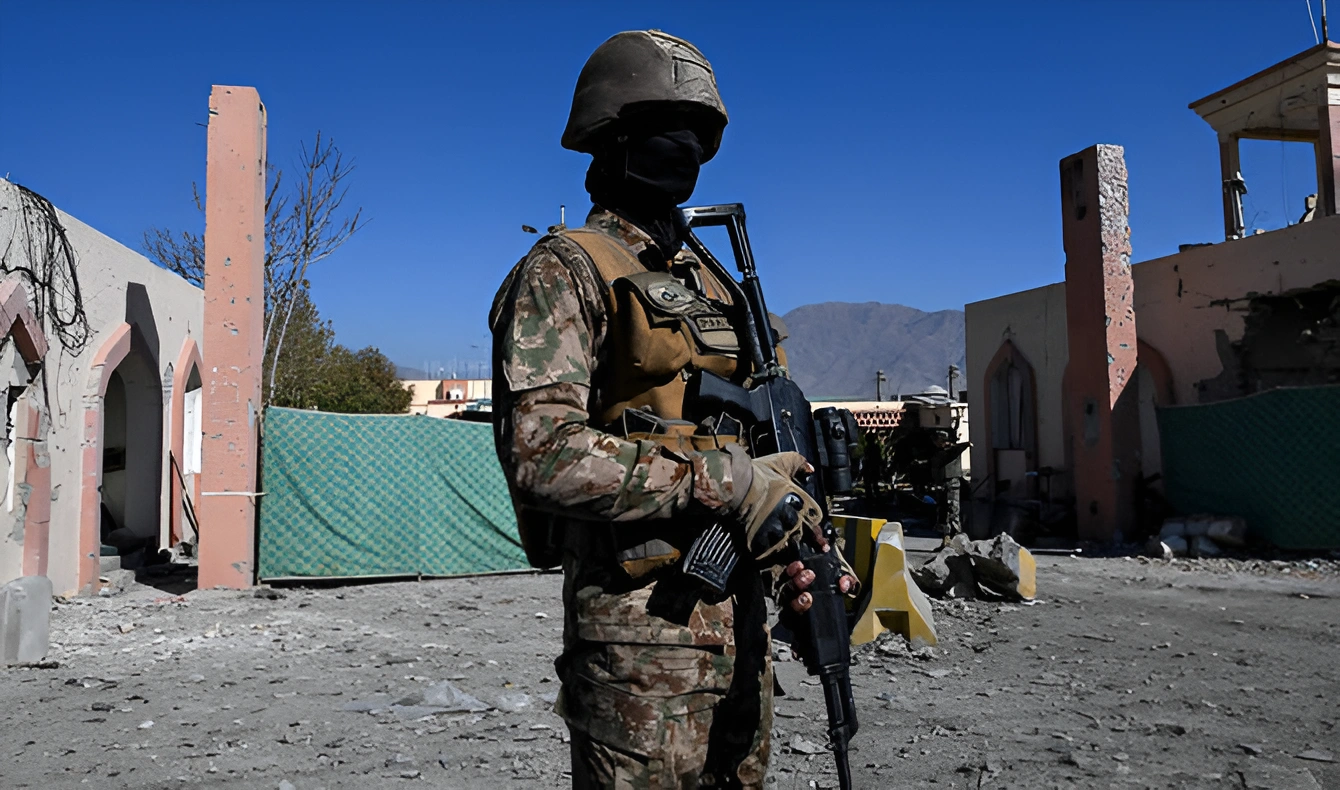 Pakistani security forces continue operations against Tehreek-e-Taliban Pakistan (TTP) militants along the country's northwestern frontier.
The group is the product of a murky policy of creating and using militants; the state’s attitude to the TTP has now been mixed up with a number of factors and prejudices: the establishment’s historical distrust of the Pashtuns including its kinship with Pashtuns in Afghanistan, and the regime’s distrust of the provincial government, now in the hands of the incarcerated former prime minister Imran Khan’s party the Pakistan Tehreek-e-Insaf or PTI. The party has won three successive elections in a province which before this had never returned an incumbent to power.
Pakistan accuses Afghanistan of aiding the TTP, and last year a UN report confirmed the Afghan Taliban, now in government in Afghanistan, were providing ‘logistical, operational and financial support’ to the TTP. So effectively Pakistan is fighting a vicious proxy war with Afghanistan.
The Balochistan issue
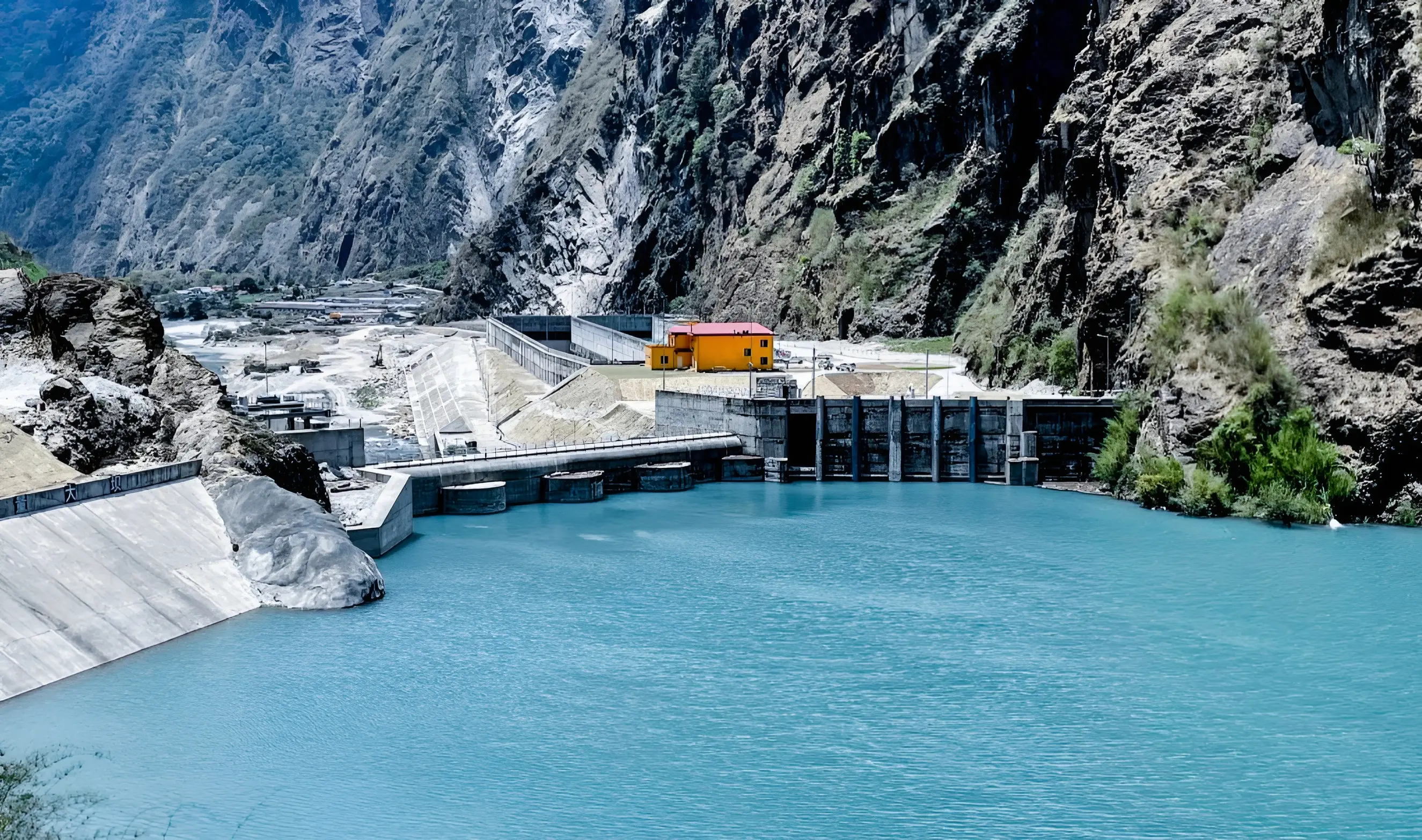
There have been uprisings and militant movements in Balochistan throughout Pakistan’s history, from its controversial accession to the country in 1947. The present-day struggle of the Baloch Liberation Army, or BLA, revolves around a narrative of occupation and colonisation, political and economic marginalisation. In recent years it has been fuelled by lucrative investment projects in the province, awarded by central government but giving no benefit to the people of the province. These include the Gwadar port project, set up by the Chinese in 2002, and the Saindak Copper-Gold mine which was leased to China in 2001, now extended to 2037. Gold and copper from the project are exported to China.
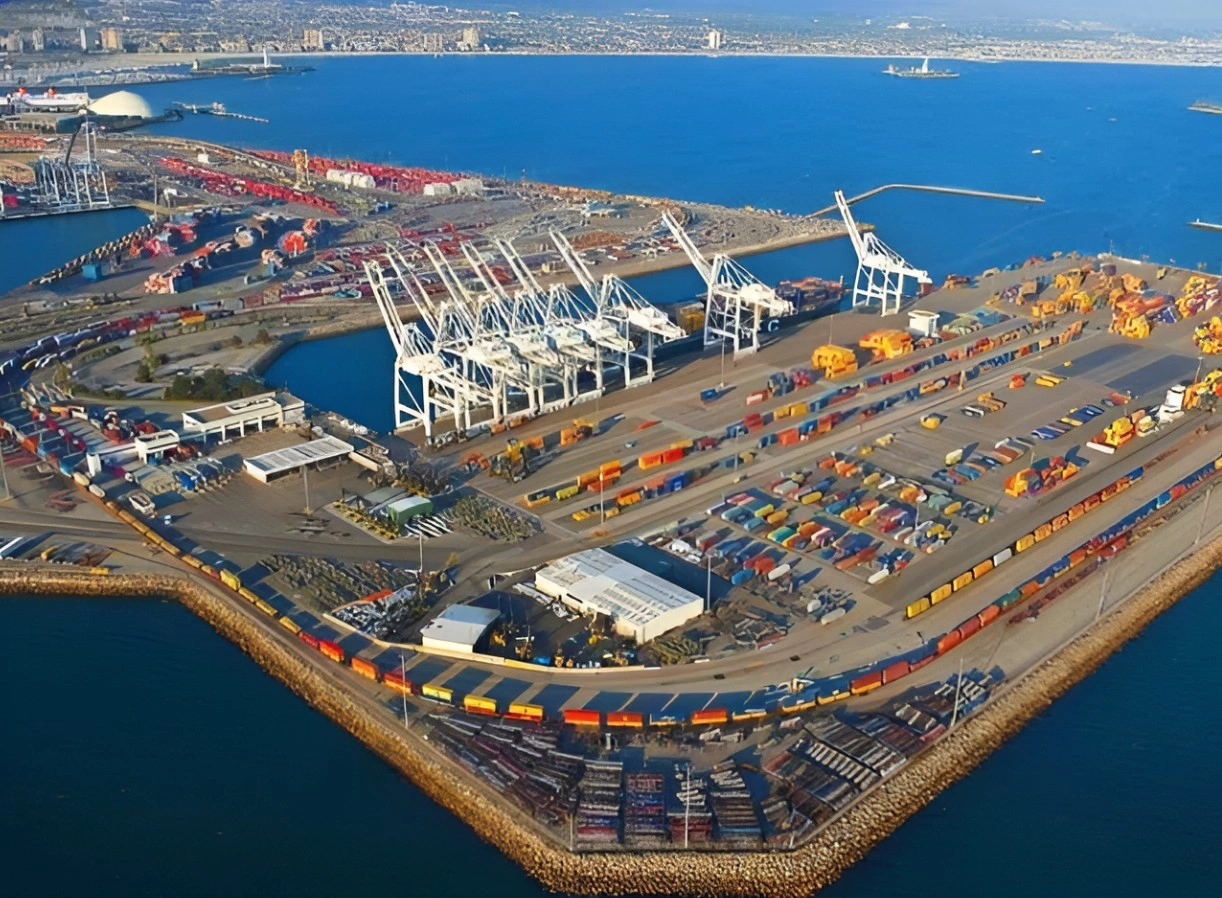 Gwadar Port has become a symbol of major Chinese-backed investment projects that remain at the centre of tensions in Pakistan's Balochistan province. Photo: Collected
The Financial Times recently reported that the head of the Saindak project had written to Pakistan’s Energy Minister saying the project was becoming unsustainable because of the ‘law and order situation’ in the province. A nearby gold and copper mine at Reko Diq is not functioning due to the security situation and supply chain disruption concerns. Several Chinese workers in Pakistan have been killed as a consequence of action by the BLA, which has also been blamed for an attack on a train in May which killed 47 people.
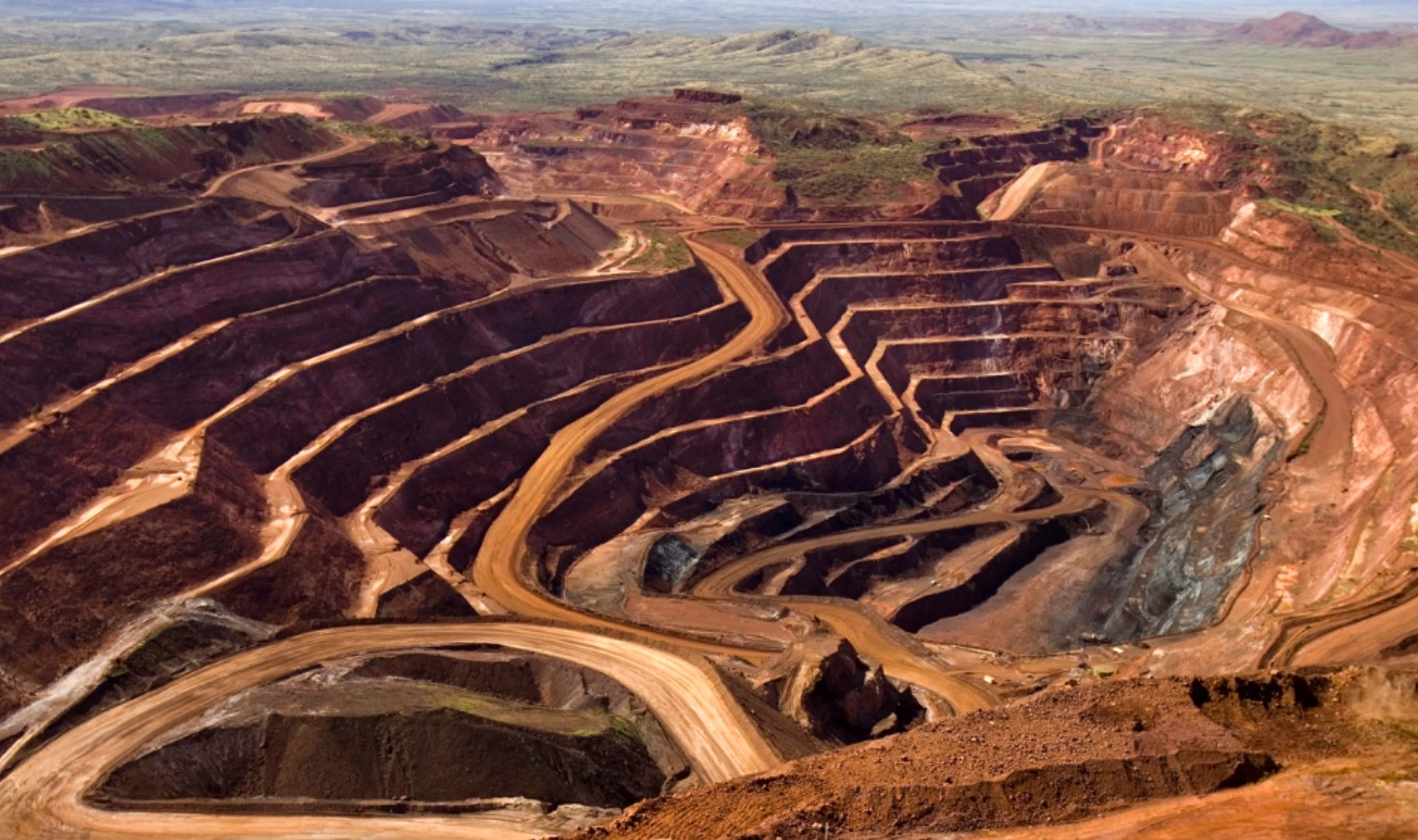 The Saindak Copper-Gold Mine in Balochistan. Rich in natural resources, the province remains at the centre of Pakistan’s long-running insurgency and security challenges. Photo: Collected
For Balochistan, the military makes all the decisions. Elected governments have tried to make political inroads but these have been obstructed. Baloch politicians have tried to work within the parliamentary system but unless they agree with the central policy on Balochistan they are sidelined. Effectively, the military is fighting a war against the Baloch people. War conditions are applied to reporting or discussion of what is happening and even peaceful protest is criminalised, a policy also applied to the TTP insurgency.
The Pakistan military has always been suspicious of the neighbouring states of India and Afghanistan. These countries’ perceived hostility is what justifies constant strengthening of the armed forces of the country. Pakistan’s armed forces are now fighting a war on two fronts but this is constantly downplayed and news of it is blacked out as far as possible.
What then, will the army chief, Field Marshal Asim Munir, do in this situation? It is likely that the status quo will continue: unrest and dissent will simmer and erupt periodically inside the country while on the international stage Pakistan will continue to build its image. Since the military do not seem ready to consider a political solution it is likely that action against these groups will become increasingly harsh. Pakistan is muddling along now but the situation is volatile and if economic projects, such as the Saindak mine project, are put on pause, retaliation for this could become very violent.