In India mainstream media – television channels and newspapers – are rapidly losing audiences, possibly because viewers and readers no longer trust them to deliver accurate news. But, as Kavita Chowdhury reports, the same trend is underway in other parts of South Asia, as is demonstrated by Gen Z’s preference for social media as a means of voicing their protests.
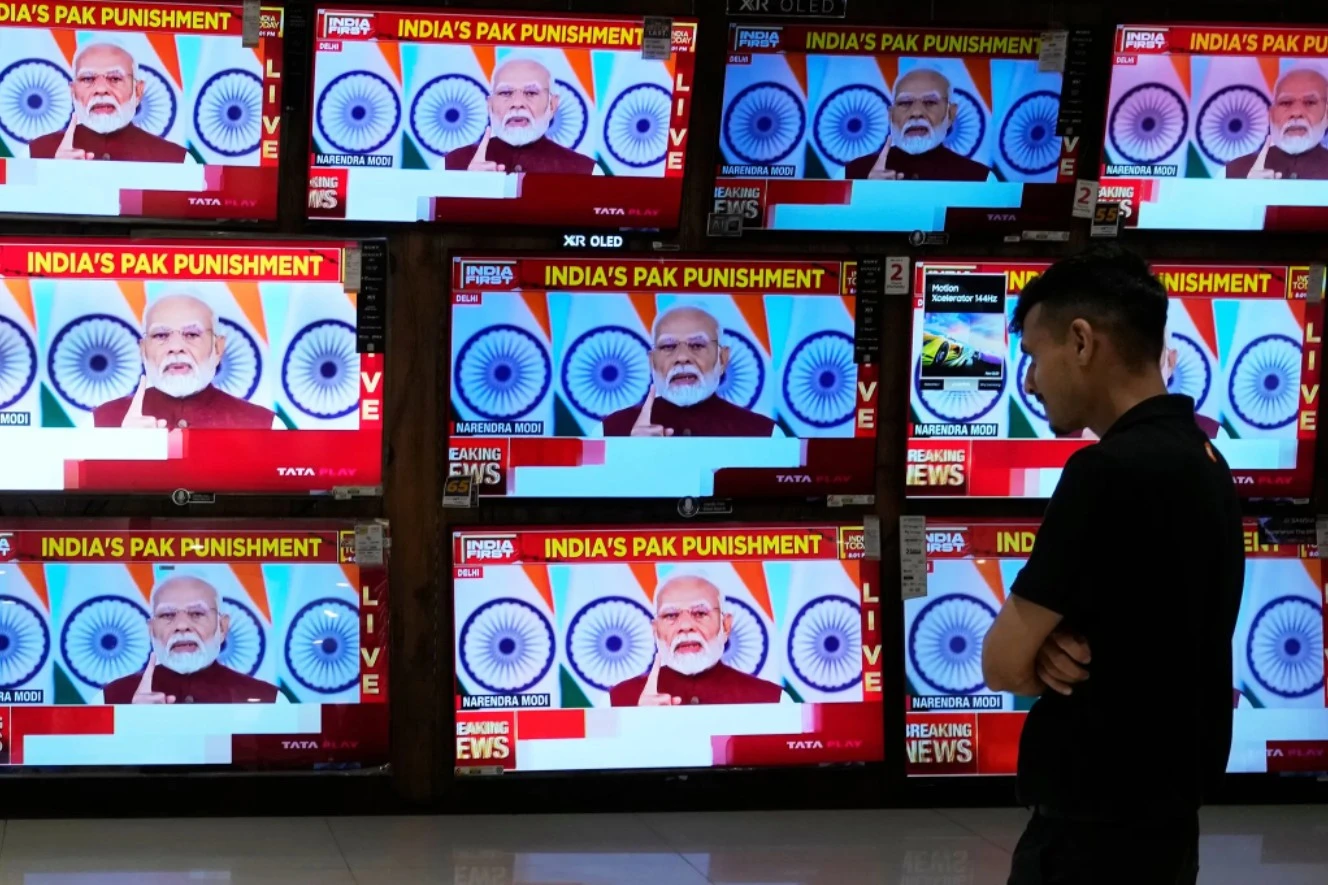
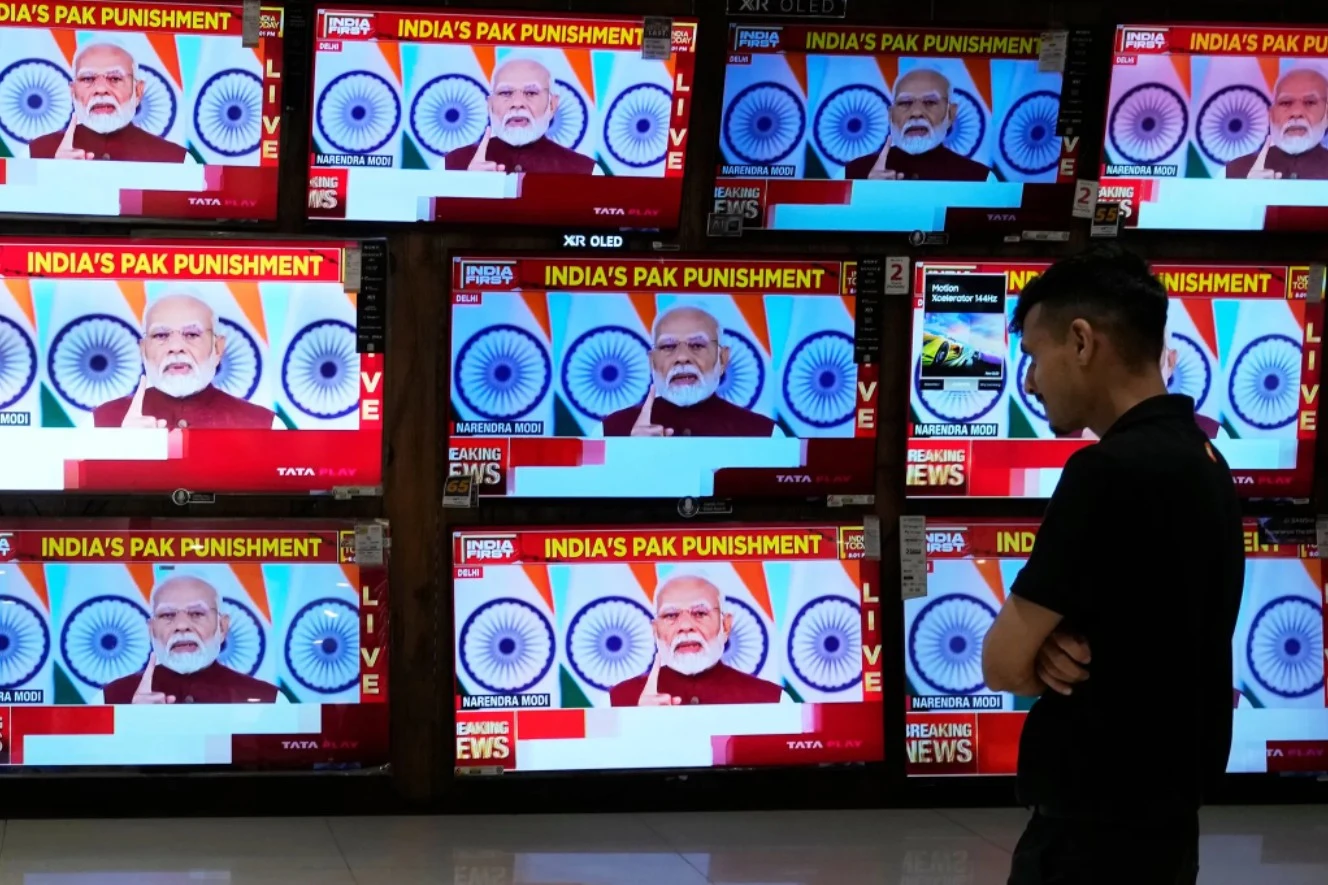
India’s mainstream news media is losing audiences as viewers increasingly turn to digital platforms for news. Photo: AP
In July this year, 120 people were sacked within four days, from one of the leading television news channels headquartered near India’s capital, New Delhi. It sent shockwaves through the industry. This, however, is not an isolated occurrence. By August, nearly a thousand media professionals had lost their jobs across the country.
From plummeting profits to shrinking ad revenues, mainstream media in India is struggling to stay afloat. Be it print or television, the audience of traditional news outlets is gradually moving away to digital and social media platforms like YouTube, Instagram and Facebook to get their daily fix of news. So, advertisers naturally have followed them. Digital media has now grabbed 60 per cent of total ad spend in the Indian media industry, overtaking traditional media which gets only 40 per cent.
To understand the sweeping changes taking place in the media space, it is vital to remember that India with well over a billion population has one of the most diverse media markets in the world. It also has the distinction of having the largest number of newspapers in print circulation and highest number of 24x7 television news channels. However, with a massive 70 per cent internet penetration, second only to China, the traditional mainstream or mass media landscape is changing fast.
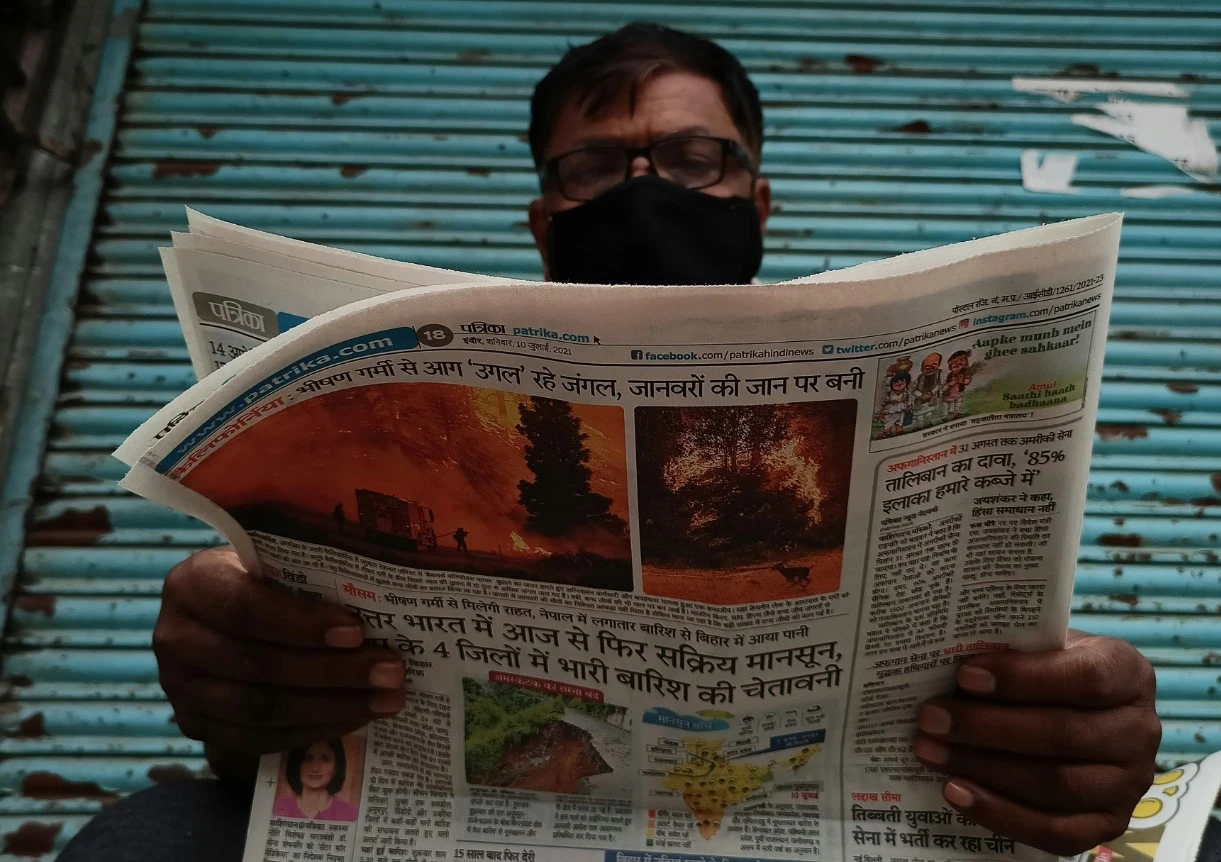 India’s traditional newspapers are losing readers as audiences shift to digital news platforms. Photo: Lakshya Jain/Unsplash
What has also catapulted this transformation is the rapid increase in mobile phone users at 1.06 billion, and 94 per cent of those mobile phone users access the internet through smart phones. Social media has become an integral part of Indian daily life, at 500 million users, and that can be largely ascribed to its large youth population which seeks to use its own kind of media, in video format and without any gatekeeping.
It is not surprising then, the latest Reuters Institute Digital News report, which studied media trends across 48 countries, found that more people are accessing news through third-party platforms than ever before. In India, 54 per cent cited social media as their primary source of news; 44 per cent of those surveyed relied on mainstream TV news channels and only 35 per cent use print newspapers. Interestingly, more than 50 per cent get their news through YouTube, WhatsApp and Instagram.
The hallmark of news media as being sources of impartial, unbiased news has been dented; trust in news has fallen. 39 % of people surveyed do not trust the regular news sources. Most mainstream TV news channels in India today are publicly perceived as mouthpieces for the Narendra Modi-led Bharatiya Janata Party (BJP) government. Government-owned broadcasters Doordarshan and All India Radio have always been undeniably ‘government media’.
Post 2014, established television news channels, including Times Now, Republic TV, Zee News, India Today and more recently NDTV, have been operating as extensions of the government with no attempts to hold the government accountable, the traditional role of mainstream media. Ramon Magsaysay award winning journalist Ravish Kumar pejoratively described these media networks as ‘godi’ or ‘lapdog’ media. The past decade has also coincided with media ownership being concentrated in the hands of businessmen close to prime minister Modi, namely Mukesh Ambani and Gautam Adani. Ambani-owned Reliance networks with 100+ television channels accounts for more than one-third of all TV viewership.
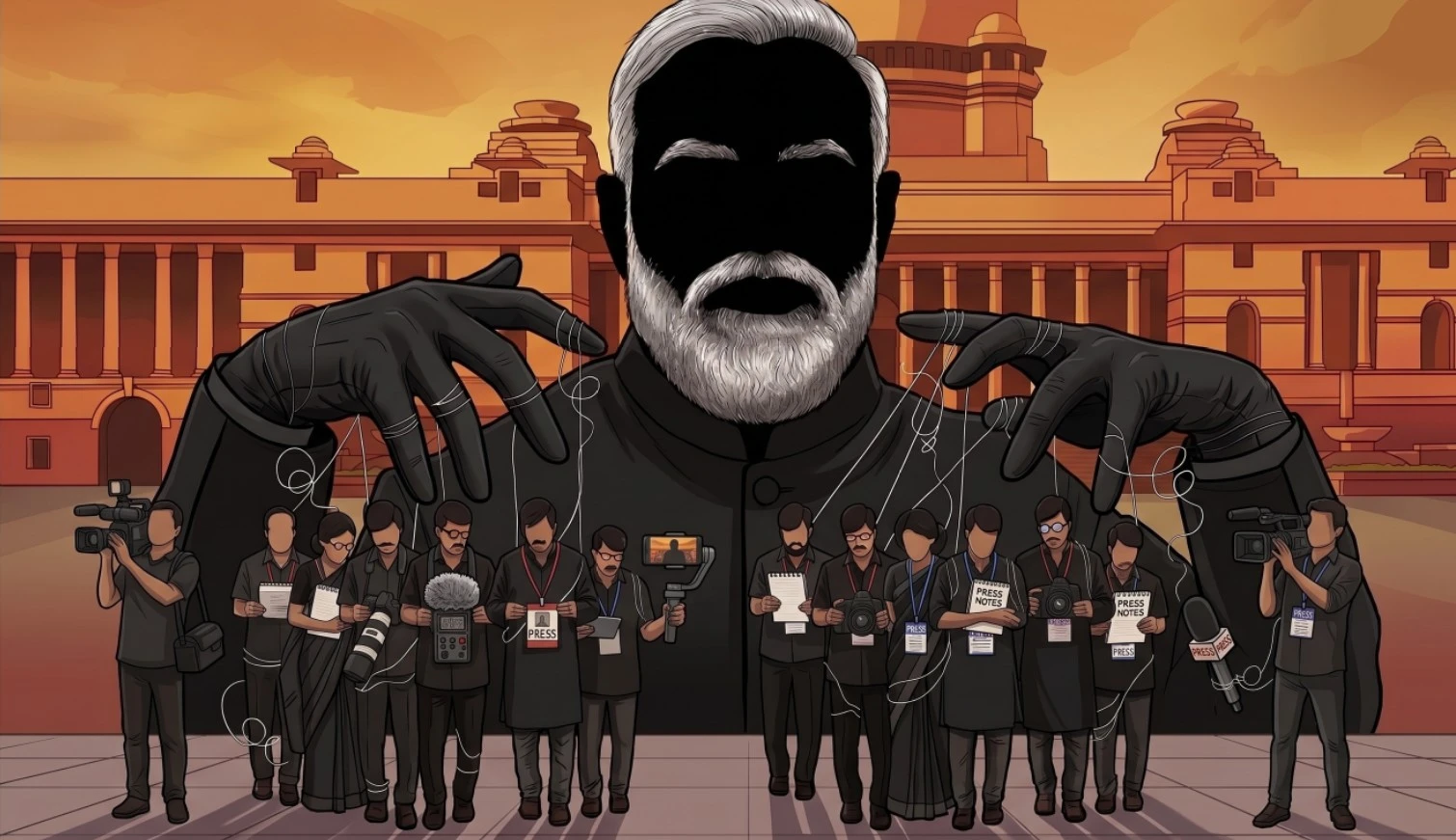 A 'godi media' illustration depicting Modi controlling India’s mainstream media like puppets, reflecting accusations of political influence. Image AI Generated
This period, has also witnessed a sharp fall in India’s rankings in the Press Freedom index, now 157th out of 180 countries; a drop of six places since last year. The present regime has branded all those critical of the government, including journalists and media organisations, as ‘anti-national’.
The student protests at New Delhi’s famed Jantar Mantar and hunger strike were not covered by the mainstream TV news for 18 days. In fact, blanking out news that is damaging to the government has been the set pattern of mainstream media. Furthermore, ‘godi media’ prime-time news anchors defamed the protestors labelling them anti-nationals. Angry students wholly boycotted TV channels even fact checking reporters who were trying to manipulate the narrative.
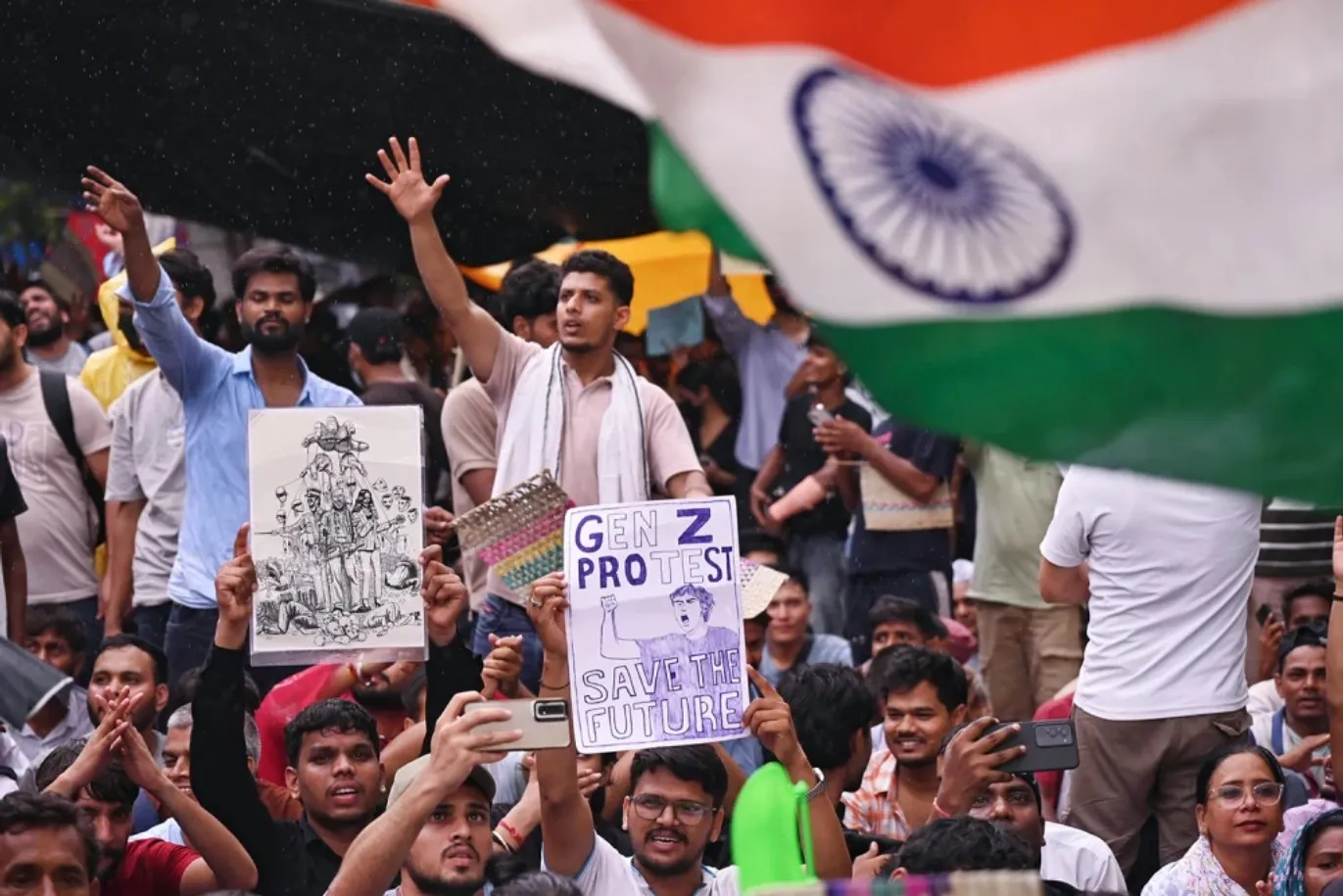
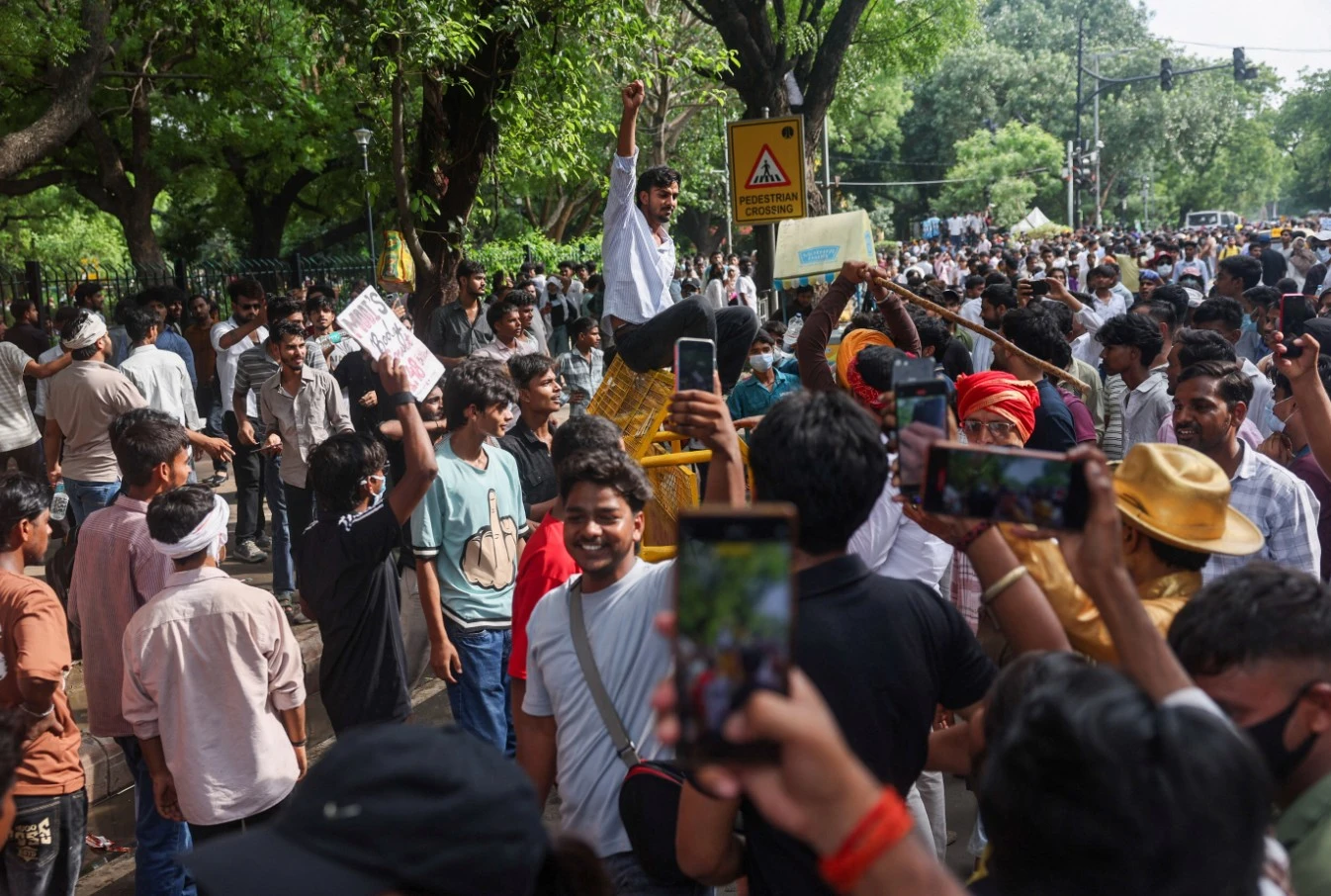 Protesters record the CJP demonstration at Jantar Mantar, using social media to amplify a movement largely ignored by mainstream television. Photo: Reuters
Tech-savvy Gen Z have grown up with the internet; they knew how to integrate their message with live videos, visual reels, anthems, songs. They beamed the student protest onto every handheld mobile phone through Instagram and Facebook live; social media influencers amplified what would be traditionally regarded as news. Hunger strike visuals, live videos of horrifying police brutality became a catalyst with the public demanding the education minister’s resignation. It was achieved by making TV news irrelevant.
Also, the disconnect between the government and Gen Z through its media outreach was apparent. Modi was the clear target of satirical songs, humour laced slogans, reels, posters, memes. The direct ungated approach of Instagram reels and posts even connected non- student working classes to the movement. In an attempt to reach out to students, 75-year-old Modi made his Instagram reel debut with a selfie video at midnight – it was trashed by the youth.
Another major reason for the audience shifts to digital news media is that several credible journalists have quit mainstream TV news channels and started their own YouTube channels, including senior professionals like Ajit Anjum and Ravish Kumar. The public now trusts independent digital journalists more than legacy media houses.
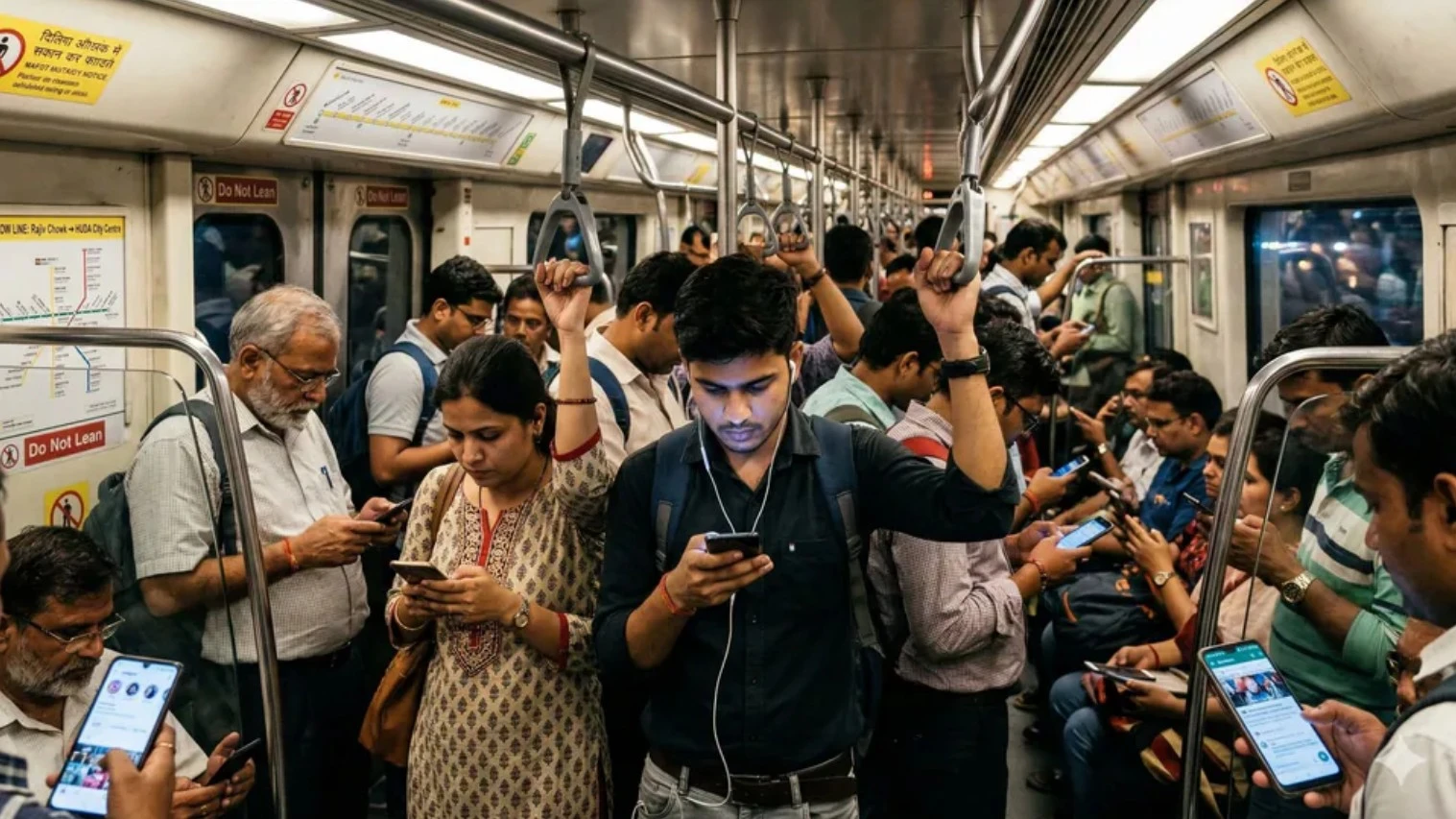 Indian audiences are increasingly turning to digital platforms for news once dominated by television and print. Image AI Generated
Speaking at a public lecture in early August, Seema Chishti, editor of the news portal The Wire said that student protests have compelled legacy media to make greater space for those challenging the establishment. She sees hope that ‘new media ecosystem, where more proactive, independent and people-oriented forms of journalism are finding space and audiences’.
It is an undeniable fact that the media landscape in South Asia is undergoing rapid changes. The not-so-distant student protests which brought about regime changes in Sri Lanka, Bangladesh and Nepal were spread primarily through social media. However, the ground realities are vastly different among India’s immediate neighbours. In Sri Lanka, mainstream TV channels and print media can be described as politically captured and their ownership concentrated.
The media scene in Bangladesh is in quite a turbulent phase; with the regime change resulting in violent reprisal on a section of journalists. Internet-based news consumption is growing but the newly sworn in BNP government is clamping down heavily on digital news media.
In Nepal, it was the social media ban on YouTube, Instagram, Reddit etc. which triggered the Gen Z protests last year. Nepal's digital platforms did not just assist the uprising they displaced legacy media as the main source of news. Ironically, the youngest ever PM in power Balen Shah, who promised change has instead started clamping down on press freedom on outlets that are critical of the government.