From India’s Cockroach Janta Party to uprisings in Bangladesh and Nepal, digitally networked movements are learning to disrupt and hold accountable political authority. Turning disruption into durable democratic change will be harder, reports Madhavi Ravikumar.
Across continents, a generation once described as politically disengaged is moving from screens to streets. From New Delhi, Dhaka and Kathmandu to Nairobi and Rabat, young people are challenging governments over corruption, unemployment, inequality and the growing distance between democratic promise and lived reality. Their movements are often leaderless, digitally networked and fluent in the political language of memes, hashtags and popular culture. They can mobilize with extraordinary speed, bypass traditional parties and turn seemingly local grievances into wider demands for accountability. Yet their successes raise a harder question: can a generation remarkably effective at disrupting political power translate viral mobilization into lasting democratic change?
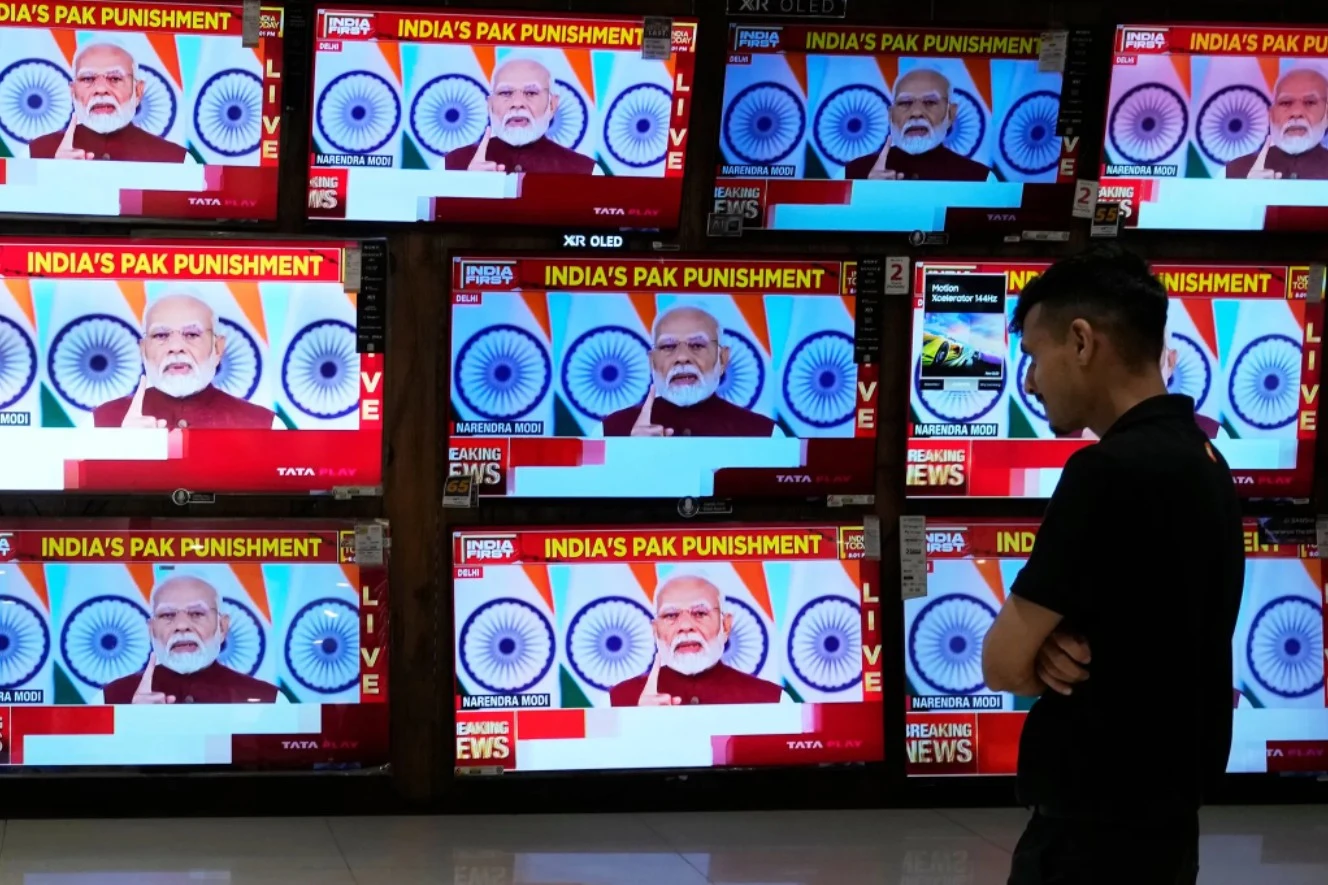
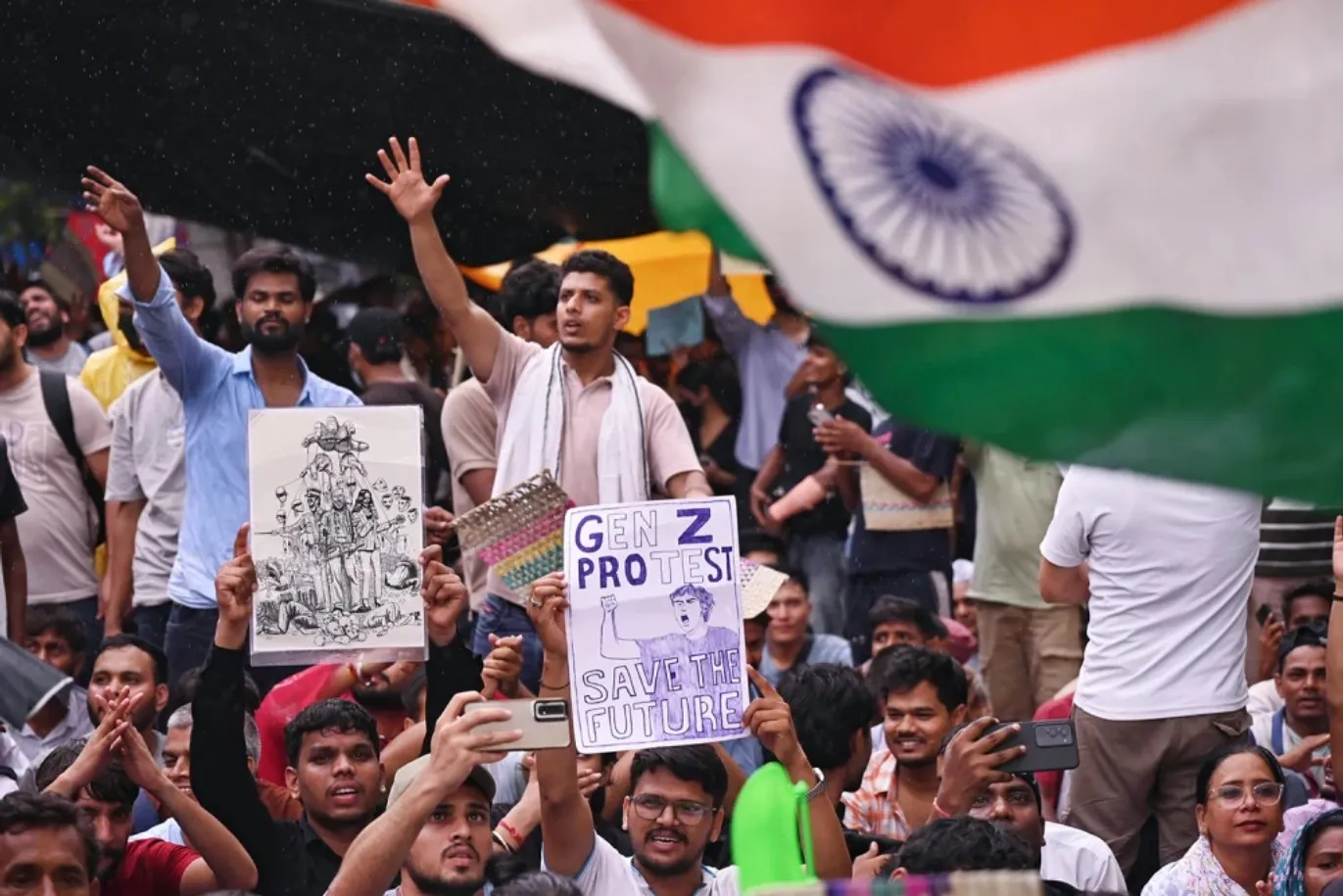
India offers a revealing answer. In July, tens of thousands of young Indians occupied New Delhi’s Jantar Mantar under the banner of the Cockroach Janta Party (CJP). Triggered by serial leaks of the National Eligibility cum Entrance Test (NEET) papers affecting two million students, the protests crystallised deeper grievances: graduate unemployment, a broken examination system, and a political culture that treated youth aspiration as disposable. What began as a satirical Instagram response to a Chief Justice’s reported comparison of unemployed youth to ‘cockroaches’ forced the resignation of the education minister, only the second cabinet exit under public pressure in twelve years of Narendra Modi’s rule.
‘I am a Cockroach,’ declared Sparsh Chetri, a 24-year-old student in Hyderabad. ‘We students had one main demand — accountability. And we have achieved that.’ But it was 18-year-old Avanshika Singh, filming the police crackdown on the 20 July march to Parliament, who captured the movement’s distinctly digital character: ‘Today, we rang Parliament’s doorbell and ran… If nothing, we are televising our revolution.’
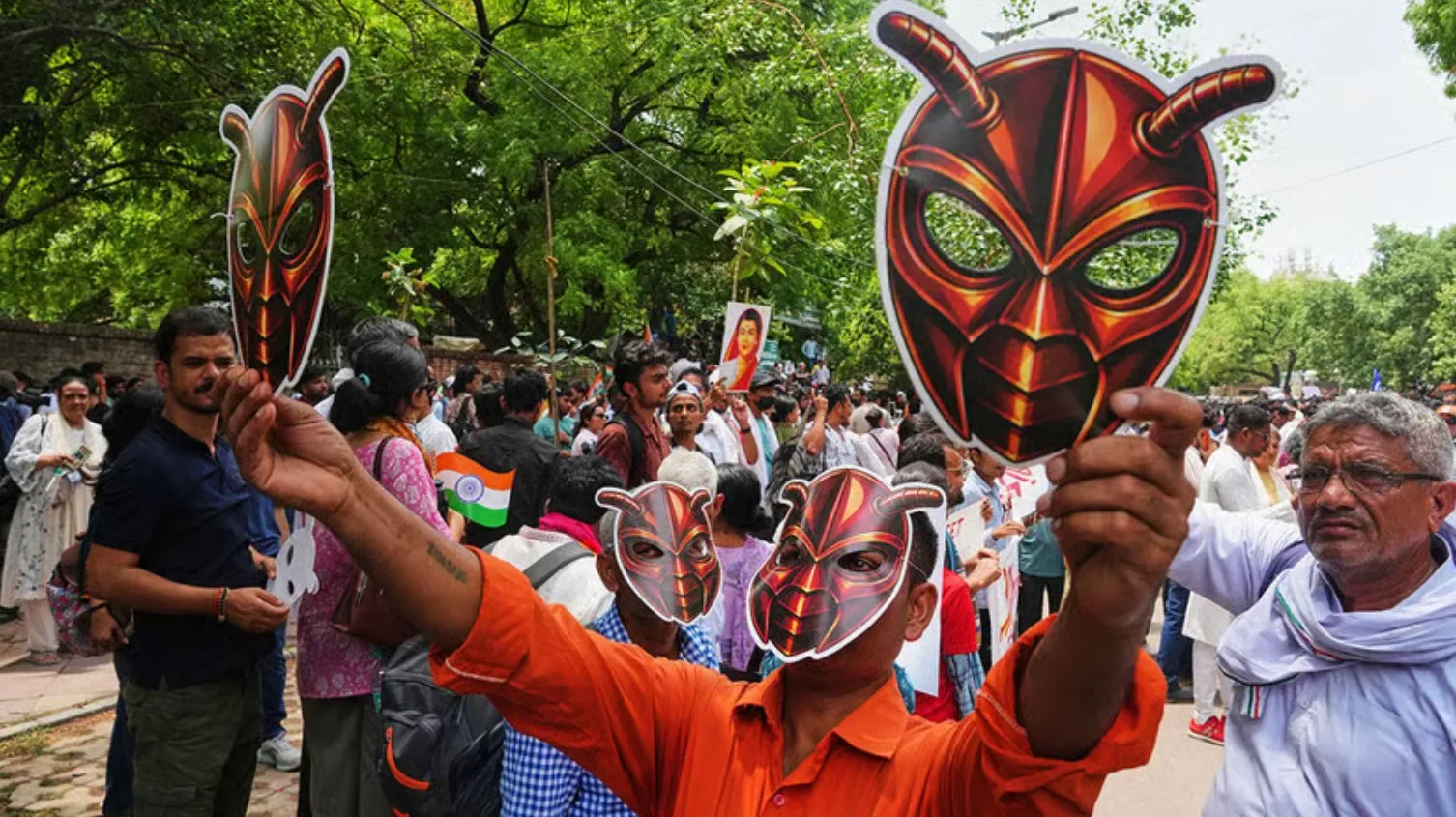 Young protesters use satire, popular culture and visual humour at the Cockroach Janta Party demonstrations in New Delhi, reflecting the movement’s distinctly Gen Z political language. Photo: AP
The Indian episode was deliberate and bounded. Unlike the upheavals in neighbouring countries, CJP focused on specific demands – ministerial accountability, compensation for families of students who died by suicide, and protection from legal reptilians – while remaining predominantly non-violent. Yet its symbolic force was substantial. ‘This government is evading all responsibility towards the youth of this country,’ said 20-year-old Ipshita Gulyari. ‘Modi had messed with the wrong generation.’
The humiliation was political as much as symbolic. For more than a decade, Modi’s authority has rested partly on an image of decisiveness and political invulnerability, a leader who sets the terms of public debate rather than responds to pressure from the street. The CJP inverted that relationship. The resignation demonstrated that even a dominant political establishment could be made to retreat.
A Generation Running Out of Patience
The Indian achievement gains sharper relief when set against more dramatic Gen Z triumphs in other regions. India’s Gen Z did not overthrow a government, nor did it seek to. Its achievement was narrower but politically significant: it forced accountability from within an unusually dominant political order. Bangladesh offers a more dramatic comparison. The 2024 July uprising began with student opposition to discriminatory government-job quotas but broadened after deadly police violence into a revolt against Sheikh Hasina’s rule. Hasina fled and an interim government took office. Yet the student-led National Citizens’ Party later struggled electorally, illustrating an emerging paradox: street power does not automatically translate into institutional power.
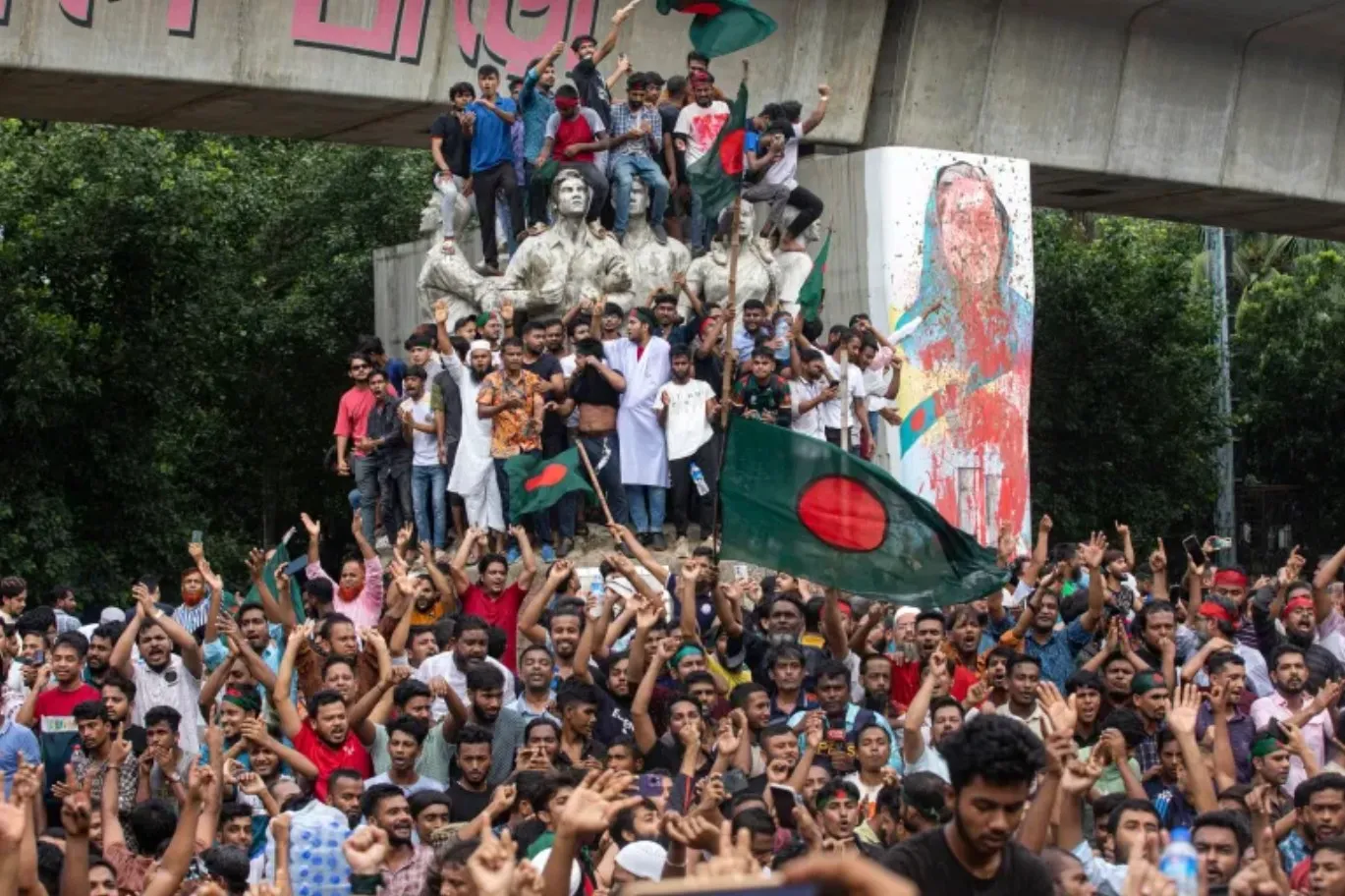 Students take part in Bangladesh’s July 2024 uprising, which began with opposition to government-job quotas before expanding into a broader challenge to Sheikh Hasina’s government. Photo: Rajib Dhar/AP
Nepal’s 2025 upheaval was even more compressed. A government ban on social media amid anger over corruption and ‘nepo kids’, triggered mass demonstrations and Prime Minister K.P. Sharma Oli’s resignation. ‘Maybe we didn’t change everything,’ said Rakshya Bam of the Nepal Gen-Z Front. ‘But we changed how people imagine what’s possible.’ Sri Lanka’s 2022 Aragalaya movement, propelled by economic collapse and dynastic misgovernance, had already established a model of digitally coordinated resistance that helped oust the Rajapaksas.
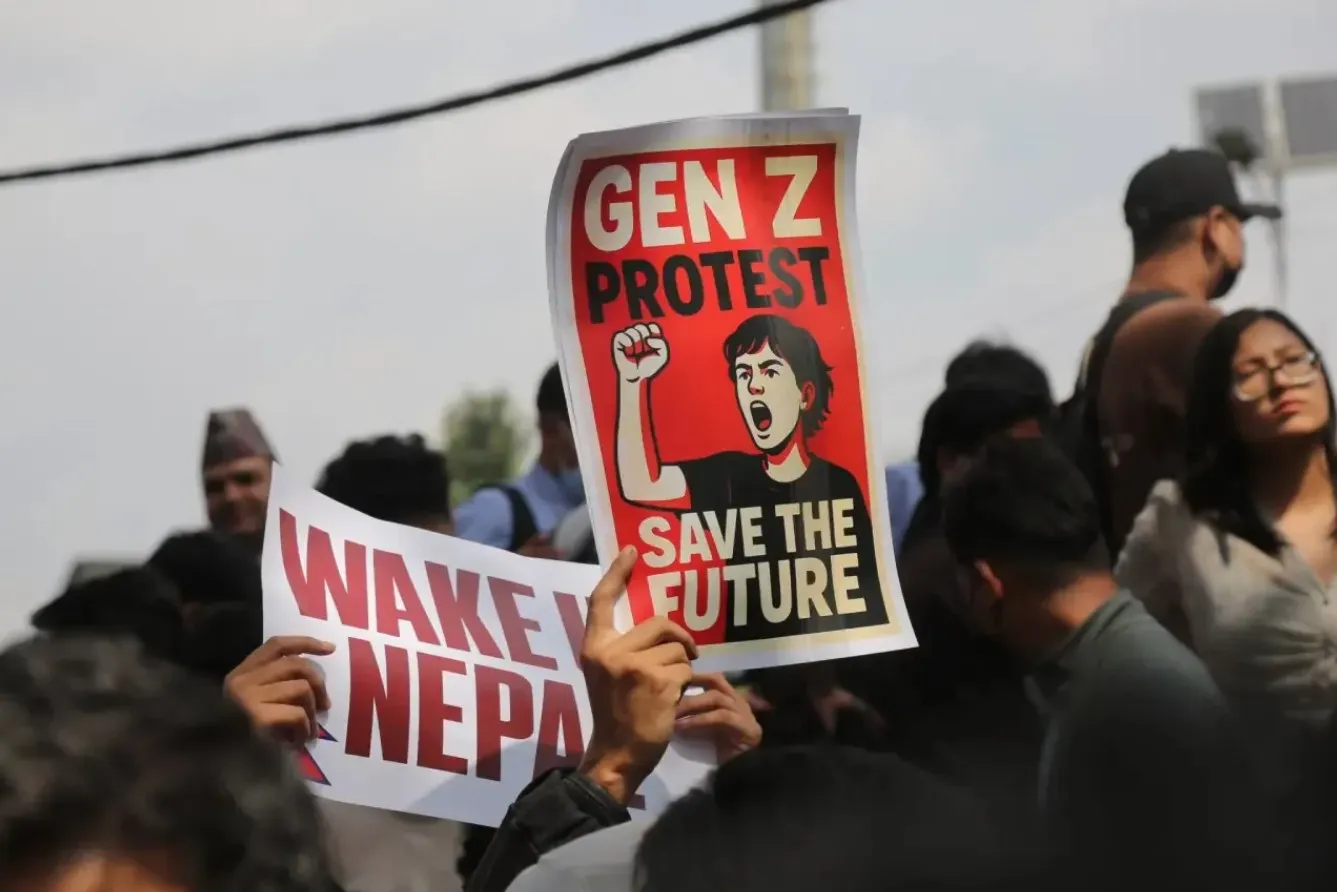 Young protesters gather in Kathmandu during Nepal’s 2025 Gen Z uprising, sparked by anger over corruption, political privilege and restrictions on social media. Photo: AP
Beyond Asia: A global grammar of youth revolt
The generational revolt extends beyond Asia. Kenya’s 2024 anti-Finance Bill protests forced President William Ruto to withdraw controversial tax proposals, while Morocco’s Gen Z 212 movement turned anger over unemployment and failing public services into the resonant slogan, ‘We want hospitals, not stadiums.’ In Serbia, students transformed a railway-station disaster into a wider challenge to corruption and institutional failure. These movements should not be treated as a single global Gen Z revolt, but their shared political grammar is striking: digitally connected young citizens are turning specific grievances into broader challenges to inequality, corruption and elite impunity.
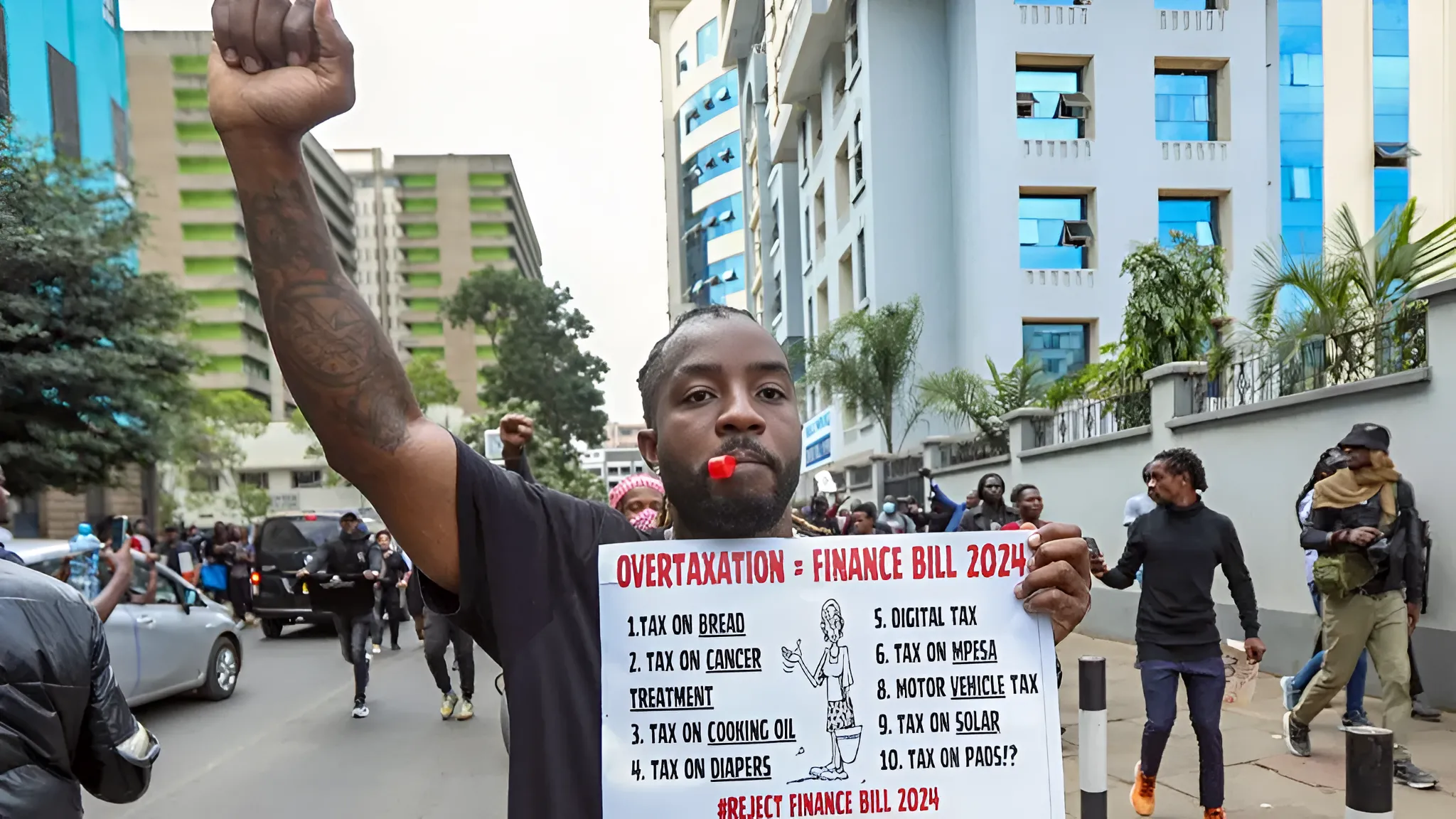 Kenyan Gen Z protesters demonstrate against the government’s Finance Bill in 2024, forcing President William Ruto to withdraw the proposed tax measures. Photo: EPA
The movements should not be romanticised, according to Professor Rumela Sen of Columbia University who sees in them ‘a very democratic, sincere aspiration for political inclusion, economic justice, and holding their elected representatives accountable.’ Yet a generational disconnect remains. As Meenakshi Ganguly of Human Rights Watch observes, ‘The youth in South Asia is not able to find anything to connect them to their political leaders.’
Harvard political scientist Erica Chenoweth’s research on nonviolent campaigns offers a sobering counterpoint: success rates have declined since 2010, partly because contemporary movements often lack the sustained grassroots organisation and strategic clarity of earlier campaigns. Leaderless, online-first protests can escalate rapidly and dominate narratives but struggle to convert momentum into durable institutional change. The energy that topples leaders does not automatically equip activists to govern. That distinction is particularly important in India, where CJP’s achievement was not regime change but something arguably more attainable and immediately measurable: compelling a powerful government to respond.
The Paradox of Leaderless Protest
Here lies the central paradox. CJP’s leader-light, digitally networked character helped it mobilise rapidly and resist conventional political control, but the same structure may make sustained organisation difficult. Its decision to remain a pressure group may preserve its independence, yet it also risks dissipation once the immediate target has fallen.
Political context also matters. These movements have succeeded most where democratic institutions still allow public pressure and elite legitimacy is already deteriorating. In more authoritarian environments, similar mobilizations can simply be suppressed.
In India, protesters forced accountability back into public discourse; in Bangladesh and Nepal, youth mobilisation helped dislodge governments; in Kenya, it forced a major policy reversal. These are not manifestations of a single global movement, and radically different political contexts should not be collapsed into a universal story of ‘Gen Z revolution’. But together they reveal something consequential: a generation raised on smartphones, economic insecurity and declining institutional trust is increasingly unwilling to accept inherited bargains of patronage, deference and political silence.
The harder test is whether these movements can translate street-and-screen energy into institutional reform and build organisations that outlast viral moments. For India, however, something has already changed. A generation dismissed through the language of ‘cockroaches’ turned the insult into a political identity and forced one of the world’s most dominant political establishments to respond. The humiliation for power lay precisely in that reversal: those who were supposed to be politically disposable had made themselves impossible to ignore. As Erica Chenoweth reminds us, 'successful resistance’ requires imagination and creativity. It requires organization. And it requires courage and discipline’. India’s Gen Z has demonstrated the imagination and creativity to disrupt power; whether it can build the organisation and endurance required for lasting democratic change is the question that comes next.