This month (February) New Delhi hosts the AI Impact Summit, a flagship global conference on artificial intelligence, recognition that India is in the top league of AI. Sham Banerji tells of its journey towards this milestone.
This month (February) New Delhi hosts the AI Impact Summit, a flagship global conference on artificial intelligence, recognition that India is in the top league of AI. Sham Banerji tells of its journey towards this milestone.
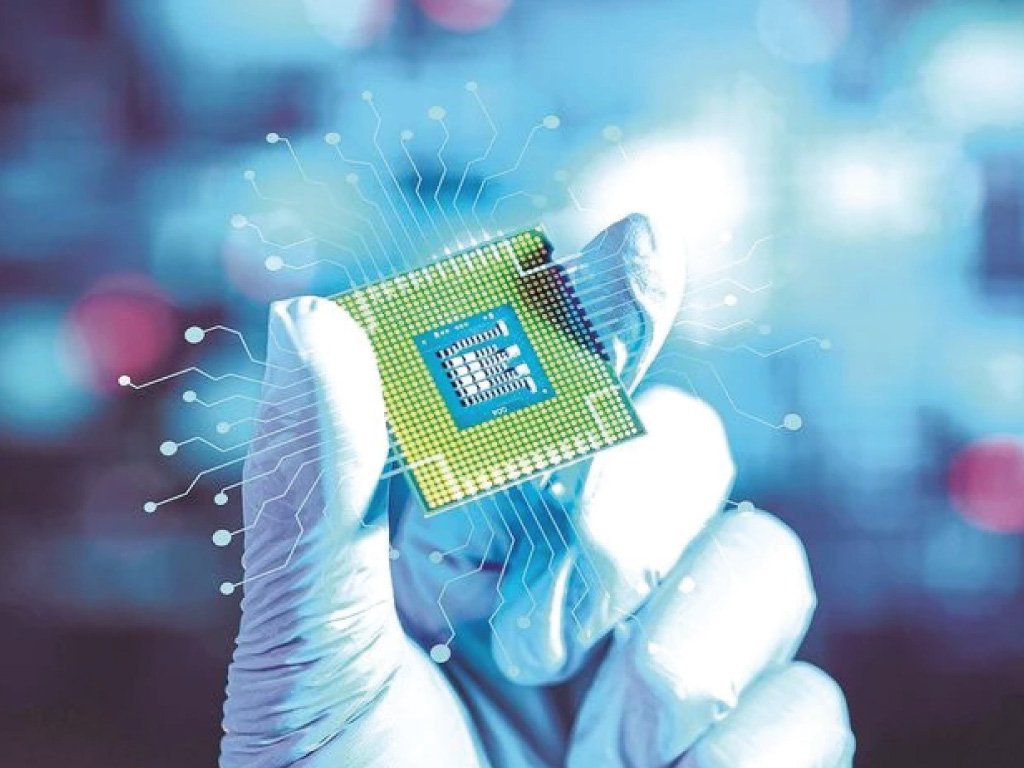
Prime Minister Narendra Modi captured India’s new semiconductor priority neatly when he told an Indian audience that “oil was black gold but chips are digital diamonds”.
India’s semiconductor journey began in the 1960s as a public sector undertaking with companies like Bharat Electronics in Bangalore and Electronics Corporation of India in Hyderabad starting pilot lines for discrete semiconductors and small-scale integrated circuits for domestic use. In 1976 the government approved the domestic production of integrated circuits though it was eight years before Semiconductor Complex (SCL) of Mohali started production. Using 5-micron CMOS technology licensed from American Microsystems, it was within touching distance of the global leading edge. At the time India was not dramatically behind Taiwan or Korea in chip manufacturing.
Then, in February 1989, a fire destroyed the main fabrication line at SCL, temporarily bringing India’s chip manufacturing to a halt. The plant was eventually rebuilt as the Semi-Conductor Laboratory but the original dream of a commercial, competitive Indian ‘fab’ or chip foundry never fully recovered.
Bullock carts and microprocessors
However, there was a parallel story unfolding. In 1985 the American company Texas Instruments (TI) dragged a satellite dish through Bangalore on a bullock cart to wire its new R&D centre to Dallas. Newspapers joked that “high-tech Bangalore arrived on a bullock cart” yet it was the starting shot on India’s long, uneven run with semiconductor heavyweights.

SCL made the first Indian ‘chips’ while TI engineers in 1997 created the first microprocessor or chip designed by an Indian team. It was codenamed Ankoor.
Scores of multinationals followed TI’s lead. According to government and industry estimates, India now hosts about 20% of the world’s chip-design engineers, said to number about 120,000. They produce around 3000 separate designs a year. Bengaluru, Hyderabad, Noida and Pune today host large design centres for Intel, Qualcomm, NVIDIA, Broadcom, MediaTek, Marvell, NXP, Micron and many others.
If TSMC of Taiwan is the world’s leading chip manufacturer, India can claim to be the global chip design centre, based on an eco-system of high-value jobs at home plugged into the global semiconductor value chain. Much of the intellectual property in chip design accrues to multinational headquarters, mainly in the US, though this is changing.

From lab to fab to cloud
In 2021 the Indian government launched its Semiconductor Mission (ISM) marking a departure from the fragmented, under-capitalised, stop-start policy initiatives of the past. Reinforced by a governmental AI Mission and semiconductor research, design and manufacturing.
In less than four years ISM approved more than ten large projects, resulting in commitments including Tata Electronics proposed US$10bn fab, or semiconductor foundry, as well as Taiwan’s PSMC and Micron Technology’s plan to build a US$2.75bn manufacturing plant in Gujarat. India is also a major user of semiconductors. Indian companies and consumers purchase around US$45–55bn of semiconductors a year, which is anticipated to rise to around US$100–120 billion by 2030.
What India needs next is good execution — projects that finish on time and training programmes that grow talent, not just headcount. Crucially, regulatory processes must keep pace at silicon-speed, not the paper-speed of the past.

Competing with China and Southeast Asia
Execution alone will not eliminate India’s current supply chain dependence on China, nor the fierce regional competition from smaller but established players in Southeast Asia. Malaysia already accounts for roughly 13% of global chip assembly, testing and packaging or ATP in shorthand. Vietnam is a major ATP hub hosting Intel’s largest test and assembly plant in Ho Chi Minh City, and Thailand with mature manufacturing ranks sixth worldwide for semiconductor-based device exports.
However, with US–China tech tensions rising and supply chains under stress, India’s sheer skilled workforce make it a natural favourite when companies look for expansion beyond China. Apple and Foxconn’s India manufacturing story is now past the experimental stage and India is now Apple’s second-largest iPhone production base after China, assembling around US$22bn worth of iPhones or one fifth of the company’s global output annually.
Artificial Intelligence
With nearly 900 million internet users and around 1800 global design centres India offers unmatched scale and linguistic diversity for training and deploying AI applications. According to IBM’s Global AI Adoption Index, India is among the world’s frontrunners with 59% of large organisations already actively using AI, and second only to China of those exploring accelerated roll-out.
India now operates a large-scale digital public infrastructure that links identity, payments and online commerce. Aadhaar, a biometric-based digital ID system, allows residents to verify who they are; UPI enables instant, low-cost digital payments; and ONDC is an open network designed to connect buyers and sellers across platforms. Together, these systems form a shared digital backbone used daily by hundreds of millions of people. The result is vast volumes of real-world data, live, complex and imperfect, that are especially valuable for developing, testing and deploying advanced AI systems at scale.

Research and Development
Research remains a challenge. As the Economist noted, when it comes to spending on R&D India’s private sector companies have been notoriously ‘stingy’. According to the magazine just 15 of the world’s top 2000 corporate R&D spenders are Indian, accounting for about US$5.9bn in 2023.
Indian tech entrepreneur Gani Subramaniam, who founded Yali Capital, frames India’s shift in more bullish terms: “We are directing over 50% of our early-stage AI investments into robotics, life sciences and aerospace — away from software services and into products.” Twenty years ago Subramaniam was designing chips at TI. His shift today into long-horizon AI investments echoes India’s own journey—from TI to AI.