Mishal Husain became well known in Britain as a presenter of BBC Radio 4’s flagship Today programme and she commentated on major royal occasions, including the funeral of Queen Elizabeth II. In her new book Broken Threads: A Family from Empire to Independence she tells a family story with great historical significance. Published by Fourth Estate, it is reviewed here by Sindamani Subryan Bridglal.
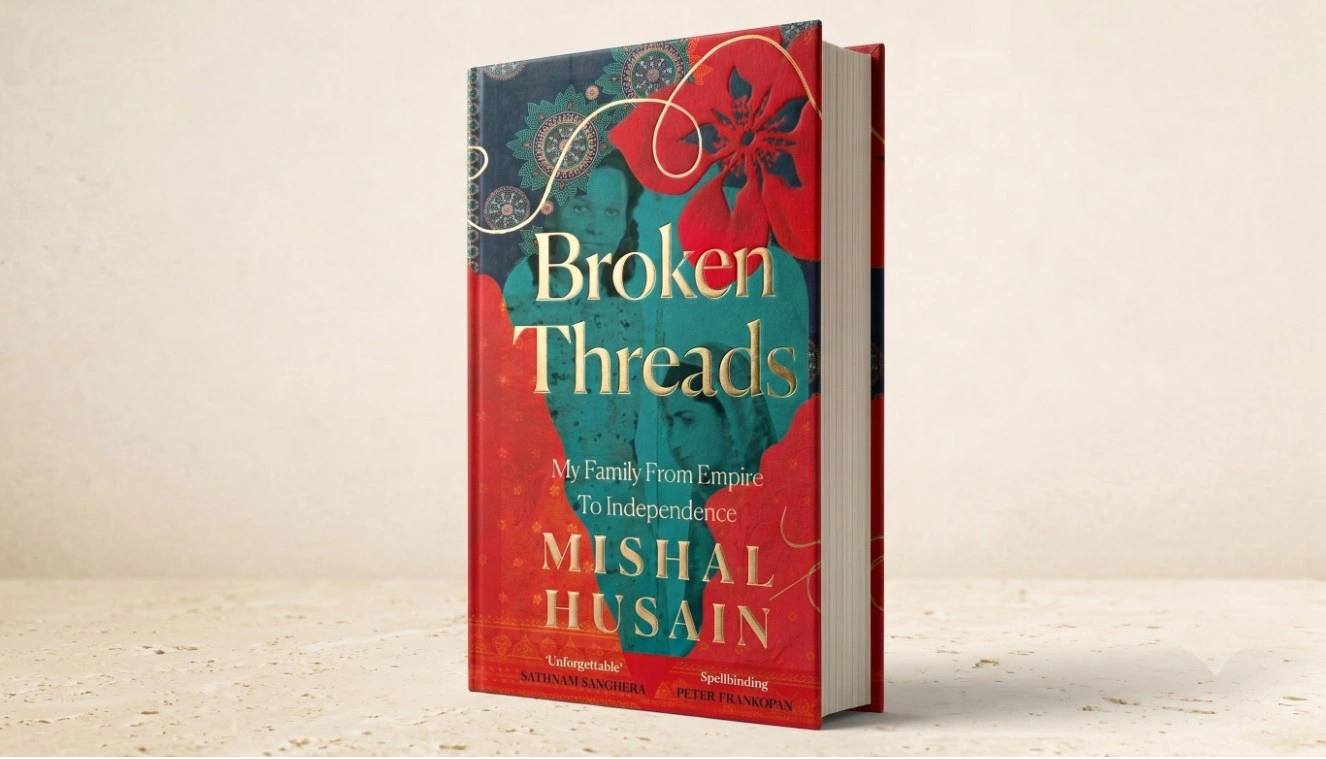
A family memoir tracing empire, Partition and the creation of India and Pakistan.
In the 2022 broadcast, Husain deftly ushered her audience through the rituals and ceremonies of the funeral of a monarch who came to the throne in 1952, a time when the push for liberation across Britain’s colonial empire had gathered momentum. A few years before, in 1947, Lord Louis Mountbatten, the Queen’s second cousin and the uncle of her future husband, became the last Viceroy of British-ruled India, and first Governor-General of independent India. In Broken Threads, Husain tells of her own family’s connection with the transfer of power from Britain to independent India and Pakistan, a process remembered for its Partition of the Indian subcontinent.
Husain describes Mountbatten as a man in a rush. Ten weeks after his arrival in India plans were drawn up for a departing empire, an empire which had set down deep roots in all aspects of life in India, from the military, to taxation, to grain export. So much was shattered when that boundary line was created to bring Pakistan into existence, severing peoples who had long lived within one political and social world.
Husain’s family memoir Broken Threads could be a memoir of all the peoples of the former British Empire who lived through the redrawing of boundary lines, and of a rushed departure, though perhaps not on such a tragic, and consequential scale as on the Indian subcontinent. Husain tells the story of her maternal and paternal grandparents, taking us on a journey through the Second World War, the post-war years and the creation of Pakistan, turbulent years for those who lived through the fray and snap of colonial life, men and women who through generations had cultivated the art of reading the nuances of life within the limitations of colonial society, and now, finally, after centuries, were navigating their own paths.
Mishal Husain is blessed with the treasure trove of material left by articulate, well-educated family members with a drive to bequeath to the next generation a family history lived in momentous times; diaries, memoirs, tapes and historical documents. Husain also gained access to intimate portraits through, for example, the letters of Barbara Swinburn, a British woman who wrote to her family in England about her experiences.
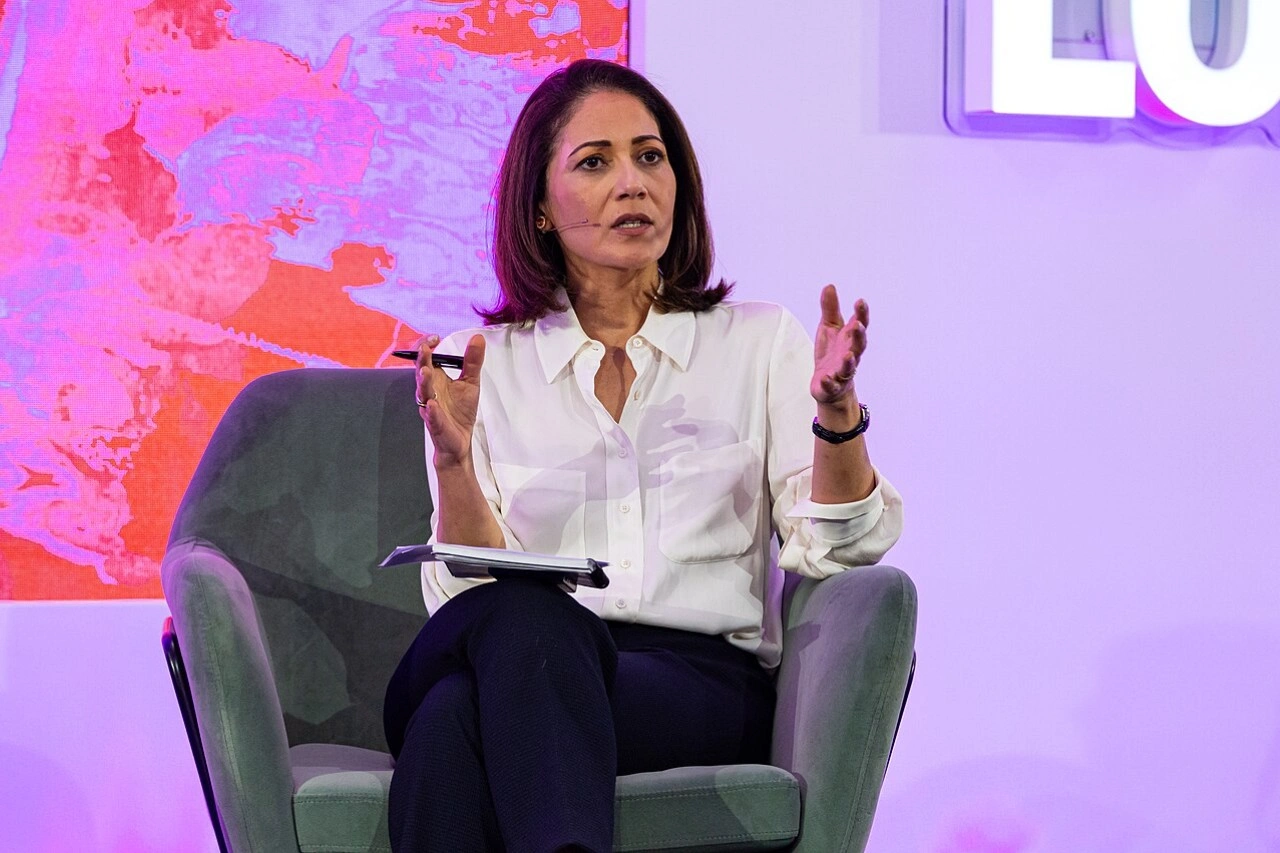 Journalist and broadcaster Mishal Husain traces her family's journey through the final years of the British Raj and Partition. Photo: Mikepaws/CC BY-SA 4.0
Husain writes about the events leading up to Partition and the great movement of people that extinguished so many lives with delicacy and nuance and can be sobering reading. For the family there were near misses. As both Husain’s grandfathers were army men, they had the connections to gain access to British planes to airlift their families safely to Pakistan. This was not available to thousands on what came to be called ‘ghost trains.’ Carriage after carriage left various railway stations with men, women and children, Muslims and Hindus, travelling in opposite directions, only to arrive at their destinations with passengers dead, killed on their journey.
Mishal Husain at one point wonders aloud how the shape of history might have turned out if more time and thought had been given to negotiations, had Mountbatten and the British allowed more time for the process of handing over Britain’s largest, most lucrative and most complex colony in its empire.
The narrative of a family living through such times – characters formed by ancestry and empire – is detailed and flawlessly researched. It has its dense moments, but overall this is a family that rubbed shoulders with the historical anxiety of self-rule. Husain returns to the horror of splitting one army into two, of who gets what, and who gets to keep the guns and ammunition. Betrayal is there. Shahid, her maternal grandfather, whom we get to know as a man of scrupulous character, had left his post as private secretary to Supreme Commander Auchinleck and settled his family in Pakistan. In 1951, as Pakistan’s Master-General of Ordnance, he found, while going through the inventories of military supplies, that what had been written down when the army supplies were divided was not what had been received.
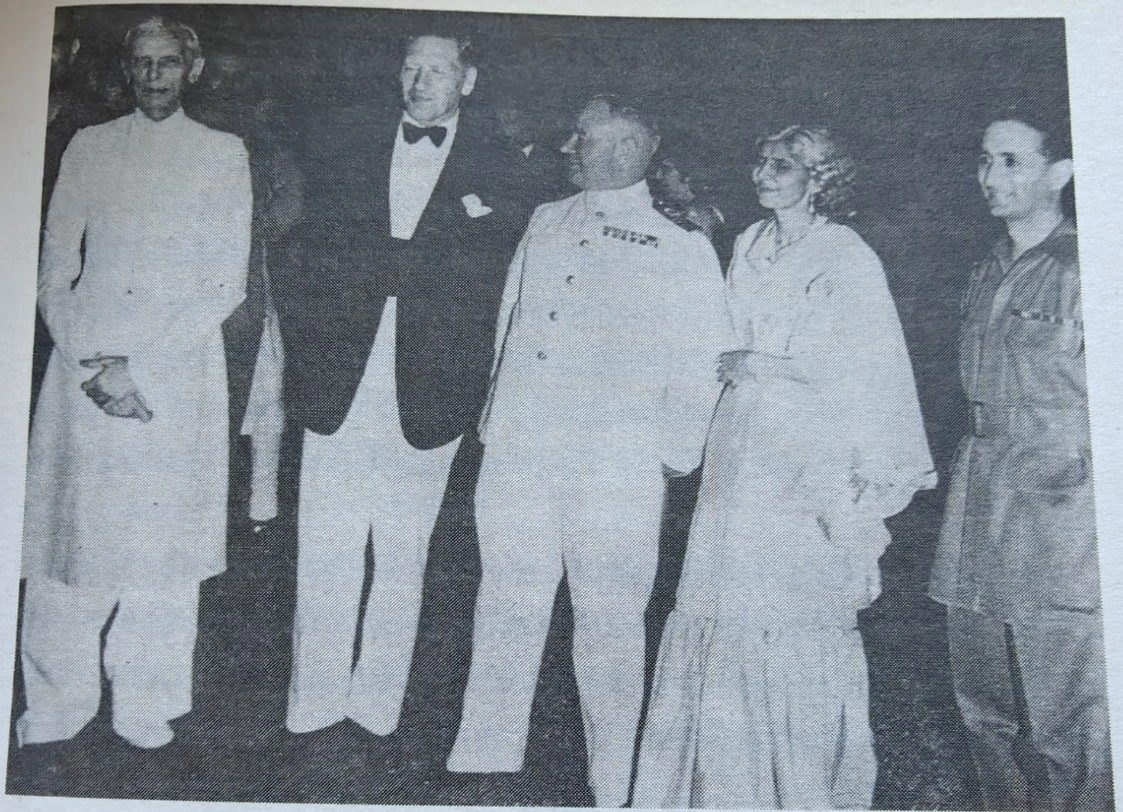 Muhammad Ali Jinnah with General Sir Claude Auchinleck, Fatima Jinnah and Shahid Hamid (far right), whose military career features prominently in Broken Threads.
Within the narrative are the key players: Jawaharlal Nehru, India’s first prime minister in 1947, Mohammed Ali Jinnah, founder of Pakistan, Lord Mountbatten, Auchinleck the last Commander-in-Chief of the pre-independence Indian army; Stafford Cripps, a member of the Churchill and Attlee governments and others.
Husain writes with verve and engaging language. She takes nothing at face value, seeks verification of family myths until she finds the truth in the libraries of Britain.
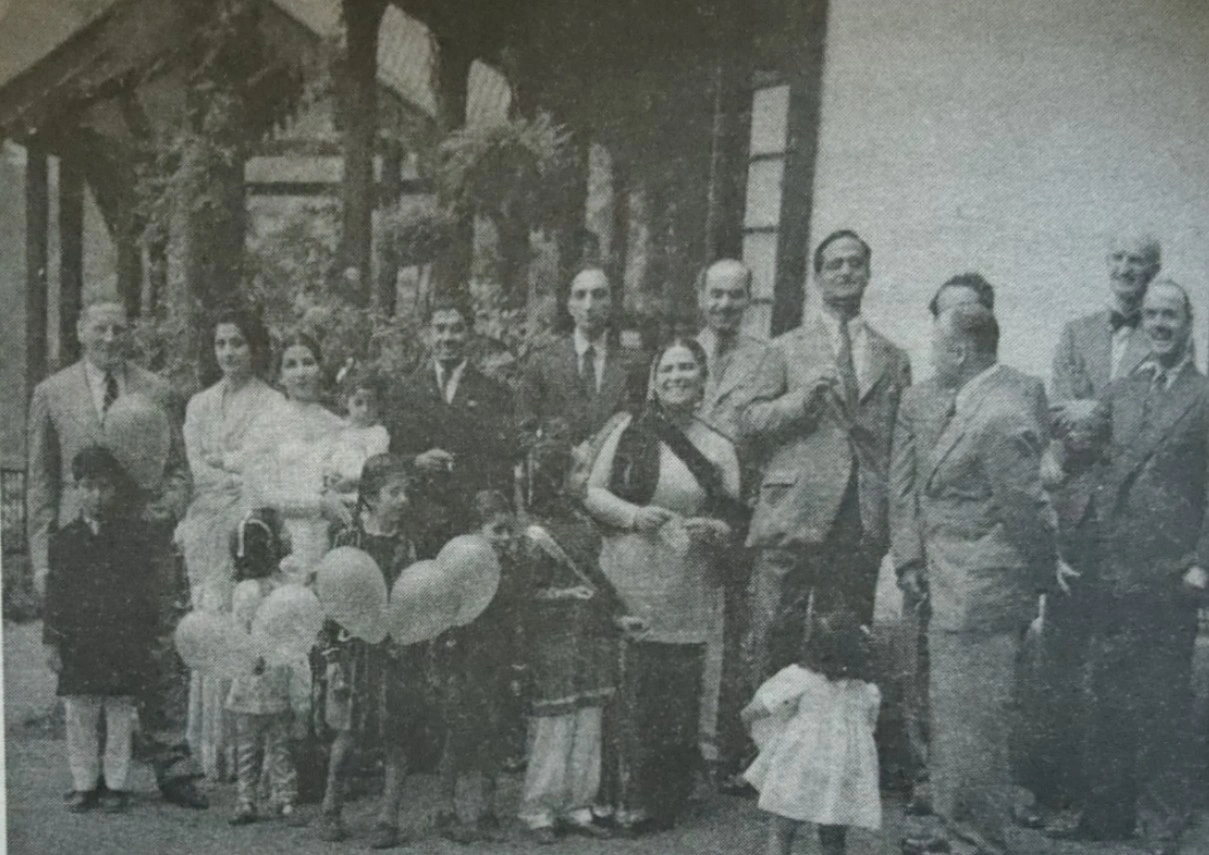 General Sir Claude Auchinleck (far left) with members of the Hamid family in Simla shortly before the Partition of India in 1947.
This is essentially a story of Mishal Husain’s family. The way this book is written makes one think about one’s own family history and how one can go about writing about it. We, the children of Empire, have all heard stories of life before the independence of our countries, of how our own grandparents lived through those momentous times. If there is a desire to write our own story, here is a guide. If one simply wants to read about a family involved in the process of independence, Husain carries the reader through the choices made by her grandfathers and, to a lesser extent, her grandmothers and, to a lesser extent, her grandmothers. It is a narrative of men seizing opportunities both for themselves and the future of their families. It is a narrative of grandfathers who rose through the military ranks through hard work, and of choices which, if wrong, could have resulted in the deaths of family members.
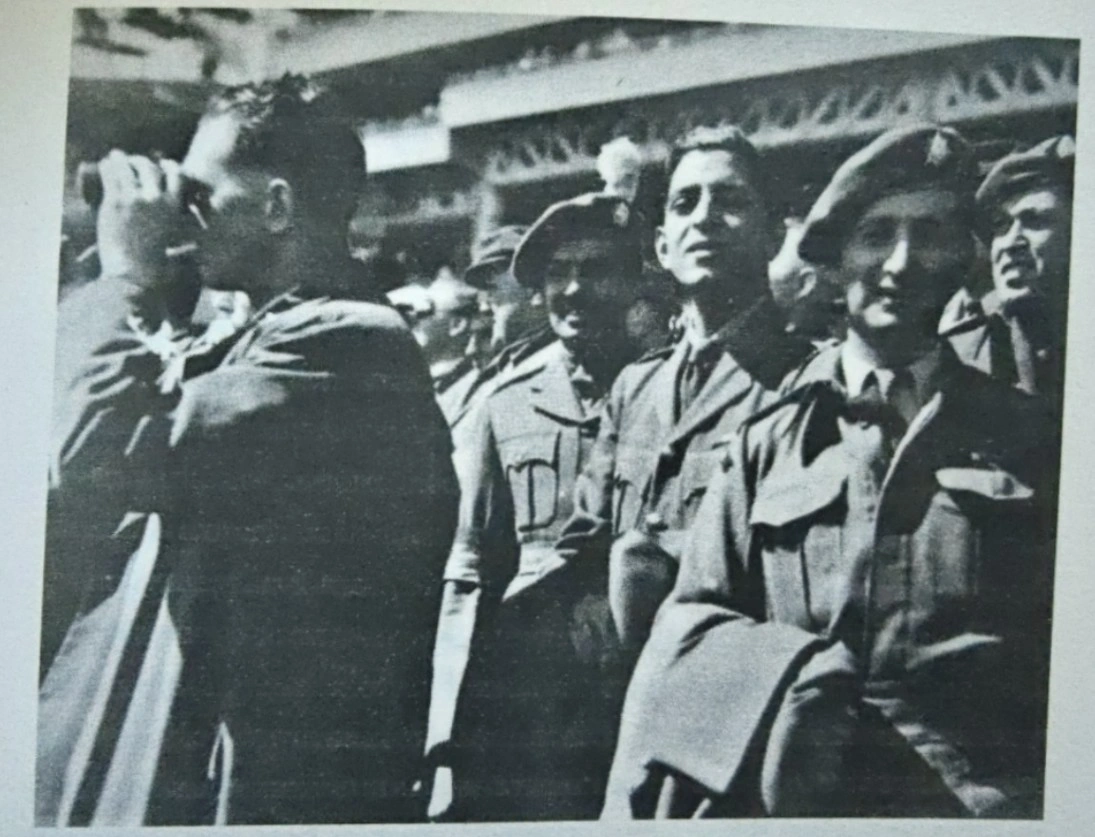 Govind (centre) and Shahid Hamid (far right) served in the British Indian Army before Partition reshaped the subcontinent.
The book is absorbing. Mishal Husain writes with skill, and with such a sweep of history that she creates individuals as vivid as characters in a novel. Engaging and entertaining us with wit and charm. She also conveys the depth of sadness, a sadness that lingers on, long after tragedy strikes.