Arundhati Roy is an Indian Booker Prize-winning writer and public intellectual, a former architect and filmmaker living in New Delhi. Her novels are The God of Small Things (1997) and The Ministry of Utmost Happiness (2017); her most recent book, the memoir Mother Mary Comes to Me (2025), turns to her own life. She has also written essays of political analysis, some of which call out the need for justice, human rights and freedoms in modern India. Her writing is reviewed here by Elaine Furniss.
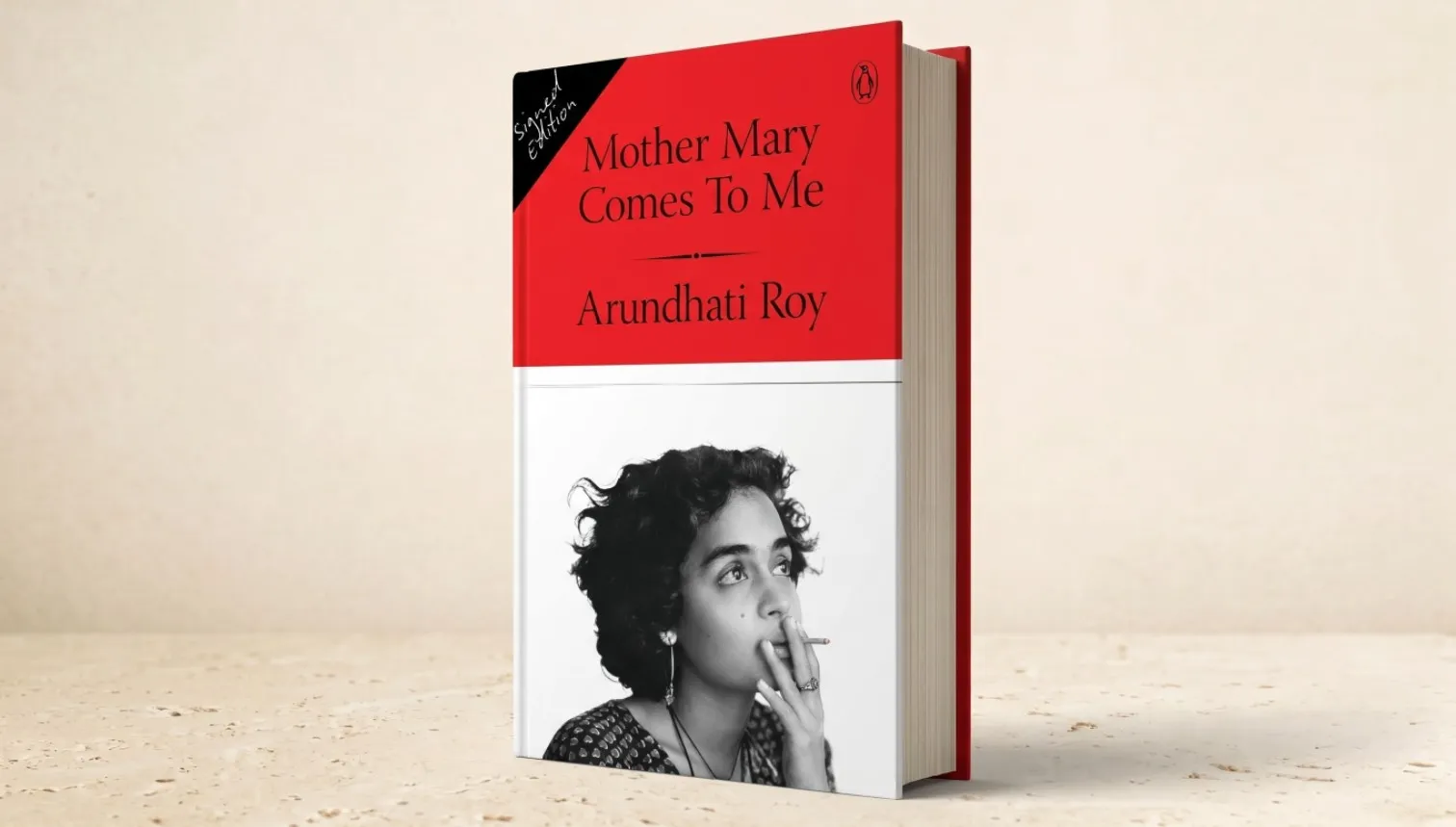
In Mother Mary Comes to Me, Arundhati Roy revisits her childhood and complicated relationship with her mother, tracing the experiences that shaped her as a writer.
Her mother: a source of both terror and inspiration
Arundhati Roy’s first novel, The God of Small Things, which is mostly autobiographical, explains how life changes for an affluent Indian family when a visiting English family member drowns. Other ‘Small Things’ and ‘Large Things’ happen, or are uncovered from the past, contributing to the difficult and violent ending of the book. Arundhati’s mother, Mary Roy, suffered from her father, Pappachi, a similar type of neglect and anger that she wreaks on her own children. Both use childhood experience to their own advantage. Mary Roy won inheritance rights for Christian women in India, ran a school, supported many people in the town where her school was, but really didn’t support Arundhati and her brother.
The Ministry of Utmost Happiness explores what it means to be outcast and living on the edge, both in the contested state of Kashmir and in New Delhi. Some critics see this novel as having a scatter-gun approach: so many characters, so many scenes of depravity. These are among the many voices, as Roy defined them, when accepting the Sydney Peace Prize in 2004, as the deliberately silenced or the preferably unheard. Death, torture, hunger strikes, and public lynching. This is the underbelly of Indian democracy, and it’s all here in the novel.
 Kashmir provides one of the central settings of The Ministry of Utmost Happiness, where Roy explores lives shaped by conflict and exclusion. Photo: Kreativeart/CC BY-SA 4.0
Mother Mary Comes to Me is a memoir which explores the relationship between the writer and her mother through scenes of abandonment and punishment, as well as covering Arundhati Roy’s education, love relationships and life trajectory. She’s very thankful for her mother making her the outspoken, yet reflective person that she is. She never ‘lets it be’, a nod to the classic Beatles song that inspired the book's title.
Language and structure
Roy fell in love with the sound of language early, as her mother’s reading to her of Rudyard Kipling’s The Jungle Book made the hair on her neck stand up. She's always interested in how language and structure provide a vehicle for content in her work. Her writing leaves one wanting to say ‘Yes! I wish I’d thought of that!’ Standing up for others comes from learning to stand up for herself. Life experience, gruesome in parts as it is, gives her insight to critique the abandonment of the less fortunate in Indian society and beyond. She writes books about the few standing up against the many, which explains her own stance as a public intellectual. Roy says about her mother in Mother Mary Comes to Me: ‘The challenge for those of us who are not chosen, but instead watch love pass us by, is to learn from it, marvel at it, and not grow bitter and incapable of love ourselves.’
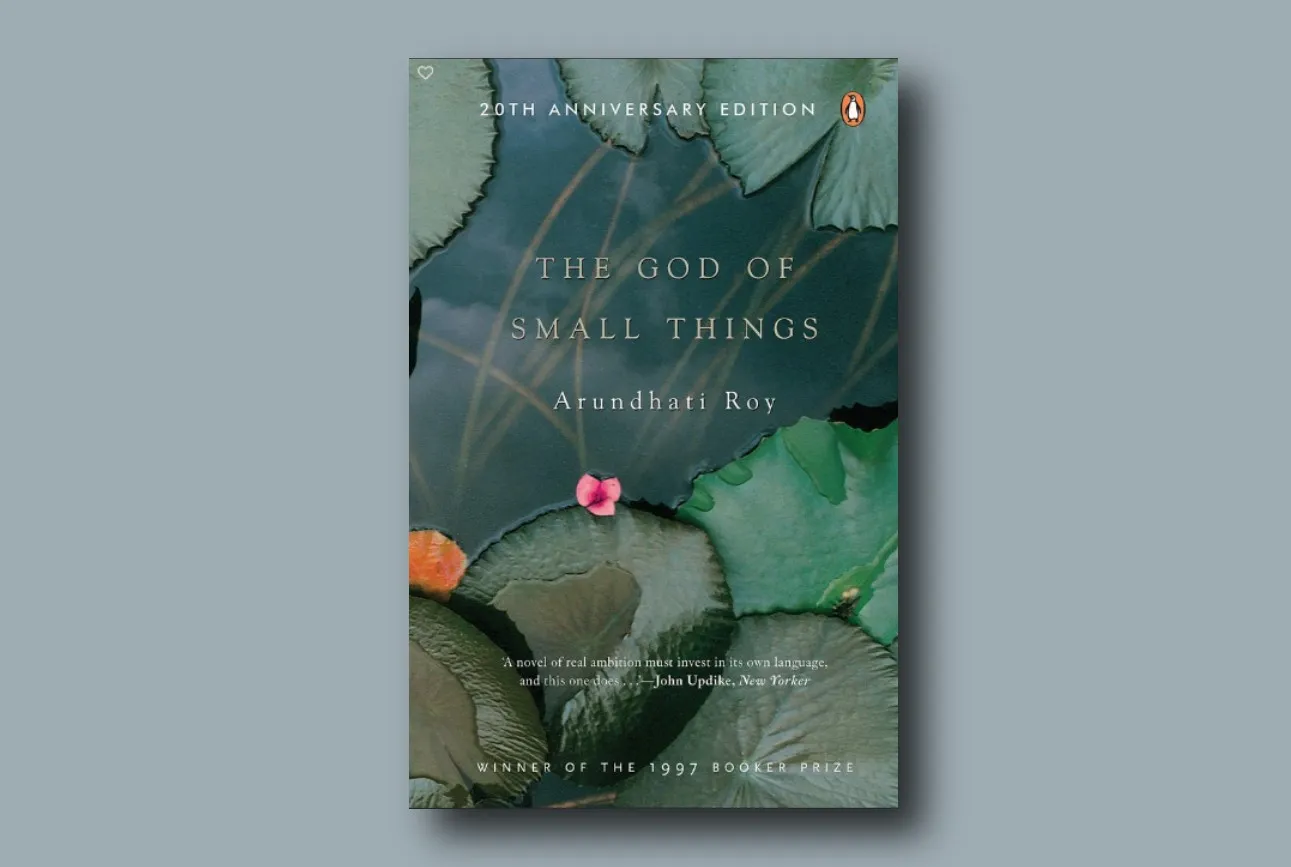
The God of Small Things, Roy’s Booker Prize-winning debut, transforms family history, childhood and social divisions into a story of lasting consequences.
Where does experience end and imagination begin? Above all, Arundhati Roy’s books point to her activist self: ‘once you’ve been unsafe in that safest place – I suppose the safest place is the mother – safety is very hard to find again, and… you’re constantly aware of the unsafe, you know, constantly aware of that other thing that’s happening, and unable to sort of settle into safety in some way.’ (Mother Mary Comes to Me)
People and issues in her sights
When, in 1998, the Indian government conducted nuclear tests, Roy wrote the essay The End of Imagination in response. Seeking to stop tribal communities from being displaced along the Narmada River, where a series of World Bank-funded dams were to be built, resulted in the essay The Greater Common Good. The dams were built anyway. She found that over 33 million people across India – others say 40 million – had been displaced through dam building resulting in serious ecological damage. She documented how privatised power and water are linked to global finance and wars in Iraq and Afghanistan that ensued. Little has changed today.
 The Narmada dams became the subject of Roy’s The Greater Common Good, her critique of displacement and the human cost of development. Photo: Narmada Tent City
She’s a strident critic of the Indian prime minister, Narendra Modi, and the ‘far right’ BJP party, which she says is a front for the RSS, the Rashtriya Swayamsevak Sangh, in existence for 100 years. She says that fascism in India is underwritten by large corporations who own the media and brook no opposition. For example, even though previously India was a friend of Palestine, Roy explains there have been no rallies in support of Gaza in India. She says the RSS suppresses them. Disjuncture between democratically elected governments and the will of the people means Western democracy is also buried beneath the rubble of Gaza, and the US arming of Israel also diminishes Israel in the eyes of many globally.
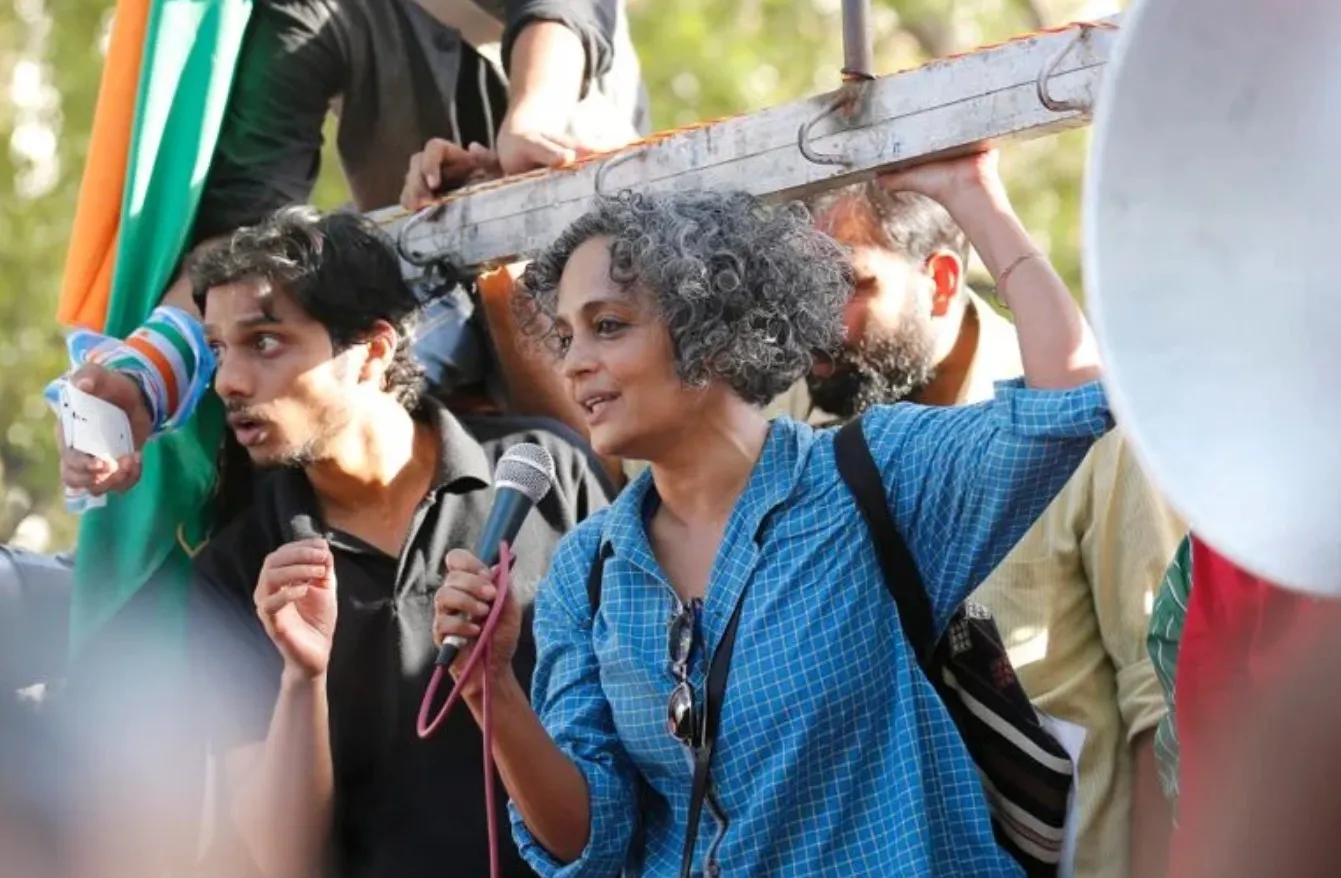 Roy’s political writing confronts majoritarianism, restrictions on dissent and the treatment of marginalised communities in India. Photo: Rajat Gupta /EPA
Calling out the complicit is a key strength. She is a strident critic of nuclear weapons. Anywhere. ‘The nuclear bomb is the most anti-democratic, anti-national, and anti-human, outright evil thing man has ever made. If you are religious, then remember that this bomb is man’s challenge to God. It’s worded quite simply. We have the power to destroy everything that You have created. If you are not religious then look at it this way: this world of ours is four thousand, six hundred million years old. It could end in an afternoon.’ (The End of Imagination essay in The Cost of Living)
Holding on to hope even if reason is not possible
Roy’s manifesto: To love. To be loved. Never to forget your own insignificance. Never to forget the unspeakable violence and the vulgar disparity of life around you. To seek joy in the saddest places. To pursue beauty to its lair. Never to simplify what is complicated or complicate what is simple. To respect strength, never power. Above all, to watch. To try and understand. Never to look away and never, never to forget. (The End of Imagination).