It’s the Year of the Fire Horse as the Chinese New Year celebrations commenced on 17 February. It is said to usher vibrant energy, adventure and transformation after the Year of the Snake, which was introspective.
It’s the Year of the Fire Horse as the Chinese New Year celebrations commenced on 17 February. It is said to usher vibrant energy, adventure and transformation after the Year of the Snake, which was introspective.
Chinese consumers, the South China Morning Post reported, spiritedly placed 120 million orders on Alibaba’s flagship artificial intelligence app Qwen in a mere six days. This reflected a growing inclination towards AI-powered shopping. Other Chinese tech giants like Tencent Holdings and Baidu are also in the fray to attract customers to their AI apps in what is being dubbed in China business circles as a ‘red packet war ahead of the Spring Festival’.

Consumers in China engage with AI-powered shopping apps during Spring Festival promotions, with Qwen App’s CNY campaign drawing over 120 million orders. Data source: Alibabacloud.com
However, 30 retail banks in Hong Kong, still a gateway to the mainland, recorded lower growth in aggregated pre-tax profit in 2025 compared to the previous year, as per data released by the Hong Kong Monetary Authority. Rising bad debts and a narrower net interest margin offset growing income from wealth management services.
India
India was, meanwhile, on a trade deal spree, albeit eliciting a mixed response from corporate and political circles in the country.
Antonio Costa, president of the European Council, and Ursula von der Leyen, president of the European Commission, were serenaded as chief guests at India’s Republic Day celebrations on 26 January, following which the two sides jointly announced a trade accord. The 27-nation European Union and India comprise nearly 25% of global gross domestic product.
An elated von der Leyen said, ‘We have delivered the mother of all deals. We have sent a signal to the world that rules-based cooperation still delivers great outcomes.’

European Council President Antonio Costa, European Commission President Ursula von der Leyen and Indian Prime Minister Narendra Modi ahead of their meeting at Hyderabad House in New Delhi, 27 January 2026. Photo: Reuters
EU-India trade already has a turnover of more than 180 billion euros. EU goods exports to India are projected to double by 2032 with the elimination or reduction of tariffs in 96.6% of items under the new arrangement. This is the biggest entry into the comparatively protectionist Indian market New Delhi has ever extended to a trade partner.
The benefit for the EU will apply from aircraft and spacecraft to alcohol and olive oil; not to mention duties on motor vehicles exports, which will be cut from as high as 110% to 10% under a quota of 250,000 vehicles. In lieu of that India will get preferential access for beverages, spices, textiles, leather goods, marine products and jewellery; while continuing to safeguard its sensitive agricultural sector.
Controversy, though, dogged the trade deal proclaimed in the first week of February by New Delhi and Washington. United States President Donald Trump branded it as ‘historic’ and flagged that America will increase its coal exports to India dramatically, thereby dismissing the bulk of the world’s concern over use of fossil fuels.
The Hindu summarised, the two countries ‘reached a framework for an interim agreement’, adding, ‘under which New Delhi will eliminate or reduce tariffs on all American industrial goods, a wide range of food and agricultural products, as well as purchase $500 billion of US products over the next five years’. This, if strictly adhered to, could turn India’s current surplus into a deficit. The bottom line is Indian exports will be levied an 18% duty; whereas imports from the US will enjoy a nominal tariff or none at all.
On 12 February, farmers and workers in India observed a day-long strike against, among other issues, the Indo-US pact, which could affect the competitiveness of India’s vulnerable farmers. The strikers claimed 300 million people supported the shut-down. Leader of the Opposition in India’s Lok Sabha, Rahul Gandhi, and president of the main opposition Congress party, Mallikarjun Kharge, endorsed the protest.
Singapore
Singapore Business Review picked out, the emphasis in AI and internationalisation as among the highlights in Singapore’s budget presented its Prime Minister and Finance Minister Lawrence Wong on 12 February. He said, though, ‘amidst heightened global uncertainties, we expect a more moderate outlook for 2026; growth is therefore projected at 2–4% with inflation at 1–2%’.

Singapore Prime Minister and Finance Minister Lawrence Wong presents the national budget, highlighting AI investment and global trade expansion. Photo: MDDI
Wong added, ‘Later this year we will sign a first of its kind agreement on trade and essential supplies with New Zealand’ and ‘Step up engagement with fast growing markets, including in Latin America, Africa and the Middle East.’
Not to be left behind, neighbouring Malaysia’s economy expanded 5.2% in 2025, with a Q4 growth of 6.3%, which was a three-year high, the Business Times posted.
Gulf
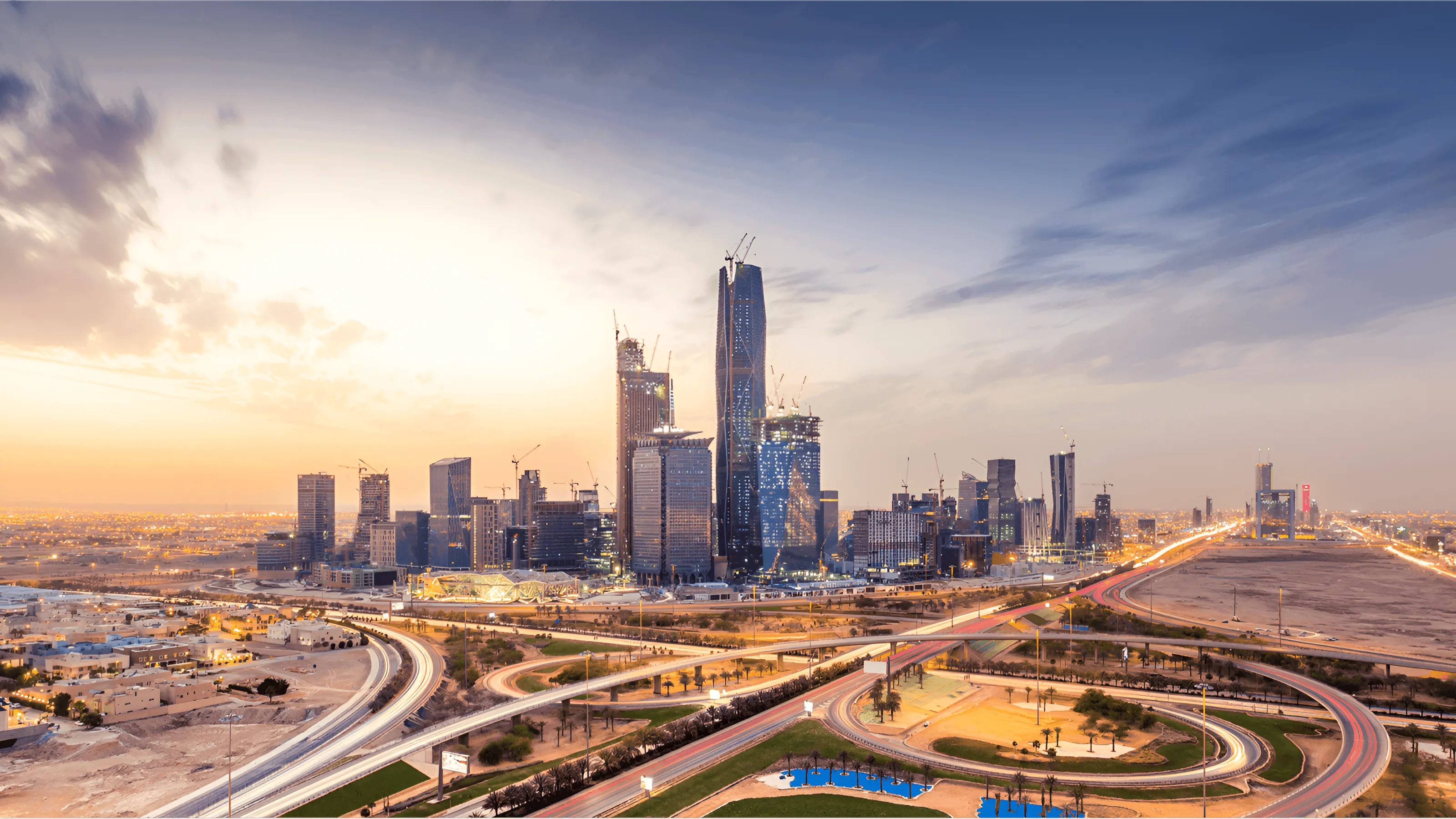
Qatar and Saudi Arabia are to have a high-speed electric rail link, the Saudi Press Agency confirmed. The project will involve construction of a 785-kilometre line between Riyadh and Doha.
It will pass through Al-Hofuf and Dammam and connect Saudi Arabia’s King Salman International Airport and Qatar’s Hamad International Airport. Trains are expected to operate at speeds exceeding 300 kilometres per hour, reducing travel time between the two capital cities to around 2–3 hours.

Qatar’s Amir Sheikh Tamim bin Hamad Al Thani visited Riyadh to co-chair the Qatar-Saudi Coordination Council, strengthening ties with Saudi Arabia. Photo: The National
The system is scheduled to be completed in six years. Once ready, 10 million passengers will travel on the route annually, generating 30,000 direct and indirect jobs.
Also, in the region, MGX, the Abu Dhabi investment firm, co-spearheaded a US$30 billion Series G funding in Anthropic, the market leader in enterprise AI and coding, now valued at US$380 billion. Partners NVIDIA and Microsoft joined the financing.
Vietnam
Vietnam’s economy, among the Asian tigers in recent decades, could enter an era of unpredictability because of US trade policy shifts.
Since Vietnam-US relations were normalised in 1995, business between the two has grown strongly, Vietnam’s Ministry of Industry and Trade portrayed. This has been ‘a key driver of economic development, job creation, and strengthened supply chain integration between two highly complementary economies’, it said.

Vietnam GDP Annual Growth Rate (%). Credit: General Statistics Office of Vietnam
Figures released by Vietnam Customs for the period from January to October, indicated the trade turnover stood at $141.4 billion, up 27.2% from 2024. Vietnam’s surplus came to $110.9 billion. Last year, to start with, Trump slapped 46% reciprocal tariffs on Vietnam, before reducing it to 20%. Reuters’ take was Vietnam’s trade-weighted average Most Favoured Nation tariff was 5.1%, against the US’s 2.2%.
Vietnam’s export sectors are understandably feeling the pinch. In textiles, the US is Vietnam’s biggest market, absorbing 38-40% of its exports. ‘We will continue to adapt and grow,’ Dang Vu Hung, deputy chairman of the Vietnam Textile and Apparel Association, assured stake.