The United States’ military operation in Venezuela, culminating in the abduction and rendition to New York of its president, Nicolas Maduro, is potentially an economic blow to China. Chinese credit to the South American country amounts to around US$10 billion. The South China Morning Post, quoting analysts, reported that Caracas could challenge the very legitimacy of the debts.

China
The United States’ military operation in Venezuela, culminating in the abduction and rendition to New York of its president, Nicolas Maduro, is potentially an economic blow to China. Chinese credit to the South American country amounts to around US$10 billion. The South China Morning Post, quoting analysts, reported that Caracas could challenge the very legitimacy of the debts.

Credit: LSEG Datastream, January 2025
Meanwhile, CNBC reports that China’s trade surplus continues to surge as it enters 2026 with the positive balance passing US$1 trillion. Demand for Chinese goods continued their strong growth despite US President Donald Trump’s tariffs on China.
BYD, the long-time domestic market leader for electric vehicles, outpaced its major international rival Tesla selling 2.25 million battery EVs in 2025 – a 27.9% year-on-year increase – compared with Tesla’s 1.64 million deliveries. Overall, BYD slowed its output increase but still sold 4.3 million vehicles in 2025. Competition from other countries in the EV sector is expected to intensify as manufacturers around the world scale up production and introduce new models.

Credit: Company filings, Bloomberg
The Rhodium Group think-tank calculated China’s economic growth in 2025 to be 2.5% to 3% driven by a collapse in fixed-asset investment in the second half of the year. The World Bank had projected 4.5%. Industrial activity expanded only modestly and retail sales inched upward at their slowest pace in years; demand is not expanding as rapidly as previously; consumer caution lingers; and private sector confidence has been flickering without igniting.
South Korea
The government in South Korea aims at 2% GDP growth in 2026, betting on strategic high-tech industries and a recovery in investment to drive a rebound, the Korea Herald reported. The paper reported that foreign direct investment pledges to the country hit a record high of US$36 billion in 2025.
South Korea’s Current Account Strong recent run of 31 months of surplus Record $ 12.2bn surplus in November 2025 surpluses 2024 total surplus $99.0bn +5.5% export growth.
The paper flagged that South Korea posted its largest-ever current account surplus for November, supported by strong exports amid an upcycle in the semiconductor sector, citing data published by the country’s central bank. The margin was US$12.24 billion compared with US$6.81 billion in October.
Samsung Electronics Co. reported a record operating profit of US$13.8 billion in the fourth quarter of 2025 – a 200% rise from the previous year. This was driven by a super-cycle in the chip industry where sales increased by 22.7%. Analysts say that Samsung is expected to maintain its robust performance in 2026. Kim Dong-won, a researcher at KB Securities Co., said Samsung Electronics will enter the supply chain of HBM4 or High bandwidth memory 4 for major tech companies, including Nvidia Corp. and Google.
Japan
The Nikkei 225 stock index hit a new record in advance of February’s election the Japan Times reported. However, the yield on a 10-year government bond fell to 2.135% and the yen weakened against the US dollar. Japan’s finance minister Satsuki Katayama underscored concern to his American counterpart, treasury secretary Scott Bessent, about “one-sided yen moves”. Bessent was reported by the Japan Times to have “shared that understanding”. Katayama said Japanese financial authorities have a “free hand” to intervene.
Meanwhile, Toyota Motor Corp. remained the world’s top-selling automaker in 2025 for six years in a row according to Mainichi Shimbun after the full-year figures released by Volkswagen AG fell short of the Japanese giant’s achievement to November. Toyota sold 10.32 million vehicles worldwide between January and November while its German rival sold 8.98 million units over a 12-month period.

Credit: The News Wheel, January 2026
Asahi Shimbun noted that Sony Honda Mobility Inc., a joint venture between Sony Group Corp. and Honda Motors Co., unveiled a prototype of its new Afeela electric vehicle in Las Vegas in January.
India
The Financial Times headlined: “India needs to import more capital and export fewer workers,” adding that “despite strong headline growth numbers, the country is slipping from the global spotlight”. The headline introduced a report by Ruchir Sharma, chair of Rockefeller International, saying that “flows of foreign money into the country have dried up, suggesting outsiders believe that the reported GDP growth rate of over 8 per cent masks underlying weaknesses”.
Sharma pointed out that India’s infamous ‘Licence Raj’ lingers making it “prohibitively expensive to acquire land or hire and fire workers”. Foreign investment in India is currently running at only 0.1% of GDP compared with over 4% in China and Vietnam.
Sharma suggested that India’s ‘brain drain’ is “a loss of exactly the skilled workers it needs to compete in advances fields” and said “employment growth continues to be weak”. He reported that 38% of graduates from the famed Indian Institutes of Technology went without a single job offer domestically; also that one-third of the US Silicon Valley’s tech workforce is now Indian.
The Hindu reported that Mr Trump’s new Iran-related tariff threat will have limited impact on India as trade between the two countries has declined significantly.
Indonesia
The World Bank certified that the Indonesian economy expanded by its projected annual target of 5% in the first nine months of 2025, because of strong investment and net exports. Its Indonesia Economic Prospects report said “the country’s monetary and fiscal policies have become more accommodative, with stimulus measures boosting private credit and consumption while maintaining fiscal discipline and moderate inflation”.
The government revoked the operating licenses of 28 companies, including a subsidiary of Jardine Matheson, following serious flooding in northern Sumatra which left more than 1000 people dead. While 22 of those companies are involved in forestry and plantations, including the production of timber and palm oil, six
are involved in mining of commodities such as nickel, products vital for Indonesia's fast expanding economy.
Saudi Arabia

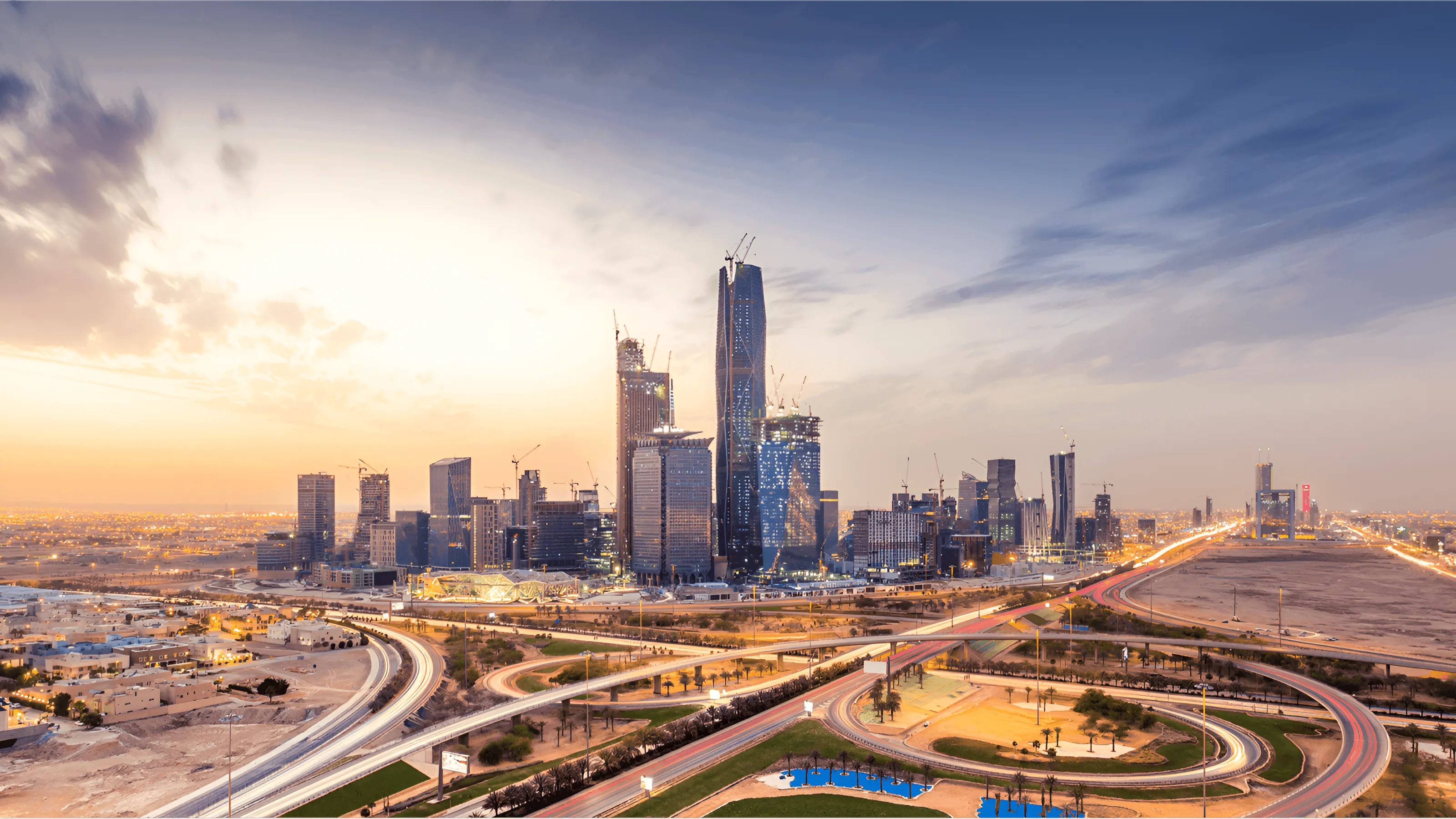
Credit: Saudi Vision 2030-‘The Line’, Saudi Vision
2030 Channel
Under its Vision 2030 programme, Saudi Arabia is fast diversifying its economy into non-oil areas like tourism, retail and construction.
Oil remains core to its economic activities. Arab News projected the country’s non-oil GDP growth will be 4.5% in 2026. S&P Global expects new investments in non-oil segments will increase fiscal and external deficits.
ASEAN
Trump’s hostility towards BRICS received a pushback, when nine Association of South East Asian Nations (ASEAN) countries – Brunei, Cambodia, Laos, Malaysia, Myanmar, the Philippines, Singapore, Thailand and Vietnam – expressed their readiness to use a future BRICS currency.

BRICS banknote, as imagined by watcher.guru