Gopichand Hinduja of London’s powerful Hinduja business family died in November more than two years after his older brother Srichand. The two were the leading lights of the Hindujas’ London-based business empire, Britain’s richest family enterprise. Ashis Ray recalls their arrival in London and considers their business legacy.
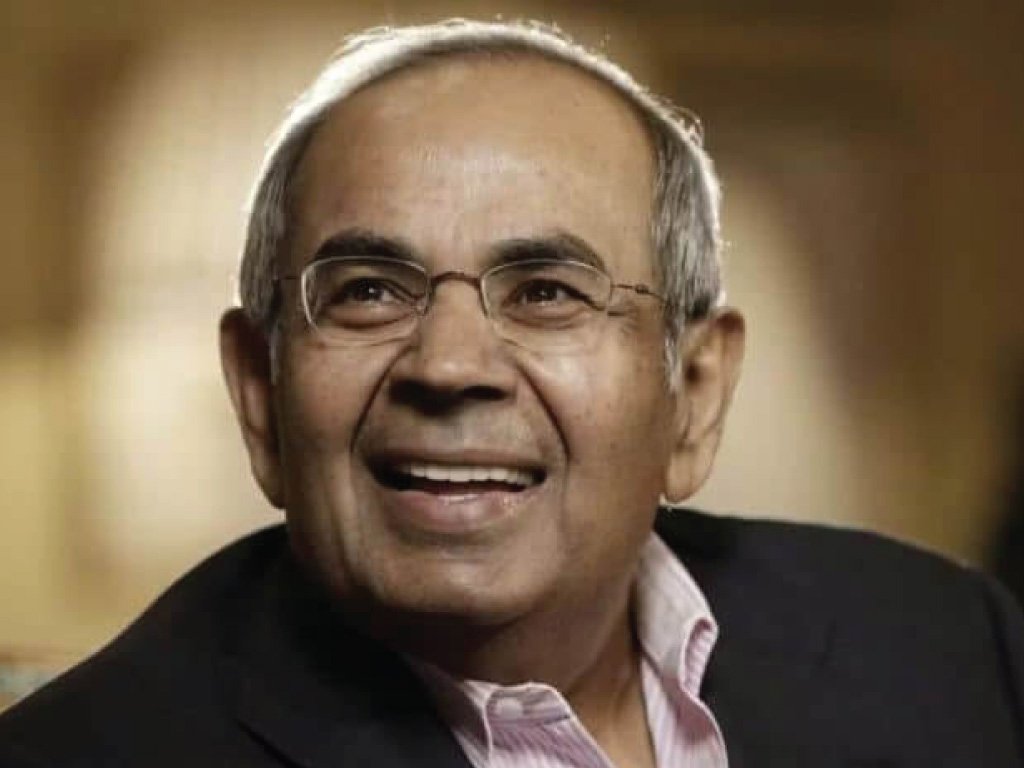
Gopichand Hinduja of London’s powerful Hinduja business family died in November more than two years after his older brother Srichand. The two were the leading lights of the Hindujas’ London-based business empire, Britain’s richest family enterprise. Ashis Ray recalls their arrival in London and considers their business legacy.
Towards the late 1970s, there was a buzz among Asians in London about two businessmen of Indian descent relocating from Tehran to the British capital. Indeed, they had moved at the nick of time to avert being throttled by the Islamic fervour which was to engulf Iran. They were Srichand and Gopichand Hinduja, popularly known as SP and GP. Both are now no more. SP died in 2023 and his brother GP died last November, thereby ending an era of Asian enterprise in Britain.
Friends of the family described their departure from Iran as “a great escape”. The Hindujas were reputedly close to the royal household of the country’s ruler Shah Mohammad Reza Pahlavi whose regime the Islamists led by Ayatollah Ruhollah Khomeini overthrew in 1979. GP attributed their timely exit from Iran to ‘a celestial message’, a reward, he said, for the family being devoutly religious. Logically, it could be ascribed to insider information.
The Hindujas hailed from Shikarpur in Sind province of pre-partition India, now in Pakistan. Their father Parmanand, after a pit stop of a few years in Mumbai, moved to the Iranian capital in 1919. The family firm eventually came to be known as Sangam Limited. As film distributors the Hindujas had made a killing with Bollywood’s mega film-maker Raj Kapoor’s 1964 blockbuster Sangam.
Sindis of Shikarpur were traditionally bankers and financiers. One of SP and GP’s early ventures out of London was, in fact, to found a finance company in Switzerland – Hinduja Bank. Much of the investment, it was whispered, emanated from wealthy Iranians, perhaps even the Shah’s relatives. It became a regulated bank in 1994, thereafter renamed S P Hinduja Banque Privee SA, continuing to offer private banking and wealth management services.
The Farsi-speaking Hindujas exploded on the London social scene with a high-profile Diwali party in the early 1980s which Prime Minister Margaret Thatcher attended as chief guest. Recognition of the Hindujas immediately catapulted to new heights in corporate and political spheres in the United Kingdom.

The Hinduja brothers: (Standing, from left) Gopichand, Prakash and Ashok (seated) Srichand. Photo: Umesh Goswami
The Hindujas were a traditional Indian joint family enterprise with an inbuilt patriarchy. No matter whose idea it was, GP and his younger brothers Prakash and Ashok would defer to SP for a sign-off on any major or new initiative. If banking was SP’s ingenuity, the acquisitions of Gulf Oil in 1984 and in 1987 Ashok Leyland – derived from British Leyland – were GP’s brainchild.
The purchase and re-development of the Old War Office in London into a super-luxury hotel, managed by Raffles of Singapore, and upmarket residential apartments was also GP’s concept. It was a building where Sir Winston Churchill had worked as Secretary of State for Air and War after the First World War, as later did intelligence officer and subsequent novelist, Ian Fleming, creator of the spy hero James Bond.
The buying price of the sprawling structure, with its famous 2.5 miles of corridors in London’s government district of Whitehall, was UK £350 million. The Hindujas put the money down with

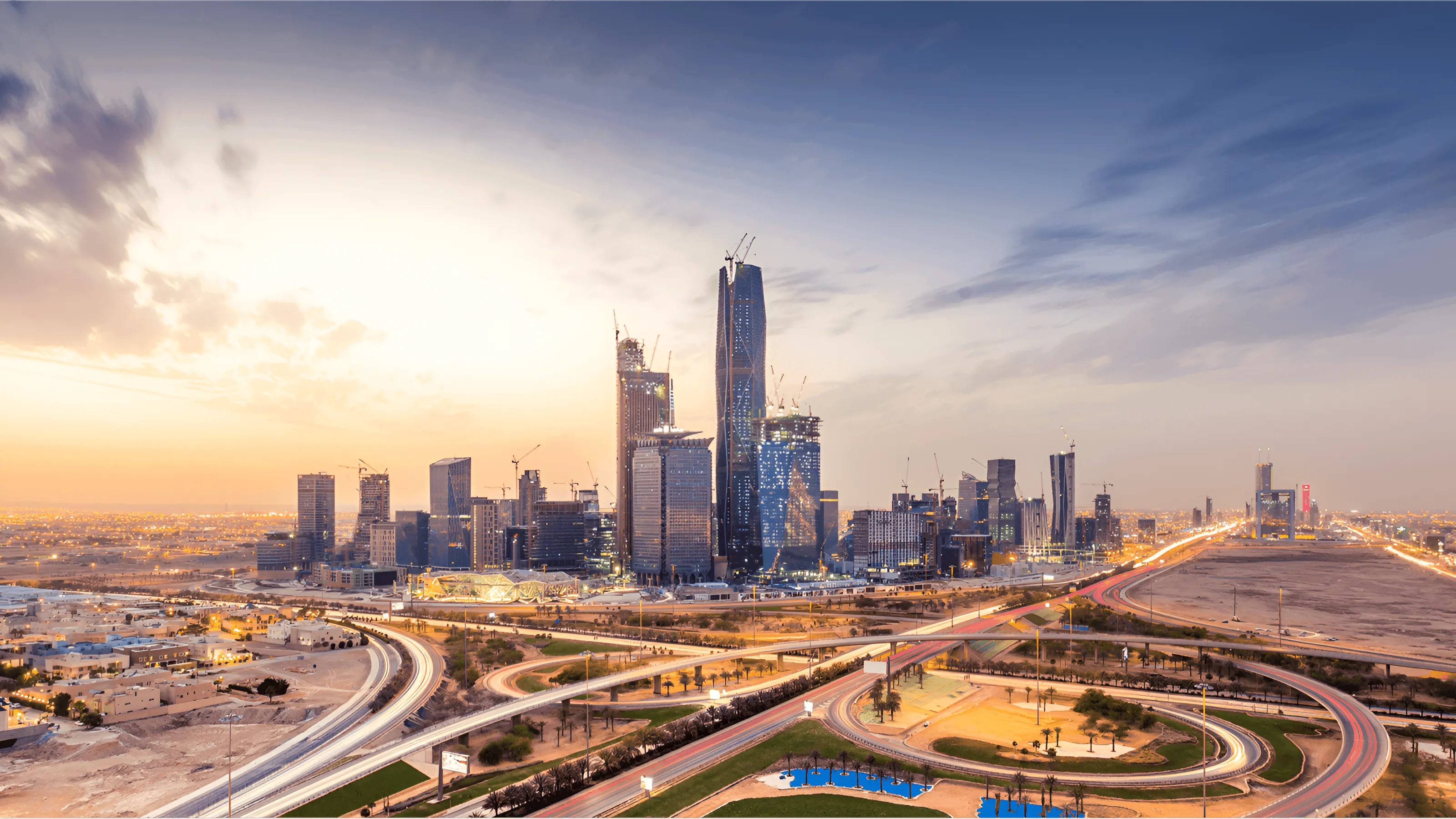
The London headquarters of the Hinduja Group, the base from which the family built one of Britain’s richest business empires. Photo: Anton Balazh/Shutterstock.com
input from a Spanish partner. The total cost of project came to UK £1.4 billion.
In six of the past 10 years, the Hindujas have been ranked by Britain’s Sunday Times newspaper as the United Kingdom’s richest family. Their Group’s net worth is calculated to be around UK £35 billion. The Hindujas had an expanding footprint in Asia. In addition to its headquarters in India, Ashok Leyland manufactures in the United Arab Emirates. It is the world's fourth largest maker of buses and a major supplier of armoured vehicles to the Indian Army. Gulf Oil’s lubricants and speciality automotive fluids are produced across Asia – in India, the UAE, Singapore and the Philippines. Its marine lubricants division, Gulf Marine, operates out of Singapore.
The Group’s integrated product engineering and digital solutions provider Hinduja Tech is based in Bangalore. The Hindujas generate coal-based power in India and are also rapidly expanding their presence in the renewable energy sector there. A spokesman for the Group said they functioned in ‘12 verticals’ in 100 countries, employing 120,000 people. Eastern Eye weekly reported no one was made redundant by the Hinduja Group during the Covid pandemic.
After SP’s death his daughters Shanu and Vinoo sought a separation of ownership of the Group’s businesses, staking a claim to S P Hinduja Banque Privee SA. This deeply hurt GP. Appeals were made even at his funeral to maintain unity. Shanu in her speech at the event sounded reassuring without being categorical. GP was a great lover of Bollywood film music and didn’t need prompting to break into a popular number. He was a patron of celebrated singers from India. Indeed, his taste extended to the Sufi tradition in the Indian subcontinent, which flourishes in Pakistan. He played host to Nusrat Fateh Ali Khan, dubbed the ‘King of Qawwali’.
The Hindujas’ mansion in London represents four interconnected residences occupied by the brothers and their families. The Grade I-listed building was in a state of disrepair when the Hindujas bought it in 2006 from the Crown Estate for UK £58 million. They spent another UK £50 million to restore it magnificently to its previous grandeur. The property was constructed on land which had belonged to King George IV. Lord Curzon, a former governor-general of India, once lived in it. It is valued today at over UK £300 million.
Controversies have occasionally dogged the Hindujas. In 1991, they were accused in India of receiving kickbacks in a howitzer

Vehicles produced by Ashok Leyland, one of India’s largest commercial vehicle manufacturers and a cornerstone of the Hinduja business empire. Photo: Coach Builder India

The Hinduja family’s Grade I listed mansion in central London, restored to its former grandeur after its purchase in 2006. Photo: Danish Khan
deal between the Swedish company Bofors and the Indian government. They were ultimately cleared of all charges in 2005, with the concerned judge commenting that the trial “has caused huge economic, emotional, professional and personal loss to the Hindujas”.
GP, who was co-chairman of the Group while SP was chairman, became its supremo after the latter’s death. But the succession now is being perceived as being more collective with an emergence of regional or sector-wise chieftains rather than continuation with a big chief. Ashok is expected to hold sway in India, where the Hindujas’ assets have incorporated IndusInd Bank since 1994 and now Reliance Capital while his younger brother Prakash will remain primarily a resident of Monaco. GP’s sons Sanjay and Dheeraj will continue to administer Gulf Oil and Ashok Leyland respectively.
'GP has left the Group in very good shape,' said Michael Urwick its Director of Communications.