Eight months after the United States and Israel first bombed Iran, and with peace efforts making little progress if any, the country’s economic crisis has worsened and the regime are said to fear a fresh uprising. Nazenin Ansari, managing editor of Kayhan London and Kayhan Life, reports.
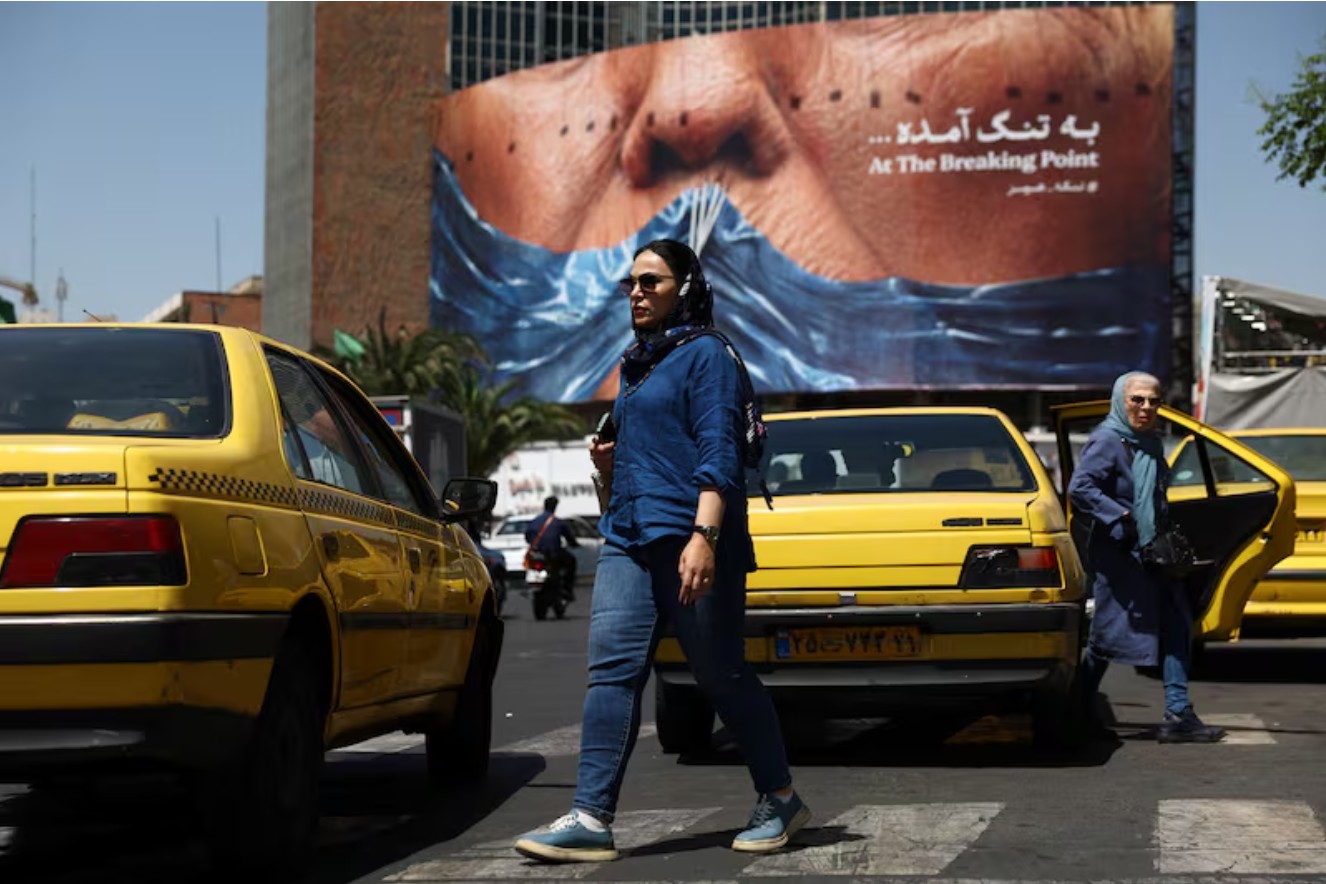
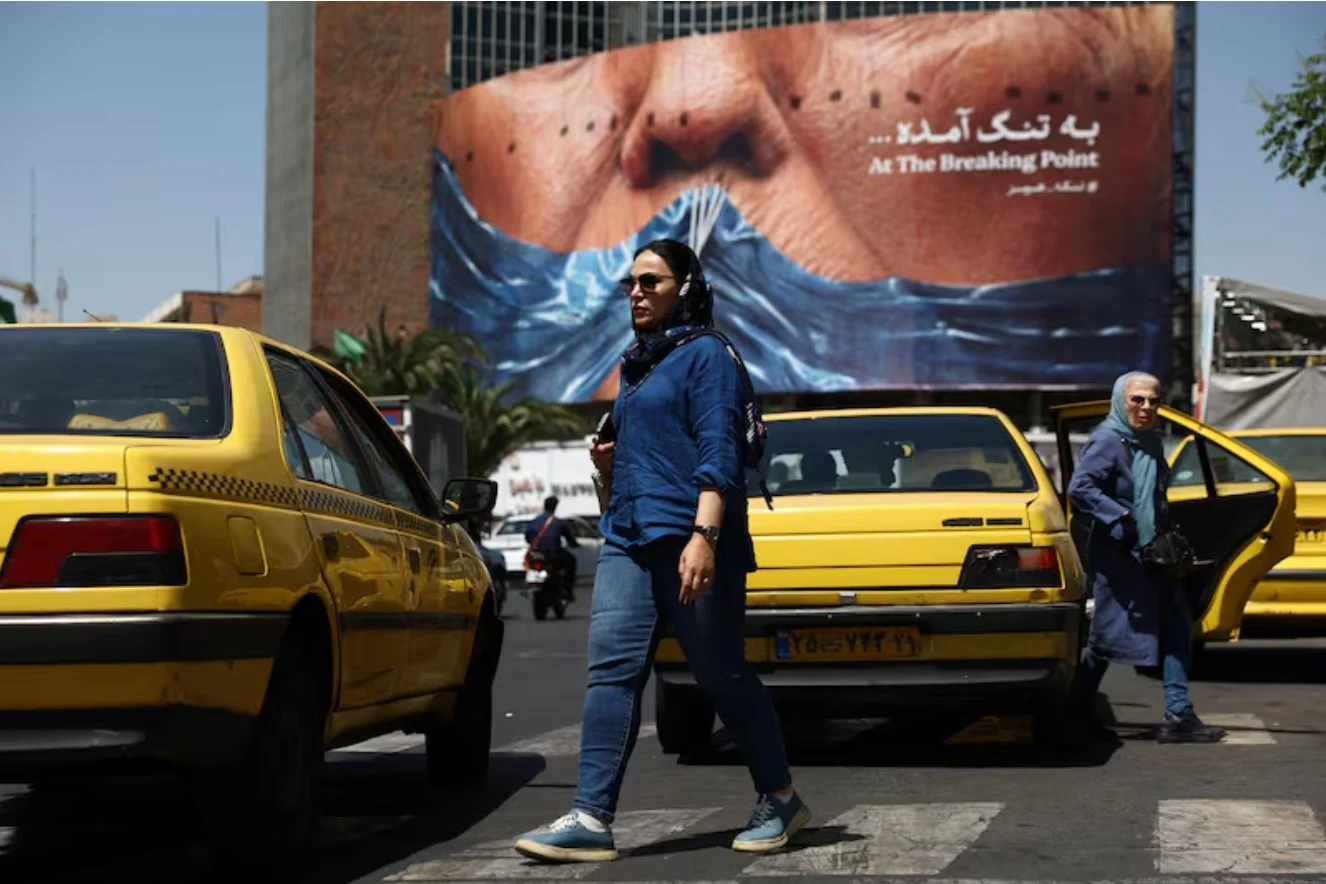
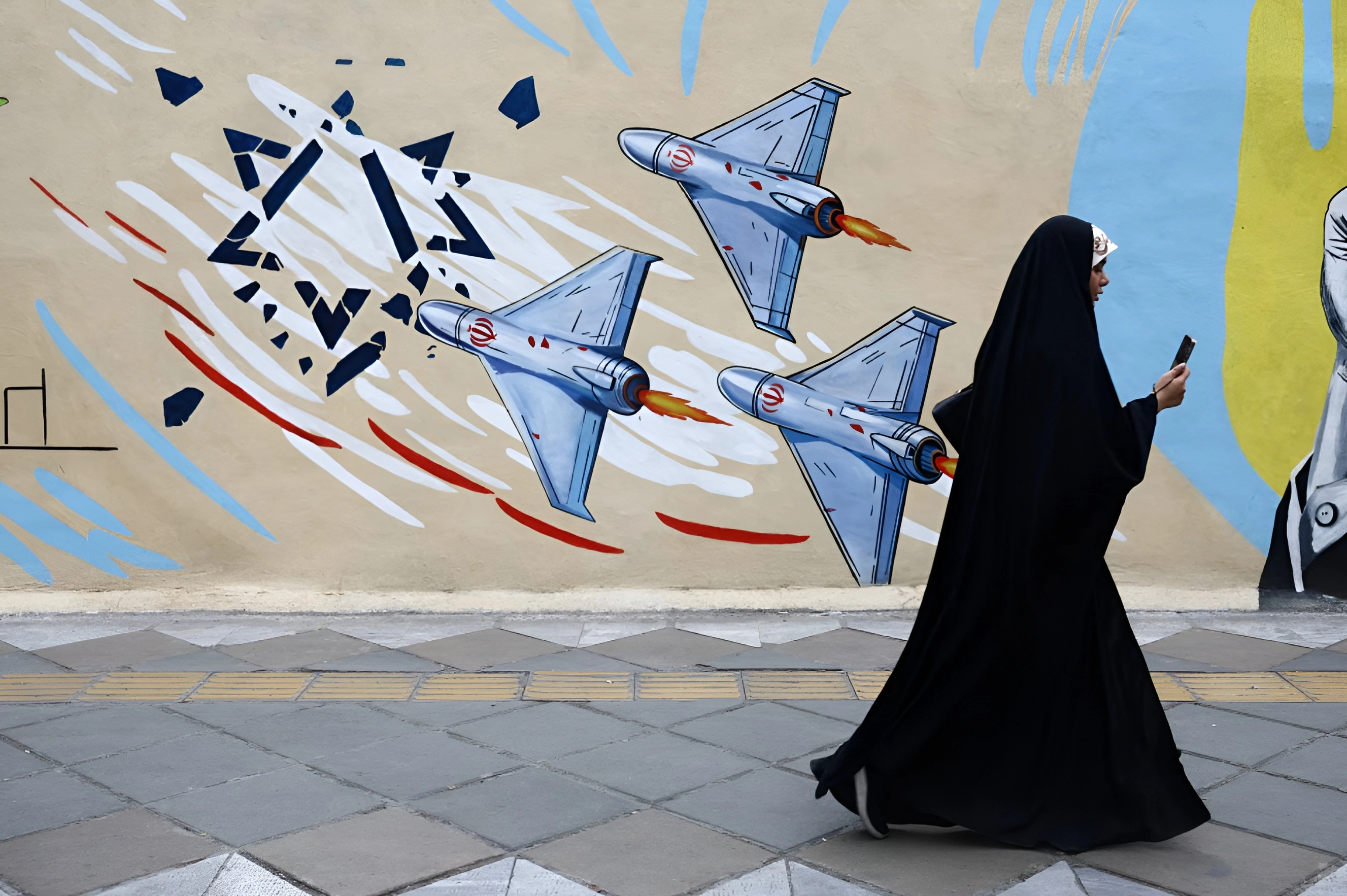
A woman walks through Tehran as soaring prices, fuel shortages and economic uncertainty deepen the pressure on Iranian households. Photo: Majid Asgaripour
Marzieh, a 36-year-old mother, asked: ‘What does inflation of 150 per cent mean?’
‘We stopped buying meat about a year ago, and there are no dairy products left in our refrigerator apart from cheese. We are turning to filling foods, like bread and Indian rice.’ Marzieh and her husband lost their jobs after the war began. Their struggle was quoted by the Iranian news website Fararu which reported that some families with malnourished children could no longer afford even basic foods.
The Statistical Centre of Iran put overall inflation above 80 per cent in August and average food inflation at 127 per cent. Cooking oil recorded the sharpest increase among basic commodities, at 340 per cent. Imported rice prices rose 201 per cent over the previous year and chicken prices by 176 per cent. President Masoud Pezeshkian acknowledged the limits of the regime’s resources, saying, ‘we may have many things; we may even have missiles and bombs, but they are of no use.’
In an interview, government spokeswoman Fatemeh Mohajerani declined to say how many people were living in poverty. ‘Disclosing information about the extent of poverty among the population, and people’s behaviour under conditions of poverty, requires authorisation from the Supreme National Security Council,’ she said.
The doubling of the highest petrol-price tier on 8 September, six months into the war, increased the burden on households already cutting back on food. The war, together with the fuel crisis, is revealing the regime's policy failures and its misplaced priorities. Analysts attribute the daily shortfall of 20 million litres of petrol to insufficient investment and to inadequate refining capacity. Reports of poor-quality fuel further expose the problem. Refineries reportedly blend methanol into petrol, and water has been found in fuel sold at some filling stations. Vahid Ghaneifar, chief executive of the Persian Gulf Star Oil Company, confirmed that its refinery had used methanol in petrol.
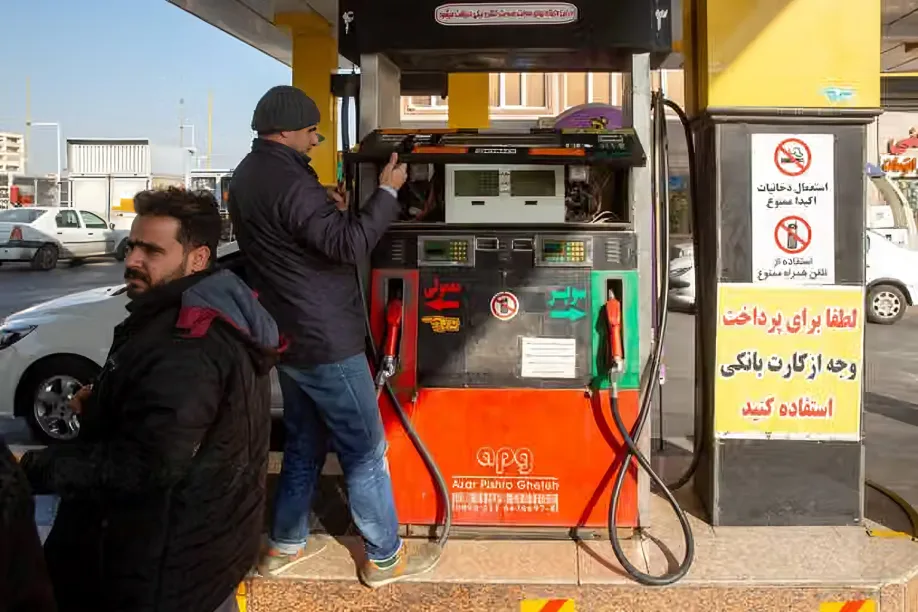 Men at a petrol station in Qom, Iran, as fuel-price increases add
to the economic pressure on households. Photo: Iran
International
Men at a petrol station in Qom, Iran, as fuel-price increases add
to the economic pressure on households. Photo: Iran
International
Fuel-quality problems predate the war: in July 2025, a Pezeshkian-appointed inspector found that even the presidential convoy had broken down in Qazvin province after refuelling with water-adulterated petrol. The Iranian Automobile Manufacturers Association has warned that methanol-blended petrol severely corrodes fuel systems and damages tanks, filters, pumps, pipes, seals and plastic components.
Furthermore, reports of corruption have once again revealed weaknesses in the country's governance that grants privileges, including the distribution of dollars at below-market rates. Informal currency exchanges operate mainly through the United Arab Emirates, Turkey, and Oman, using banking, shipping, and trading services. These arrangements, many designed to sell oil and move money outside the international banking system, have allowed many regime insiders to pocket the revenues meant for Iranians.
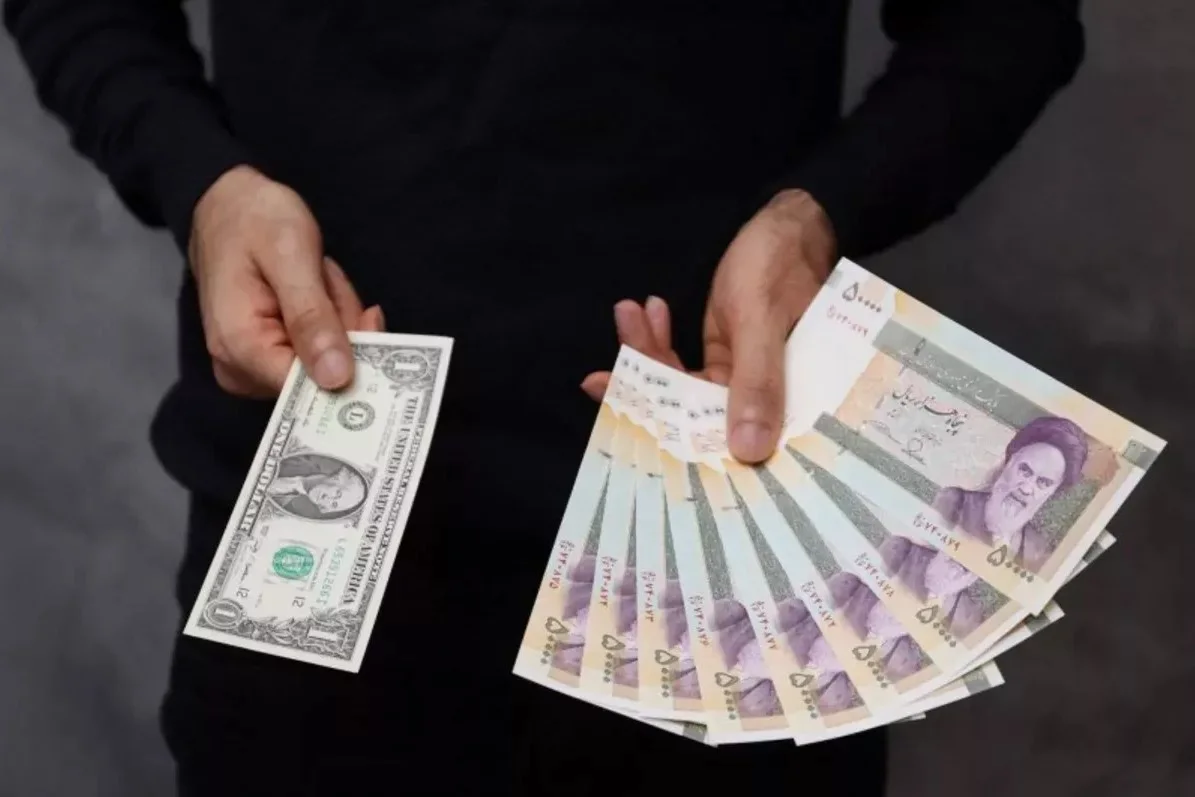 Currency traders in Iran, where exchange-rate
pressures and restrictions on access to foreign
currency have added to economic difficulties. Photo:
Reuters
Currency traders in Iran, where exchange-rate
pressures and restrictions on access to foreign
currency have added to economic difficulties. Photo:
Reuters
The authorities said 20,676 individuals and organisations had failed to meet foreign-exchange obligations totalling approximately $109 billion. The sum represented export earnings and other foreign-currency commitments that should have been returned to Iran. Tehran prosecutor Ali Salehi said on 27 July that the judiciary had opened 59 cases against managers of companies known as ‘trustees’ that allegedly failed to return proceeds from sanctioned exports.
Zabihollah Khodaian, head of the General Inspection Organisation, admitted that intelligence and security agencies, the Supreme National Security Council and banks had trusted the intermediaries; hence the term ‘trustee’. His comments indicate that the ‘trustees’ operated with the knowledge and approval of the Islamic Republic’s most powerful institutions. In one case, he said, a ‘trustee’ had left the country without returning US $200 million.
As economic hardship, external military pressure and internal divisions continue to strain the regime, judiciary chief Gholam-Hossein Mohseni-Ejei threatened an unprecedentedly harsh response to any renewed protests. He warned that if an uprising erupted, the regime would respond ‘more decisively and more harshly than at any previous period’.
Dr Jabbar Rahmani, an anthropologist at the state’s Institute for Cultural, Social and Civilisation Studies, explained that the Islamic Republic model of ‘general mobilisation campaign’ that began with war that was patterned on Soviet models. He said the authorities appeared to have placed repression at the heart of their increasingly militarised approach to domestic security.
Mohsen-Ejei’s threat comes amid a continuing campaign of executions. Human Rights Watch and the Abdorrahman Boroumand Centre said the authorities announced the executions of 29 people in connection with recent protests between 18 March and the end of August. In a joint report, they said ‘these executions were unlawful and violated international human rights law; several of the people who had been executed were teenagers who were 18 or 19 years old; scores more are still at risk of being executed; and some of the executions have taken place in public with a view to increasing fear, representing a major escalation.’
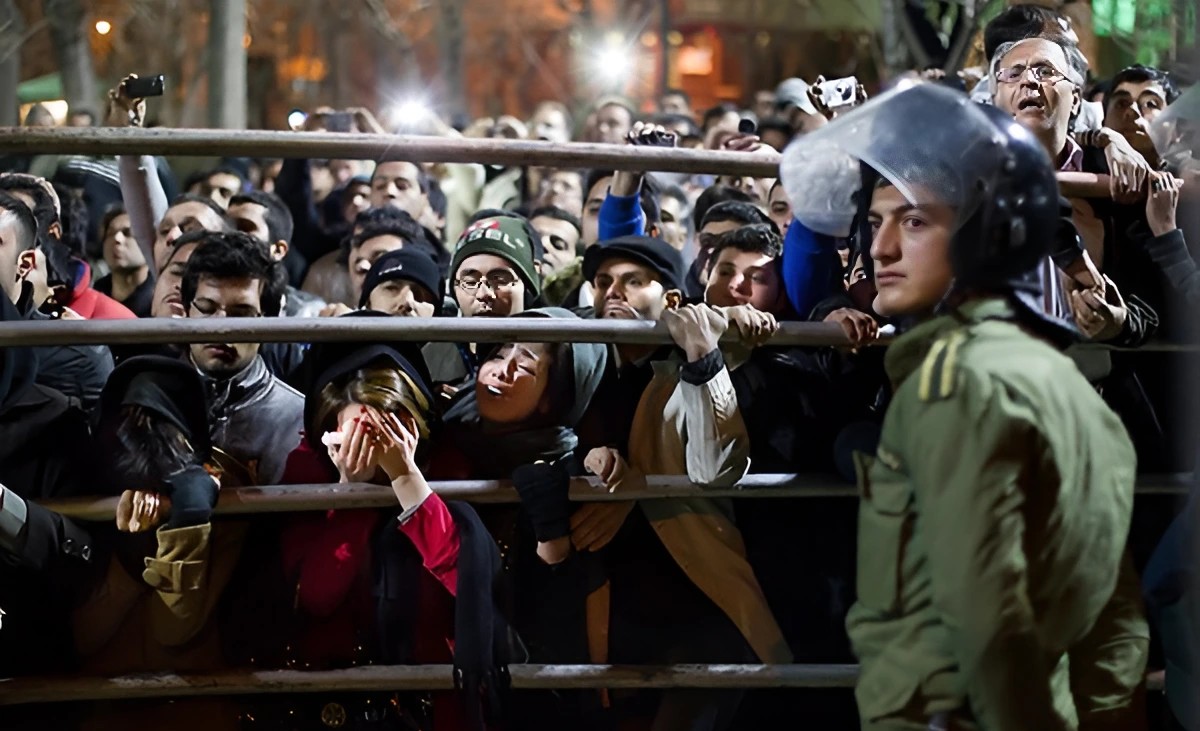 People gather to watch a public execution in Iran, where
executions have been used amid a wider campaign of
repression against dissent. Photo: Fars Media Corporation/CC
BY 4.0
People gather to watch a public execution in Iran, where
executions have been used amid a wider campaign of
repression against dissent. Photo: Fars Media Corporation/CC
BY 4.0
The organisations said the executions followed grossly unfair, summary proceedings, with the time between arrest and execution ranging from just over five weeks to less than eight months. In most cases, defendants had not been accused of killing anyone but were convicted on vague, national-security, charges and executed for alleged acts such as damaging public property. They cautioned that many other protesters and political dissidents were still in immediate danger of being executed, including women, children, and people whose co-defendants had already been executed.
Repression offers no remedy for the pressures according to Dr Rahmani. He said severe economic hardship, daily price increases, hyperinflation and intense social and psychological pressure has destroyed public confidence in the status quo. Attendance by government supporters at nightly gatherings had declined and a more radical mood was emerging in society.
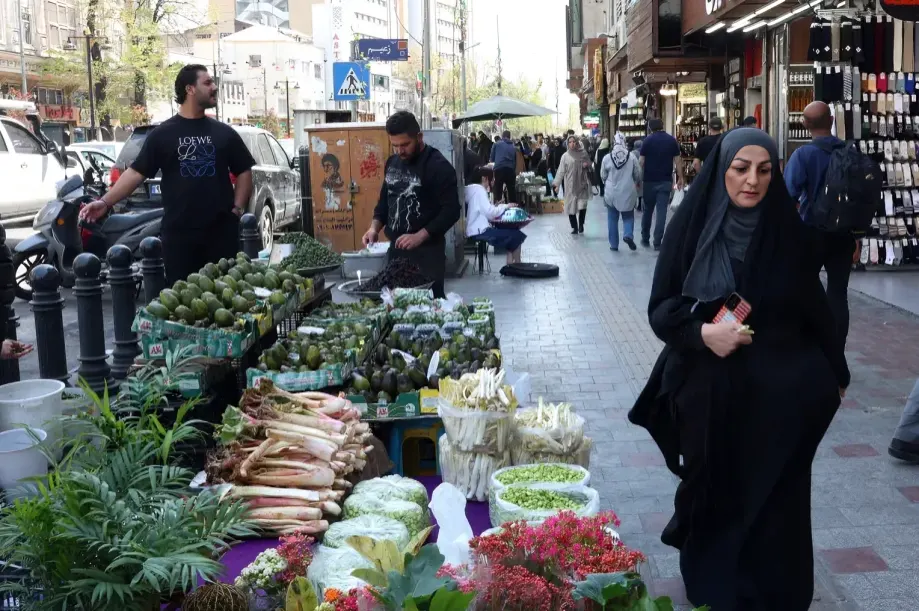 Everyday life in Tehran continues amid rising prices,
economic uncertainty and mounting pressure on
households. Photo: Abedin Taherkenareh/EPA
Everyday life in Tehran continues amid rising prices,
economic uncertainty and mounting pressure on
households. Photo: Abedin Taherkenareh/EPA
Analyses published by media outlets linked to the security establishment raised similar concerns. Tasnim, a news agency connected with the Islamic Revolutionary Guard Corps, warned of the risk by saying that ‘when a society is facing a number of demands, economic problems and a feeling of financial pressure, a new decision could provide the spark that brings those grievances together’.
Six months into the war, the Islamic Republic fears the political consequences of its shrinking resources and internal dissent, including within its ranks. Whether suppression can keep people off the streets remains to be seen. But the state can do little to address the conditions that drive the growing anger, desperation and radicalism among the Iranian people.