Lijia Zhang reflects on how experience, taste and escape became the markers of status in the new China
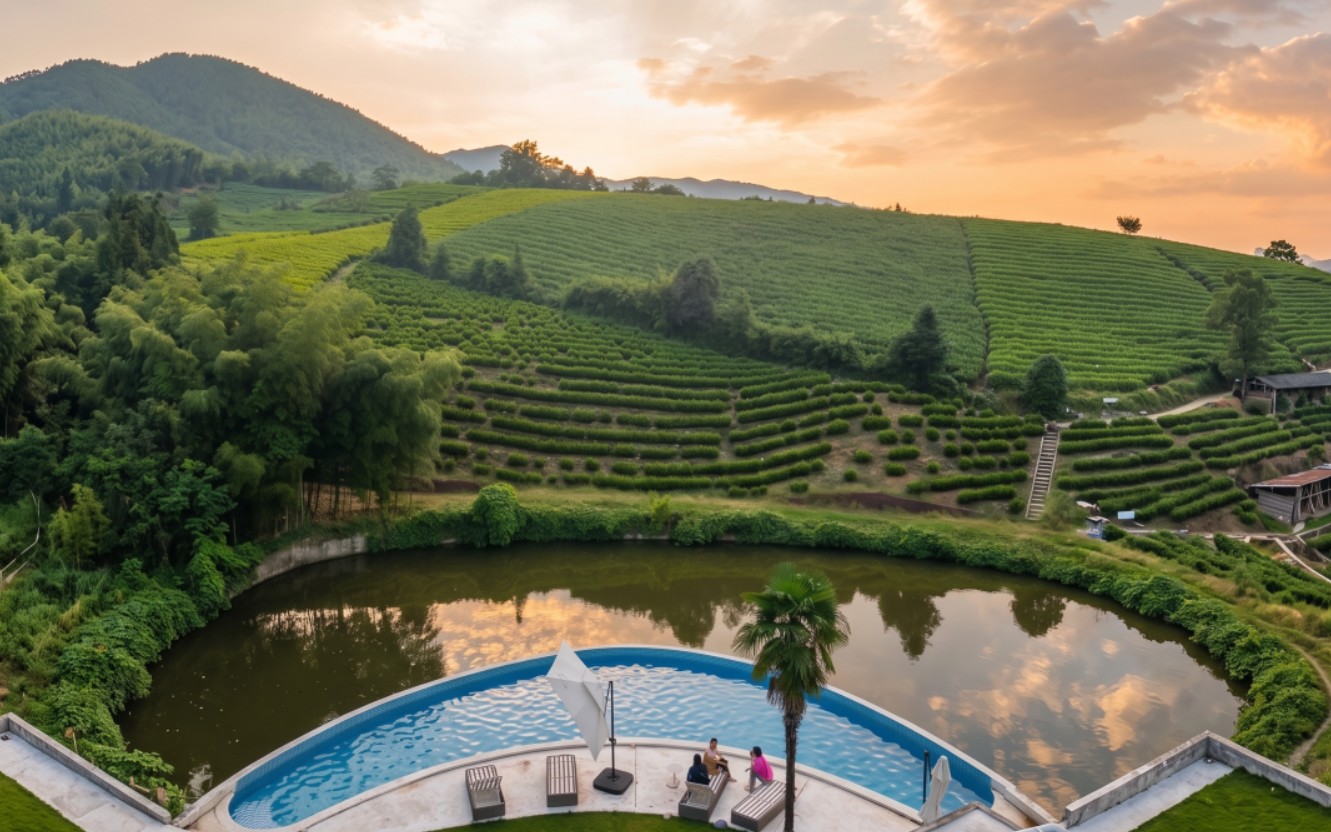
A luxury countryside retreat in China reflects a shift in status, from displaying expensive possessions to purchasing privacy, nature and exclusive experiences. Photo: Lijia Zhang
Last autumn, I returned to China with my two daughters. My sister took us and the rest of her extended family to a luxury resort amid bamboo-covered hills and tea plantations outside Nanjing. A large white villa rose above a reflecting pool, with glass-fronted terraces, manicured lawns and palm trees. It looked like a vision of California transported to the Chinese countryside.
The resort offered quiet, clean air and carefully tended nature. We could admire the hills without farming them, enjoy local flavours without worrying about the harvest and retreat indoors whenever the weather turned. A butler with a car was available to drive us anywhere, at any time.
When did the Chinese countryside cease to be somewhere people struggled to escape and become an experience the rich paid to enter?
My own life spans an extraordinary transformation in what consumption means in China. I grew up in a poor working-class family in Nanjing, when food and cloth were rationed and almost nothing was wasted. In 1980, at sixteen, I was taken out of school and put to work in a factory producing intercontinental missiles. For families like mine, consumption was a calculation of necessity: what could be obtained, saved or done without.
In the 70s, possession of a bicycle, watch, sewing machine and radio signalled that a household was doing well. Later came colour televisions, refrigerators and washing machines; then private apartments, imported cars and foreign labels. As reform and opening gathered pace, possessions took on new meanings. By the 1990s and 2000s, China's new wealthy often displayed their success loudly. Banquets grew more extravagant; logos grew larger. Cars, watches, handbags and apartments announced how far their owners had come. Some men, including my businessman brother-in-law, even left the labels on the sleeves of their new suits. A society that had long condemned bourgeois indulgence learned to read the language of brands.
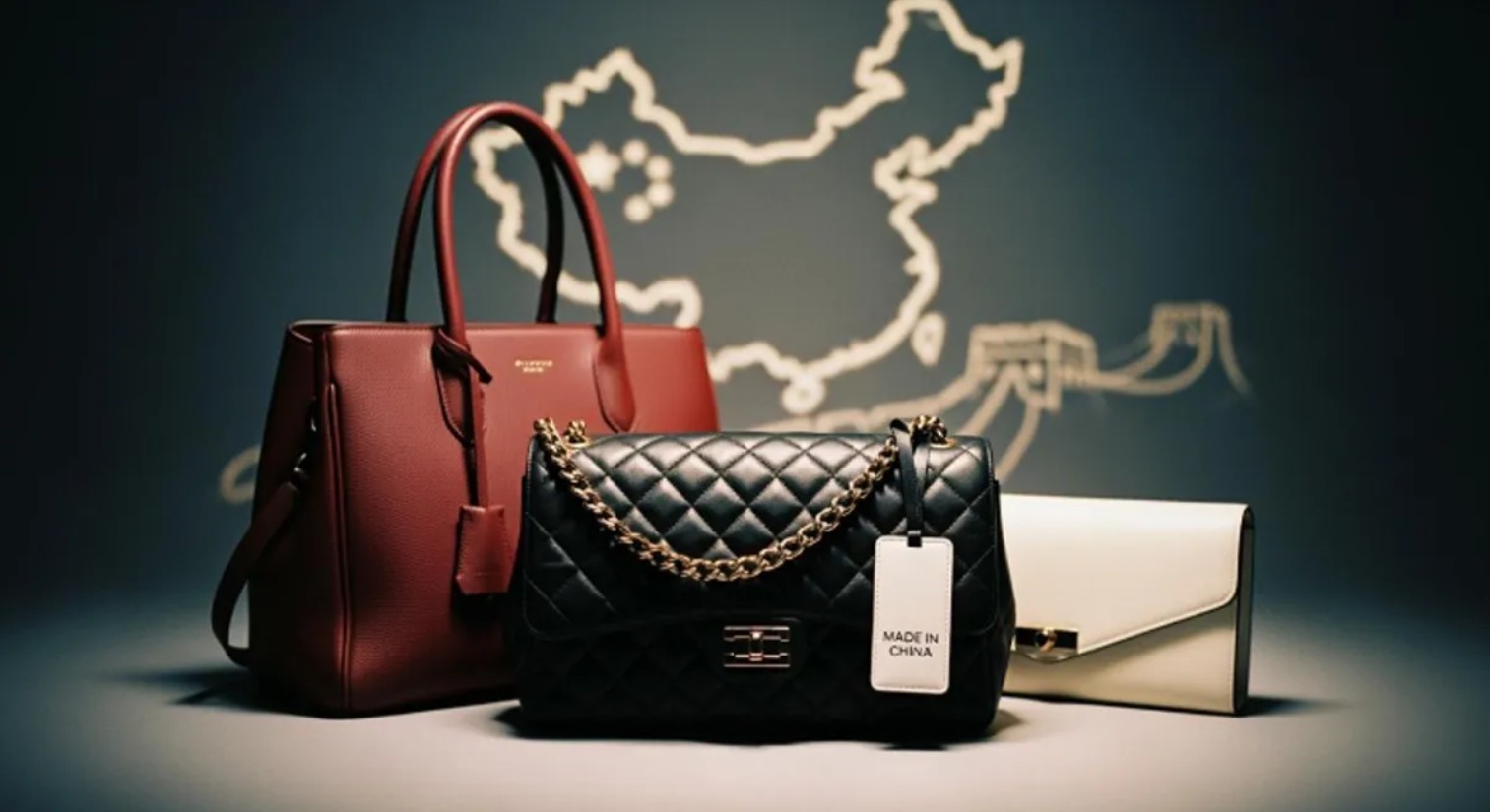 Designer goods, watches and imported cars became
powerful symbols of wealth as China’s consumer culture
expanded during the reform era. Photo: INITI
Thorstein Veblen's phrase ‘conspicuous consumption’ seemed made for the moment: people bought things partly to make their social position visible. That phase has not disappeared. China remains an enormous market for luxury goods, and a Hermès bag or a German car still communicates wealth. Yet among affluent consumers, particularly the better educated, the signs of status are becoming subtler. The coveted luxury may now be a secluded villa among bamboo groves, glamping on the Mongolian steppe in a private yurt with a portable shower, a helicopter ride over an unspoilt landscape or a hunting trip in Africa. One of my most unusual meals was dinner inside a karst cave, beneath dramatically lit stalactites. For those with 5.1 million yuan to spare, Trip.com is even offering a suborbital spaceflight planned for 2027.
 Luxury glamping retreats offer affluent Chinese travellers a
way to enjoy remote landscapes and exclusive experiences
away from crowded cities. Photo: Saiyuen
Market researchers have noticed the shift. McKinsey's 2026 study of luxury consumers in China and the United States organised their expectations around four ideas: desirability, exclusivity, moments and discovery. Oliver Wyman found that younger Chinese travellers were redirecting spending from luxury labels towards food, local culture and wellness. Even as China's market for personal luxury goods contracted in 2025, spending on experiences proved more resilient.
Status consumption has changed its vocabulary. The old message was: ‘Look how much money I have.’ The new one is: ‘Look how discerning I am; look what I have discovered; look how freely I can use my time.’
Social media makes apparently private experiences highly visible. A secluded retreat promises escape from the crowd, but also supplies images for social media platforms such as WeChat Moments or Xiaohongshu: an empty terrace at dawn, tea beside a mountain stream, a dinner made with seasonal ingredients. The display is quieter than a diamond-studded watch, but no less legible to those who understand the code.
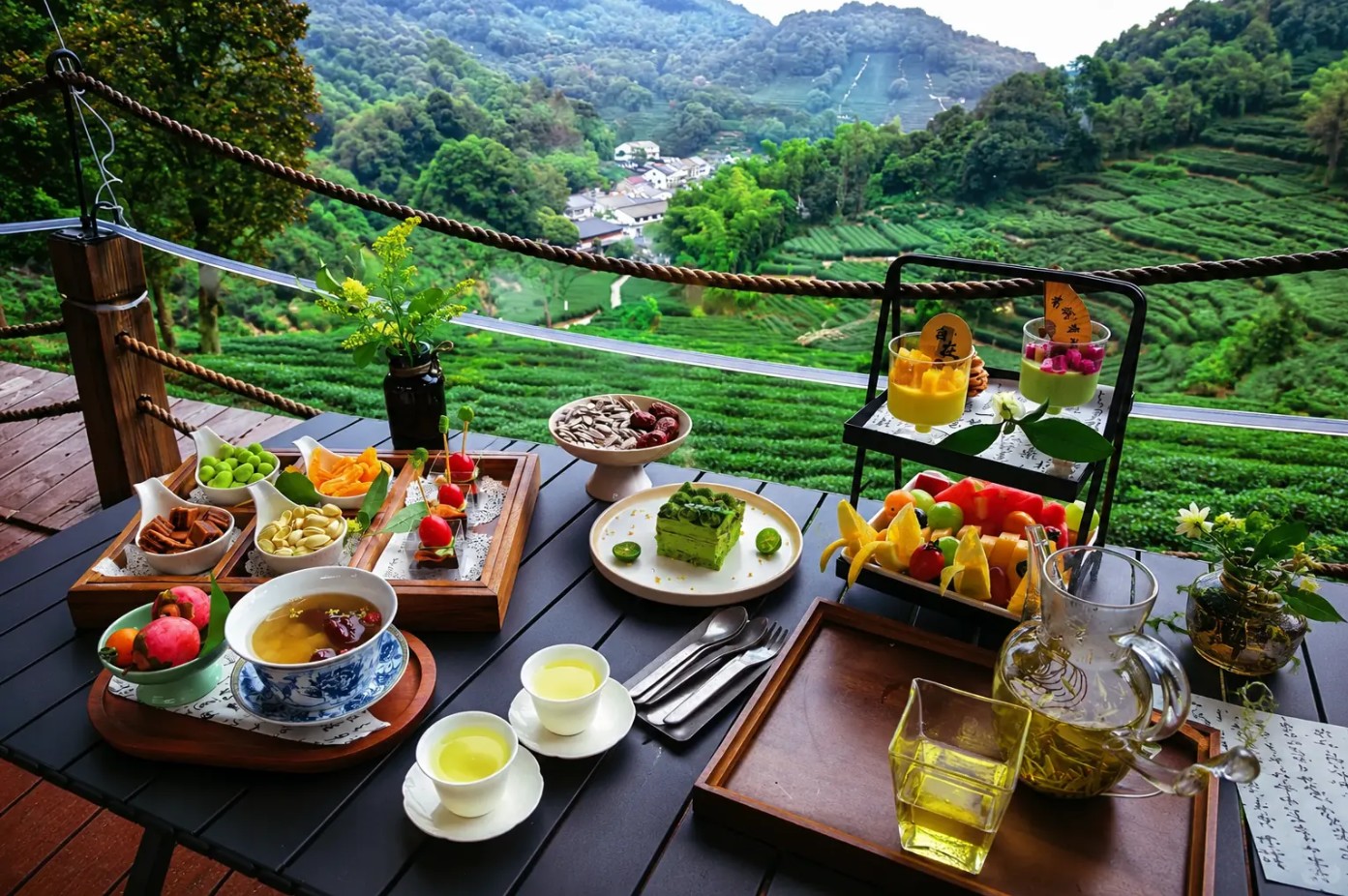 Tea houses and mountain views in Meijiawu Tea Village,
Hangzhou, reflect the growing appeal of scenic escapes and
carefully curated experiences among China’s affluent
consumers. Photo: Go China Freely
Knowing which remote guesthouse to book, independent designer to wear or regional cuisine to seek out demonstrates cultural knowledge as well as money. Obvious extravagance can now appear crude. Luxury must look discovered rather than purchased, even when a substantial bill lies behind it.
Our family visit brought home another aspect of this trend: the affluent are buying escape. China's economic rise has produced spectacular cities, but also crowded public spaces, punishing competition and exhausting work. A rural retreat offers distance from noise, schedules and scrutiny. Its greatest luxury may be the feeling of having nowhere else to be.
Time is part of the purchase. To travel slowly, cultivate a hobby or spend several days doing very little requires more than disposable income. It requires confidence that one's job, business and savings are secure. In a society built through relentless labour and sacrifice, the ability to be unproductive has become a mark of privilege.
This helps explain an apparent contradiction. By the usual economic measures, China still struggles with weak household consumption and a high savings rate. Yet culturally, it is unmistakably a consumer society. Goods and experiences help people construct identities, express aspirations and locate one another within the social hierarchy. A country can consume too little as a share of its economy while allowing consumption to occupy an enormous place in its imagination.
Purchasing power determines the worlds one can enter. Money buys a quieter neighbourhood, better schooling, more dependable medical care, foreign travel and freedom from many inconveniences of public life. At the highest levels, it provides insulation from crowds, uncertainty, pollution and everyday pressures.
Consumption also offers personal choice in a society where other forms of individual agency remain constrained. Through clothes, travel, food and leisure, people can declare what kind of person they wish to be seen as. But the market's range of identities comes with an entrance fee.
I do not begrudge my sister her success and I do appreciate her generosity in taking us away. I enjoyed the villa, the rooftop pool and the gentle green hills, far from the madding crowd. For a family that once knew genuine hardship, gathering several generations in comfort is worth celebrating. China's consumer revolution has brought pleasure, choice and a degree of personal freedom unimaginable in my childhood.
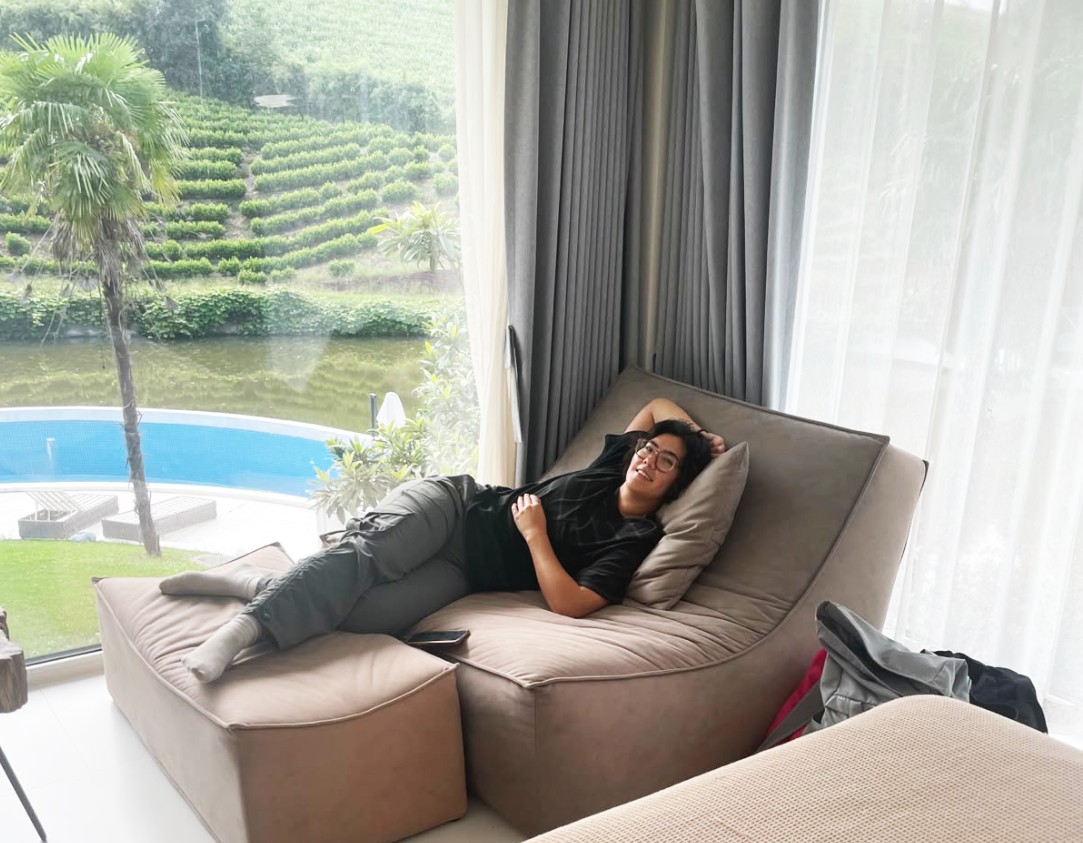
Lijia Zhang, author of the article, at the luxury resort outside Nanjing that inspired her reflections on changing ideas of status, leisure and luxury. Photo: Courtesy of Lijia Zhang
Yet the resort also embodied the hierarchy that revolution created. Rural simplicity had become a premium product; nature had been landscaped, serviced and enclosed. The affluent no longer needed to prove they could escape the countryside. They could demonstrate that they could return to it on their own terms.
As we prepared to leave, the villa's white walls shimmered in the pool and the bamboo-covered hills rose beyond the lawn. The scene was beautiful, but revealing. In today's China, status is increasingly measured by where one can go, how one can spend one's time and which version of China one can afford to inhabit. What will these new barriers mean for a society founded on the promise of equality, however imperfectly that promise was kept?