Three years ago, China lost its status as the world's most populous nation to India, a crossover driven as much by India's continued growth as by China's population shrinkage. Rahul Jaywant Bhise examines measures Beijing is using to fight a demographic decline that is alarming the country's leaders.

China’s shrinking population is putting growing pressure on its economy and workforce. Photo:Quan-You Zhang/Unsplash
China will shed nearly 60 million people over the next ten years – roughly the population of France – according to the Rhodium Group. The country's population fell for a fourth consecutive year in 2025: births totalled just 7.92 million, while deaths, at 11.31 million, were the highest since 1968. Total population fell by 3.39 million, to just over 1.4 billion.
Some of this was already locked in by earlier policy, some reflects social change. The one-child policy, in force from 1980 to 2015, reshaped family size for a generation, but the more recent slide owes less to policy than to shifting social attitudes. The number of women aged 15 to 49 fell from 360 million in 2010 to 310 million in 2022, while the average age of a woman's first marriage rose from 24 to 28 over roughly the same period. A smaller, later-marrying cohort produces fewer babies most years, regardless of what Beijing does. By contrast, the number of people over 60 is expected to reach 402 million by 2040, according to the World Health Organization.
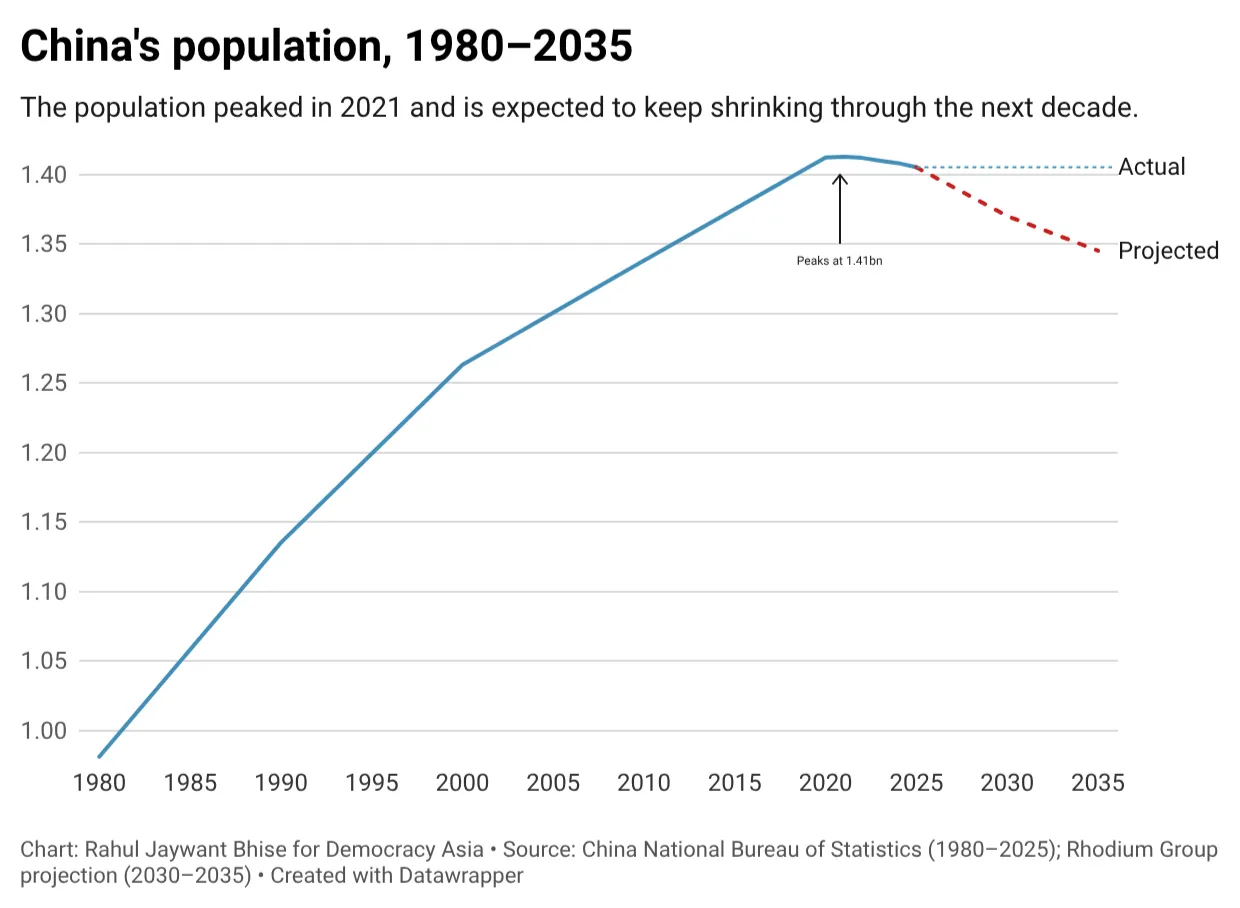 Beijing has applied four distinct tools this year in response, each acting on a different timeline. Officials and demographers do not agree on which is likely to matter most.
Money is the most visible: a nationwide subsidy of 3,600 yuan (about $534) a year per child under three launched in July 2025, reaching 25 million children and costing an estimated 180 billion yuan nationally once local schemes are included. One study found a comparable subsidy raised stated intentions to have children by 8.5 percentage points – a real effect, but a modest one, and a measure of intent rather than actual births. Yanzhong Huang of the New York-based Council on Foreign Relations calls the measure ‘performative at best’ since it does not touch the real cost of raising a child to age 18, an estimated 538,000 yuan, more than six times China's GDP per capita.
 Beijing is offering childcare subsidies to encourage families to have more children. Photo: AP
The comparison that should worry Beijing more than Huang's line is that Japan tripled its family-policy budget between 2016 and 2025, and its fertility rate – the average number of children a woman has over her lifetime – fell anyway, from 1.44 to 1.20. South Korea has spent heavily on similar measures since 2006, and its fertility rate fell even further, to 0.72, the lowest in the world. A review of 37 countries by Tomáš Sobotka, of the Vienna Institute of Demography, found that no developed country has reversed a long-run fertility rate stuck below the replacement level through policy alone. Against that record, China's spending is not just unproven; it's small.
The second tool cost nothing. In May 2025, China scrapped a rule – in place since 1986, as part of the hukou system that has controlled rural-to-urban migration since 1958 – requiring couples to marry where their household was registered. For the more than 370 million people who have moved from the countryside to cities that had meant a trip home just to get married. Marriages rose 22.5% year-on-year in the third quarter of 2025. China's own demographers disagree on how much credit the change deserves: Yuan Xin of the China Population Association attributes the rise to the whole package of reforms working together, while Xiujian Peng of Victoria University in Melbourne doubts any of it ‘moves the needle’ much without deeper change. What is clear is narrower: a decades-old bureaucratic rule was taxing family formation, and removing it cost the state nothing, whatever share of the credit it deserves.
The third tool skips births entirely. From January 2025, China began raising the retirement age over 15 years – to 63 for men, up from 60, and to 58 for women, up from 50 – while also raising the minimum pension-contribution period from 15 to 20 years, phased in from 2030. It works on the right timeline, since it does not need a birth today to help a workforce gap next decade. The ratio of working contributors to retirees, near 2.5-to-1 now, is projected to fall below 1.3-to-1 by 2035, against the 1.67-to-1 the pension system needs to stay balanced. With this reform factored in, estimates of when the main urban pension fund runs dry have shifted from 2035 to around 2044 – later, but still not solved.
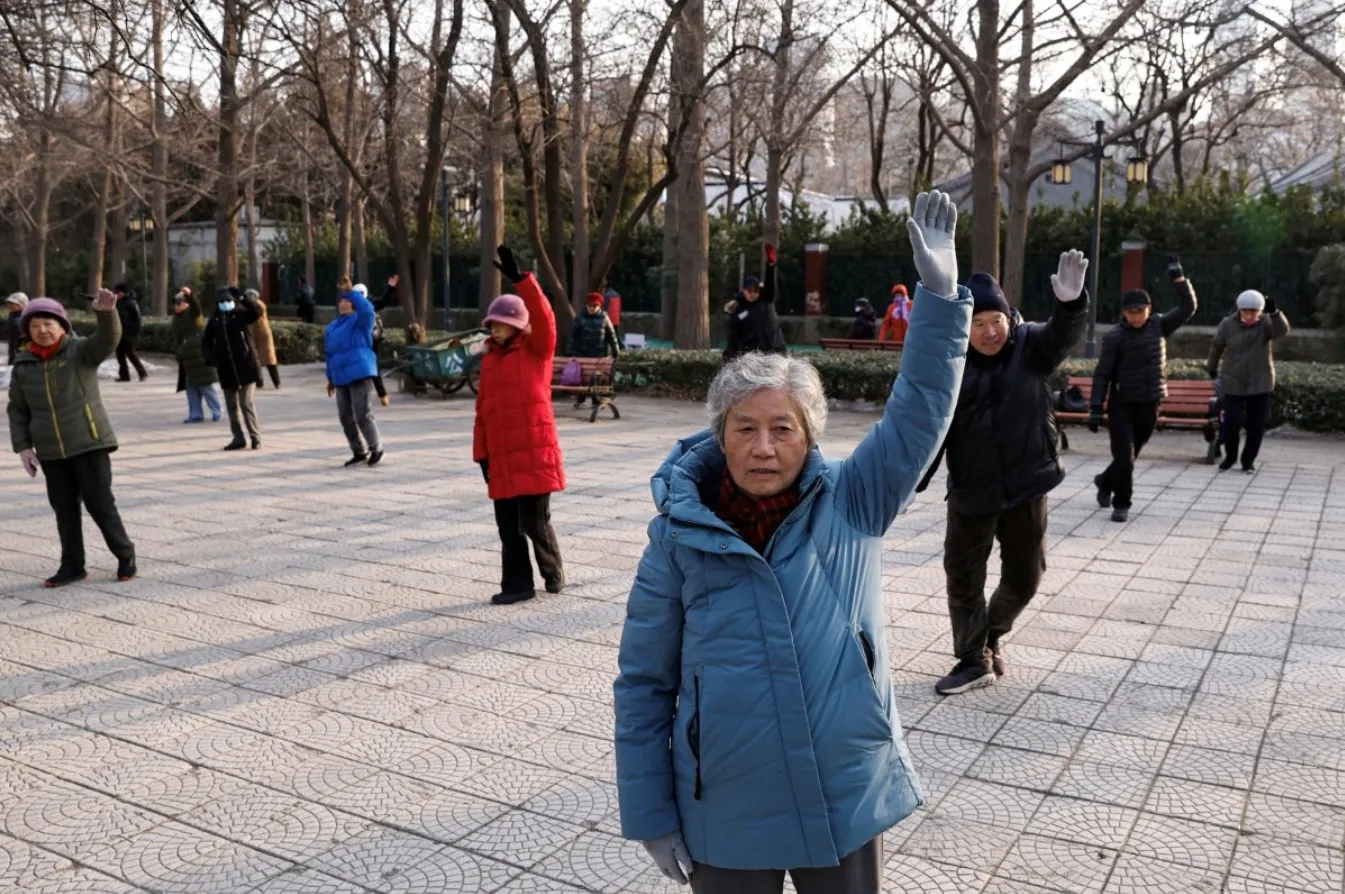 China is raising the retirement age as its working-age population shrinks. Photo: Reuters
The fourth and least-discussed tool is robotics. China already installs roughly 85% of the world's humanoid robots. One scenario has it deploying up to 24 million by 2035, offsetting 60% of a projected 37-million-person decline in the working-age population. That's a real dent, not a fix, and one concentrated in factories rather than the hospitals and classrooms an ageing population will need staffed.
 China is turning to robotics to offset the impact of a shrinking workforce. Photo: VCG
The most overlooked front is geographic. Of China's 31 provincial-level regions, 24 lost population in 2025; the seven that grew did so mostly through migration, not births – Shanghai's population grew only because net inflows of over 100,000 people more than offset a natural decline of 57,000. Sichuan, Anhui, Hubei, Liaoning and Heilongjiang posted the sharpest losses. The fiscal mechanics matter: migrants pay pension contributions where they work, usually a rich coastal province, but can only draw full benefits where they are registered, usually the poorer province they left. In 2023, just four provinces generated pension surpluses large enough to fund the national pooling system created in 2022; Guangdong alone contributed 115.8 billion yuan. Three deficit provinces received 180 billion yuan back – more than half their total tax revenue. Analysts already question how long Guangdong can keep subsidising the rest if its own population starts ageing in turn.
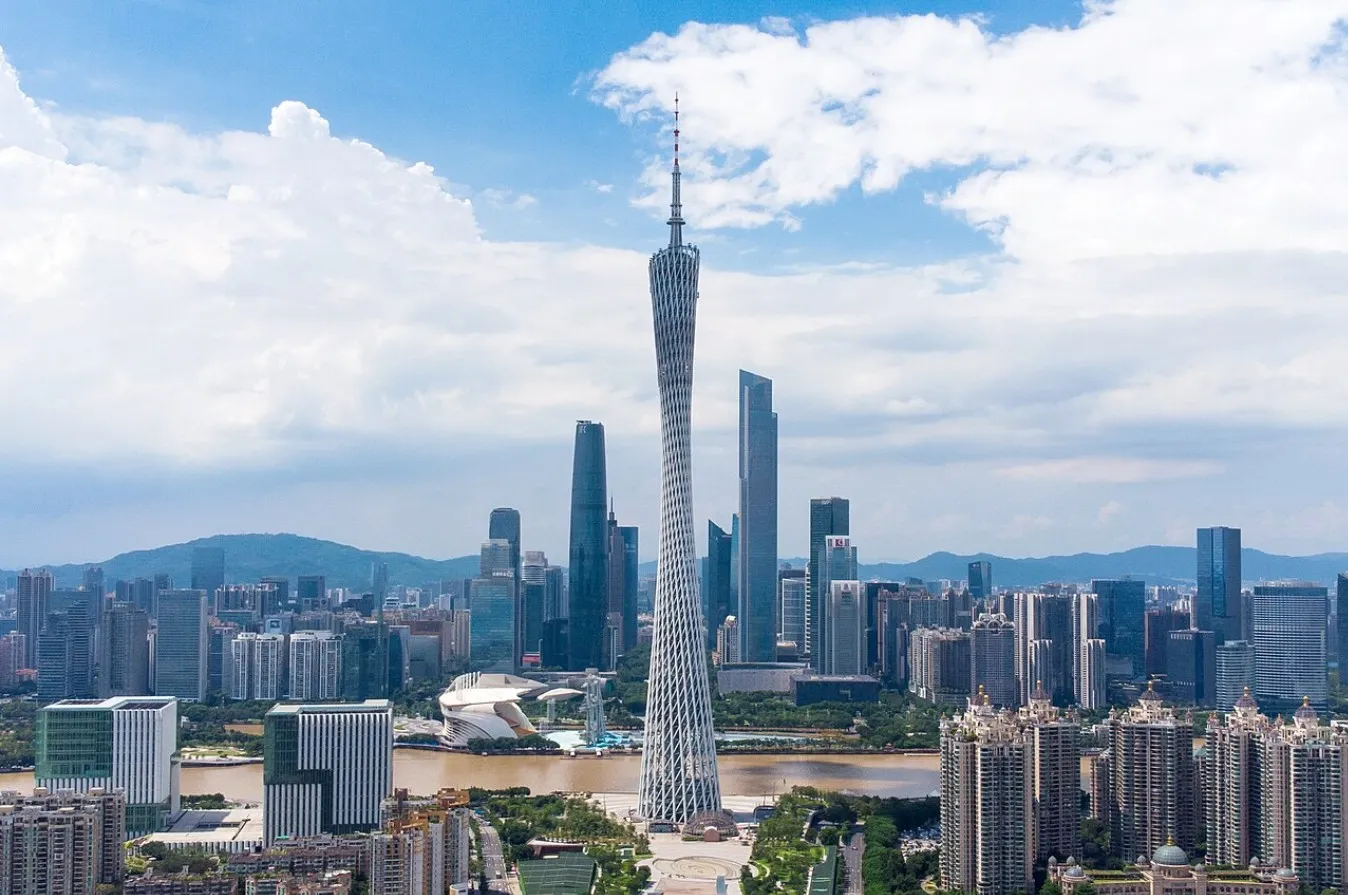 Guangzhou, in Guangdong province, where population inflows have helped offset China’s wider demographic decline. Photo: Tim Wu, CC BY-SA 4.0
India's own trajectory is a reminder that this is not only a China story. The UN's World Population Prospects projects India's population will peak at around 1.7 billion in the early 2060s before it begins to decline. Population growth is not a one-way escalator: societies grow as death rates fall faster than birth rates, then shrink again once birth rates catch down - a pattern demographers have described since the 1920s as the demographic transition. China simply reached its turning point first.
None of these four tools moves on the timeline the crisis needs. A child born today doesn't join the workforce until the 2040s, by which point the pension system's own maths will already be under strain. Only delayed retirement and robots act in time, and neither fully replaces the other. The stakes reach beyond China's borders: a shrinking Chinese consumer base and workforce will ripple into Asian supply chains and the export and commodity markets built around Chinese demand.
If two of the region's most determined spenders, Japan and South Korea, have not found a way back from this after twenty years and hundreds of billions of dollars, China's neighbours should be questioning how the world's second-largest economy can manage without one.