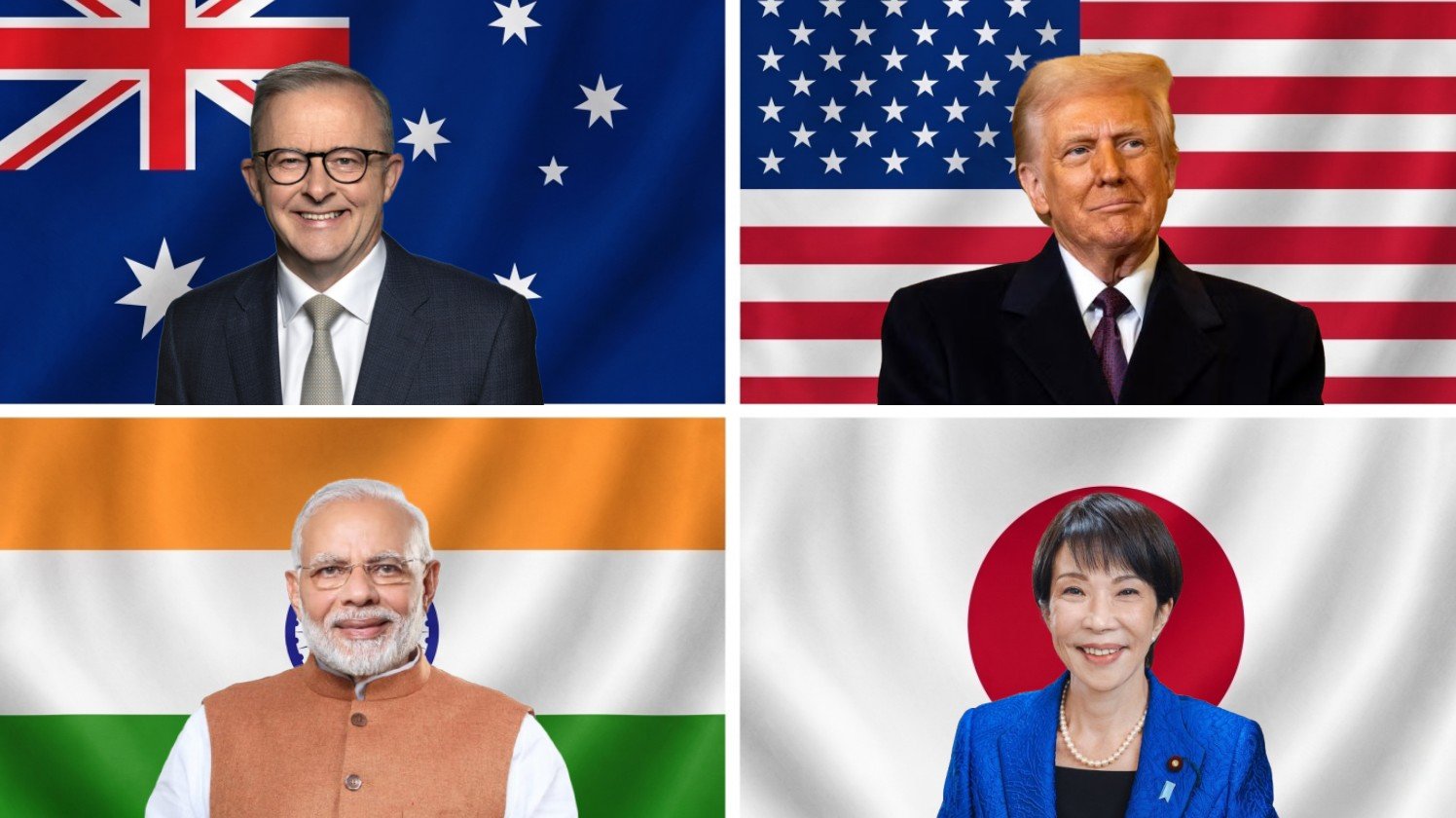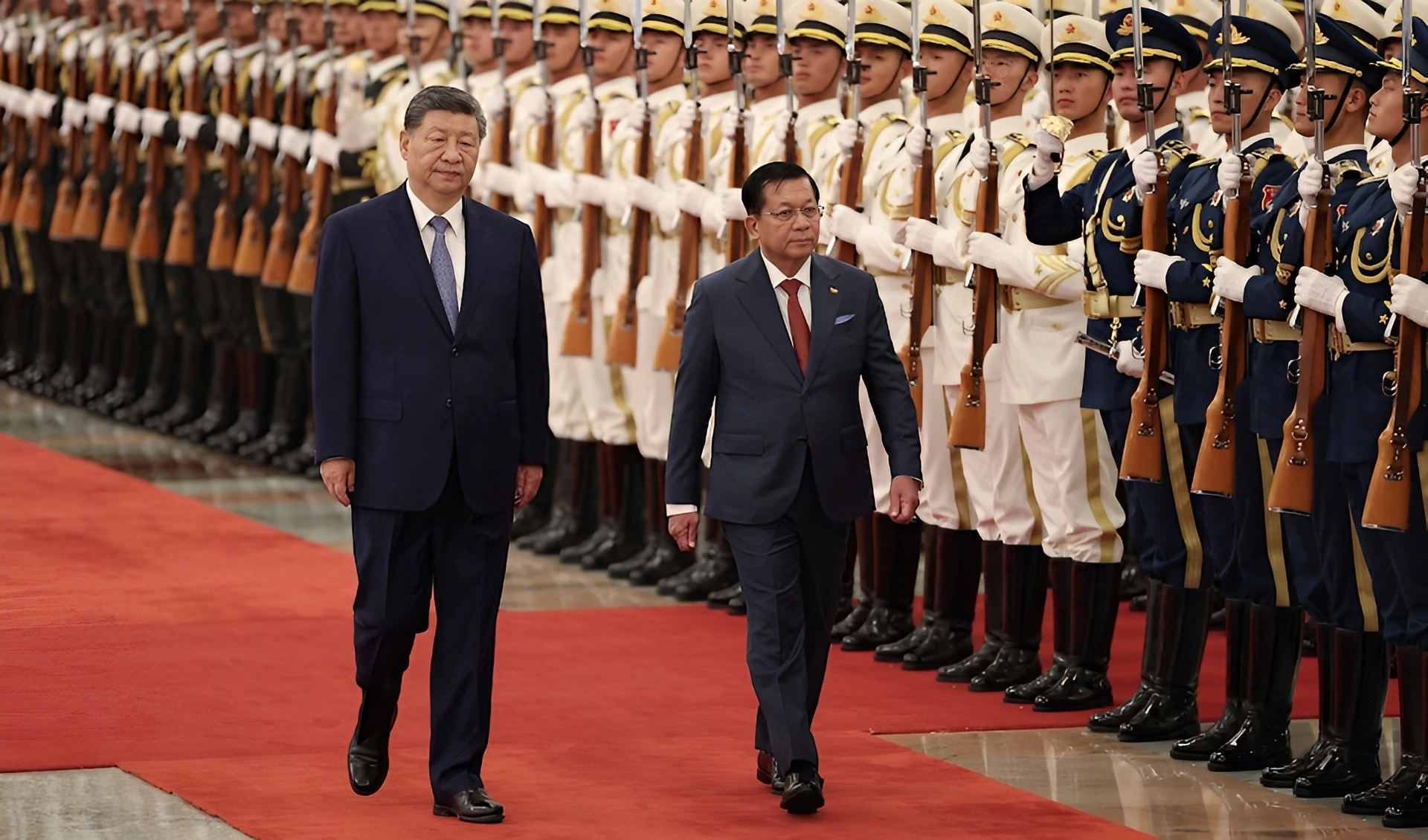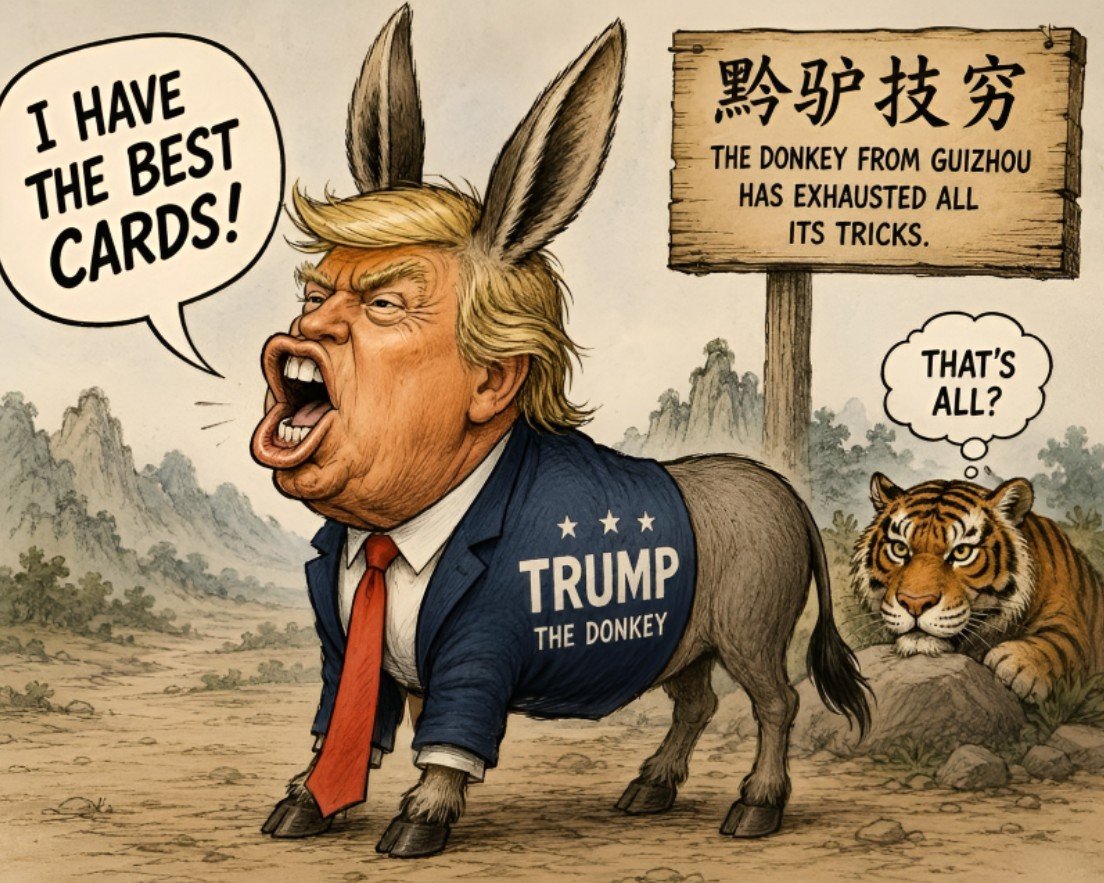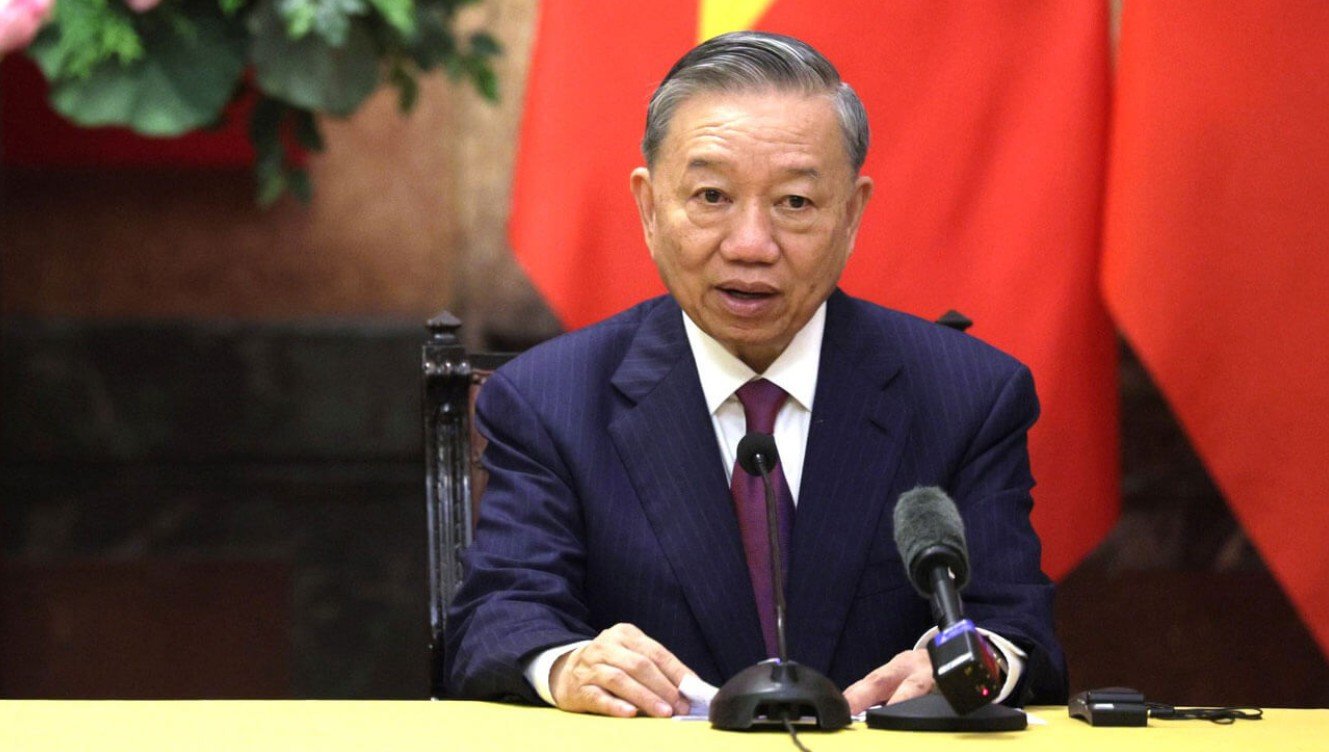
US allies in Asia, as in Europe, are increasing their military spending in response to President Trump’s new doctrine. But three years of signals from Asia’s premier security forum tell a more unsettled story than Washington may be prepared to acknowledge. Howard Zhang reports.
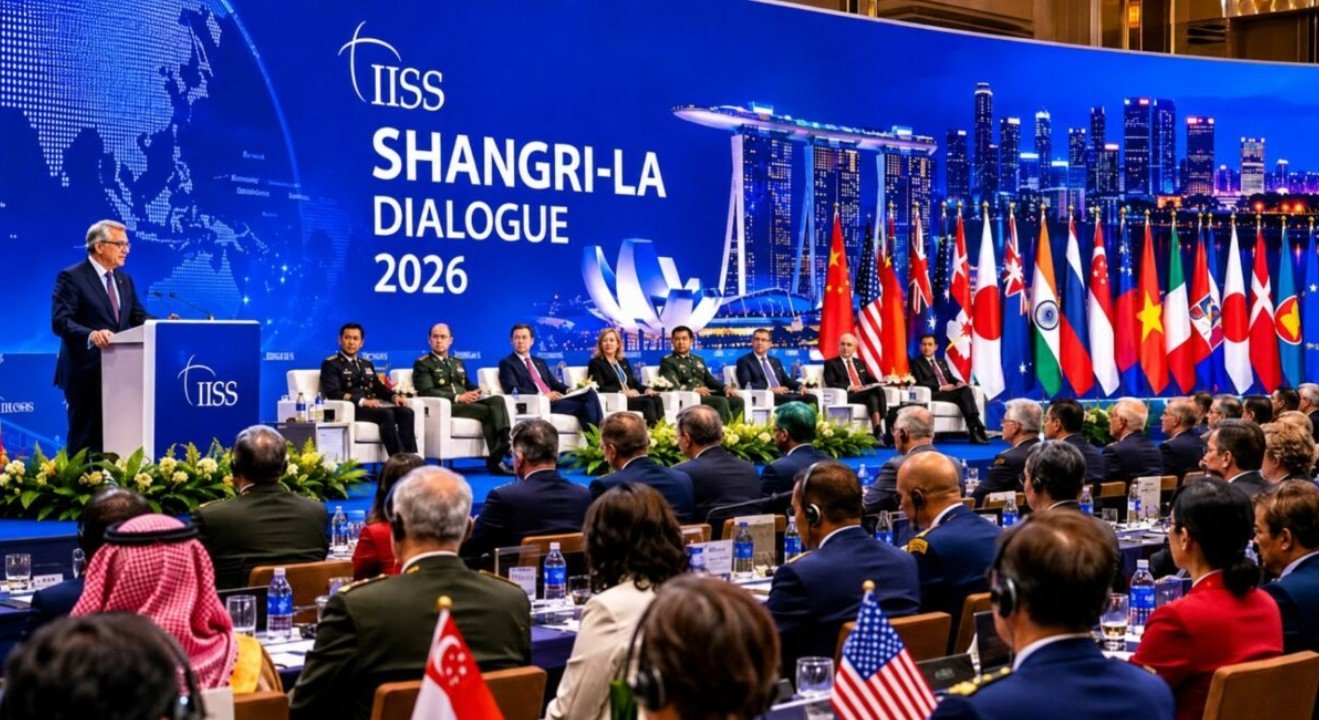
Delegates gather at the Shangri-La Dialogue in Singapore, Asia’s premier security forum. Photo: AthenaLab
When Japan’s Defence Minister Shinjiro Koizumi took to the podium at this year's Shangri-La Dialogue in Singapore on 31 May, the atmosphere inside the well-air-conditioned conference hall felt as heated as the tropical weather outside. Having watched US Secretary of Defence Pete Hegseth read out a list of ‘model allies’ to be rewarded with expedited arms sales and deeper intelligence sharing, Koizumi gently asked Hegseth for a message of reassurance. It was an awkward yet telling moment between two staunch Cold War allies. Tokyo, now under Prime Minister Sanae Takaichi, is spending more, coordinating more, and shouldering greater regional security burdens than at any point in the post-war era. And yet Japan still felt the need to ask, publicly, whether America was actually committed.
 Japan’s defense minister, Shinjiro Koizumi speaks at the Shangri-La Dialogue in Singapore amid growing questions about the durability of the US-Japan alliance. Photo: Reuters
That exchange got lost in summit coverage which was dominated by headline friction between Washington and Beijing. Yet it was precisely the signal that tells you where things actually stand in the Indo-Pacific. Looking across the three most recent Shangri-La summits, one under Biden and two under Trump, a clear pattern has emerged: Indo-Pacific nations are adapting to Trump's America, but adaptation does not equal alignment, and the region’s responses are more varied, and in some cases more unsettling, for long-term American strategy than the surface picture suggests.
Prize list replaces partnership
Where Biden's Defence Secretary Lloyd Austin came to Singapore in 2024 speaking of ‘new convergence’ and Pete Hegseth in 2025 still framed China as an ‘imminent threat’ to Taiwan, Hegseth’s speech this year was qualitatively different. The new US National Security Strategy had signalled the shift: allies must contribute more, and those that do will be prioritised. At Shangri-La 2026, Hegseth listed his favoured partners – Australia, Japan, India, Indonesia, Vietnam, the Philippines, South Korea, Singapore, Malaysia, Thailand. He made clear that ‘model allies’ would ‘move to the front of the queue’. The partnership had become a prize list.
 US Defence Secretary Pete Hegseth outlined a new approach that rewards ‘model allies’ with deeper cooperation, signalling a shift from traditional alliance management toward conditional partnership. Photo: Reuters
Equally telling was what he did not say. Taiwan went unmentioned – the first time in more than a decade that a US defence chief had left the island out of his Shangri-La address. AUKUS, the trilateral security pact between the US, UK and Australia built explicitly around countering Chinese power, did not feature. Nor did the Quad, Washington's flagship democratic grouping in the Indo-Pacific. Three of the most visible institutional expressions of America's China-facing strategic architecture, and not one of them named.
Three silences, one signal
These omissions sit alongside other signals that together form a pattern uncomfortable to dismiss. Days after Trump left Beijing, the White House paused a $14 billion arms package to Taiwan that Congress had already cleared. Trump described Taiwan's arms package as ‘a very good negotiating chip for us’, a framing that broke with every previous administration's public position. Within the same fortnight, Xi met Putin in Beijing and signed more than 40 cooperation agreements, reaffirming their strategic partnership days after hosting Trump. Then came the Xi-Kim summit in Pyongyang, where Xi acknowledged North Korea's ‘sovereignty, security and development interests’ in language that analysts at the American Enterprise Institute noted implicitly legitimised Pyongyang's demands for sanctions relief.
No formal bargain has been announced, and whatever was or was not agreed in Beijing remains opaque. But the cumulative pattern raises a question the region is quietly asking: if Taiwan's security, AUKUS and the Quad are all too sensitive to mention in public, what exactly is on the table in private, and who was consulted?
China's absence is its argument
Beijing's response across three years is consistent enough to constitute a considered strategy. In 2024, Defence Minister Dong Jun attended in person. He was combative on Taiwan and the South China Sea but present and attempting to shape the room. Since then, Beijing has sent only scholars. Two consecutive absences invite speculation about the PLA's anti-corruption campaign – Dong’s two predecessors both received suspended death sentences earlier this year – though his appearance alongside Xi in Pyongyang in early June puts those rumours to rest for now.
 As Beijing kept its distance from the Shangri-La Dialogue, China continued to deepen strategic ties with Russia through high-level diplomatic and security engagements. Photo: Reuters
The more durable explanation is categorical. A serving PLA general described attending as walking into ‘a lion's den intended to directly counter Western disinformation’ and China's defence ministry condemned Washington for using the dialogue to ‘create disputes, sow discord, provoke confrontation and seek selfish interests’. Senior diplomat Wang Yi went to the Munich Security Conference in February rather than Singapore in May, choosing ground where he could contest the normative order on his own terms. Beijing turns up where the argument is worth having.
What it chose to do inside the room at the Shangri-La Dialogue was pointed nonetheless. Chinese delegates directed their sharpest criticism not at Washington but at Tokyo, questioning Japan's standing to speak about regional security given its wartime history – a deliberate effort to pressure the US-led coalition where it is most susceptible to fracture.
Three ways the Indo-Pacific adapts
The rest of the Indo-Pacific has not waited for clarification. Regional powers have begun adapting in at least three distinct ways.
The first is willing integration. Japan and Australia have broadly aligned with Washington's direction, spending more, deepening interoperability, accepting the burden-sharing logic. Japan's adaptation is the more consequential, involving not just increased defence expenditure but a genuine shift in how Tokyo talks about its security role: less apologetic, more direct about regional threats, more willing to be seen as an independent actor.
The second is transactional autonomy. India’s instincts – issue-based partnerships, no formal commitments, cooperation on its own terms – fit the Trump era more comfortably than they fitted Biden’s emphasis on rules-based order. At Shangri-La, India's defence secretary held talks with US counterparts while simultaneously engaging NATO officials: India intends to remain indispensable to multiple frameworks by belonging fully to none.
The third is perhaps the most instructive. In 2025 President Macron of France had stood at this same podium and argued that the era of non-alignment was definitively over. Vietnam's president, who leads a communist one-party state sharing a land border with China, delivered remarks pointing in precisely the opposite direction. This year, Washington named Vietnam a trusted partner and placed it on the model-ally prize list alongside treaty allies. Hanoi accepted without allowing the designation to constrain its posture. Speaking two strategic languages simultaneously is an art form Vietnam has been practising for fifty years.
 Taiwan continues to strengthen its defences amid growing uncertainty over regional security commitments and the future balance of power in the Indo-Pacific. Photo: AP
The keynote shift nobody mentioned
The reality is that the Indo-Pacific has not coalesced around Trump's security framework. It is adapting to it, which is a different thing. Allies are spending more, but some because the security environment demands it regardless of what Washington does. Partners are lining up, but on terms that preserve their freedom to manoeuvre. China has decided the forum is no longer worth attending to contest. And somewhere in all of this, Taiwan has approved nearly $25 billion in additional defence spending and is waiting to find out whether the silence around it is temporary, or the shape of things to come.