The prolonged blockade through the Strait of Hormuz is raising costs and uncertainty across South and Central Asia. Few countries are as exposed as Pakistan and Afghanistan. Yet while the crisis threatens economic disruption, it has created an opportunity for Islamabad to reposition itself as an increasingly consequential diplomatic and logistical actor, as Iftikar Firdous reports.
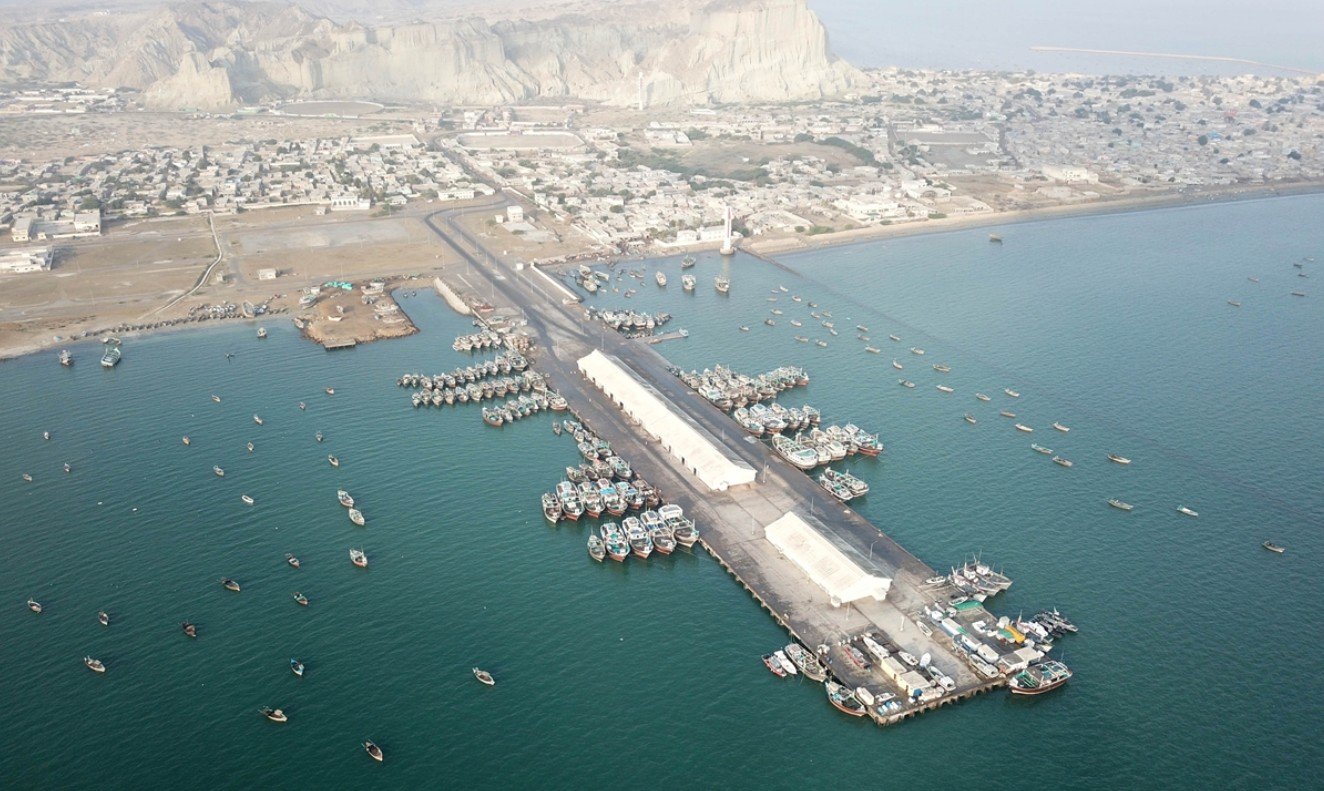
Gwadar Port has emerged as a strategic node in Pakistan’s effort to reshape regional trade routes amid growing instability around the Strait of Hormuz. Photo: Xinhua
Pakistan imports a large proportion of its crude oil from Gulf countries, making it highly exposed to disruptions in the Strait of Hormuz. Any sustained disruption in Hormuz inevitably translates into higher energy costs, renewed inflationary pressure and additional strain on already fragile foreign exchange reserves. Remittances from Pakistani workers in Gulf states, a key pillar of the economy, are also under pressure. Yet Islamabad appears determined to turn this vulnerability into strategic advantage.
 The Strait of Hormuz remains one of the world’s most critical energy chokepoints, with disruptions threatening fuel supplies across South Asia.
Since late 2025, Pakistan has kept its border with Afghanistan effectively closed, disrupting traditional transit trade routes that once defined regional commerce. The result has been a strategic reorientation by both countries toward alternative routes and new political alignments. In April Pakistan operationalised a new trade corridor linking newly developed Gwadar Port to land-locked Uzbekistan through Iran. The inaugural shipment, consisting of frozen meat destined for Tashkent, marked the reshaping of regional trade routes, a signal of Pakistan’s attempt to redraw regional trade geography. Under the arrangement, goods originating from Pakistan move through Gwadar, a central node of the China-Pakistan Economic Corridor (CPEC), transit Iranian territory, and continue onward into Central Asia.

Days later, Pakistan issued another policy move enabling westbound trade routes to bypass Afghanistan entirely, allowing Pakistan to connect more directly with West Asia and reduce Kabul’s traditional transit relevance and the revenues associated with it. The significance of this shift is not merely economic. It reflects a deeper strategic conclusion in Islamabad that relations with the Afghan Taliban are unlikely to improve significantly. Border skirmishes along Pakistan’s northwestern and southwestern frontiers continue despite periodic diplomatic engagement, reinforcing the perception within Pakistani security circles that structural distrust now defines the relationship.

Pakistan is attempting to reposition itself as a regional logistics hub linking South Asia, Iran and Central Asia through new overland corridors. Photo: Al 24 News
Afghanistan had tried to reduce its dependence on Pakistan by strengthening routes through Iran and Central Asia. Pakistan is now attempting to bypass Afghanistan altogether. The impact may not be immediate, but strategically it is substantial. Afghanistan risks gradual marginalisation within emerging regional trade networks if alternative corridors stabilise.
These new arrangements also reduce dependence on vulnerable maritime pathways through the Gulf. In effect, the Gulf crisis is accelerating competition over trade routes, where infrastructure, security and geopolitical alignment increasingly determine strategic relevance. Pakistan’s geographic position and its Chinese-backed infrastructure projects, places it in a potentially pivotal role as a gateway linking South Asia, Central Asia and the Middle East.
Alongside these logistical recalibrations, Pakistan has also elevated its diplomatic profile. Islamabad’s leadership has increasingly highlighted open channels with Western powers, Gulf monarchies and Iran, while carefully maintaining what officials describe as a policy of maintaining ties with Western powers, Gulf states and Iran. The objective is clear: avoid becoming locked into any single geopolitical bloc while positioning Pakistan as a credible intermediary capable of facilitating dialogue during periods of regional crisis.
This balancing act has contributed to a more visible diplomatic role of Pakistan’s military leadership, particularly Field Marshal Asim Munir. His recent engagements and visibility in high-level regional discussions between Iran and the US have reinforced perceptions of Pakistan as an active stakeholder in crisis management rather than a peripheral observer reacting to external developments.

Iranian Parliament Speaker Mohammad Bagher Ghalibaf meets Pakistan army chief Asim Munir in Tehran on 16 April 2026, amid Pakistan’s growing diplomatic role during the Hormuz crisis. Photo: EPA
At the same time, Pakistan’s military establishment has maintained a harder line on Afghanistan. While Islamabad has sought to facilitate diplomatic space between Iran and the United States, it has shown little indication of easing pressure on Kabul over the Tehreek-e-Taliban Pakistan (TTP). During the 275th Corps Commanders’ Conference at General Headquarters in Rawalpindi on 5 May, the military leadership sharply criticised the Afghan Taliban, accusing them of providing safe havens to militant groups operating against Pakistan. ‘The forum categorically rejected frivolous allegations of Pakistan targeting Afghan civilians and reaffirmed that Pakistan’s defensive actions remain focused, precise, and directed solely against infiltrators, terrorist hideouts and support infrastructures,’ the official statement said.
For Afghanistan, the Gulf crisis creates a different but equally serious challenge. As a landlocked state, Afghanistan does not depend directly on maritime trade routes, but its economy depends heavily on access to Pakistani ports such as Karachi. Most of Afghanistan’s essential imports, including fuel and food, pass through Karachi port, making uninterrupted access critical. Disruptions in Gulf shipping lead to delays, higher transport costs and shortages of essential goods.
These pressures are particularly severe given Afghanistan’s fragile economy. Rising fuel and food prices, reduced aid flows, and limited fiscal capacity leave the country highly exposed to external shocks. With few economic buffers and continued political isolation, uninterrupted transit access through Pakistan remains critical for Afghanistan’s short-term resilience.
Against this backdrop, Pakistan’s diplomatic manoeuvring acquires broader regional significance. By engaging multiple stakeholders simultaneously and presenting itself as both a corridor state and a potential diplomatic facilitator, Islamabad is attempting to leverage geography into geopolitical relevance. The strategy, however, carries risks. Balancing relations between Gulf states, Iran, China, Western powers, and the Afghan Taliban requires constant calibration. Any perceived tilt could alienate critical partners or undermine Pakistan’s carefully cultivated position as a mediator.
Still, the broader reality is becoming increasingly clear: crises in the Gulf are no longer geographically confined to the Middle East. Their consequences now ripple directly across South and Central Asia, reshaping trade routes, security calculations, and regional diplomacy.
For Pakistan and Afghanistan alike, the Gulf blockade scenario is more than an economic challenge. It is a direct test of how dependent regional economies remain on fragile global supply chains. For Pakistan in particular, it is also an opportunity to turn economic vulnerability into political influence at a moment when the regional order itself is being renegotiated.