Understanding life in Afghanistan has been difficult since the Taliban came to power – for the second time – in August 2021. One of the few international journalists to have gained access to the country is BBC correspondent Yogita Limaye. Here she tells Alia’s story.
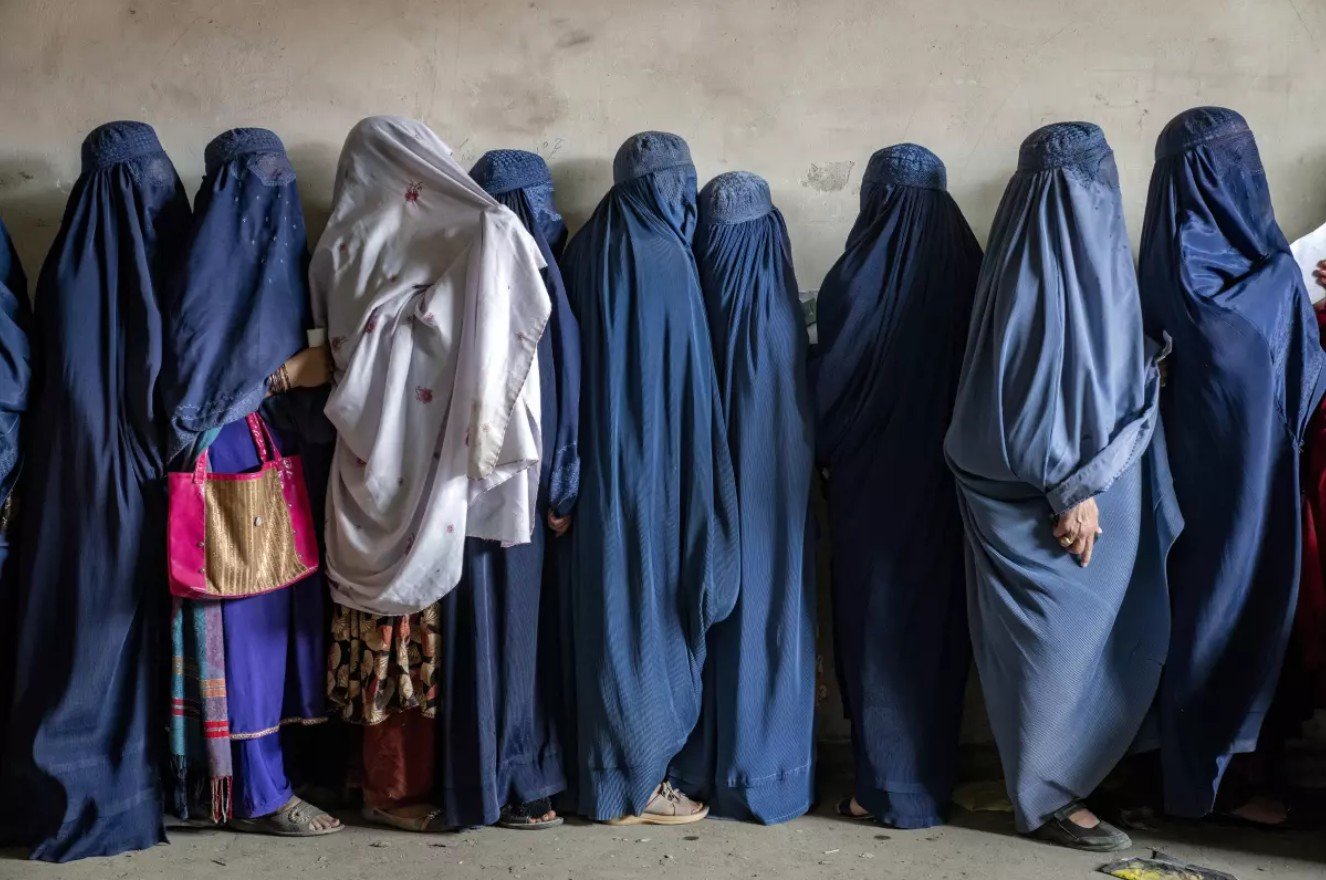
Afghan women continue to navigate severe restrictions under Taliban rule, balancing hope for education and independence against growing pressure and fear. Photo: AP
When I met her in Kabul, the nineteen-year-old woman who we’re calling Alia was clutching an English grammar textbook, memorising lines from it. I can’t tell you her real name, because she fears reprisal from the Taliban government for speaking out against their ban on female education. We had to meet Alia at a discreet location, because going to her home might have attracted unwanted attention.
Alia is enrolled in a short-term English language course in Kabul. Private classes like this still continue for women and girls, slipping through the cracks of Taliban diktats. For her, the course was both a fragile link to the life she led before the Taliban seized power five years ago – and an excuse to stay away from home, where she fears being pressurised into marriage by her family.
 With universities closed to women, private language classes have become one of the few remaining spaces where Afghan women can continue learning and hold onto hopes for the future. Photo: Collected
‘Before the ban, my parents passionately encouraged me to study. They believed in me and told me I could definitely achieve my dream of becoming a pilot,’ she told me. ‘But now they say the best way for me is to get married because I can’t go to university – and I can’t even work,’ she went on.
And so, eight months ago, Alia got into a taxi along with a female cousin, saying she was going to Kabul to meet her former classmates and friends. ‘That was a lie. My classmates have either left the country or have got married. When I arrived in Kabul, I enrolled onto a course and convinced my family to let me stay here to complete it,’ she said.
 Afghan female students walk near Kabul University in Kabul. Since the Taliban banned women from higher education, thousands of young Afghans have seen their academic ambitions put on hold. Photo: Reuters
That simple act of travelling hundreds of miles to Kabul from her home in the remote Daykundi province was extraordinary, because in Afghanistan women are not allowed to travel long distances without a male relative. ‘I was constantly scared that we would be stopped and questioned, but luckily nothing happened and we reached Kabul,’ she said.
I asked where she had found the courage to make the journey. ‘There was no question of courage,’ she shot back. ‘It was the only way for me. I want a bright future. What if the family I’m married into is conservative and does not allow me to pursue my dreams? I will resist until I cannot breathe,’ she told me with steely resolve. But holding on to this dream in Afghanistan means withstanding a continuous onslaught of blows dealt by the Taliban’s top leadership.
After I left the country, Alia’s story took a turn. When I recently spoke to her again over the phone, she was back home in Daykundi. She explained she was standing on the roof of her house, so the signal would be strong enough for her to speak to me. ‘I came to Daykundi a few weeks ago to visit my mother who had taken ill. I had plans to return to Kabul, but then we saw what happened in Herat,’ she said.
She was referring to a recent incident in the western city, when Taliban police fired at people who’d gathered to protest after local officials had detained some women for allegedly violating the dress code imposed by the Taliban’s supreme leader. Two people were reported to have been killed – a charge the Taliban police deny.
Far away in Daykundi, news of the incident had reached Alia and her family through social media. ‘It was really painful to see the videos. I felt upset and cried a lot,’ said Alia. And now her family is too scared to send her back to Kabul.
‘My mother says she would be extremely worried if I went back,’ Alia told me. ‘I am also scared, of course – what if officials stop me and take me to an unknown place, and even my family and friends don’t know where I am?’ ‘But on the other hand, I am also scared about my future,’ she said.
While in Kabul, Alia told me she had already encountered the Taliban’s morality police. ‘The first time they stopped me, my hair and body were covered but not my face. The second time they told me to button up my overcoat properly, even though I was fully covered. The third time they asked me not to look around while walking, and to only keep my eyes on the path ahead,’ she said. ‘I felt so scared. My legs began to feel wobbly. I couldn’t utter a word so I just nodded and quickly walked away.’
 Women in Afghanistan face strict enforcement of Taliban regulations governing dress, movement and everyday public life, with fear of punishment shaping even routine activities. Photo: Ebrahim Noroozi/AP
And yet she insists she would choose to return if her family allows her to, as she’s more worried about what might await her if she stays in Daykundi. ‘When I was in the kitchen making tea, I overheard my parents talking about whether I should get married,’ she said.
The future Alia wants for herself, the one she’s fought so hard for, feels more out of reach, with every passing day.