Advertisement Ad

Democracy Asia Magazine brings you trusted timely and thought-provoking stories from around the globe.

Quick Contact:

  • 07974960666
  • info@democracyasia.com
  • 35 Bow Road, London, England, E3 2AD
Get In Touch
Share on:

Source: View

Big Tech’s seatbelt moment

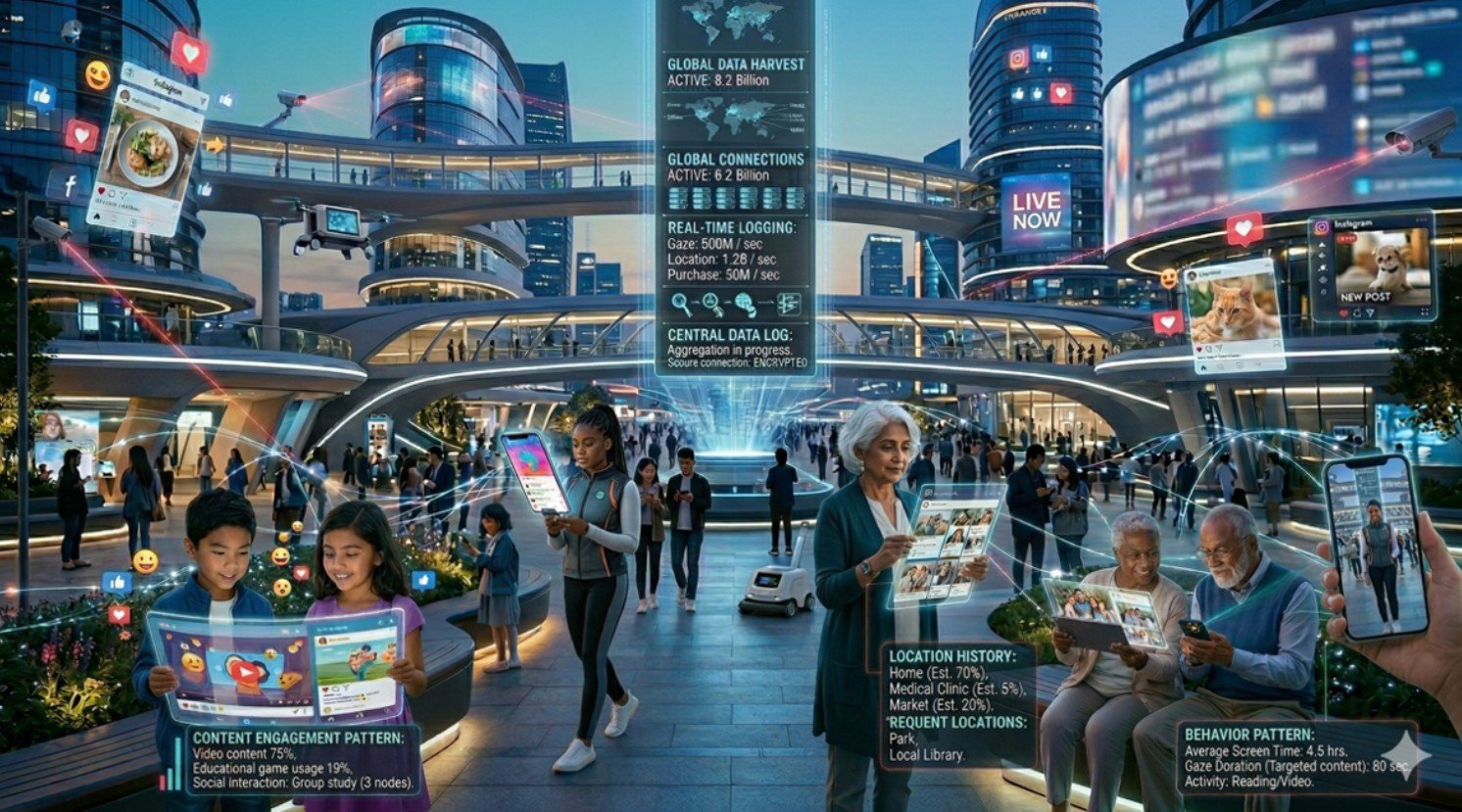
As lawsuits mount and governments move towards tougher safeguards, the question is no longer only what appears on the screen, but why the screen was built to behave that way in the first place. Sham Banerji reports that a new regulatory phase may be opening for social media and AI.
7-minute read

  From hosting to liability 

In September 2024 the British actor and comedian Sir  Stephen Fry, commenting on the influence of companies behind  social media, warned: ‘You and your children cannot breathe the  air or swim in the waters of our culture without breathing in the  toxic particulates and stinking effluvia that belch and pour  unchecked from their companies into the currents of our world.’  Almost Victorian in its disgust, at the time the remark sounded  rhetorical. Today, it reads more like the preamble to an  indictment. 

In March 2026 a jury in Los Angeles found Meta and Google  liable in a landmark social-media addiction case brought by a  20-year-old woman. She claimed that Instagram and YouTube  had contributed to her depression, anxiety and suicidal thoughts.  The jury agreed and she was awarded $6 million in damages. In  the same month in New Mexico, another jury found Meta had  violated the state’s consumer-protection law for misleading users  about the safety of Facebook, Instagram, and WhatsApp and  enabling child sexual exploitation on its platforms. Fines  amounting to $375 million were imposed in civil penalties. 

More important than the sums involved, however, is why these  cases matter. The US law Section 230, an amendment to the  Communications Act of 1934, provides a foundational legal shield  for social media. Passed in 1996, it provides protection to social  media companies from publisher liability for claims resulting  from user-generated content. If any content left a teenager  distressed, addictively engaged, or a family divided, that was  regrettable, but it is not considered the fault of the product. 

In the two recent cases, however, the courts treated the issues not  as third-party content but as matters of product design. Reuters  reports that more than 2,400 similar federal cases have been  consolidated before one judge in California, with thousands more  in the pipeline in Californian courts. For years, the platform  owners argued that they merely hosted behaviour. Courts are now  asking whether they also engineered it. 


A history of warning signs 

This moment did not arrive out of nowhere. Social media content  as ‘ambient toxins’ has been in the headlines for some time. The  Cambridge Analytica scandal in 2018 was an example of how  Facebook user data could be harvested for voter profiling and  targeting. United Nations Human Rights Council investigators  linked Facebook’s systems to the spread of anti-Rohingya hate in  Myanmar. The Christchurch massacre in 2019 showed how terror  and violence could be live-streamed on Facebook faster than any  moderator could contain it. These were not isolated mishaps.  They were early signals that engineered content could not only be  shared but steered. 

Meta’s decision in April 2024 to integrate Meta AI chat bots into  WhatsApp, Instagram and Facebook went mostly unnoticed.  Almost overnight, machine-generated content and machine-like  interaction entered the flow of everyday social life. Platforms  already associated with misinformation, cyberbullying, privacy  violations and manipulation were no longer merely carrying  human content but hosting synthetic dialogue. At the time,  Aleksandra Korolova, a Princeton computer science and public  affairs professor who studies the societal impacts of algorithms  and machine learning, posted screenshots on X of Meta AI  ‘speaking up’ in a Facebook group for thousands of New York City  parents. Responding to a question about gifted and talented  programs, Meta AI claimed to be a parent with experience in the  city’s school system and went on to recommend a specific school.  It even shared experiences of its own alleged child with the  citywide program. AI chatbots on smartphones alone now sit  within reach of 60 per cent of humanity. 


From sermons to standards 

The courtrooms are only half the story. The more durable shift  may come from government regulation. Australia is furthest along.  Its social-media minimum-age guidelines took effect on 10  December 2025, putting the burden on platforms, rather than  parents or children, to take ‘reasonable steps’ to stop under-16s  from holding accounts. In its March 2026 compliance update, the  eSafety Commissioner said it was focusing enforcement  investigations on Facebook, Instagram, Snapchat, TikTok and  YouTube, with decisions on possible action expected by mid-2026.  Australia is no longer debating whether the state should  intervene. It is testing whether state intervention can make a  difference.

Britain is not yet at Australia’s stage, but the direction of travel is  unmistakable. The government’s ‘Growing up in the online world’  consultation, launched in March 2026, explicitly considers age  restrictions for social media, gaming services and AI chatbots,  alongside restrictions on addictive design features and risky  functionalities. Indonesia, with over 100 million social-media  users, has moved from warning to enforcement. After summoning  Meta, TikTok and other platforms in 2025 over disinformation,  pornography and online gambling, it has now begun  implementing its PP Tunas regulation, restricting minors from  ‘high-risk’ platforms and requiring companies to deactivate  accounts, strengthen safeguards and demonstrate compliance. 

Across the world, government ministers are no longer speaking  only of moderation and content removal. They are asking whether  certain features should be eliminated by design. Fines are painful.  Judicial redesign will impact the companies’ bottom line. 

A companion-style AI chatbot can flatter, mirror, encourage, and  persuade in a highly personalised way. In August 2025, OpenAI  and its boss Sam Altman were sued in a California state court by  the parents of Adam Raine, who allege ChatGPT coached their  16-year-old son on self-harm methods and even offered to draft a  suicide note. Regulators are taking notice. New York’s AI  companion law was already in force by the time California’s SB 243  came into effect in January 2026 aimed at youth protection. These  are only first-generation rules but they hint at what may come  next. Synthetic companionship may turn out to be less a product  feature than a new legal risk. 


Resistance before reform 

None of this abolishes Section 230, the federal shield on which  the platforms have long relied. Appeals are coming, and the scope  of recent verdicts may be narrowed. The big tech companies will  fight hard and with deep pockets. Legislators too will find it hard  to define harmful design without stifling legitimate innovation  and free speech. Age-gating, verification and enforcement still  remain technically and politically challenging. 

For the social media industry this is a seatbelt moment. An  immensely valuable technology sold for too long on the  assumption that the user bore most of the risk is being  re-calibrated. Seatbelt-and-airbag regulation did not arrive at the  first crash. Compulsory safeguards for social media and AI are  unlikely to arrive without years of resistance, dilution and evasion  before they finally harden into law. For now, discussion on social  media addiction has shifted from a source of revenue to a source  of litigation.
By Sham Banerji

He is a veteran of the high-tech industry with over three decades working with Texas Instruments and Philips in the UK, USA, and India.

Related News

The Xi-Trump talks: was anything achieved?

By Sir Vince Cable June 2026

The talks between presidents Xi Jinping and Donald Trump were important and timely though the mood music was subdued. Expectations were low and were, if anything, underachieved with little more than a few gestures of commercial goodwill. Former British minister for Business, Skills and Innovation Vince Cable reports.

Bisinomics

June 2026

India Narendra Modi has advised Indians not to travel abroad for  holidays and weddings. He also asked people to work from home  and use public transport. India is the world’s third-largest importer of oil. It faces a  ballooning economic challenge because of the sharp increase in  energy prices and an uncomfortably low level of reserves caused  by reduced supplies from the Persian Gulf following the virtual  closure of the Strait of Hormuz. ‘We must curb our use of petrol and diesel,’ Modi said in a  speech. ‘In cities with metro lines, we should use the metro  wherever possible… We must also place a strong emphasis on  saving foreign exchange.’ As Indians braced themselves for a  further escalation in energy prices, Modi’s critics mocked him for  not practising what he was preaching by taking off on a  five-nation overseas trip. They said hands-on economic  management was the national priority. The Financial Times reported that India ‘imported $174 billion of  oil and gas last year, with two-thirds of natural gas and half of  crude oil imports [coming] from the Gulf’. India has returned to  sourcing oil from Russia – after obsequiously obeying orders  from United States President Donald Trump not to, before Mr  Trump partially waived sanctions in March. The Indian cabinet,  meanwhile, approved expanded gas production from coal on an  urgent basis. Shortage of cooking gas has disrupted homes and  debilitated hotel and restaurant businesses.  Commuters crowd public transport in India as rising fuel costs and supply disruptions intensify pressure on households and businesses. Photo: EPA The FT reported that ‘higher import prices have hurt the Indian  currency and knocked investor confidence’. It added that ‘the  rupee has been among Asia’s worst-performing currencies since  hostilities began in the Gulf… Economists are concerned over the  war’s impact on India’s balance of payments, already under  pressure from foreign investors selling Indian stocks at the fastest  pace on record… As the Gulf crisis drags on, economists are  revising down their estimates for growth in India.’ Kazakhstan In contrast, Kazakhstan has since the start of the Iran war  experienced an appreciation in its currency, the tenge. Oil-rich,  the country has benefitted from the steep upward revision in  crude prices, leading to the strengthening of the currency. This  trend is likely to continue until international trade in oil  stabilises. The oil sector accounts for over 40% of the Kazakh  government’s revenues. Kazakhstan, though, is dependent on electricity from Russia. It  aims to exit from dependence on Russian imports by 2027, the  Times of Central Asia reported, following a restatement of the  goal by the country’s deputy energy minister, Sungat  Yessimkhanov. Rising global crude prices have strengthened Kazakhstan’s energy sector, even as the country faces domestic electricity challenges. Photo: Kazakhstan government website It is likely to fulfil that objective only if homes remain heated and  industry avoids shortages during peak demand. Kazakhstan has  had a power deficit because of years of underinvestment, rising  demand, ageing thermal plants and uneven regional output,  according to the same newspaper.Uzbekistan Another Central Asian state, Uzbekistan, posted healthy activity  in its car industry, selling 121,601 vehicles between January and  April of this year, as per figures released by UzAvtosanoat and  reported by UZ Daily. UzAuto Motors, the largest automaker in Uzbekistan,  maintained its dominant position, selling 58,168 vehicles. The  company manufactures a wide range of models under various  brands, including American General Motors’ Chevrolet. Chinese  brands and Kia of South Korea are also noticeable in the  Uzbekistan market.  Indonesia The energy crunch has affected oil-producing Indonesia because  its demand outpaces its crude output, so it is planning to expand  its nuclear power capacity. Significantly, director-general Alexey  Likhachev of Russia’s state nuclear energy corporation Rosatom  was in Jakarta to meet the Indonesian president, Prabowo  Subianto, to discuss bilateral cooperation. Indonesia is exploring expanded nuclear energy  cooperation as Asian governments search for long-term energy security solutions. Photo: SouthEast Asian Gallery Bernama reported Likhachev as saying Rosatom was ready to  offer Indonesia ‘a comprehensive approach to developing its  national nuclear programme, including both large-scale nuclear  power projects and small modular reactors and floating power  units’. Malaysia In neighbouring Malaysia, economic growth for the first quarter  of the 2026 financial year was 5.4%, exceeding the prediction of  5.3%. The number had moderated from the 6.3% enlargement in  the previous quarter. The Star quoted the chief statistician of Bank Negara Malaysia,  Datuk Seri Mohd Uzir Mahidin, as saying ‘Malaysia’s economy  continued to expand in the first quarter of 2026, reflecting the  underlying resilience and stable growth conditions amid a  challenging global environment.’ The country continued to record a surplus in its current account  balance for the same period amounting to RM15.2 billion,  equivalent to 3% of gross domestic product (GDP). This was  significantly higher than RM2.7 billion in Q4 of 2025. Mahidin  said this was attributed to, as The Star put it, ‘sustained external  demand for Malaysia’s exports alongside improving services  sector performance’. Singapore In the Chandler Good Government Index, Singapore retained its  top position for a fourth consecutive year. The seven pillars of  evaluation are: leadership and foresight, robust laws and policies,  strong institutions, financial stewardship, attractive marketplace,  global influence and reputation and helping people rise.  Singapore was ranked first in all categories except robust laws  and policies and global influence and reputation.However, as Singapore Business spelled out, Singapore Airlines  (SIA) suffered a 57% year-on-year slump in net profit to $1.18  billion in the financial year ending 31 March last, because of its  shareholding in loss-making Air India. SIA suspended services to Dubai and Jeddah in February as a  result of the war in the Gulf and deferred the introduction of  flights to Riyadh until September 2026. The suspension of flights  to Dubai has been extended to 2 August. South Korea Samsung, South Korea’s giant electronics firm, faced a general  strike from 21 May. The strike threatened losses running into the  tens of trillions of won, not to mention semiconductor  production chaos and supply chain instability, Business Korea  reported. After the failure of labour-management negotiations,  Koo Yun-cheol, deputy prime minister and minister of economy  and finance, wrote on X: ‘We will continue supporting resolution  through principled negotiations under any circumstances.’ From aviation to semiconductor manufacturing, major  Asian corporations are facing mounting uncertainty from  supply chain and energy disruptions. Japan A group of lawmakers in Japan’s ruling Liberal Democratic Party  submitted a proposal to Prime Minister Sanae Takaichi to review  the country’s Companies Act, which would require shareholders  to own at least 30,000 shares in an enterprise to call extraordinary meetings or enter items on the agenda. At present,  a 10,000 shareholding is sufficient for the purpose. The Japan Times wrote the change ‘would bring the Japanese  market more in line with standards in other countries, where it is  normally more difficult for shareholders to directly participate in  governance’. It is expected this will ‘make Japan into a leading  financial centre’.

Bisinomics

May 2026

Post-war reconstruction is in the minds of Arab partners of the United States, who were collateral casualties in the hostilities between the US-Israel alliance and Iran. Indeed, Saudi Arabia, among others, pressed Washington to return to the negotiating table, as The Wall Street Journal revealed.

Bisinomics

April 2026

The United States’ military operation in Venezuela, culminating in the abduction and rendition to New York of its president, Nicolas Maduro, is potentially an economic blow to China. Chinese credit to the South American country amounts to around US$10 billion. The South China Morning Post, quoting analysts, reported that Caracas could challenge the very legitimacy of the debts.

Subscribe and login

Unlock Your Daily Briefing

Get the latest headlines, exclusive reports, and important updates delivered directly to your inbox.